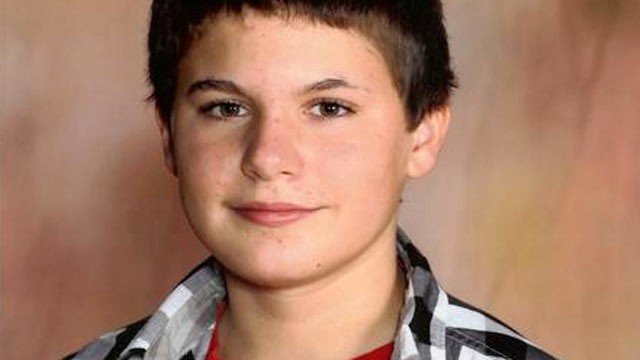
Showing posts with label hate. Show all posts

Friday, October 7, 2011

CNN - What fuels transgender backlash?

October is LGBT History Month, so in honor of that, here is a recent article from CNN on the cultural denigration of transgendered people. It seems that just as we are beginning to recognize and honor the full humanity of the LGB part of the acronym (what the hell took so long?), we still fear and reject the Trans community.

The "backlash" came in response to a story CNN ran about transgender children. It is insane to me that people blame the parents for a child who from a very early age identifies as opposite of his/her biology. If a child says this and acts this way for a week or a month or even a year, it might be a phase. But if it emerges at age three or four or five and does not go away, then honor your child's identity.

The report generated thousands of angry responses. Here is a bit from the original story:

Transgender kids: Painful quest to be who they are

By Madison Park, CNN
September 27, 2011


Click to play
Gender identity: A change in childhood


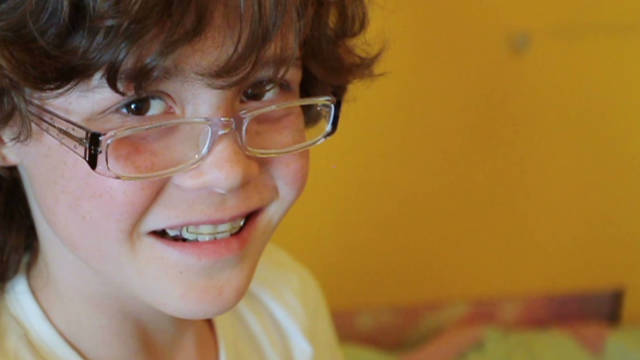
Berkeley, California (CNN) -- One of the first things Thomas Lobel told his parents was that they were wrong.


The 3-year-old had learned sign language because he had apraxia, a speech impediment that hindered his ability to talk. The toddler pointed to himself and signed, "I am a girl."


"Oh look, he's confused," his parents said. Maybe he mixed up the signs for boy and girl. So they signed back. "No, no. Thomas is a boy."


But the toddler shook his head. "I am a girl," he signed back emphatically.


Regardless of the fact he was physically male, Thomas has always maintained that he is a girl. When teased at school about being quiet and liking dolls, Thomas would repeat his simple response, "I am a girl."


Thomas, now 11, goes by the name of Tammy, wears dresses to school and lives as a girl.


Her parents have been accused by family, friends and others of being reckless, causing their youngest child permanent damage by allowing her to live as a girl.


When children insist that their gender doesn't match their body, it can trigger a confusing, painful odyssey for the family. And most of the time, these families face isolating experiences trying to decide what is best for their kids, especially because transgender issues are viewed as mysterious, and loaded with stigma and judgment.


Transgender children experience a disconnect between their sex, which is anatomy, and their gender, which includes behaviors, roles and activities. In Thomas' case, he has a male body, but he prefers female things likes skirts and dolls, rather than pants and trucks.


Gender identity often gets confused with sexual orientation. The difference is "gender identity is who you are and sexual orientation is who you want to have sex with," said Dr. Johanna Olson, professor of clinical pediatrics at University of Southern California, who treats transgender children.
Read the whole article here.

The response was so extreme that they ran a separate article on why people are so unwilling to accept transgender people, and why being the parent of a child who identifies as opposite of her/his biology can be so challenging.

What fuels transgender backlash?

By Madison Park, CNN
updated 10:16 AM EST, Fri September 30, 2011

(CNN) -- Tuesday's CNN.com story about transgender children and their families shed light on an emotional topic and provoked strong response.


"Transgender kids: Painful quest to be who they are" centered on identity, gender, health, parenting and child development. It's not unusual for a popular story on CNN.com to have hundreds or thousands of responses, but the overwhelmingly negative tone of Tuesday's comments raised the question about the root of the hostility. What exactly provoked such harsh opinions?


The discomfort toward transgender people comes from challenging conventions, said one academic who focuses on social attitudes and behavior.


In American culture, sex and gender belong in one of two categories, said Diane Everett, professor of sociology at Stetson University in DeLand, Florida. As soon as humans are born, the first thing people ask is whether the baby is a boy or girl.


"We tend as a society to put people into boxes," she said. "Someone who is transgender is not only crossing gender boundaries, but also defying them. If people can't relate to you as an either-or, they have a hard time relating to you in their general comfort level."
Read the whole article.

Saturday, September 24, 2011

Jezebel - Bullied Teen Who Made "It Gets Better" Video Commits Suicide


Effing awful . . . . Sometimes it really doesn't get better. Dan Savage, who started the It Gets Better Project, says we shouldn't bully the bullies, but hold them accountable:
His tormenters need to be held to account—not bullied themselves, not prosecuted or persecuted, but held to account—for their actions, for their hate, for the harm they've caused. They should be asked if they're "WAY more happier" now, if they're pleased with themselves, and if they have anything to say to the mother of the child they succeeded in bullying to death.
I suspect the kids who bullied Jamey feel pretty bad right about now. I can't imagine what it would feel like to be directly responsible for another human being feeling so horrible about himself and his life that suicide seems to be the best answer. They need to understand the degree of pain required for another person to take his own life at such a young age.

And we need to do more to make sure this does not keep happening in other schools in other towns . . . to other young men.

Jezebel posted his video and the story about his situation - links to their sources are at the bottom of the post.


Bullied Teen Who Made "It Gets Better" Video Commits Suicide

This weekend, just a few months after he filmed a video for the "It Gets Better" project, 14-year-old Jamey Rodemeyer of Buffalo, NY was found dead from an apparent suicide. Earlier this month he blogged, "I always say how bullied I am, but no one listens. What do I have to do so people will listen to me?"
* * * * 
Tracy Rodemeyer says her son, "Has had issues since fifth grade. He had suicidal tendencies back then." Things got particularly bad a year ago when he created a Formspring account and started receiving hateful messages:
"JAMIE IS STUPID, GAY, FAT ANND UGLY. HE MUST DIE!" read one post.
Another read: "I wouldn't care if you died. No one would. So just do it :) It would make everyone WAY more happier!"
The messages were reported to guidance counselors at his middle school, and Jamey was seeing a social worker and therapist.
* * * *
Jamey is the second Williamsville North High School student to commit suicide this year, but school officials say they did all they could. Dale Bauer, a licensed school social worker and clinical social worker at Williamsville, says the school offers some counseling, but isn't a mental health clinic.
 * * * *
In a post responding to news of the Jamey's death, Dan Savage says that those who bullied him, "need to be held to account-not bullied themselves, not prosecuted or persecuted, but held to account-for their actions, for their hate, for the harm they've caused." He adds:
The point of the "It Gets Better" project is to give kids like Jamey Rodemeyer hope for their futures. But sometimes hope isn't enough. Sometimes the damage done by hate and by haters is simply too great. Sometimes the future seems too remote. And those are the times our hearts break.

Tuesday, June 28, 2011

“TWO SPIRITS”, Story of Murdered Navajo Teen, to Air Nationally on PBS: Independent Lens


This looks like a good film - and it's important to get the message out about hate crimes against transgender and intersexed people. This was posted at (and the film supported by) HRC Back Story, an LGBT equal rights organization.

PBS began showing the film on June 14, so it may be too late to see it on television, but I think we can watch it on the Independent Lens website.

“TWO SPIRITS”, Story of Murdered Navajo Teen, to Air Nationally on PBS: Independent Lens

By Charlie Joughin
June 9th, 2011

https://blogger.googleusercontent.com/img/b/R29vZ2xl/AVvXsEj1-rzBbz7pN2fGvJ_Oev4x4Nuu6sFmnxg1jLpKlvFIvSMqi7A_tkv3OtVtxVh3LobzF4_vo886wKR2SG28j_t3x8uiqGNoDutodASxak8H3MFkgD9p9YSas9msH48W0lSDTzWaf51ANp4/s400/Two-Spirits-102.jpg

TWO SPIRITS is a film about Fred Martinez, a Navajo teen who didn’t want to have to choose between being a boy or a girl– he wanted to be both. According to the ancient Navaho culture, it was a gift to be born with a male body and a feminine nature. In an earlier era, he would have been revered. Instead, he was brutally murdered at the age of sixteen for embracing his identity and living the life he was born to live.

From the director of the film, Lydia Nibley:

Making the film TWO SPIRITS began when I sat with Fred’s mother at his grave and she poured out her heart to me.

The experience transformed me from someone who had very little awareness, to someone who fully embraces gender diversity, because I see how much it adds to all of our lives.The tragic story of a mother’s loss of her child to a brutal murder has challenged us to answer the question she raised, “Why are people killed for being who they are?” And learning that there was a time when the world wasn’t simply divided into male and female, and that there is a place of honor in many Native American cultures for people across a spectrum of sexuality and gender expression, has been a gift.

Vote for the film for PBS’ Audience Award here and give it 5 stars: http://www.pbs.org/independentlens/award/

Visit Two Spirits for information on ways you can help spread the word about this truly remarkable story, or to purchase your copy of the DVD. You can also purchase the video for download on iTunes.

HRC is proud to be an Outreach Partner Organization of such an amazing film.


About the Film

Two Apache warriors with headdresses and war paint to their faces, gently touch foreheads. Zuni leader We’Wah, a two-spirit, is pictured in this black and white portrait from the 19th century when she visited Washington D.C. Historic, sepia-toned photo of Navajo couple from the collection of the Museum of New Mexico

Two Spirits interweaves the tragic story of a mother’s loss of her son with a revealing look at the largely unknown history of a time when the world wasn’t simply divided into male and female and many Native American cultures held places of honor for people of integrated genders.

Fred Martinez was nádleehí, a male-bodied person with a feminine nature, a special gift according to his ancient Navajo culture. He was one of the youngest hate-crime victims in modern history when he was brutally murdered at 16. Two Spirits explores the life and death of this boy who was also a girl, and the essentially spiritual nature of gender.

Two Spirits tells compelling stories about traditions that were once widespread among the indigenous cultures of North America. The film explores the contemporary lives and history of Native two-spirit people — who combine the traits of both men and women with qualities that are also unique to individuals who express multiple genders.

The Navajo believe that to maintain harmony, there must be a balanced interrelationship between the feminine and the masculine within the individual, in families, in the culture, and in the natural world. Two Spirits reveals how these beliefs are expressed in a natural range of gender diversity. For the first time on film, it examines the Navajo concept of nádleehí, “one who constantly transforms.”

In Navajo culture, there are four genders; some indigenous cultures recognize more. Native activists working to renew their cultural heritage adopted the English term “two-spirit” as a useful shorthand to describe the entire spectrum of gender and sexual expression that is better and more completely described in their own languages. The film demonstrates how they are revitalizing two-spirit traditions and once again claiming their rightful place within their tribal communities.

Two Spirits mourns the young Fred Martinez and the threatened disappearance of the two-spirit tradition, but it also brims with hope and the belief that we all are enriched by multi-gendered people, and that all of us — regardless of ethnicity, gender, sexuality, or cultural heritage — benefit from being free to be our truest selves.


Sunday, November 21, 2010

Elizabeth Meyer, Ph.D - Punished for crossing gender lines

One of the ideals I hope to promote on this site is gender fluidity - the idea that since gender is mostly a socio-cultural construct, we all have the option of how we manifest our core gender identity - the inner sense of our gender as an element of our self.

With that ideal in mind, yesterday was the Transgender Day of Remembrance:
About

[Photo from San Francisco DOR 2000]The Transgender Day of Remembrance was set aside to memorialize those who were killed due to anti-transgender hatred or prejudice. The event is held in November to honor Rita Hester, whose murder on November 28th, 1998 kicked off the “Remembering Our Dead” web project and a San Francisco candlelight vigil in 1999. Rita Hester’s murder — like most anti-transgender murder cases — has yet to be solved.

Although not every person represented during the Day of Remembrance self-identified as transgendered — that is, as a transsexual, crossdresser, or otherwise gender-variant — each was a victim of violence based on bias against transgendered people.

[Photo from San Francisco DOR 2001]We live in times more sensitive than ever to hatred based violence, especially since the events of September 11th. Yet even now, the deaths of those based on anti-transgender hatred or prejudice are largely ignored. Over the last decade, more than one person per month has died due to transgender-based hate or prejudice, regardless of any other factors in their lives. This trend shows no sign of abating.

The Transgender Day of Remembrance serves several purposes. It raises public awareness of hate crimes against transgendered people, an action that current media doesn’t perform. Day of Remembrance publicly mourns and honors the lives of our brothers and sisters who might otherwise be forgotten. Through the vigil, we express love and respect for our people in the face of national indifference and hatred. Day of Remembrance reminds non-transgendered people that we are their sons, daughters, parents, friends and lovers. Day of Remembrance gives our allies a chance to step forward with us and stand in vigil, memorializing those of us who’ve died by anti-transgender violence.

Elizabeth Meyer, Ph.D., who blogs at the Gender and Schooling page for Psychology Today, has posted a nice piece on this topic - especially as it relates to children crossing gender boundaries as part of their maturation process.

What are the costs for straying from the script of pink or blue?

Today is the Transgender Day of Remembrance. A day set aside to recognize and honor the lives lost to transphobia. Transphobia happens in many ways and impacts many folks in addition to transgender people. Recently a 1st grade girl was bullied for having a Star Wars water bottle, and a kindergarten boy was mocked for choosing to dress as Daphne from Scooby-Doo for Halloween. The impacts of forcing children to live in narrowly defined boxes of pink and blue have negative long-term consequences. This post will discuss some recent examples as well as some interesting educational interventions to help challenge limiting gender stereotypes.

Punished for gender non-conformity

Youth whose gender identity or expression varies from the norms of masculinity for boys and femininity for girls are often subject to bullying, harassment, exclusion and violence in schools and society at large. The media have covered several recent suicides due to anti-gay bullying, but as noted in an earlier post, this is often related to gendered bias, not just homophobia. Some examples of this gendered bias include the two stories mentioned earlier with the girl who likes Star Wars and the boy who dressed as Daphne from Scooby-Doo. There was also a recent case of a girl who was beat up for having a "boy's" name: Randi. Ironically, this incident happened after a Christian Fellowship meeting. Additionally, a male football player was sanctioned by his coach for wearing pink cleats in observance of Breast Cancer Awareness month. When allowed to return to play, he kicked for 3 extra points -- the last of which tied the game and allow his team to win in overtime.

If these relatively small social transgressions evoked such strong reactions, imagine what happens when a young child persistently pursues activities and chooses clothing usually associated with another gender. This behaviour usually results in extreme violence. The body count for Transphobic motivated murders is too high - for a full list of the individuals being remembered today, visit "remembering our dead". The stats for the frequency and severity of forms of gendered harassment (sexual harassment, homophobic harassment and Transphobic harassment) in schools are also unacceptably high as reported by GLSEN, Egale (Canada), Stonewall (UK)], The European Union Agency for Fundamental Rights just to name a few.

Educational Solutions

Fortunately, there are some very smart and committed educators and activists out there creating educational resources and youth support groups to help address this problem. I was recently invited to deliever a keynote speech at a conference in Belgium on LGBT issues in education and the gendered nature of this bias was a central theme at this event. While I was there, I learned about two organizations: Gender In de Blender (Belgium) and Gendered Intelligence (UK) that have done some really important work in this area. Another UK-based resource is the No Outsiders Project. This multi-year research project resulted in some very important data on the impacts of gender bias and homophobia in schools and they have compiled some useful teaching resources here. Finally, one of my favourite resources is a film by Groundspark called: Straitlaced: How Gender's got us All Tied up:


a fantastic documentary that highlights youth voices about how gender roles have limited and impacted their lives.

So, today, in honor of the TDOR, I invite you to read more about these research findings and explore these educational resources on transphobia and gendered bias to educate yourselves as parents, educators, and concerned adults who want to take a stand against all forms of bias and violence.