This past June, The Art of Manliness ran a month long series called 30 Days to a Better Man. We got a very positive response from it and many of you told us that you found it very helpful. After the series was over, we received many requests from readers to put the series together in an a easy to read and formatted PDF eBook that they could print off and go through at their own speed.
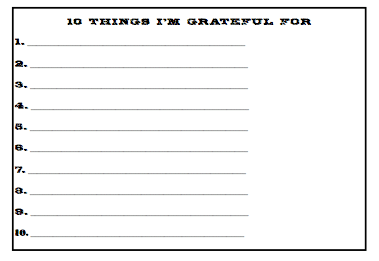
Well, I finally it got it done. I spent a lot of time working on this bad boy, but I think the effort was well worth it. It looks nice and I’ve added some spiffy worksheets at the end of each task that you can use to help you make your progress on becoming a better man. This turned out to be the size of a regular book. It’s a little over 90 pages long. Because it’s PDF, you can print more than one book page on a printer page. You can put two to a page and create a small book. If you really want to save paper, put three to a page.
Here’s a preview of what it looks like:
Mantastic! How can I get it? If you’d like to download the book, click on this link. You’ll be taken to a PayPal page, where you can securely pay a nominal cost of $2.50 and download the file.
Why are you charging for the eBook? The cost is to cover the time I spent putting this bad boy together. I kept the price nominal because 1) I wanted everybody to afford it if they wanted it and 2) the content is already available online.
Can you still access the posts online for free? You betcha. You can still go through all the Better Men posts online for absolutely free. They’re not going anywhere. The draw of the eBook is the convenience of being able to print it off and take it with you and the worksheets I added.
Again, if you’d like download the eBook, click here and pay $2.50 via Paypal. Paypal accepts credit cards.
Friday, August 14, 2009
Art of Manliness - Get the 30 Days to a Better Man eBook!



Thursday, August 13, 2009
Art of Manliness - Being Decisive
Being Decisive
by
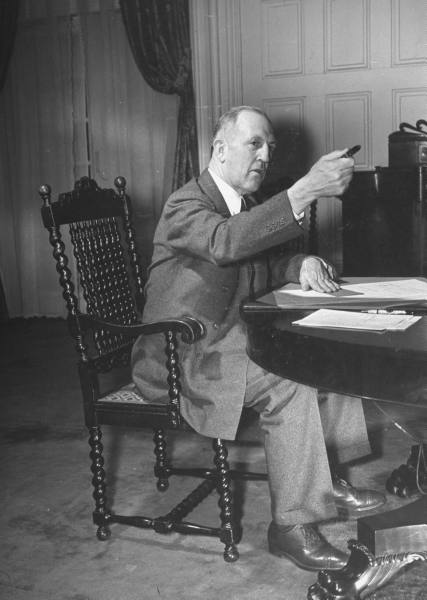
Source: Life
Decisiveness is an essential aspect of manliness. No soldier wants to be under the command of an officer who stands flat-footed in the midst of crisis. No woman desires a beau who cannot decide what he wants in a relationship. No boss appreciates an employee who cannot make decisions on the fly. And no person respects the man who orders a burger and then spends the rest of the night talking about how he should have gotten fajitas.
The man the ladies want, the corporation promotes, and the world respects is the decisive man. The decisive man is calm and cool under pressure; he’s a take charge kind of guy; he has purpose and direction; he is the man with the plan. The indecisive man makes little or excruciatingly slow progress in his life because he is always standing shilly shally, unable to decide which way to go. He’s stuck in neutral while the decisive man cruises ahead toward his goals and his happiness.
The indecisive man is also the restless man. He labors under the delusion that not making a decision will allow him to remain safe in his current position. Yet he fails to understand that life is like standing in the midst of a river in which we are continually fighting the current. If you cease to paddle, you will simply be swept downstream. It is not possible to stand still. Instead of feeling in control, you will feel as though life is happening to you. If you try to live in the middle of your decisions, these unmade choices will subconsciously clutter up your brain, cause you to regress, and make you feel quite anxious.
A man doesn’t simply float along in life. He seizes the reigns and plots his course. He is the captain of his destiny.
Of course just making decisions isn’t enough. After all, the man who makes all poor decisions isn’t very successful or popular either. A man needs to be both skilled in decision making and in making the right decisions at the right time.
How to Make a Good Decision
We all have to make decisions every day, some easy-what shirt to wear-some excruciatingly difficult-what college should I go to? When we have a tough decision to make, we often put off making the choice as long as possible. We know that as soon as we step through one door, the other door will close, and we’ll never get to know what was behind it. That’s a frightening thing. But there are steps you can take to ameliorate your anxiety as you make a decision.
Get as much information as possible. Whenever you’re faced with a big decision, this is the first step you should always take. Don’t just sit and stew about it day after day, waiting somehow for the stars to align and for the answer to come to you. Instead, find out as much information as possible about all of the options you have before you. If you’re trying to choose a college, go visit the campus, read a college guidebook, talk to students that go there, etc. If you’re trying to choose what job offer to take, research as much as you can about your prospective employers. Talk to people in your field that have an outsider’s perspective on the firms. Read, go online, talk to people close to you for advice. In the midst of your research, you may have an “ah-ha” moment where the best choice becomes clear. If not, move on to the next step.
Make a list of pros and cons. This is an old standby method that can be really helpful at times. Just take a piece of paper, make some columns and list the pros and cons of each potential decision. The pro column for one might be much longer than the others. Even if it’s not that obvious, the process of really thinking through the positives and negatives can lead to your “a-ha” moment.
Imagine yourself down each road. Sometimes when we’re making a choice, we only imagine the results of that decision in the abstract. But this is going to be your life. So sit or lay down somewhere quiet and really try to imagine your life after making each of your possible choices. Think about what you’re doing and how you’re feeling. Which scenario gives you feel a sense of peace? Which one makes you happy just thinking about it? And which one leaves you feeling a little empty?
Think about past decisions. It’s often been said that those who don’t understand history are doomed to repeat it. This is as true for the world as it is for our personal lives. Sometimes we make the same screwy decisions over and over again.
Think about the bad decisions you made in the past; is there a common denominator? Did you bail out on what you’re really passionate about because you thought you wanted prestige, only to wish you had followed your dream? Then don’t make another decision based on your pride. Have you made bad choices based simply on your insecurity? Make sure that’s not behind the way you’re leaning now.
Making on the Fly Decisions
Of course you don’t always have time to sit down and study things out. Sometimes you have to make decisions on the fly. It’s harder to always make the right choice when you’re under pressure, but there are a couple of things you can do to bring that percentage up.
Be prepared. Have you ever watched a football game in which there is but seconds to go and it’s fourth down for the team that is but one touchdown behind? The pressure is on and the crowd of 80,000 spectators is going nuts. The ball is snapped and the quarterback zips a sweet pass to the receiver in the end zone, winning the game. The fan is apt to sit back and think, “Wow, that kids thinks well on his feet.” And maybe he does, but he knew what to do long before that high-pressure fourth down. His coach had presented him with a few plays that should be run in that situation. And he endlessly practiced them until he had them down cold. So when the time came, he could shut out the crowd and the stress and simply follow through with the plan.
You obviously can’t know exactly what choices you’ll be faced with in your life. But you can prepare as best as possible for what to do in a variety of situations. At work, keep up on the details of the deals that are coming down the line and the pros and cons of each. With your relationships, think about where you want things to go and hypothetically work through what you would say if your girlfriend asks you for a greater commitment. Learn valuable skills that will come in handy in case of an emergency. Practice the skills that are important in your life so that if you’re suddenly faced with a big decision, you won’t have to think about it much; your training will just kick in automatically.
Go with your gut. Several scientific studies have shown that a correct gut feeling can hit us before our brains can even rationally process what is going on. In a recent article in the New York Times about the hunches soldiers get that help them avoid danger, Dr. Antonio Damasio, director of the Brain and Creativity Institute at the University of Southern California, said:
“Not long ago people thought of emotions as old stuff, as just feelings — feelings that had little to do with rational decision making, or that got in the way of it. Now that position has reversed. We understand emotions as practical action programs that work to solve a problem, often before we’re conscious of it. These processes are at work continually, in pilots, leaders of expeditions, parents, all of us.”
So trust your gut. But make sure it’s an informed gut. The article also pointed out that the most accurate hunches came to the soldiers with the most experience and training. So do your research and if both choices seem equally good, go with your gut.
Also, while listening to your gut seems simple, it’s actually something you can get better at with practice. We’re often so busy and stressed, that our hunch signals can’t even get through. You have to learn to quiet your mind and hone in on what you inner-compass feels like.
How to Avoid Regret
Of course even a great decision can be wrecked by the disease of regret. It eats at us, and we can’t take our minds off of what might have been behind the other doors. Did we make the right choice? What if we made the wrong choice!?
Regret usually sets in after the honeymoon period of a made decision passes. You take a new job and then after a few weeks you have a soul-crushing day, and your mind can’t help but think about what it would have been like to be in graduate school. You break-up with a woman and then it’s Friday night, and you’re lonely and miss her.
At moments like these, you need manly resolution. You need to keep putting one foot in front of the other. Here are some tips on how to avoid looking back once you’ve made a choice:
Consult your journal. You are keeping a journal, aren’t you? They’re essential for moments when regret starts to grip your mind. When you make a decision, write down how you came to that decision and all the reasons you made that decision in your journal. Then, later on when you’re starting to have some doubts, you can look back and remember why you made that choice in the first place. Has anything fundamental changed that should legitimately cause you to reevaluate your decision? If not, just keep letting your past self reassure your present self that you’re on the right track.
Remember, just because something gets hard, doesn’t mean you made the wrong choice. If a choice was right to begin with, it’s usually still right when the going gets tough.
Repeat this: Whichever decision you made is the right decision. I heard that advice from a wise old man when I was facing one of the most serious and hard decisions of my life. And it gave me great comfort. No matter which road you choose, there are going to be things you’re grateful for and things you regret. It wouldn’t have been any different if you had made a different choice. So just settle that fact and in your mind and fully own the choice you made.
Are there decisions in your life that you’ve been putting off? Man up and tackle them today!
Tuesday, August 11, 2009
Michael Eric Dyson - Why Men Need to Get Over Their Femiphobia -- Fear and Disdain of the Female
Why Men Need to Get Over Their Femiphobia -- Fear and Disdain of the Female
From the book Can You Hear Me Now? by Michael Eric Dyson. Excerpted by arrangement with Basic Books, a member of the Perseus Books Group. Copyright © 2009.
Femiphobia — the fear and disdain of the female.
We’ve got to grapple with instances of internalized sexism in women where the ventriloquist magic of patriarchy is occurring — women’s lips are moving, but men’s voices and beliefs are speaking.
A great deal of the nation’s gender problem has to do with how men think about women. Such thinking is largely rooted in the belief that God has set up a hierarchy where women fall beneath men in the natural order of things. But I think it’s long past time that we re-examine our beliefs and come up with different ideas about how things work, and how we should behave in light of what we learn.
Black women have been a defining force in our liberation struggles, so we shouldn’t seek to oppress the very sisters who valiantly helped to win our freedom as a people, and as black men.
We must battle those who use the Bible to justify some terrible beliefs about black women. We get awfully upset — and rightfully so — with how hip hop culture demeans and degrades sisters. We are outraged when a rapper resorts to epithets to disrespect our women, and despite my great love for hip hop, I’m sympathetic to that critique. But at the same time, we permit some destructive ideas to flourish in the church. These ideas are harmful because they influence how we act, not only in church, but also in our homes and schools. We’ve got to find a new way to behave so that our children inherit a more positive future.
Black men can love black women by promoting the biblical principle of mutual submission contained in the fifth chapter of Ephesians. Mutual submission means that we act in a way to enhance the interests of each partner in the relationship. The text topples the notion that men should rule over a woman’s life in home or society. Our liberating black religion teaches us that nobody has ultimate authority over our lives but God.
When most of our white brothers and sisters hear the word “race,” they think “black” or “brown” or “yellow” or “Native American.” They don’t think “white,” as if white is not one among many other racial and ethnic identities. Men are the same way. When black men hear male supremacy, we often think, “white guys who control the world.” We don’t think, “black guys who control our part of the world.”
Black men have to surrender our patriarchal pose and our sexist strut. In our homes, that means that we’ve got to listen to and learn from our women as we strengthen our relationships. We must respect one another, encourage one another, sacrifice for one another, and stand up for one another, even against harmful gender ideas we’ve supported over the years.
A lot of black men are afraid to love black women with abandon because we fear they won’t recognize the hurts that black men face. But nothing could be further from the truth. In fact, black women have been among the most vocal and progressive advocates for black men. Who was way out front on the issue of the prison-industrial complex that affects the million black men locked away, many unfairly, and to warn us about the injustice of incarceration? Angela Davis. Who edited the book that rigorously explored the claim that black males are an endangered species? Jewelle Taylor Gibbs. And who sang a song about the destructive images of black men in the culture and praised us for our moral beauty and our strength? Angie Stone.
We don’t have to disrespect or dominate our women to feel like men.
Black men must be careful not to justify our ugly treatment of black women by pointing to our pain. We must avoid what the scholar Barbara Christian calls “the oppression derby,” where groups argue over who has suffered the most. Black men can’t pretend that our oppression is worse than black women’s. Neither can we take solace in our suffering as a way to excuse our brutality toward our sisters. We cannot have a hierarchy of pain. If it hurts, it hurts. All of our pain is legitimate and real — if it is legitimate and real. So let’s not waste any more time building a totem pole of catastrophe where we cut our niche of misery deeper or higher than black women’s.
In a world where black women are battered by negative half-truths in the media, and ambushed by brutal put-downs from their own children in entertainment, the least we can do is to wrap sisters in the healing garments of reverence and respect.
Black men must not be intimidated by the strength and intensity of our women’s speech. Some women have had their voices muffled for so long that they shout when they can finally speak up. We should even encourage them to take “voice lessons” as they join with other women in amplifying their interests and desires.
We can’t lean on male supremacy to resolve conflicts or settle disputes in our homes. Instead, we’ve got to appeal to reason and to prayer, to negotiation and to consultation, to iron out our differences.
A new understanding of black male and female relationships that can truly help our communities should flow from our churches. I believe that the black church is still the greatest institution black folk have, and we’ve got to work hard to keep it that way. That means we’ve got to move beyond the spiritual apartheid we practice. Seventy-five percent of the black church is made up of women, and yet they rarely have access to the central symbol of power — the pulpit. We’ve got to stop dragging our feet and begin to acknowledge just how important black women are to our churches — and to our mosques, temples, ashrams, and sanctuaries of all sorts. We must also realize just how important black women are to our success and survival as a people.
We’ve got to sacrifice the unfair privileges we’ve gained by being men and seek to share power and responsibility with our partners. We’ve got to be willing to argue our case, but also to hear a case argued, as we make critical decisions that affect our relationships.
If I dislike myself, if I dishonor myself, if I hate myself, I will dislike, dishonor, and hate my partner. If I refuse to take care of myself, I threaten the quality of my relationship. If I hate myself I damage the person about whom my partner deeply cares. If I fail to appreciate the gifts God gave me I deny their expression to my partner, and perhaps, the world. If I have a low estimation of myself, I obviously believe my partner’s judgment of me is distorted. That is a weak foundation on which to build any enduring relationship. That means that black male self-hate is hatred of black women. And black male hatred of black women is ultimately self-hatred. So the “bitch” we black men really hate may be staring back at us in the mirror.
Monday, August 10, 2009
The Culture Wharf - Masculinity’s Delayed Adolescence
Masculinity’s Delayed Adolescence
Editor’s Note: Anyone interested in a thoughtful analysis of the issues facing young men in today’s cultural landscape should check out Guyland by Michael Kimmel. A review of that book was the inspiration for this article.
7/30 – Update – the title of the article, after a thoughtful argument from a good friend of the Wharf, has been amended
—
Though women’s issues tend to get the majority of media attention, Kimmel elegantly elicits throughout his book that young men are silently struggling, especially in the 18-30 “delayed adolescence” age group, with the puzzle of modern, or should I say post-modern, masculinity in a post-feminist world.
First of all, as a sort of disclaimer, anything I write here is going to be an oversimplification; but an oversimplification for the sake of illustrating an idea. Let’s start with this one: on the whole women have adapted to the rapidly changing cultural landscape more effectively than men. That’s because women, collectively reacting to men in power through generations upon generations of society, have had to develop psychological and social flexibility to survive and empower themselves as a class. When those efforts finally became organized at the broad social level in the 20th century, real change in society resulted. Real change that affected men every bit as much as women, but for men without any sense of ownership. Thus the troubling sense for many men that feminism “happened to them,” the state of confusion and loss of identity that followed. A state for men that society is still frankly reeling from.
* * *
Men as a whole have never gone through “feminism,” because there has never been a stage of men collectively discovering and asserting their power to overcome repression. That makes women, as a whole, much more developmentally (in the sense of culture and their place in it) advanced than men.
It’s a little like adolescence. Sometime around the ages of twelve to fifteen the child begins to challenge the authority of their parents in an effort to make an identity separate from them. The battles of identity, rebellion and self-definition that ensue from this urge to individuate drive most parents crazy, but are a critical step in the psychological transition from childhood to adulthood.
“Womankind,” to use a term that I dislike as a writer but find oddly accurate for conveying this sense of a class or group, collectively went through adolescence in the 20th century, the most dramatic battles of civil rights for women, and identity for the parallel teenage girl, having been fought by the time the first digit struck two.
As any fan of my thinking knows, I’m always one for an ongoing analogy, so why stop there. Any parent of teenagers could tell you that teenage girls seem to experience adolescence both much earlier and much more acutely than males. Part of this is biological, girls start physically developing around thirteen and slow down significantly by age eighteen. Men on the other hand don’t begin developing physically until fifteen, and for many men it can go on into their early-twenties. The end result of this pattern of development is that by the time a man and a women each reach the age of twenty-five the woman has been in her body for close to seven years, and the man is just getting comfortable.
And, you’ve no doubt already guessed where I’m going with this, so goes the story of masculinity’s emerging maturity. As usual, we are just a few years behind the girls.
While feminism rocked our culture throughout the second half of the 20th century like a sixteen year old girl’s cigarette-smoking-goth-rock phase, masculine development will likely more resemble young male development: after so many years of pounding light beer and playing Rock Band with no particular achievements to his name the twenty-something boy decides it’s time to make a little money and gradually, over the course of many more years than the dramatic and condensed female version, grows into a man by imitating the mature male role models in his life.
Which means we probably won’t see a broad scale “Masculinism” emerge as dramatically and publicly as Feminism. But make no mistake, the maturity of masculinity, like the boyish twenty-four-year-olds who populate Kimmel’s Guyland, is long overdue. Ladies, fear not: mature masculinity will be much more compatible with the current stage of female development. Mature masculinity will not mean a return to repression, but an embrace of the differences between men and women and the fun we can have with them.
Saturday, August 8, 2009
Revolutionary Man - The 2 Keys To Finding Your Life’s Purpose
The 2 Keys To Finding Your Life’s Purpose
This post was repurposed from one I wrote for Primer Magazine.
Do you know why you are on the planet?
Many of us believe that someone else has the answer to the call of our life. “Just tell me what I’m supposed to do with my life!” we claim.
While it’s true that a good mentor can give us valuable course corrections, and remind us to stay true to ourselves and our path, ultimately, finding and living our life purpose is up to us. We have to be the one to uncover and discover what we are here to do.
Even still, psychics and woo woo healers will claim to know your life purpose. To want them to give you the answer is human. Believe me, I have looked to someone else to tell me what I should do with my life many times over.
There are many web sites and businesses built upon helping you discover your life purpose. But it all boils down to 2 main things:
- Know yourself deeply
- know what you want
The more you know yourself, the more you are able to articulate what you want in life and out of that comes discovering your purpose.
So, if it’s true that you just need more self-knowledge to discover your purpose, then save yourself a lot of time and money, and, as I keep saying over and over on this website, go inward. Be willing to make the deep dive and your purpose will emerge, but not in the way you think.
The River Of Your Life
Let’s use a metaphor of a giant, wide, river.
If you stay in the river of your life, you are likely to be on purpose and you may not even know it. The more you stay in the big wide river, which represents your following your heart or following your truth, then you are on target.
For example, if all you know is that you want to help others, then that is your river. The finer details will come in terms of with whom, where, what and how.
Now, if you don’t stay in the river of helping others, and you listen instead to your parents, culture or friends, the more you will get diverted along the path of their river and you will get lost taking side tributaries. You might get distracted by the allure of money, fame, power, a woman.
This is common–to veer off your path for a while. But then, remember to come back to the big river of what you want.
If you commit to staying in your river, not someone else’s, the narrower the river will become until it’s like a surging mountain torrent or waterfall. When this happens, you feel alive, invigorated and full of energy to give to your purpose or cause.
Notice how I didn’t use the metaphor of reaching the summit of the highest peak. Men often think that one day, they will find their purpose, as if it’s a summit, and then everything will be okay. My own experience suggests otherwise.
A few important points about purpose.
- You have to be willing to know yourself deeply and know what it is you want. Not what your ego wants!
- Most spiritual teachers and traditions agree that a meaningful life purpose is always about helping others.
- David Deida likes to say that if you don’t know your purpose, your purpose ought to be finding your purpose.
If you are unclear about your purpose, here are some fun exercises:
1. Finding your life’s purpose in 20 minutes. This comes from personal development wizard Steve Pavlina. Check it out.
2. What do you want? Stemming off of what Steve suggests, take out a sheet of paper and write “What do I want?” at the top. Now, write “I want…” and fill in the blank over and over. Remember not knowing what you want becomes an excuse to continue putting off your life and discovering what you are here to do.
3. Now brainstorm this question from Deepak Chopra. “If you had all the money and all the time in the world what would you do?”
4. If you go the “woo woo” route, use palm readers, psychics, shamans and plant medicine with great care. Don’t go in like I did expecting to be hit over the head with “the answer.” Remember, your purpose is likely to unfold over many years and will change many times. Remember to stay in a common theme (the big river).
5. Listen to Tripp Lanier interview Guy Sengstock and Brian Johnson on the New Man podcast. These are both great interviews about finding your purpose.
So remember, finding your purpose in life is about discovering who you are and what you want, plain and simple.

Thursday, August 6, 2009
Precision Nutrition - Male Hormones: Adjustment or Replacement
Male Hormones: Adjustment or Replacement
Improve Hormonal Health and Body Comp:Dr Berardi’s Precision Nutrition SystemDr Walsh’s Fat Is Not Your Fault ProgramAs popular as hormones are in today’s baby boomer anti-aging movement, it’s surprising how many health care professionals completely screw up hormones. The physiology of males’ hormones is not terribly complex, as you’ll see, but for some reason many doctors completely miss the big picture.
Too much testosterone
Before I continue – and before I share with you my
ideas on hormonal adjustment and replacement – I’d like to go on the record as saying that hormone replacement therapy is way over-prescribed for men.
Yes it is popular, mainstream, and promoted by some high-profile doctors and celebrities. And yes, testosterone replacement is necessary for some individuals.
But, in general, it’s a quick-fix, no-thought-required, formulaic approach that’s actually making many people worse.
Call me old fashioned, but when you start artificially messing with physiology, it finds a way of messing back.
“But my friend went on hormones and felt great.”
Really? People can take cocaine and feel pretty good on it, too. Just because something makes you feel better doesn’t mean it’s good for you.
For these and other reasons I’m a big fan of optimizing hormonal levels naturally. There is a natural ebb and flow to life, to aging, and to nature that has been going on long before any of us were here. And to start toying with the system is asking for trouble. But enough of the soapbox — on to the good stuff.
Male hormones 101
Guys, we’re lucky. The hormonal system in male bodies is pretty basic. There are some subtle deviations to watch out for, but it’s nothing like a woman’s hormonal profile. Here is a quick video to help give you an overview of basic male hormone physiology.
The many roads to low mojo
There are a number of things that can misfire in a man’s body, all of which can create low testosterone symptoms, but none of which require hormone replacement. In fact in some cases, hormone replacement will make the situation much worse.
Rather than describe the defects, here is another short video explaining five of the more common defects in male hormone physiology. When you understand these, you’ll have a better working knowledge of male hormone physiology than many doctors.
So let me ask you this. Are symptoms of low testosterone always due to low testosterone production? Obviously not! Low testosterone symptoms could be due to:
- Decreased liver detoxification
- Poor gastrointestinal health
- Altered adrenal function
- Blood sugar and insulin issues
- Altered enzyme activity – 17,20 lyase, aromatase, beta-glucuroniase, 5-alpha reductase
- Compromised pituitary function
The good mechanic
Let’s say you were a car mechanic and three people came to you reporting low gas mileage. Would you:
1. Give them all the same gas additive and call it a day, or
2. Assess things that can affect gas mileage such as tire pressure, spark plugs, fuel injector, oxygen sensors and the air filter, and then make your recommendations accordingly.
Good mechanics obviously do the latter. Now let’s pretend you are a doctor.
Three men come to you all complaining of low testosterone symptoms. Do you automatically give all of them Androgel? No.
One person might have liver and pituitary issues, another person might have upregulated 5’delta-desaturase activity, and the third could have blood sugar issues causing increases in androstenedione and estrogen.
What to do
Honestly, this is the section I like least because it’s not as simple as simply saying “Everyone needs zinc, tribulus, and horny goat weed.” Unfortunately it doesn’t work that way. Now, if one of those supplements has worked for you, this is great evidence. In fact, it could be somewhat diagnostic.
For example, if the herb tribulus terrestis helped increase your testosterone levels, you likely had low lutenizing hormone caused by pituitary suppression. But why was it suppressed?
If zinc helped you increase your testosterone levels, you were probably zinc deficient. But why was your zinc low? Was it hypochlorhidria, fluoride toxicity, and/or blood sugar issues?
If you have symptoms of low testosterone, get tested. A good male hormone panel will include total and free testosterone, the estrogens (estrione, estradiol, estriol), androstenedione, sex hormone binding globulin, DHEA, DHT and lutenizing hormone. Also consider an adrenal salivary panel to assess cortisol levels.
It can be difficult to find a doctor that will run all of these for you, so you may have to look around for a more proactive doc.
One option is to see a naturopath. In our office, we most often use salivary testing for male hormones.
In summary
Today, men are experiencing what could otherwise be described as Functional Andropause at alarming rates, and it is not limited to sedentary, overweight men. Many exercise enthusiasts are affected, too.
The conventional medical establishment is doing virtually nothing to help any of these men and in many cases is making them worse using the replacement model.
Male hormones physiology is not terribly complex when you know what to look for and many times you can correct imbalances without resorting to drugs or hormones.
The best thing you can do is first educate yourself. Then, with that education, get tested. Have an intelligent conversation with your doctor rather than merely listening to what s/he says. If they won’t listen, find another doctor.
Tags:
Wednesday, August 5, 2009
Mark Epstein - Be Here Angry Now
The problem for me, I think, like many men, was that when I got angry, I BECAME anger. I didn't feel angry, I WAS anger. Being unable to separate ourselves from our feelings is not healthy. It has taken many years of meditation and some good therapy to undo that damage.
But anger in itself is not a problem - it's how we deal with it, or don't, that is the problem.
Be Here Angry Now
Mark Epstein, psychiatrist and author of Thoughts Without a Thinker and Going to Pieces Without Falling Apart (Broadway Books) speaks with Tricycle about expressing, transforming, and dissolving anger.
As practitioners, we sometimes feel as if we must behave as diplomats for Buddhism, always acting gentle and not getting angry. Do you think Buddhists have more trouble expressing their anger than non-Buddhists? People have one of two problems with anger, as they do with any emotion. Either they’re indulgent in the expression of it, or they’re afraid of it; either they’re spilling the emotion, or it’s there and it’s affecting them but it’s being pushed away. Many Buddhists get very skilled at pushing anger away, at sitting at a distance from their anger, but it’s not extinguished. They need help bringing it back into the center of their awareness and owning it again. Of course, some Buddhists, like other people, are just spilling anger, self-indulgently, and then it’s a problem of ego and of learning how to use some restraint.
How does the view of anger differ between Western psychotherapy and Buddhism? The Buddhist teachings suggest countering hatred with love. This takes anger pretty much at face value - as an unwholesome mental state, a kind of noxious emotion, like poison. That notion of anger is exemplified by one of the Buddha’s first disciples, Angulimala, who murdered victim after victim. Run-of-the-mill late-twentieth-century anger is positioned a little differently. It’s a little more perverted. In psychotherapy, it’s the disguised message of anger that is looked for - the attachment or love that’s underneath the anger, or anger as a perverted form of aggression in psychotherapy. Aggression is seen as a good thing necessary to break through an obstacle. Frustrated aggression is a problem, but aggression itself is not a bad thing.
Tibetan Buddhism, in particular, pays a lot of attention to the transformation of anger, and to the idea that anger is a kind of energy that can be harnessed. In some of the teachings, anger is not even considered to be a negative thing. It’s similar in psychotherapy. The crucial thing about anger is that it is a clue to where someone is blocked. And you have to salvage the energy. Otherwise, you might be wiping something out that’s precious. When I’m working as a therapist and people come in with anger, I don’t ordinarily try to counter it with love, as you would do in traditional Buddhist teachings. I see anger as connected to a kind of life energy. Whenever you’re leaving some vital part of yourself off to one side, there’s a kind of depletion of energy. That feeds into a willingness to let someone else lead you. It’s a kind of sapping of the aggressive energy that’s necessary for true involvement in the world. So I look for the aggressive life energy that’s necessary for making contact. How is the person shutting him--or herself down?
Is there a difference between dissolving anger and transforming it? Creating a space in which anger can actually dissolve is the same as transformation. In Western psychotherapy, the thrust of the therapist’s position is to not make judgments about material the client or patient presents. The analyst is supposed to be equidistant between id, ego, and superego: that means that the analyst sits in a position of neutrality and doesn’t rush to judgment, even in the face of terrible expressions of rage. From a Buddhist point of view, one could say that the ideal stance, even in the face of overwhelming negative emotions, is the same - not to rush to judgment - and to make space for whatever is being presented. When I’m functioning as a therapist and someone comes in with their anger pushed off to the side, my impulse is to try to draw that anger back into them. Usually, they have a fundamental fear that if they truly express their anger, they will be disdained or rejected.
In the ideals both of a teacher and of a mother, there’s the notion of creating a sphere of unconditional love in which you can reveal yourself, whether anger or anything else arises, without fear of rejection. As a therapist, can you provide this? I think this idea of unconditional love is a little dangerous, because the way most people try to provide it - whether mothers or therapists - is by being fake. Who can really love everyone all the time? So if you’re trying to offer unconditional love and it’s not real, then the other person experiences you as a fake, and it’s no longer a safe environment. When it’s real, it’s very beneficial. But I find it more useful to talk about what Donald Winnicott calls being a “good enough” mother or a “good enough” therapist, which means that you don’t have to be completely loving. We can be loving enough. And it’s actually in the disappointments or failure of that less-than-perfect environment that a person evolves: if the mother or the therapist is good enough but not ideal, the person can develop his or her own capacity for tolerance.
What makes you angry? Being misunderstood.What do you do when you’re angry? I try to first feel the feeling, both in my mind and in my body, before I act. That’s hard for me. I try to notice the impulse to act or to speak. Then I try to be judicious in my response. Sometimes that means going with the energy of the anger, and sometimes thinking better of my impulse. I don’t know how I make that decision. What I really have to work on is when the anger percolates. I try not to be so judgmental about anger, to say, “Okay, I’m angry. It’s not the end of the world.” But when I see that I’m brooding, I have to be more meditative with it, to find it in my body and just be with it.
Read Mark Epstein's "Stopping The Wind."
Image: Untitled, 1985, © The Estate of Robert Mapplethorpe, used with permission.

Tuesday, August 4, 2009
The New Man - Episode 74: Pt 2, How to Navigate a Woman's Emotional Minefield
The New Man - Episode 74: Pt 2 How to Navigate a Woman's Emotional Minefield
When your woman freaks out, do you buckle or try to make it all go away?
Do you prefer a passionate woman or a stepford wife robot?
And does your woman really support you or does it seem like she’s just another obstacle getting in the way of the life you want to have?
Alyson Schwabe and Christiane Pelmas are back for part 2 of our talk on how to navigate a woman’s emotional mine field.
This is part 2 of our in depth talk on how to approach tough topics with your woman. In this one, we learn a BIG lesson around how to deal with a woman’s “emotional storm”, how saying “yes, dear” is killing her respect for you and other tips for avoiding those big traps men often fall into.
For information regarding The Red Pill Weekend visit http://www.tripplanier.com/redpill
In this episode:
- Don’t be afraid of your woman’s storm
- How to go through something hard and come out okay
- Why am I in this relationship?
- Life with a woman is about storm
- Storming is about being passionate
- Do you want a passionate woman or a stepford wife robot?
- Storming is to test a man, to see if he’s trustable
- The storm does not mean something is wrong
- Do not buckle to the storm
- If you buckle, she will take over your role in the relationship or look for some way to fill it
- It’s not about winning a fight or dominating the scenario
- She’s entitled to her response and it has virtually nothing to do with you
- Don’t take on her feelings
- And don’t defensively posture
- Stay curious
- We want to know that in our relationships, we can say anything
- Most common belief: I’m the only one that has to deal with this
- Don’t try to do it alone
- Get help with big problem areas -- find a therapist, coach or counselor
- Trust that your relationship can stand the test and actually grow
- Look at your partner as a team member, not as your opponent
Related Links:


Monday, August 3, 2009
Art of Manliness - Making a Difference
Making a Difference
by on July 31, 2009
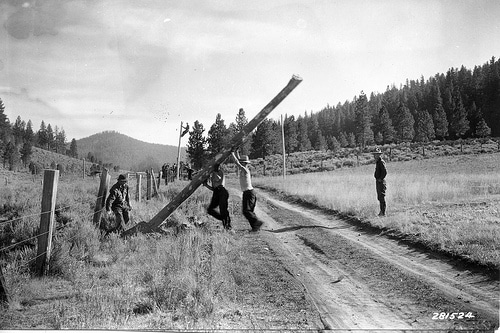
Civilian Conservation Corps, Oregon
A man walking on the beach saw a child reaching down to pick up small objects and then throwing them into the ocean. He called out “Good morning! May I ask what it is that you are doing?” The child looked up and replied “Throwing starfish into the ocean.”
“I must ask, then, why are you throwing starfish into the ocean?” To this, the child replied, “The sun is up and the tide is going out. If I don’t throw them in, they’ll die.”
Upon hearing this, the man commented, “But do you not realize that there are thousands of starfish? You can’t possibly make a difference!”
At this, the child bent down, picked up a starfish, and threw it into the ocean. As it met the water, he said, “It made a difference for that one.”
Adapted – Loren Eiseley “The Star Thrower”
This article is intended to inspire; because it can seem that the efforts of one are insignificant, that a single man’s actions will not be noticed. But nothing could be further from the truth. Inspired individuals can and do make a difference.
Declaring War on Extreme Poverty – Nuru International
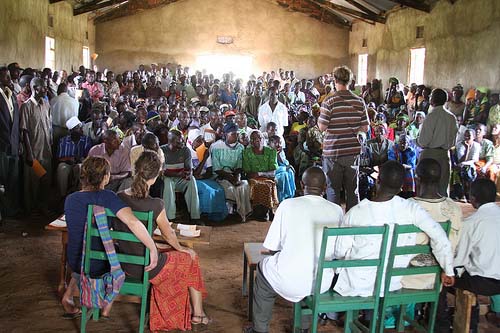
Nuru International Training in Kenya - modern farming techniques, water sanitation training, and sustainability are the topics being covered.
I use the term “war” because that is how Jake Harriman has approached his mission of eliminating extreme poverty. A Naval Academy graduate, Jake served as a Special Operations Platoon Commander with 1st Marines and deployed with BLT 3/1 during the initial thrust up from Kuwait to Baghdad. It was in Iraq that he came into contact with people whose economic situation was so desperate that they were being forced into the unthinkable life and death decision of fighting US forces or having their families murdered. After these events he sought to make a difference, to find a way to help his fellow human beings caught in the cycle of extreme poverty.
Leaving the military, Jake pursued his masters at Stanford where he conducted independent research on what worked and what didn’t for non-profits operating in impoverished regions, specifically Africa. Taking what he learned, he founded Nuru International with the goal of helping communities pull themselves out of the clutches of extreme poverty through a sustainable business model that included education and micro loans for better crop inputs. Creating a lean strike force which he would lead, the initial Nuru team was to be the test subject to see if the idea was scalable. Nuru’s first team into Africa included water & sanitation specialist Nicole Scott, marketing specialist Douglas Scott, and health care expert Janine Dzuba. Harnessing their individual strengths along with a grassroots support base, Jake sought to lay the foundation for a concerted and sustained effort to eradicate extreme poverty in Kuria, Kenya.
What has Nuru International accomplished in less than a year? With their modest resources, Jake and his team helped 450 farmers learn modern farming techniques, worked with them to acquire 70 tons of fertilizer, and planted over 7 tons of quality seed. As of April 2009, this has translated into an increased crop yield of over 400% which will enable the farmer to not only feed their families but pay back their loans in addition to having resources left over to repeat the process next year. They also taught thousands proper sanitation techniques (boiling water before use, washing with soap properly, using mosquito nets, etc), spearheaded the building of collecting rain water from roofs, and organized the digging of 4 wells to decrease the need of women to walk miles to fetch water from streams.

Nuru International Crop Results - The farmer on the left did not participate while the farmer on the right did and experienced a 400% crop yield increase.
This picture, take in July of 2009, shows clearly the difference Nuru made for farmers who took advantage of their training and loans. These two fields were within a stone’s throw of each other – the field on the right yielded more corn in one season than this farmer had seen in the previous five years combined.
Nuru International has permanently improving the lives of 5000 people by providing them the tools to pull themselves out of extreme poverty. And the amazing thing is their model is both sustainable and transferable; already there are plans to expand the program once the proper resources are available. To learn more visit Nuru’s website where you can see their videos summarizing recent accomplishments and become a fan of their Facebook Page where they just posted their latest pictures from Kenya.
Using Your Unique Skill Set – The First Response Team of America

Tad Agoglia and The First Response Team at work clearing debris after a natural disaster strikes a small town.
Growing up in West Texas I remember seeing firsthand how destructive nature could be; in 1987, the town of Saragosa was wiped off the map when a monster tornado ripped through the town. The floods in Iowa last year again highlight to me just how powerful the forces of nature can be. Nothing can be done to avoid a natural disaster – but what can we do to help immediately after the event, in the first few critical days when people need help the most? What can one person do in that critical time period?
Tad Agoglia asked himself that question; a successful small businessman, he owned two specially designed trucks outfitted with debris clearing claw cranes capable of lifting cars. As a contractor he watched government agencies sometimes take weeks to get recovery operations going. Seeing this, Tad felt that America deserved a better type of response to these disasters.
In May 2007, Greensburg, Kansas was destroyed by a tornado. Tad immediately loaded up his equipment and small team of men and drove to the disaster offering his services – free of charge. His team cleared roads for emergency vehicles, opened the fire department and hospitals, recovered valuable equipment and documents covered by debris, and provided power with their industrial strength generators. His work allowed emergency personnel to do their jobs, helping heroes be heroes. Since Greensburg, Tad and his team have responded to over 20 disasters across the United States. Again, all free of charge. I can only imagine what this world would be like with more men like Tad.
To learn more about the First Response Team of America, visit their website and join their Facebook page.
What Can I do Right Now?
We all know that money is something non-profit organizations are always short on, so all I’ll say is make sure your contribution counts. I prefer small, local, and religious organizations that use a volunteer force vs. a well paid staff. These organizations usually do a better job of stretching every dollar, and only a tiny bit if any goes to payroll. Although 8 years old, this article highlights the strengths of my favorite large charity, the Salvation Army.
No money? Time and skills are a great substitute for monetary contributions. Can you create a blog for the local Boys Club and spend the day snapping pictures to upload so that others can become aware of the organization’s plight? What about volunteering at a local school to help the children who need extra instruction and encouragement with their basic math and reading skills? Even something as simple as taking a few minutes to properly social bookmark your favorite non-profit can help bring in scores of traffic it wouldn’t have otherwise received. All of us have something to give.
I would like us to use the comments section below to highlight other men & small organizations making a difference. I know I’ll personally visit each link and if nothing else, social bookmark it or become a fan. A small “contribution,” I know, but every little bit counts – sometimes a tiny contributions is the spark that leads to a much larger set of actions.
“Be the change you want to see in the world.” Mahatma Gandhi
Sunday, August 2, 2009
Cokie Roberts: 'Men Are Just Lesser Beings'
Why is it acceptable for Cokie Roberts to make a dumbass statement like this, but if a man were to say the same thing about women, he would be fired?
One might understand her saying something like that to her husband as she watched the Mark Sanford spectacle, but then to repeat it on nation television shows poor judgment at best, and sexism at worst. She should be soundly reprimanded by her network, but will she?Cokie Roberts: 'Men Are Just Lesser Beings'
In the "First Person Singular" interview in The Washington Post Magazine on Sunday, ABC and NPR news analyst Cokie Roberts expressed her female chauvinism loud and clear: "Men are just lesser beings." Strangely, her extreme take on the sexes came right after she proclaimed she was in the common-sense middle of political opinion:
I think that often where I am is just in the middle. The middle is often the common-sensical place to be. The notion that one side is right and one side is wrong is generally, as one finds in life, not the case. Women tend to be a lot more common-sensical than men are. In fact, when the Mark Sanford thing broke, I went tearing into my husband's office and said, "Okay, that's it. Women just are better. Men are just lesser beings." He couldn't argue at that point.
Her husband, former New York Times reporter Steve Roberts, might have noted that a woman was enabling Sanford to cheat on his wife. Or he could have matched Sanford with a female politician like Monica Conyers (wife of the House Judiciary Committee chairman), who just resigned from the Detroit City Council after pleading guilty to bribery charges.
This isn't a slip of the tongue. Cokie also said women are better in agreeing with Sonia Sotomayor. If a man said something this flat-out sexist, would he face suspension from his network duties? David Shuster might have been suspended for less for suggesting Chelsea Clinton was being "pimped out" by her mother's campaign.
