September 11, 2009Described as the Kentucky Derby, the Olympics and Christmas rolled into one, Mongolia's Naadam is an 8-centuries-old celebration of heroism and masculinity. The annual festival is devoted to the three "manly sports" — horse racing, wrestling and archery.
The most hotly contested event, the horse racing, hasn't changed since the 13th century and the days of Genghis Khan.
Wrestlers Compete In Naadam
From early in the morning, a steady stream of herders — all dressed in their festival finery — come cantering into the small town of Khujirt, 260 miles southwest of Mongolia's capital, Ulan Bator. Both men and women wear embossed silken dels, or traditional robes, cinched at the waist with brightly colored sashes and leather boots on their feet.
The older men sniff from each others' snuff bottles as a greeting, while young women and men on horseback flirt as they circle the wrestling arena, cooling their animals down after the journey.
Measures Of Agility, Strategy And Brute Force
The events begin with a ceremonial dance from a youngster, and then the wrestling gets under way. Each wrestler performs the eagle dance as he enters the arena, a display of power and grace. All eyes are fixed on 37-year-old Dorj Batmunkh, who is looking forward to competing.
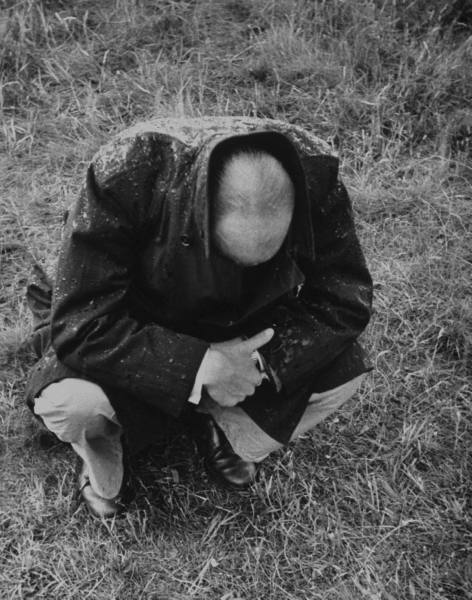
Enlarge Ariana Lindquist for NPRDorj Batmunkh, a second-generation champion wrestler, waits for a new opponent at the Naadam festival in Khujirt. Batmunkh did not win this match.
"You feel very light, excitement fills you as Naadam gets near," he says.
His father was a famous local wrestler, winning the lion rank after a ninth-round victory. Batmunkh himself is a falcon, or fifth-round winner, at the aimag, or provincial, level.
"Mongolians say horses inherit speed, and wrestling skill is inherited, too," he says.
This is a contest of agility, strategy and brute force. The first wrestler whose knee or elbow touches the ground loses. Several pairs of wrestlers face off inside the ring simultaneously, grappling with each other intently.
The wrestlers wear open jackets a precaution introduced, legend has it, after a woman disguised as a man won the event. On their feet are traditional Mongolian leather boots with upturned toes, similar to those worn by Genghis Khan's army.
This year, Batmunkh is unlucky, and after a lengthy contest, he is eliminated in the second round.
"I had a chance to throw my rival, but something wasn't right," he says. "It's OK. Next year I'm planning to win."
The Main Event
This year, it's too windy for archery in Khujirt. And for many in the crowd, the horse racing is the main draw.
Naadam marks the end of an intense monthlong training period for those racing horses. "For 10 to 20 days, you really don't get enough sleep," says Chuluunbart Badelgar, the mother of a 14-year-old jockey.
You don't want to hurt the horse by kicking it with shoes. And shoes are heavy. And you might lose them on the way.
But she admits the pre-race nerves are the worst moment for her. "I'm scared of the injuries my son could get. But once the boys head off to the start line, I can only pray for my son," she says.
Her son is racing his final season. At 14, he is becoming too heavy to compete as a jockey.
In this town, only one girl is riding this year. Some of the smaller boy jockeys are as young as 5 years old and seem impossibly, unbearably tiny.
At 11, Ganbaatar Tserenpuntsang considers himself an old pro. His racing colors are yellow from head to foot. But like most others, he will ride the 17-mile race in his socks.
"You don't want to hurt the horse by kicking it with shoes," he explains, "And shoes are heavy. And you might lose them on the way."
Most kids ride bareback, too.
Echoes Of The Mongol Hordes
Before the race begins, the child riders pay a fee for insurance. As the jockeys set off on the two-hour ride to the starting line, their trainers often flick airag, or fermented mare's milk, over the riders for good luck. As they go, the riders sing encouragement to their mounts.
Horse Race Evokes Genghis Khan
Along the way, they pass a shamanistic cairn, or sacred heap of stones, which the jockeys circle three times, their voices overlapping in song in an ethereal, slightly eerie chant. This is a prayer for a safe journey, an act of worship to the mountains and the sky.
These races are said to be the brainchild of the founder of the Mongol empire, Genghis Khan known here as Chinggis Khan. They originally doubled as military exercises and a celebration of martial might. Now, they are held each year in every town across the country.
A rope is held at the prescribed point 17 miles away from the finish line and when it's suddenly lowered, the riders surge forward. They scream and yell, wild warlike shrieks, as their horses' hooves thunder across the grasslands. It's impossible not to think of the Mongol hordes bearing down.
Trainers drive alongside in jeeps and motorbikes, weaving between the riders and veering dangerously close to yell advice to their child jockeys.
"Stop beating the horse," screams one trainer, who has levered the top half of his body out of the car window to get near to his rider. "Sing! Encourage the horse!"
Then he swears: From the corner of his eye, he catches sight of another of his riders losing control and galloping in the wrong direction.
"That boy will never ride for me again," he mutters, swearing more.
A Unifying Force
It's a half-hour gallop, full-tilt, to the finish line, where the town is lined up expectantly on horseback, gossiping as they wait.
Suddenly, a moving cloud of dust is thrown up in the far distance. The riders are approaching, ancient telescopes are lifted, and the crowd compares notes on who is gaining ground.
Enlarge Ariana Lindquist for NPRSpectators, horse trainers, family and friends welcome riders at the finish line of the Naadam horse race in Khujirt.
As the first riders approach, the crowd whoops. The finish is close, but first past the post is Ganbaatar Tserenpuntsang in yellow.
The crowd surges forward, closing in on the winner. The dust of the winning steed is thought to be lucky, as is the sweat, so supplicants race up to swipe horse sweat to dab on their foreheads.
The winning horse gets a medal, below its forelock. Its trainers embrace. Jockey Tserenpuntsang gets the honor and a money prize.
These races are a test of bravery and stamina, with tiny children riding at top speed for hours, sometimes through thunderstorms and rain. Their faces say it all: the wordless terror of the tiny 6-year-old, racing for the first time; the bloodied cheek of one who fell off and was dragged along behind his horse; and the grinning conqueror's euphoria.
The horse racing and wrestling are rites of passage for Mongolian males. But more than that, the Naadams are a unifying force for Mongolia, a distant echo of its past as the biggest contiguous land empire the world has ever seen.


Sex differences in the brain are sexy. As MRI scanning grows ever more sophisticated, neuroscientists keep refining their search for male-female brain differences that will answer the age-old question, “Why can’t a woman think like a man?” (and vice-versa).
Social cognition is one realm in which the search for brain sex differences should be especially fruitful. Females of all ages outperform males on tests requiring the recognition of emotion or relationships among other people. Sex differences in empathy emerge in infancy and persist throughout development, though the gap between adult women and men is larger than between girls and boys. The early appearance of any sex difference suggests it is innately programmed—selected for through evolution and fixed into our behavioral development through either prenatal hormone exposure or early gene expression differences. On the other hand, sex differences that grow larger through childhood are likely shaped by social learning, a consequence of the very different lifestyle, culture and training that boys and girls experience in every human society.
At first glance, studies of the brain seem to offer a way out of this age-old nature/nurture dilemma. Any difference in the structure or activation of male and female brains is indisputably biological. However, the assumption that such differences are also innate or “hardwired” is invalid, given all we’ve learned about the plasticity, or malleability of the brain. Simply put, experiences change our brains.
Recent research by Peg Nopoulos, Jessica Wood and colleagues at the University of Iowa illustrates just how difficult it is to untangle nature and nurture, even at the level of brain structure. A first study, published in March 2008 found that one subdivision of the ventral prefrontal cortex—an area involved in social cognition and interpersonal judgment—is proportionally larger in women, compared to men. (Men’s brains are about 10 percent larger than women’s, overall, so any comparison of specific brain regions must be scaled in proportion to this difference.) This subdivision, known as the straight gyrus (SG), is a narrow strip of cerebral cortex running along the midline on the undersurface of the frontal lobe. Wood and colleagues found the SG to be about 10 percent larger in the thirty women they studied, compared to thirty men (after correcting for males’ larger brain size). What’s more, they found that the size of the SG correlated with a widely-used test of social cognition, so that individuals (both male and female) who scored higher in interpersonal awareness also tended to have larger SGs.
In their article, Wood and colleagues speculate about the evolutionary basis for this sex difference. Perhaps, since women are the primary child-rearers, their brains have become programmed to develop a larger SG, to prepare them to be sensitive nurturers. Prenatal sex hormones are known to alter behavior and certain brain structures in other mammals. Perhaps such hormones—or sex-specific genes—may enhance the development of females’ SG (or dampen the development of males’) leading to inborn differences in social cognition.
The best way to test this hypothesis is to look at children. If the sex difference in the SG is present early in life, this strengthens the idea that it is innately programmed. Wood and Nopoulos therefore conducted a second study with colleague Vesna Murko, in which they measured the same frontal lobe areas in children between 7 and 17 years of age.
But here the results were most unexpected: they found that the SG is actually larger in boys ! What’s more, the same test of interpersonal awareness showed that skill in this area correlated with smaller SG, not larger, as in adults. The authors acknowledge that their findings are “complex,” and argue that the reversal between childhood and adulthood reflects the later maturation of boys’ brains, compared to girls. (Adolescents’ brains undergo a substantial “pruning” or reduction in gray matter volume during adolescence, which happens about two years earlier in girls, compared to boys.)
However, in both studies, Wood and colleagues added another test that reminds us to be cautious when interpreting any finding about sex differences in the brain. Instead of simply dividing their subjects by biological sex, they also gave each subject a test of psychological “gender:” a questionnaire that assesses each person’s degree of masculinity vs. femininity—regardless of their biological sex—based on their interests, abilities and personality type. And in both adults and children, this measure of “gender” also correlated with SG size, albeit in just as complicated a way as the correlation between “sex” and SG size. (Larger SG correlated with more feminine personality in adults but less feminine personality in children.)
In other words, there does seem to be a relationship between SG size and social perception, but it is not a simple male-female difference. Rather, the SG appears to reflect a person’s “femininity” better than one’s biological sex: women who are relatively less feminine show a correspondingly smaller SG compared to women who are more feminine, and ditto for men.
This finding—that brain structure correlates as well or better with psychological “gender” than with simple biological “sex”—is crucial to keep in mind when considering any comparisons of male and female brains. Yes, men and women are psychologically different and yes, neuroscientists are uncovering many differences in brain anatomy and physiology which seem to explain our behavioral differences. But just because a difference is biological doesn’t mean it is “hard-wired.” Individuals’ gender traits—their preference for masculine or feminine clothes, careers, hobbies and interpersonal styles—are inevitably shaped more by rearing and experience than is their biological sex. Likewise, their brains, which are ultimately producing all this masculine or feminine behavior, must be molded—at least to some degree—by the sum of their experiences as a boy or girl.
And so, any time scientists report a difference between male and female brains, especially in adults, it begs the question, “Nature or nurture?” Is women’s larger SG the cause of their social sensitivity, or the consequence of living some 30 years in a group that practices greater empathetic responding? Wood and colleagues are among the few neuroscientists to analyze male-female brain differences for their relationship to gender type, as opposed to strict biological sex. Their findings do not prove that social learning is the cause of male-female differences in the brain, but they do challenge the idea that such brain differences are a simple product of the Y chromosome.
Are you a scientist? Have you recently read a peer-reviewed paper that you want to write about? Then contact Mind Matters co-editor Gareth Cook, a Pulitzer prize-winning journalist at the Boston Globe, where he edits the Sunday Ideas section.




Mon, Sep 7, 2009