Thursday, June 24, 2010

Do Men Love Differently Than Women?

http://www.cartoonstock.com/newscartoons/cartoonists/awh/lowres/awhn114l.jpg

In this article reposted at AlterNet, the author looks at how men and women in couples therapy process feelings, conceptualize relationships, and possibly even love differently. This comes from Psychotherapy Networker, a very good journal for counselors and therapists, so it's not just some crap from the mainstream media.

In part, I think these differences are about gender roles more than sex differences. However, the authors make a good point here:
Broadly speaking, the men who do come into therapy want to feel understood and appreciated as much as their wives, but therapy typically involves asking partners to go beyond generalized expressions of appreciation to acknowledge that each partner's point of view is reasonable or understandable in certain circumstances. The focus of most of today's couples therapies is "validation"—conveying an understanding that you experience your partner's mental and emotional states and that you value their experience. But the fact is that men often don't want their thoughts and deeper feelings experienced or valued by their partners, even if their therapists think they should want these things. Unless we develop a better understanding of the real, intrinsic rewards men can experience as a result of being in therapy, they'll just go through the motions or pursue their hidden agendas, like "Learning what I have to say to get laid."
They identify the real issues right there - we need to understand better what men want and/or need in the therapeutic relationship, both with the therapist and with their partner.

The authors here present an evolutionary psychology explanation for what keeps men in relationships - and I tend to disagree pretty much completely with that perspective. Men and women might conceptualize and talk about relationships differently, but both seem to want the intimacy, friendship, and stability that comes from a long-term relationship.

Near the end, they get to the real issue in most relationships - the reason couples end up in therapy:
A major challenge to lasting change in marriage lies in the fact that couples' day-to-day interactions operate largely on automatic pilot. Emotional response is triggered predominantly by unconscious cues, such as body language, tone of voice, and level of mental distractedness. Negativity in any of these inadvertently sets off the automatic defense system that's developed between the parties. Once triggered, the unaware couple can easily spiral into dysfunctional patterns of relating. They tend to get lost in the details of whatever they're blaming on each other, with no realization of what's actually happened to them—namely, an inadvertent triggering of the automatic defense system.
This issue has nothing to do with sex or even gender roles - but it has everything to do with attachment patterns in the family of origin. study after study has shown that adult attachment patterns in relationships are formed early in childhood in the relationship with the primary care-giver.

Steven Stosny, Ph.D., is the director of Compassion Power and author of Love without Hurt: Turn Your Resentful, Angry or Emotionally Abusive Relationship into a Compassionate, Loving One.

In couples therapy, women and men often have very different ideas about what it means to feel and show "love."


Photo Credit: Wikimedia Commons

Most of the couples I work with are referred by clinicians who find the man to be "too resistant" for therapy to continue. Typically, when the guys come in, they're either defensively resentful, angry, or just emotionally shut down. Often they start right off by proclaiming that they're frustrated as hell with therapy. As we talk, it becomes clear that, initially, they practiced the communication techniques they were taught and took to heart the insights they learned about relationships and family of origin. Yet, for reasons they can't explain, they couldn't bring themselves to make the long-term effort to use their new skills or apply their consulting-room insights on a routine basis at home. Of course, this failure to follow through makes their wives even more disappointed in them: "It was one thing when I thought he couldn't do it; now I know he just won't!" noted one angry spouse.

But beyond the frustration and resentment of the men I see is their utter bewilderment. Despite their time in therapy, they still don't have a clue about what their wives and therapists want from them. Partly this has to do with having different expectations from their partners—men just don't buy relationship-improvement books or read women's magazines or watch Oprah. They find words like, connection, attunement, and validation mystifying, used less to enlighten than to point out their deficiencies.

Most of my male clients feel that their previous therapy experience was about forcing them to fit a template of what the Therapy World believes love and relationships should look like. While the therapeutic language of "intimacy" is supposedly gender-neutral, most men see it as reflecting values and ideals that appeal disproportionately to women. Nevertheless, when men don't buy into our relationship template, we often wind up labeling them as resistant, manipulative, narcissistic, or, maybe worst of all, "patriarchal." The message these "failed" clients get is that the way they express their love just isn't good enough.

The reason men can talk about feelings and relationship patterns in consultation rooms, but are unlikely to keep doing it at home is simple: emotional talk tends to produce more physiological arousal in men—they experience it more stressfully. Unlike women, they don't get the oxytocin reward that makes them feel calm, secure, and confident when talking about emotions and the complexities of relationships; testosterone, which men produce more of during stress, seems to reduce the effect of oxytocin, while estrogen enhances it. It takes more work with less reward for men to shift into and maintain the active-listening and self-revealing emotional talk they learn in therapy, so they're unlikely to do it on a routine basis.

Some readers may be squirming right now at the very suggestion that there may be gender differences in the way people love. So let me emphasize that gender differences can never account for all of the nuances and complexities of individual behavior or render irrelevant the impact of personality variables, such as introversion, sociability, and neuroticism. It's important to remember that research findings are always about group averages and thus provide room for lots of individual exceptions.

My colleague Pat Love and I begin our presentations standing side-by-side while making the empirically valid statement that men are generally taller than women. (Pat is 5 ft. 11 in. or so, while I'm just over 5 ft. 6 in.) If you randomly select 25 men and women, the average height of the men will likely exceed the average height of the women, yet probably there'll be tall women and short men in the sample as well. There most assuredly are men who love to talk about feelings and women who hate it. For some couples, no doubt, emotional conversation is like a good, mutually enjoyable backrub—both parties love it equally. However, those couples are unlikely to seek therapy.

Broadly speaking, the men who do come into therapy want to feel understood and appreciated as much as their wives, but therapy typically involves asking partners to go beyond generalized expressions of appreciation to acknowledge that each partner's point of view is reasonable or understandable in certain circumstances. The focus of most of today's couples therapies is "validation"— conveying an understanding that you experience your partner's mental and emotional states and that you value their experience. But the fact is that men often don't want their thoughts and deeper feelings experienced or valued by their partners, even if their therapists think they should want these things. Unless we develop a better understanding of the real, intrinsic rewards men can experience as a result of being in therapy, they'll just go through the motions or pursue their hidden agendas, like "Learning what I have to say to get laid."

For men to engage in the hard work of change, the rewards have to be automatic and visceral, independent of the artificial environment of the therapist's office and vague therapeutic concepts. They have to feel compelling reasons to change and, most important, to incorporate new behavior into their daily routine. I believe that the primary motivation keeping men invested in loving relationships is different from what keeps women invested, that it has a strong biological underpinning present in all social animals, and that it's been culturally reinforced throughout the development of the human species.

The glue that keeps men (and males in social animal groups) bonded is the instinct to protect. If you listen long enough to men talking about what it means to love, you'll notice that loving is inextricably linked, for many men, to some form of protection. If men can't feel successful at protecting, they can't fully love.

Protection and Connection

The main role of males in social groups throughout the animal world is to protect the group from outside threats. For the most part, males participate in packs and herds only if the group has predators or strong competition for food. Herds and packs without predators or competitors, like elephants and hippos, are matriarchal, with males either absent or playing peripheral or merely sperm-donor roles.

Male physiology is well-evolved for group protection, with greater muscle mass, more efficient blood flow to the muscles and organs, bigger fangs and claws, quicker reflexes, longer strides, more electrical activity in the central nervous system (to stimulate organs and muscle groups), and a thicker amygdala—the organ that activates the flight or fight response. That's right, the first emergency response in male social animals is flight, with the option to fight coming into play only when flight isn't possible. The principal protective role of males in social groups is to lead the pack to safety. (The primacy of flight over fight may be why the initial response of most men to conflict with their wives is to withdraw or shut down.) Significantly, males who are deficient in protecting—the ones poorer at escaping or, if necessary, fighting—have little access to the females of the species.

In species in which the females are the primary hunters, like African lions, males protect the pride from competition for food from other lions and hyenas. This sets them apart from lions in other parts of the world because they're socially integrated with the pride. Some zoologists believe that this is because the smaller females, while excellent hunters, couldn't protect their kills from hyena packs.

When most animal packs are under attack and can't flee, the males form a defensive perimeter, while the females for the most part gather the young and hide them within an inner circle of protection. This scenario plays out in a great many human households, when the woman, who generally has keener hearing, detects a middle-of-the-night sound somewhere in the house. The man typically goes down to investigate, perhaps carrying a baseball bat, while she checks on the children.

Even when male animals are dominant in packs and herds, the glue of the social structure is maintained by females, who attend to one another in ways that are analogous to "validation"— sniffing, licking, and grooming other female members of the pride. This behavior calms and gratifies all the females involved, much the same way that a good emotional talk with girlfriends seems to calm and gratify women. If one of the females is missing from the pack, the others seem to worry. When she returns, the other females greet her with sniffing, licking, and grooming. The males remain connected to the group by virtue of proximity to the females, but don't interact with them much. In contrast, it appears that frequent interaction among the females—along with fear of isolation—keeps them connected.

Anthropologists agree that humans were communal from our earliest time on earth, moving into pair-bonding relatively late in our history. There's no reason to suspect that early human social structures were greatly different from those of other primates, where the larger, stronger males protected the tribe and the more social females "validated" each other. Both specialized activities—protection and validation—increased survival rates by enhancing group cohesion and cooperation.

Through much of history, the idea that men and women should consistently engage in intimate conversation and validate each other's emotional worlds would have been laughable. As historian Stephanie Coontz puts it, previous generations widely assumed that men and women had different natures and couldn't truly understand each other. The idea of intergender emotional talk independent of the need to protect didn't emerge until the dissolution of the extended family, which began in the middle of the 20th century. Previous to that, the nuclear family—an intimate couple and children living as an isolated unit—was a rarity. Other family members were in the same house, next door, or across the street. Women got their emotional validation from other women, although they certainly wanted admiration from their men and vice versa. Today, research shows that the healthiest, happiest women have a strong network of girlfriends. In earlier times, men tended to associate mostly with other men—a cultural construct that's still prevalent in many parts of the world, frequently reinforced by religious beliefs.

Male Protection and Self-Value

The survival importance of the instinct to protect makes it a potent factor in men's self-value. Men with families automatically suffer low self-value when they fail to protect loved ones, no matter how successful they might be in other areas of life. Just imagine the emotional fate of a world-class CEO who distractedly lets go of his child's hand, and sees the child run over in traffic. In contrast, a man's self-value will likely remain intact, even if he fails at work, as long as he feels he can protect his loved ones. As a boy, I remember the manager of our Little League baseball team, a man in his mid-forties, who was beloved by his two sons and idolized by the rest of the kids, even though our parents considered him a flunkie for working as a grocery store bagger. Getting fired from a job is more tolerable for men who are more invested in the protection of their families than in their egos. They tend to search immediately for another job as a means of putting food on the table, while those who view failure at work primarily as an ego assault may face weeks of self-reproach and depression before they get up the energy to job-hunt. Under stress at work, women tend to want closer family connections, while men under stress are likely to withdraw if not isolate from their families to keep from feeling overwhelmed by their failure to protect. Men who abandon their families don't respond to them as individuals with needs as much as symbols of their failure to protect.

Failure to protect drains meaning and purpose from the lives of family men. As a result, they often turn to some form of adrenaline arousal for motivation or stimulation—chronic resentment, anger, drugs, affairs, or compulsive behavior. When those prove insufficient, they succumb to a dispirited numbness or depression. I've never seen a depressed, resentful, angry, abusive, addicted, unfaithful, or compulsive man who didn't see himself as a failure at protecting his family.

Violence and Failure to Protect

Male social mammals who succumb to fear and fail to protect the pack are either killed or driven away by its dominant males. Those who survive banishment often become rogue predators on the pack, raping females and killing juveniles who stray too far from the group. Among humans, violent criminals usually lack what sociologists term a stake in the community: marriage, paternal investment in children, a job, and positive neighborhood connections. Serial killers and terrorists almost never have intimate relationships or a close connection to their children. Historically, invading armies wanted soldiers before they married or had children; when they did have spouse and children, they were kept isolated from them. By contrast, defensive armies conscripted married men because they'd be willing to die to protect their families from invading hordes.

The increase in family violence since the 1960s parallels the diminishment of fatherhood in America. Fatherless homes have grown 400 percent by some estimates, greatly increasing the risk to women and children. A woman and her children are much more likely to be abused by a boyfriend who isn't the father of the children and to suffer serious violence and death at the hands of a rejected father, compared to a woman and children who live with the children's father. Men marginalized as protectors of their families are likelier to struggle for power and control over their wives or girlfriends. They compensate for loss of the capacity to protect with dominance and/or violence.

Read the whole article.

How Men and Women View Friends with Benefits Relationships

http://liebchen11.files.wordpress.com/2009/05/friends-with-benefits1.jpg

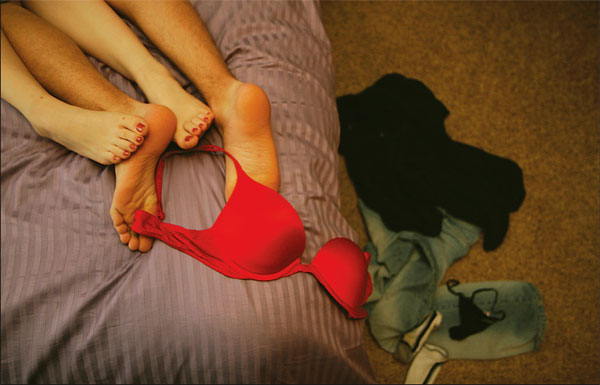
Friends with Benefits Relationships - we've all heard the term and some of us may even have participated in such a relationship (friendship, sex, no commitment). According to one study, more than sixty percent of men (63.7%) and slightly more than half (50.2%) of women reported experience in a friends with benefits relationship. As one might guess, the men enjoyed the benefits more than the friendship, but the women sought the friendship more than the benefits (McGinty et al., 2007) - although these are generalizations.

A new study confirmed those findings, with the caveat that men actually do value the friendship over the benefits - although they tend to enter into the arrangement for the benefits part, while women seek the emotional connection aspect.

There's more below . . . .

From Discover:

NCBI ROFL: Sex Differences in Approaching Friends with Benefits Relationships

couple

“This research explored differences in how men and women approach “friends with benefits” (FWB) relationships. Specifically, this study examined sex differences in reasons for beginning such involvements, commitment to the friendship versus sexual aspects of the relationship, and partners’ anticipated hopes for the future. To do so, an Internet sample of individuals currently involved in FWB relationships was recruited. Results indicated many overall similarities in terms of how the sexes approach FWB relationships, but several important differences emerged. For example, sex was a more common motivation for men to begin such relationships, whereas emotional connection was a more common motivation for women. In addition, men were more likely to hope that the relationship stays the same over time, whereas women expressed more desire for change into either a full-fledged romance or a basic friendship. Unexpectedly, both men and women were more committed to the friendship than to the sexual aspect of the relationship. Although some additional similarities appeared, the findings were largely consistent with the notion that traditional gender role expectations and the sexual double standard may influence how men and women approach FWB relationships.”

Link to the PubMed abstract.

[Emphasis added.] The finding that both men and women were more committed to the friendship than to the sex overrides the stereotype of men only caring about sex. While sex may be what draws a man into the relationship, the friendship ends up being more important than the sex.

At Psych Central, Dr. John Grohol looked at the Friends with Benefits form of relationships, referencing a study by Puentes and his colleagues (2008), who collected over 1,000 surveys of undergraduates (FWB relationships decline in frequency as people age, so college students are the largest population involved in these relationships).

Grohol makes an important point, in my opinion about the findings in the study in terms of men and sexual expression:

I also think it’s difficult for us, as humans, to separate sexuality from our emotions (even though it appears men are more able to do so than women). Even when men do so, I believe many do so only outwardly. Inside, perhaps unconsciously, they still feel the connection they’re making through sex.

Because sex is more than just a physical act of pleasure. It strips us, if just for a moment, of all of our social masks, and bares our physical desires (and some might argue, our souls) to the other person. While men may deny that happens, I can’t help but believe it does. Maybe not in everyone, but I think in more men than research shows.

I tend to agree with Grohol here - and I think this is born out by the findings in the new study that men end up valuing the friendship more than the sex. Whether they know it or not, the intimacy that comes with sexual expression forges an emotional connection - only the most callous or unconscious person (man or woman) can have an on-going sexual relationship and not become emotionally connected to their partner.

Anyway, back to the study - the researchers came away with the following observations on these friends with benefits relationships:

1. Males. Over sixty percent of the men (63.7%) compared to slightly over half (50.2%) of the women reported experience in a friends with benefits relationship. While not statistically significant, McGinty et al. (2007) also found men more likely participants and concluded that, “men focus on the benefits, women on the friends” aspect of the friends with benefits relationship. Previous research comparing men and women has emphasized that men think more about sex, report a higher number of sexual partners, and engage in more frequent sexual encounters than women (Michael et al., 1994).

2. Casual daters. Respondents who were casually dating different people (76.3%) were significantly more likely to report experience in a FWBR than those emotionally involved with one person (49.3%) or not dating/involved with anyone (49.9%). It is clear that while the respondents were having sex with a friend, they did not define the relationship as a dating relationship that was going anywhere. To the contrary, the participants had a dating life (or were open to one) with different people that was separate from the friends with benefits relationship.

3. Hedonist. Undergraduates selecting hedonism (82.2%) as their primary sexual value were significantly more likely to be involved in a friends with benefits relationship than those selecting relativism (52.3%) or absolutism (20.8%). Unlike relativists who prefer sex in the context of a love relationship and absolutists who won’t have sex outside of a marriage relationship, hedonists are focused on sexual pleasure, not the relationship with the person.

4. Sex without love. It comes as no surprise that participants in a FWBR were adept at having sex independent of love. Indeed, over 80 percent of participants in a FWBR reported that they had had sex without love, compared to 13.4% of non participants who preferred sex in the context of a love relationship. This difference was statistically significant.

5. Nonromantic/realist. In contrast to romantics who believed that there is only one true love/love comes only once, nonromantics (also known as realists) viewed this belief as nonsense. Analysis of the data revealed that undergraduate realists who believed that there were any number of people with whom they could fall in love (57.9%) were significantly more likely to be a participant in a friends with benefits relationship than were undergraduate romantics who believed in one true love (44.7%).

In effect, nonromantics believe that they would have many opportunities to meet/fall in love and that a friends with benefits relationship would not cancel out their chance of doing so. Hughes et al. (2005) also found that persons involved in a friends with benefits relationship had a pragmatic view of love.

6. Question deep love’s power. Participants were less likely than nonparticipants to believe that deep love can help a couple get through any difficulty. Slightly over half (52.7%) of participants in a FWBR reported they did not believe in the power of deep love compared to over 60% (62.3 %) of nonparticipants who did believe in such power. We interpret this finding as another example of participants being nonromantic realists who were not focused on romantic love in their relationships.

7. Jealousy. Undergraduates identifying themselves as a jealous person (58.8%) were significantly more likely to be involved in a friends with benefits relationship than those who did not view themselves as jealous (51.1%). We are not sure how to interpret this data as we would assume just the opposite. Nevertheless, the data show that participants are more jealous. Perhaps those having sex with a friend wonder how many other sexual partners their “friend” has and want to feel that they are “special” and “unique.”

8. Blacks. In regard to racial differences, over sixty percent of blacks (62.5%) in contrast to over half of the whites (52.9%) reported involvement in a friends with benefits experience. Previous research comparing blacks and whites on interpersonal issues revealed that blacks valued romantic relationships less than whites, were less involved in an exclusive relationship, and were less disclosing in intimate relationships (Giordan et. al., 2005). Data from the National Survey of Family and Households also revealed great instability of black compared to white marriages (Raley 1996). A “friends with benefits” relationship which provides minimal emotional investment for a sexually involved couple is not inconsistent with relationship instability.

9. Higher class rank/age. The more advanced the undergraduate in class rank, the more likely the undergraduate reported involvement in a friends with benefits relationship: freshmen = 45.4%, sophomore = 55.1%, junior = 55.2% and senior = 62%. As might be expected, the older the student, the more likely the FWBR involvement with those 20 and older being more likely. We suspect that age increases one’s opportunity for a FWRB experience and that older undergraduates given the opportunity for a FWFR are more likely to cash in.

10. Money focused. When asked about their top value in life, undergraduates identifying financial security (67.9%) were significantly more likely to be in a friends with benefits relationship than those who identified having a career that they loved (53.9%) or having a happy marriage (48.5%) as their primary life value. Seemingly, the pursuit of money was more important than a love relationship moving toward commitment or marriage and they (participants in a friends with benefits relationship) took sex in whatever convenient context they could get it.

Reference for this study:

Puentes, J., Knox, D. & Zusman, M.E. (2008). Participants in ‘friends with benefits’ relationships. College Student Journal, 42(1), 176-180.

One of the interesting break-downs for me is the difference in worldviews among those surveyed - percentages are those who hold those views and participate in FWBRs:

Relativism (52.3%) - sex in loving relationship is primary goal
Hedonism (82.2%) - sexual pleasure is primary goal
Absolutism (20.8%) - no sex before marriage is primary goal
The piece that interests me about this is this correlation in worldviews here with developmental stages. The relativist perspective is generally seen as the postmodern worldview, favoring emotional and communal aspects of relationship and culture, while the hedonist is a more strategic, rational way of approaching the world, and the absolutist perspective tends to be more authoritarian and "law and order" based, in which sex before marriage is a sin as decried by God.

There are a few other studies available for free online, here are the references:

Grello, C.M., Welsh, D.P. & Harper, M.S. (2006). No Strings Attached: The Nature of Casual Sex in College Students. The Journal of Sex Research; August: 43(3), pp. 255–267.
ABSTRACT: The purpose of this article was to identify the circumstances associated with casual sex encounters, as well as to identify the link between casual sex, depressive symptoms, and infidelity among college students. We found that casual sex was a fairly common occurrence related to early sexual transition, engaging in first sex with a casual sex partner, drug use, and alcohol consumption. Casual sex occurred more often between “friends” than with strangers. Depressive symptoms were associated with engaging in casual sex differently for males and females. Males who engaged in casual sex reported the fewest symptoms of depression, and females who had a history of casual sex reported the most depressive symptoms. Frequencies of affectionate and genital behaviors were associated with expectations of the relationship, the relationship to the partner, infidelity, and the individual’s relationship style. We discuss results in light of evolutionary and sociocultural theories of sexuality.
Bisson, M.A. & Levine, T.R. (2007). Negotiating a Friends with Benefits Relationship. Archives of Sexual Behavior. DOI 10.1007/s10508-007-9211-2.
ABSTRACT: Friends with benefits (FWB) refers to ‘‘friends’’ who have sex. Study 1 (N = 125) investigated the prevalence of these relationships and why individuals engaged in this relationship. Results indicated that 60% of the individuals surveyed have had this type of relationship, that a common concern was that sex might complicate friendships by bringing forth unreciprocated desires for romantic commitment, and ironically that these relationships were desirable because they incorporated trust and comfort while avoiding romantic commitment. Study 2 (N = 90) assessed the relational negotiation strategies used by participants in these relationships. The results indicated that people in FWB relationships most often avoided explicit relational negotiation. Thus, although common, FWB relationships are often problematic for the same reasons that they are attractive.
Hughes, M., Morrison, K. & Asada, K.J.K. (2005). What's Love Got To Do with It? Exploring the Impact of Maintenance Rules, Love Attitudes, and Network Support on Friends with BenefitsRelationships . Westem Journal of Communication; January, 69(1), pp. 49-66,
ABSTRACT: Friends with benefits relationships (FWBRs) are defined as relationships between cross-sex friends in which the friends engage in sexual activity but do not define their relationship as romantic. Relationship scholars have only recently begun to examine these relationships, despite their mention in the popular media (e.g., HBO's 'Sex in the City,' MTV's 'True Life,' 'Seinfeld,' and the New York Times). This study explored the relationship between FWBRs and maintenance rules, love attitudes, and network communication and support. Respondents (N = 143) completed self-report surveys in which they described their FWBRs, their perceived rules for maintenance, perceptions of same-sex network cottmiunication and support, and the current status of their FWBRs. They also completed the short form of the love attitude scale (Hendrick, Hendrick, & Dicke, 1998). The findings suggest that people tend to communicate their FWBR experiences to their same-sex friends and, in general, receive supportive responses. Although attitudes toward love (e.g., agape) did not impact rules for maintenance of FWBRs, attitudes toward love did influence motivations for FWBRs and the outcomes of these relationships.

Wednesday, June 23, 2010

Dr. Jory Goodman - ADHD Brains: The Quintessential Supercomputer


ADHD diagnoses are disproportionately given to boys over girls - as much as 5 to 1 in some studies. The CDC shows only a 2 to 1 difference, which is still significant. Here are some stats from the CDC page:
  • Diagnosis of ADHD increased an average of 3% per year from 1997 to 2006. [Read article Adobe  PDF file]
  • Boys (9.5%) are more likely than girls (5.9%) to have been diagnosed with ADHD. [Read article Adobe  PDF file]
  • ADHD diagnosis is significantly higher among non-Hispanic, primarily English-speaking, and insured children. [Read article]
  • Prevalence rates are significantly higher for children in families in which the most highly educated adult was a high school graduate (or had completed 12 years of education), compared with children in families in which the most highly educated adult had a higher or lower level of education. [Read article]
  • ADHD diagnosis among males was reported significantly more often in families with incomes below the poverty threshold [Read article]
Monroe A. Gross, M.D., suggests that from his experience, girls are just as likely as boys to have ADHD, but boys are much more likely to be diagnosed because their behavior is seen as disruptive, while girls are more likely to be diagnosed as adults.

In Virginia, in 1998:
Among elementary students, 17% of all students and 33% of white boys had been diagnosed with ADHD and the vast majority had been medicated for this condition at some time during the 1997-98 school year. At the time of the survey, which spanned the summer months (when drug therapy is sometimes temporarily discontinued), 12% of all elementary students were medicated for ADHD (LeFever et al., 2002). Ninety percent of all identified cases had been medicated for the disorder at some point and the majority had been treated for over two years. These findings suggest that as of 1998, school-based studies of ADHD prevalence captured approximately half of the cases treated in the community. Preliminary data from a follow-up study suggest that as of 2002, school records capture as few as 25% of ADHD cases (LeFever, 2002).
This is from an excellent article looking at the over-diagnosis and over-medication of ADHD in children:
LeFever, G.B., Arcon, A.P. & Antonuccio, D.O. (2003). ADHD among American Schoolchildren: Evidence of Overdiagnosis and Overuse of Medication. The Scientific Review of Mental Health Practice; Spring: Volume 2 Number 1.
As someone diagnosed with ADHD as a kid (no treatment) and AADD (adult attention deficit disorder) as an adult (low-dose Adderall), I feel grateful that I was never medicated as a child. The medication is useful now, but when I was younger it may have squashed my exuberance for learning and my fast-paced brain function. Yes, I think quickly and sometimes that costs me on exams, but it also allowed me to excel in ways I may not have otherwise - it made me creative and able to process and synthesize large amounts of information. It also gives me a short attention span and I get bored quickly and easily.

All of that was to set up this new article from Dr. Goodman at the Attention, Please blog at Psychology Today, introduces an idea new to me - that ADHD brains are not simply different (which is how I tend to look at it, rather than dysfunctional), but maybe better.

ADHD BRAINS: THE QUINTESSENTIAL SUPERCOMPUTER

Cowboys and sodbusters, the ADHD Supercomputer

ADHD is not a disorder. It is a difference. The ADHD brain is a genetic adaptation found in populations that have had to adapt to difficult situations; migrate, survive. There is very little ADHD in sedate, bucolic agrarian populations that have done the same things for eons. There is a lot of ADHD in Jews, Gypsies, American Irish, and so forth. These are groups that have been assailed and attacked. And the survivors are the ones able to think on their feet, adapt, stay ahead of death. America has an unusually high prevalence of ADHD because it is to America that the firebrands, pioneers, resisters, and survivors went. From Europe, Asia, Ireland, England; everywhere. There is a clear and direct correlation between the great creativity, productivity and success of America and the nature of it's immigrant, melting pot society. After WWII it was described as "The Brain Drain" as the best and brightest scientists, artists and so on...came to America. The Jews who made it, the Irish who made it earlier, were the one's who wouldn't take it, saw the writing on the wall and moved on. Notwithstanding the politically motivated Nobel prizes for "peace" and literature exactly how many Nobels have come out of the Europe engulfed by the Holocaust. And how many have come from the Arab world?

The brain is the world's most sophisticated computer. In the parlance of cyberese the regular brain has 20 gigs of RAM, a modest, linear processor (speed of sound), and a methodical, one thing at a time desktop. Attempts to run too many programs at once slows it down until it freezes or crashes. Programs must be put to sleep and then closed on the hard drive, and tediously retrieved when needed.

The ADHD brain has almost a google of RAM, a splendidly fast non-linear processor (speed of light), and a busy, frenetic desktop. Dozens or hundreds of programs are open and running all of the time; the RAM buzzes along with stupendous amounts of data, often to a fault. It is internally as distracting as the continuous attention to all manners of external and extraneous sensory input. It can't "turn off" at night and go to sleep. Neither can it's owner. It can frazzle you into anxiety. It can keep you "obsessively" re-checking things.

It's the distinction between the Cowboys and the Sodbusters. One breaks new ground, explores and discovers. The other moves in and builds fences and makes rules and needs order and struggles for control. It's the difference between the Special Forces and the Regular Military. The former think the latter to be stupid bean counters. The latter think the former crazy! It's very difficult to make it in the Special forces without ADHD. They screen for it. You know; think on your feet, improvise, multitask, intuit, anticipate. You know; the irritating kid/adult who blurts out the solution to a problem before the teacher finishes the question/the committee administrator has explicated the conundrum. Infrastructure? We don't need no stinkin' infrastructure! Oh yeah.

Linear thinkers describe ADHD as an executive function disorder because folks with ADHD don't think as they do. Actually the ADHD brain is a true Executive brain; non-linear, super-fast, creative, decisive. It just doesn't count all of the beans, zips about and can't often tell you how it got there. That's why so many creative, inventive executives are forced out of their own companies when their success takes them to a critical mass (called the chasm by an author I can't recall) and there is a need for the dreaded infrastructure, organization and that most detestable of all, the administrative middle manager.

I'll enlarge upon this in future posts.


Ann Friedman - The End of the American Man?


Ann Friedman, of The American Prospect, responds to the recent article in The Atlantic on men ("The End of Men") with her own piece, The End of the American Man?, picked up by AlterNet. She offers one of the most coherent counter arguments to the Atlantic article that I have seen.

This is the link to the original article at The American Prospect- It's Not the End of Men. Here are a couple of brief excerpts.
With each step that American women have taken on the road to equality, detractors have fretted about what their advancement means for men -- particularly the "manly man." The lumber jack. The quarterback. The captain of industry. Clint Eastwood.

Sure, we occasionally see articles lamenting the end of traditional femininity and the difficulty of finding a submissive woman who derives all of life's pleasure from nurturing her family. But a far more common modern lament is the demise of masculinity. In 2000, Susan Faludi explored "the betrayal of the American man" in Stiffed. In 2001, Christina Hoff Sommers decried The War on Boys. In 2005, New York Times columnist David Brooks wrote that "this is turning into a woman's world," and Michael Gurian and Kathy Stevens published a book about "saving our sons from falling behind in school and in life." In 2006, Harvey Mansfield eulogized Manliness, and a Newsweek cover story again warned of an impending "boy crisis." Last summer, in Foreign Policy, Reihan Salam declared the economic crisis a "he-cession."

After a few paragraphs summarizing the argument Rosin presented in The Atlantic - and refuting some of the more obvious flaws that argument, she gets to her point:

When it comes to what determines which Americans succeed in this economy, race and class completely overshadow gender. Yet the conversation keeps returning to the decline of men. "The working class," she writes, "which has long defined our notions of masculinity, is slowly turning into a matriarchy, with men increasingly absent from the home and women making all the decisions." She describes single mothers who are "struggling financially; the most successful are working and going to school and hustling to feed the children. Still, they are in charge." As if it is audacious for hard-working single mothers to want control over their lives and those of their children!
This is the crux of her objection. She proceeds to dismantle the lame pop-culture references in the Rosin's article. None of them hold up under scrutiny.

A little earlier in the article, she points out the problem most articles on the decline of men and the death of masculinity fail to note - it's about gender stereotypes, not biological sex. As long as our culture tries to stuff men into limited and limiting gender roles, while supporting women in the expansion of their own options, men will feel left out, set adrift, and (more obviously if you read some of the men's rights blogs) downright angry.

Men can do more than crunch numbers for corporations, dig ditches and build houses, mine coal or assemble cars, and carry weapons into war - we can nurse the sick, teach our children, and raise their own kids as stay-at-home dads. Why should men be limited to gender roles that have become antiquated in the 21st Century? And why should only women see the expansion of their options?

As I suggested in my response to Rosin's article, she is correct in observing that the workforce is changing, and that it will favor more right-brain, interpersonal skills (traditionally considered women's skills), but there is no reason men cannot also utilize these skills in the workplace - they are human skills, not only women's skills.


Tags: , , , , , , , , , , , , , , , , , ,

Tuesday, June 22, 2010

Men at the Toilet

Funny sh!t.


Toy Soldier Reviews "Knights Without Armor"

http://ecx.images-amazon.com/images/I/51T0T6MPWAL._BO2,204,203,200_PIsitb-sticker-arrow-click,TopRight,35,-76_AA300_SH20_OU01_.jpg

I think Toy Soldiers has an interesting blog - his efforts to report on or re-post information about the abuse of men and boys is necessary. In a recent post, he offers a very cogent review of Aaron Kipnis’ Knights Without Armor: A Guide to the Inner Lives of Men, a book I also recommend - it's on the sidebar.

Here is a brief excerpt from the review:

Kipnis’ journey towards writing the book began when he and six other men met in to play poker while coping with their history of substance abuse. Over time the poker game faded and the discussion shifted from the mundane to the personal. Each man’s experience revealed to Kipnis that despite men’s hard exteriors, many men bore internal wounds. Unfortunately, wounded men cannot heal because they cannot remove their armor. They live in a society constantly requires them to remain armored up, and that society not only denies the existence of male pain, but also punishes men for speaking about that pain.

The wounded male often turns to risky behavior and drugs in an attempt to cope with his problems and with the stresses of fulfilling the role of the hero. While Kipnis criticizes the traditional norms forced onto men, he also dissects the feminized man, a man produced by “women’s attempts to modify or control men’s thinking and behavior.”

As Kipnis notes, many men try to cope with changing social norms and stresses by shutting down, becoming hyper-masculine, or simply following women’s directives. He offers an insight into why this happens:

All these strategies for coping with the modern changes in men’s roles are reactionary. They are not affirming positive, creative choices for men generated out of men’s own inner search and inspiration. They are merely attempts to adjust to the changes women have made. Reactionary roles do nothing to further men’s psychological and spiritual development, heal out wounds, or increase the range of our personal freedoms.

Sadly, much of the move toward so-called femininity is a product of shame. The shame of being male is aggravated by the type of feminist invective cited in the preceding pages.… In reaction to patriarchy (the sociopolitical belief that the rule of men is a higher authority than that of women) and in feminist to feminism (which often promotes women as morally superior to men), many men have sought initiation into soul through the feminine.… This has resulted in a more sensitive, receptive, gentles, conscientious, and socially responsible male, Yet many of the so-called new, changing men are often powerless and ineffectual in the world. As a result, women today are asking, “Where are all the real men?”

Kipnis speaks of the “lost fathers,” the gods of old. He suggests that men have lost their connection to the sacred masculinity. Only the stern, distant sky-father remains. Likewise, male sensuality and the male body get framed as dangerous, undesirable, disgusting, and evil. This further produces shame among men and keeps them from exploring broader aspects of masculinity.

The need for male role models and male bonding is central in Knights Without Armor. These two concepts receive a host of negativity from society at large, especially from feminists. However, as Kipnis points out, males crave male attention. Boys seek out male role models, and when those men are not present, boys substitute them with other males, many of whom do not provide positive influences.

I think he really captures the sense of the book - I highly recommend that anyone interested in the book go read the whole review.

On the other hand:

I suspect the man behind Toy Soldiers probably won't like me or this blog - he seems to be in the Warren Farrell camp much more than I am. While I recognize the ways men and women have been struggling over power for the past 50 years or so - with historical imbalances in both directions being redrawn and redistributed, but not rectified.

I feel less animosity toward the opposite sex than many of those who buy into Farrell's worldview (which is not to say that Toy Soldier does, only that there seems to be a pattern among "male rights" bloggers - a sense of anger), and I think this blogger is more balanced in his approach than are some others.


David Tacey - Remaking Men: Jungian Thought and the Post-Patriarchal Psyche


This is another older (2007) article from David Tacey - Remaking Men: Jungian Thought and the Post-Patriarchal Psyche - at the CG Jung Page. Tacey is the author of Remaking Men.

Most Jungian approaches to masculinity studies in the last 25 years or so have focused on what became known as the mythopoetic movement, but this is an incredibly phallo-centric perspective.

Tacey is equally critical of the popular versions of Jung expounded by Bly and Moore & Gillette (among others), which exalts the father archetype, and the post-feminist men's studies agenda that seeks to kill the father. Neither is valid in his opinion. Here is his summary of the problem:
The Iron John tradition is virtually All-Phallus, while the contrary antimasculinist discourse is No-Phallus. Why can't we have the phallus without appalling idealisations or guilt-ridden demonisations? We must unpack and disassemble patriarchy, while at the same time develop new meanings and metaphors for masculinity, which must never be constructed as the "enemy" of men or women. I earnestly believe that we need to find a "third way", or a "middle path" between the extremes of patriarchal nostalgia (Iron John) and matriarchal identification (Oedipus). The zeitgeist urges us to defend the feminine, but the development of masculinity forces us to differentiate ourselves from the mother so that the feminine archetypes can be properly served and attended by a sensitive and invigorated consciousness.
This is a fairly concise proposal - finding a middle way between exalting the phallos and cutting it off. As a Buddhist, I generally approve a "middle way" approach.

Remaking Men: Jungian Thought and the Post-Patriarchal Psyche

Written by David Tacey
Wednesday, 31 January 2007
ABSTRACT
In this article on how to help men discover a new, post-patriarchal equilibrium, David Tacey uses mythological figures to reinforce the idea that traditional masculinity will "go on its consuming course...unless we break the cycle of power, conquest, and domination." Tacey poses the question "Is Jungian theory to be used to encourage change, or to escape from change?" and uses Jung's Psychological Types and other texts to explore that question.
The devouring father and Jungian conservatism

It seems to me that some desperate compensatory mechanism has been triggered in the Western psyche, and that there is an element of real urgency about the return of the feminine. The progressive spirit in society is pushing us toward an "androgynous" psychological condition, undoubtedly because the unchecked masculine has ruled for so long, and its excesses and desecrations are now painfully apparent to any alert person. We best advance the spirit of the time by admitting the feminine into our lives and hearts, into our social structures and political institutions. But patriarchy is notoriously resistant to change, and in Greek mythology it is well represented by the figure of Chronos-Saturn, the recalcitrant and static ogre who devours his own offspring lest they pose a threat to his hegemonic rule. Direct combat may not be the answer; instead we must, like Zeus acting on Rhea's plan, outwit the tyrant and trick him into releasing all the diverse and plural life-forms -- the lost femininities and "alternative" masculinities -- that he has systematically devoured. Chronos-Saturn will go on its consuming course, swallowing the feminine and converting all masculinities into a likeness of itself, unless we break the cycle of power, conquest, and domination.

Ever since Robert Bly's Iron John: A Book About Men1 burst upon the international scene, we have witnessed a veritable avalanche of Jungian or pseudo-Jungian texts which attempt to "solve" the crisis of masculinity. But although this new tradition of "mythopoetic" writing about men is often insightful, and always alert to the critical situation of contemporary masculinity, I find it largely unsatisfactory. To me, this new tradition is basically reactionary, conservative, and backward-looking. It asks how men can recover their former balance, not how they can discover a new, post-patriarchal equilibrium. It assumes that men must reconnect with masculine archetypes, and it invents terms like the "Deep Male" and the "Inner Warrior" to remythologise this new pact with masculinity. But the "therapeutic" fix-it mentality is in danger of losing sight of the biggest cultural issue of our time: patriarchal masculinity must be challenged and displaced by the rising feminine.

If men are "cured" of the crisis, and if Saturn is returned to rule, then we are actually in worse shape, collectively, than ever before. Patriarchy is not merely some abstract entity "out there"; it has provided the deepest emotional foundations for the construction of traditional masculinity. Men must be allowed to feel the pain of the disintegration of their former props and supports, and the collapse of patriarchy must be genuinely registered in every individual heart. We have too much therapy that wants to numb the pain, heal the wounds, "initiate" men into outmoded patriarchal constructs, bridge the (necessary) distance that separates sons from fathers. Because of all this "helpful" therapy and mythopoetic cushioning - Connell calls it "masculinity therapy", where broken masculinity is dropped off for repair2 -- we are in danger of employing depth psychology to outwit the psyche, and to stifle its important transformations.

The question I have to pose is this: Is Jungian theory to be used to encourage change, or to escape from change? It has long seemed to me that Jung, like Freud, can be used either to move ahead with the times or to betray the zeitgeist in a nostalgic recovery of the past. Because of the illusory "stability" and purported "timelessness" of the archetypes, Jung has proved attractive to the conservative opponents of change, and the revolutionary possibilities of Jungian theory have been denied.

The theory of archetypes is often wheeled out by "concerned" humanists and therapists who have seen enough social change -- and clinical casualties of change -- and who want to turn the cultural clock back fifty or even a hundred years, to protect men from the chaos and suffering of modern times. Jungian archetypes are viewed, quite wrongly, as fixed and stable elements embedded in an unchanging eternal mind. Just when the foundations of patriarchy are shaking, and when the potentials for real change are greatest, some Jungians (qualified analysts, as well as others) churn out best-selling texts which promise stable "archetypes" (read "stereotypes") of gendered identity. In popular Jungianism there is a hopelessly unrealistic view of psychological experience.

Popular Jungianism has degenerated into a new-age fantasy system, where everything we lack in society or personal experience is provided by the ever-reliable (and never rusting) "hard wiring" of the unconscious. Robert Bly, witnessing men turning "soft" through their contact with the feminine, enjoins men to toughen up by going "down" into the unconscious and reawakening the so-called Hairy Wildman. Robert Moore and Douglas Gillette, noting that the stereotypical models for men are disintegrating and losing credibility, use the theory of archetypes to convince men that the reliable old models, King, Warrior, Magician, Lover, can be found again in the deep unconscious. Handbooks and manuals (again designed to attract the "practical" male reader) are produced to lead men into a step-by-step recovery of the broken patriarchal models.3 Guy Corneau and Alfred Collins, aware of the painful gap between fathers and sons, between old patriarch and rebellious youth, invent new archetypes such as "Fatherson", and conjure up other Jungian magical tricks, to will all gaps and ruptures away.4 Gregory Vogt insists that the Lost Son can, if he wants to, return to the bosom of the Great Father.5 With the power of archetypes, reality can be refashioned, reshaped, to suit the desires of any fantasy agenda.

Contrary movements: embracing the father and killing the patriarch

According to Robert Bly and the mythopoetic circle, "What Men Really Want" is to become one with the father and to be "initiated" into the father's world. They speak about this "initiation" as the fulfilment of desire, an almost intoxicating sense of belonging and deep reparation. But I read this cheap psychology as anti-psychological; it does not give men what they want at all, but merely caters to their regressive longing for an infantile and unconscious patriarchal paradise, replete with infantile idealisations of the father that any Freudian would immediately recognise. In times of epochal change and transformation, the sons must not simply repeat the traditional pattern and become part of the father's tribe. The sons must strike out anew, rebuild the world and refashion its politics, and the most creative sons of all must "father" themselves, not simply engage in a conventional "Return to Father", which only succeeds in propping up the ailing patriarchy. This is a lonely path, a courageous path, and it requires above all that men make a commitment to the creative spirit of the present and the dream of the future, not just to the spirit of the past.

At the other end of the spectrum, men engaged in the contrary discourse of what is called profeminist men's studies plot ways to overthrow the patriarchy, defeat the father's authority, and render impotent the Devouring Father of our culture. This primarily academic discourse, based in feminism, marxism, and revolutionary fervour, seeks to liberate men by killing off the father. For this intellectual tradition, no father equals freedom; whereas for the mythopoetic tribe, no father equals unbearable isolation and a psychological inferno. There is too much emphasis on direct confrontation, "revolutionary violence", and on murdering the father, rather than on tricking him or displacing his authority. In the mythic pattern I am interested in, Saturn is not assassinated, but simply "stripped of his authority" "by Zeus's force and deceitful cunning".

Too many academic radicals want to kill the father -- and what then? When the father is killed, we find that we unconsciously return to mother, to infantilism, satiety and self-destruction in the false paradise of the maternal source. The "defence of the feminine" in much so-called profeminist men's studies is actually an unconscious idealisation of the mother and an identification with her archetypal world. In some profeminist writings, the penis is linked with rape, manhood is synonymous with violence, maleness is a violation of an innately feminine nature, and indeed masculinity itself is no more than an abominable fiction or construct that "progressive" politics must attempt to destroy. The Oedipus complex is no real solution to the crisis of masculinity because masculinity must never be fused with the mother. If such a fusion occurs, masculinity falls into the unconscious, and then we can expect compensatory eruptions and explosions of primal, and probably fascistic, masculinity. Ironically, the radical killing of the father could bring on a social-political regression more terrifying than any "backlash" idealisation of the masculine.

The Iron John tradition is virtually All-Phallus, while the contrary antimasculinist discourse is No-Phallus. Why can't we have the phallus without appalling idealisations or guilt-ridden demonisations? We must unpack and disassemble patriarchy, while at the same time develop new meanings and metaphors for masculinity, which must never be constructed as the "enemy" of men or women. I earnestly believe that we need to find a "third way", or a "middle path" between the extremes of patriarchal nostalgia (Iron John) and matriarchal identification (Oedipus). The zeitgeist urges us to defend the feminine, but the development of masculinity forces us to differentiate ourselves from the mother so that the feminine archetypes can be properly served and attended by a sensitive and invigorated consciousness. Paradoxically, the feminine spirit of our time demands that the masculine be further developed so that a higher consciousness can realise the enormity of the challenge of integrated (masculine and feminine) awareness. It is through paradox, and the constant consideration of contrary points of view, that we discover the middle way out of our cultural dilemmas.

Spirituality and politics: eternity and time

Spirituality has an innate tendency to want to escape from the bounds of the real, but if spirituality is to be authentic and socially transformative, this innate tendency has to be arrested and spirituality must be politicised and linked with the social and historical process. From an intellectual perspective, any human experience is the product of its culture, so that a universalising spiritual discourse lacks credibility if it fails to engage the field of social reality. If the popular, Jung-influenced spiritual discourses are not firmly grounded in the real, they can readily, and perhaps rightly, be dismissed by hostile critics as so much froth and bubble, having little or no political consequence.

A case in point is the work of well-known Jungian populariser, Robert Johnson, who is so enamoured of the timelessness of the archetypes that he writes as if politics, social structure, and the historical process did not exist. His "depth" and profundity carry him away from reality to a mythic realm where time is measured in bundles of eight hundred years or more. Hence Johnson can tell us that the twelfth century version of the Grail myth holds the "spiritual prescription for our own time". With alarming naivete, Johnson writes about He, She, and We as if gendered experience had not changed since the time of King Arthur and the Knights of the Round Table.6 Johnson's view is that the Man is essentially the provider, quester, hero, and "active partner"; whereas Woman is essentially nourisher, home-bound, domestic, and static.

I have sat in a crowded lecture hall and watched many spiritual seekers become entranced by Johnson's droning mythopoetics, while a number of more politically alert listeners became visibly disturbed and downright angry at his social blindness and lack of political awareness. Watching these opposite responses in the room is like witnessing my own contradictory response to mythopoetics: one part of me amazed, another part appalled.

The opposite problems attend much radical, academic discourse. Here, life is lived on the fast-moving surface. Progressive intellectuals sometimes anticipate huge social changes from a national convention, or expect a three-day leading-edge conference to change the world. They write books complaining about the rate of change, with titles like Slow Motion or Backlash.7

The problem with surface-level intellectual discourse is that it fails to see the extent to which the archetypes influence our lived experience. Much sociology of masculinity and gender theory strikes me as hopelessly inadequate; it calls for change and demands instantaneous release from stereotypes without even beginning to reckon with the powerful archetypes that regulate our lives, all the more powerful for not being seen by the intellectuals. Little wonder this facile sociology gets frustrated with the subjects it tackles, because it is made to see how hopeless its own methods are for accessing the core issues and getting to the root problems. It is astonishing how often we are told that masculinity is merely a construct of society, one that can be exploded simply if we stop believing in it. This is social positivism and extraverted awareness gone mad, completely unaware of its own limitations and arrogantly believing in the premises of its own social theory. How can theories of the human world dispense with or ignore the massive contributions of both Freud and Jung? Unless a depth dimension is taken into account, political and social science will remain frustrated and frustrating, a testimony only to the machinations of the hubristic intellect.

For their part, the Jungians -- especially the popular Jungians -- have an enormous amount to learn as well. I agree fully with James Hillman and Andrew Samuels that the Jungian understanding of the "inner world" has to be radically revisioned. For Hillman, the constant privileging of the "inner" has made the therapy-loving generations into political duds. 8Samuels argues insightfully that the inner life is not hermetically sealed off from culture or society, but our psyche is a "political psyche", intimately part of, and a major player in, the world of political events.

Therapy culture and academic culture: men's pain and men's power

The wetness of contemporary men's experience is repugnant to many dry intellectuals, who do not like crying, moist feelings, bleeding hearts, confessionals, or soul-searching. Academic men's studies and the popular men's movement, however, do have more in common than either would perhaps care to realise. Both groups inhabit a post-patriarchal world, and while therapy culture feels the legacy of an outworn patriarchy in the empty heart and suffering soul, academic culture thinks bout how to overthrow the remaining structures of political patriarchy. Both cultures will have to come together in a future radicalising discourse.

Although they look at each other with some alarm and disdain, therapy and academic cultures have grasped opposite ends of the same historical situation. Therapy culture assumes that patriarchy as a identity support structure is dead, and it sets about to inculcate a "survival mentality" that will help individual men in the task of rebuilding their lives. However, therapy culture fails to see that political patriarchy is still very much alive, and that although men may feel themselves to be disenfranchised and emotionally adrift, they are still in charge of social authority. There is a dangerous split here between the internal psychic reality (where we are all made to feel "inferior" and powerless) and the external reality (where Chronos-Saturn continues to rule).

Academic culture grasps very well the continued hegemonic power of men, but is blind to the fact that many men are already suffering, as it were in advance (and ahead of the feminist schedule), the emotional fallout of the disintegration of patriarchy as a psychological and identity-forming reality. Academic culture cannot see what the crying men are getting at: their tears are viewed as crocodile tears, indulgent sensitive new age tears, which have no validity and merely mask the reality that men still hold the power.

We live in a complex time where we have to come to terms with the paradox of men's power and men's pain. In my life as an academic, I talk the language of men's power on a daily basis. In my second life as a public speaker and participant in the therapy culture, I see men's pain everywhere and feel a great deal of it myself. Both sides of contemporary men's experience are real, and both have to be taken into account. We are not dealing here with a contradiction, but with a paradox, and only if the paradox is not understood is the link between pain and power lost. I would say that the ability to sustain this paradox, and the tension between power and pain, is what constitutes full psychological health in a postpatriarchal world.

The problem with the popular emphasis on "men's healing" is that it forgets why men are wounded in the first place. Before we remake masculinity we must unmake it, and understand why it had to fall apart. In our remaking efforts, we must become self-critical and be careful to distinguish between new and old masculinities, to differentiate the new self-esteem from the old masculinist arrogance, to separate the new happiness from the old complacency, to tell the difference between human rights and patriarchal privileges. Instead of using Robert Bly's Iron John as a textbook, or Sam Keen's Fire in the Belly, men's forum team leaders should look at Lynne Segal's Slow Motion, or Kenneth Clatterbaugh's Contemporary Perspectives on Masculinity.9

I think if men knew more about why they are suffering, if they understood better the cultural, political and historical reasons for their disorientation, the effects of this increase in knowledge could only be positive. The personal mess is not then so terribly personal, and creative insight, rather than guilt-feelings, could be better mobilised. Jung puts it very well: "if the connection between the personal problem and the larger contemporary events is discerned and understood, it brings release from the loneliness of the purely personal, and the subjective problem is magnified into a general question of our society. In this way the personal problem acquires a dignity it lacked hitherto". 10 Ironically, for contemporary men to gain the larger, contextual view that Jung recommends, they need to read feminist and feminist-inspired writings, and not the popular Jungian material that wards off the social-political world.

We must, I believe, muddle away at getting both perspectives in our minds at the one time. Men's pain and men's power, spirituality and politics, feeling and reason: the claims of both sides must always be examined, balanced, and placed against each other.

David Tacey is a Senior lecturer in English at La Trobe University. His book Remaking Men will be published by Routledge in March 1997 in the UK and USA and by Penguin Australia in July 1997.

NOTES AND REFERENCES

1. Robert Bly, Iron John:A Book about Men, Addison Wesley, 1990

2. R W Connell, Masculinities, University of California Press, 1995

3. Such handbooks and manuals include The King Within, The Warrior Within etc by Robert Moore and Douglas Gillette published by Avon Books, New York

4. Guy Corneau, Absent Fathers, Lost Sons, Shambala, 1991; Alfred Collins, Fatherson, Chiron, 1994.

5. Gregory Max Vogt, Return to Father, Spring Publications, 1991.

6. Robert Johnson, He: Understanding Masculine Psychology, Harper and Row, 1974; She: Understanding Feminine Psychology, Harper and Row, 1984.

7. Lynne Segal, Slow Motion: Changing Masculinities, Changing Men, Virago, 1990; Susan Faludi, Backlash:The Undeclard War Against Women, Crown 1991.

8. James Hillman, We have a Hundred Years of Psychotherapy and This is Getting Worse, HarperCollins, 1993

9. Kenneth Clatterbaugh, Contemporary Perspectives in Masculinity: West View Press 1990.

10. Carl Jung, Psychological Types,

Australian Humanities Review all rights reserved.
http://www.lib.latrobe.edu.au/AHR/copyright.html for copyright notice.

The book, Remaking Men, can be ordered from Amazon.Com by clicking on the Amazon.com logo. The hypertext link will take you directly to the Amazon page where you will find the book.