Showing posts with label self esteem. Show all posts

Friday, February 1, 2013

Anthony Carter - Young Boys Need Self-Esteem to Survive


Over at the Good Men Project this morning, Anthony Carter has an article entitled, "Young Boys Need Self-Esteem to Survive," an idea that seems pretty obvious and useful on the surface. However, I have long agreed with Kristin Neff, PhD (University of Texas) and clinical psychologist Christopher Germer, PhD, who both argue that self-compassion is more important than self-esteem. After the article from Carter, I will offer some information on why self-compassion is not only better, but more important than self-esteem.

Young Boys Need Self-Esteem to Survive

FEBRUARY 1, 2013 BY ANTHONY CARTER


Anthony Carter knows how hard it is to survive a childhood that was critical of who he was. He wants that to change for the boys of today.


To all the boys who may or may not be queer. The boys picked last in sports but first for the latest in fashion, entertaining, and tasteful decorating. The boys who couldn’t catch a football but instead could clean a bathroom until it sparkles and offer serious, heartfelt care to a sick sibling.

I salute you.

I salute us. In this culture, our gifts go unrecognized or at worse, get criticized and mocked. I salute all the boys like me who were different. Yes, we are here to stay and more importantly will be leading the revolution when the time comes.

Did I mention the time is now?

We are through waiting patiently for the all powerful “they,” whoever the they happens to be this week, to allow us the privilege to “be.” We have been quietly watching from the sidelines learning to survive a very hostile world that is not ready for us.

However, no one is ever fully ready for change. It pretty much sneaks up on you.


♦◊♦

As a young boy and now older adult, I have spent my life seeking kindness. I witness so much cruelty, domination, and coercion in the world.

What are boys and men like me to do if there is no urge to dominate or be dominated? What to do when we would rather a great conversation and a cup of coffee than an opportunity to one up a friend or colleague?

In this world, the thinking man is a problem man. As a person seeking kindness, it becomes difficult to hold out for this seemingly unattainable entity. It seems almost an impossibility trying to survive amidst a world that seems so set on destroying everything that you are.

Almost impossible is not the same as impossible.

Those of us who have survived childhood and didn’t give into the self-hatred that is so seductive when you don’t toe the line, know a thing or two about not only surviving but thriving. Within the harshest of circumstances, human beings hunger for and create beauty.

As a man/boy learns to thrive beyond a prescribed masculinity, we totally thrive by repeatedly creating beauty.

Our refusal to stop being, doing, and developing the things that sustain us is the most important step in revolutionizing our thinking, our relationships and our planet.

Hurray for the assholes that bullied us and bravo to all the young males who survived it, didn’t recreate it, and learned how to not stop simply because a wall of shit fell on their heads.

One key line above is important in my opinion: "Our refusal to stop being, doing, and developing the things that sustain us is the most important step in revolutionizing our thinking, our relationships and our planet." Being who we are and doing the things that sustain us has little to do with self-esteem and everything to do with self-compassion.

Here is a short video from Dr. Neff on the important differences between self-esteem and self-compassion:


And this brief section, from Kristin Neff's article, Self-Compassion: An Alternative Conceptualization of a Healthy Attitude Toward Oneself (Self and Identity, 2: 85–101, 2003), offers an useful working definition of self-esteem:

Self-esteem, which stems from evaluations of self-worth, is constituted by judgments and comparisons (Coopersmith, 1967; Harter, 1999). As William James (1890) proposed over a century ago, self-esteem involves evaluating personal performances (how good am I?) in comparison to set standards (what counts as good enough?) in domains of perceived importance (it’s important to be good at this). Self-esteem also involves looking to others’ evaluations of the self (how much do others like me, approve of me?), in order to determine how much one likes the self (Cooley, 1902; Mead, 1934). Social comparison is an additional determinant of self-esteem (Aspinwall & Taylor, 1993; Beach & Tesser, 1995; Buunk, 1998; Deci & Ryan, 1995; Suls & Wills, 1991), so that the self is evaluated in relation to the performances of others.

There are also sub-types of self-esteem, such as domain specific self-esteem, contingent self-esteem, and stable self-esteem, among others.

In opposition to the self-esteem model, which can result in less than desirable behaviors in order to maintain social approval, to measure up to others, or an "over-emphasis on evaluating and liking the self may lead to narcissism, self-absorption, self-centeredness, and a lack of concern for others" (Neff, 2003), Neff (2009) has proposed an alternate model based in self-compassion, one that does not involve evaluations of self-worth:

Drawing upon ideas discussed in the Insight tradition of Buddhism (e.g., Brach, 2003; Kornfield, 1993; Salzberg, 1997), self-compassion is defined in terms of three main components: self-kindness, a sense of common humanity, and mindfulness when considering personal weakness or hardships (see Neff, 2003a, 2003b, for a more complete discussion of the theoretical underpinnings of self-compassion). Research on self-compassion is part of a larger movement by Western psychologists to investigate the validity of Buddhist ideas concerning the causes and amelioration of suffering and to examine the usefulness of techniques such as mindfulness for adaptive functioning (see Wallace & Shapiro, 2006, for review).

Although people typically value being kind and compassionate to others, they are often harsh and uncaring toward themselves. The intense self-focus that occurs when people confront their own limitations can sometimes lead to a type of tunnel vision in which people become over-identified with and carried away by negative thoughts and feelings about themselves. Feelings of isolation can also occur when people temporarily forget that failure and imperfection are part of the shared human experience, serving to amplify and exacerbate suffering. Self-compassion, on the other hand, involves being kind toward oneself when considering weaknesses, remembering that being human means being flawed and imperfect, and learning from one’s mistakes. Self-compassion also involves taking a mindful approach to negative thoughts and emotions that acknowledges the reality of personal failings while keeping them in balanced perspective. Mindfulness shifts one’s attention away from elaborative cognitive processing—especially those thoughts creating stories about the self (Martin, 1997)—toward the nonjudgmental acceptance of present-moment experience (Bishop et al., 2004). Thus, self-compassion tends to soften rather than reinforce egoprotective boundaries between self and others. (For an alternative conceptualization of self-compassion, see Gilbert & Irons, 2005 or Gilbert & Procter, 2006.)

In this same article, Neff argues that people who rate higher in self-compassion likely are not as defensive of their egos (compared to people who are working to maintain their self-esteem) because their feelings of inadequacy are experienced with acceptance rather than evaluation and judgment.

One of the huge criticisms of the "self-esteem movement" in this country is the need for everyone to feel special (to the point that score is not kept in games or everyone gets a trophy for showing up). After all, who wants to be average? Few people describe themselves as average and many would consider it an insult.
In contrast, self-compassion is predicated on the acknowledgment of shared and universal aspects of life experience and therefore tends to highlight similarities rather than differences with others. Also, whereas self-esteem is often contingent on the successful attainment of goals, self-compassion is felt precisely when life is not going so well, allowing for greater resilience and stability regardless of particular outcomes. (Neff, 2009)
So, rather than arguing that young boys need self-esteem to survive, I would argue that our boys (and teens and men) need self-compassion to survive . . . or even better, to thrive.

For more information on the psychological benefits of self-compassion, see Self-compassion and adaptive psychological functioning (Neff, Kirkpatrick, and Rude; Journal of Research in Personality 41: 139–154, 2007).

Monday, October 8, 2012

Binge Eating Among Men Steps Out of the Shadows


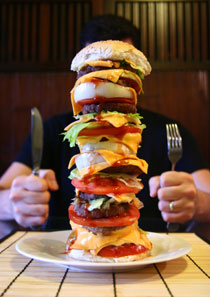
This article ran in the New York Times back in August. Men are suffering from all types of eating disorders at higher levels than ever before (although part of this might be a more tolerant atmosphere than in the past in which to come forward, so the numbers have rapidly increased), and binge eating is no exception.

In fact, I would suggest that binge eating disorder in men (which means without purging) has been much more common than anyone has known - but it was just seen as having a "manly" appetite. The article acknowledges that men and women are about equal in their experience of binge eating.

Binge Eating Among Men Steps Out of the Shadows

By ABBY ELLIN


FIRSTHAND Andrew Walen, a recovering binge eater, now counsels others.

After downing 70 chicken wings in about an hour, Andrew Walen realized he had a problem.

Oh, he had known something was wrong over the years. Normal people don’t consume 4,500 calories worth of food in one sitting, or order takeout for four when dining alone. But it took a maniacal feeding frenzy for him to finally accept the reality: He was a binge eater, and he had absolutely no control around food.

“Ultimately, it was about numbing out and self-loathing,” said Mr. Walen, now 39 and a therapist in Columbia, Md. “There was this voice in my head that said, ‘You’re no good, worthless,’ and I turned to food.”

Mr. Walen is one of an estimated eight million men and women in the United States who struggle with binge eating, defined as consuming large amounts of food within a two-hour period at least twice a week without purging, accompanied by a sense of being out of control.

While about 10 percent of patients with anorexia and bulimia are men, binge eating is a problem shared almost equally by both sexes. A study published online in October and then in the March issue of The International Journal of Eating Disorders found that among 46,351 men and women ages 18 to 65, about 11 percent of women and 7.5 percent of men acknowledged some degree of binge eating.

“Binge eating among men is associated with significant levels of emotional distress, obesity, depression and work productivity impairment,” said Richard Bedrosian, a study author and director of behavioral health and solution development at Wellness and Prevention Inc., which works with employers and health plans.

But while binge eating is challenging for women who suffer from it, the perils are perhaps greater for men, who rarely seek treatment for what many believe is a “women’s disease.” Unlike bulimia and anorexia, binge eating does not even have a distinct listing in the current D.S.M., as the diagnostic guide for mental health professionals is known.

“Guys generally don’t come forward for any reason,” said Ron Saxen, 49, author of “The Good Eater,” a memoir of his struggle with binge eating, which began when he was about 11. At his worst, Mr. Saxen was consuming 10,000 to 15,000 calories’ worth of Big Macs, French fries, chocolate milkshakes, candy bars, ice cream and M & Ms, often within an hour-and-a-half window.

Those men who do seek treatment often have difficulty finding a facility or therapist to work with them — even the literature is predominantly female-centric. Before Vic Avon was given a diagnosis of anorexia in 2006, for example, he scoured the Web for information relating to men and eating disorders. “Everything I saw was written for and by women,” said Mr. Avon, 29, a building contractor in Brick Township, N.J.

Mr. Avon seesawed between anorexia and binge eating (not uncommon), at one point weighing 300 pounds. “I was so ashamed because it was a girl’s illness, I thought. I didn’t have any guys to look to.”

Many binge-eating men do not even recognize that anything is wrong. About 70 percent of people with binge eating disorder are overweight or obese, but a higher weight is generally more culturally acceptable for men than for women.

“There’s nothing wrong with a college guy eating a whole pizza by himself, but with women they would be horrified,” said Roberto Olivardia, a clinical psychologist who specializes in the treatment of body image disorders and eating disorders in men and is an author of “The Adonis Complex.”

Even if they are disturbed by their food intake, few men make the connection between gorging and emotional distress. “With men it’s usually a disconnect,” said Mr. Walen, the former binge eater turned therapist. “It’s about ‘I want to eat,’ not ‘I’m coping with an emotional trauma.’ ”

Adam Lamparello’s binge eating was both physical and psychological, the result of the starvation that ensued during his six-year bout with anorexia, and his attempt to fill the “emptiness, loneliness and emotional void” that he felt in his life.

“Those with binge eating disorder often do not have meaningful relationships with other people, are isolated, believe that life has no purpose or have suffered prior traumatic events and turn to food for emotional comfort,” said Mr. Lamparello, 36, a lawyer in Hasbrouck Heights, N.J., who recently published “Ten-Mile Morning: My Journey Through Anorexia Nervosa.”

Men like Mr. Avon and Mr. Walen often struggle to find help. But the tide may be slowly turning as awareness about men and binge eating grows. Chevese Turner, founder and chief executive of the Binge Eating Disorder Association, said about 20 percent of the calls she receives are from men, up from 5 percent when she started the organization in 2008.

In general, cognitive behavioral therapy is the most successful treatment for binge eaters, said Sarah J. Parker, the director and a founder of the Reeds Center, an outpatient mental health center in New York that treats men and women who have anxiety and eating disorders. Treatment often begins with efforts to recognize distorted, all-or-nothing thinking and to begin monitoring one’s eating, sleeping and exercise patterns. Since many binge eaters restrict food intake during the day and binge at night, the goal is to get them to eat three meals a day and a snack.

Whether or not one can be fully cured of binge eating depends on one’s definition of “cured.” An October 2011 study in The Journal of Consulting and Clinical Psychology reported a 51 percent remission rate for patients a year after using cognitive behavioral therapy. Therapy did not lead to weight loss, however.

“Do people stop binge eating and basically not binge eat again? Yeah,” Ms. Parker said. “Is it O.K. to have an episode once a month? For some people that might be a cure.”

Mr. Saxen finally went to a therapist at age 40. While he no longer binges, “I’m in the camp of A.A. — you’re always recovering,” he said. “There are times when bad things are happening, and I have my moments.”

After the chicken wing incident, Mr. Walen also sought treatment. He has not had a full-on, out-of-control “big B” binge since 2006 — but he has had “little B” moments. “I would say that most people have ‘little B’ binges where they go, ‘I know I overate, but it didn’t come with a lot of guilt shame stuff.’ I think almost everyone goes through that a few times a year,” he said.

Perhaps the greatest challenge, experts say, is to persuade more men to come forward and seek treatment. “You have to have alternative means of getting men to acknowledge the problem,” Dr. Bedrosian said. “We need to find alternative ways for men to get screened, we have to encourage the screening for all eating disorders in primary care,” with an emphasis on making sure men as well as women receive attention.

He added, “If I were training medical students today I would say, ‘When you’re discussing weight loss programs with an obese patient, make sure you ask them about binge eating behavior.’ ”

Monday, October 3, 2011

APA - College Football Players Can Cry (A Little) if They Want to


When Tim Tebow and his Florida Gators lost to Alabama for the SEC Championship back in 2009, he cried, and then he was ridiculed in the press for his tears - with people referring to him as Tim Tearbow. The internet, as only it can be, was even more brutal:
In a review summary of three recent studies published in the APA journal, Psychology of Men and Masculinity, the American Psychological Association posted this press release about college football players and crying. They reveal some interesting conclusions about how these young men feel about showing emotions.

Seems Tim Tebow wasn't too out of line after all.

College Football Players Can Cry (A Little) if They Want to

Expressing Emotions May Give Players Mental Edge, Research Finds


WASHINGTON—While there’s no crying in baseball, as Tom Hanks’ character famously proclaimed in “A League of Their Own,” crying in college football might not be a bad thing, at least in the eyes of one’s teammates.


Although college football players feel pressure to conform to some male stereotypes, players who display physical affection toward their teammates are happier, according to new research. The findings were reported in a special section of Psychology of Men and Masculinity, published by the American Psychological Association.


“Overall, college football players who strive to be stronger and are emotionally expressive are more likely to have a mental edge on and off the field,” said psychologist Jesse Steinfeldt, PhD, of Indiana University-Bloomington, who co-authored each article in the special section.
Here are some additional excerpts:
Those who read about Jack tearing up after losing thought his behavior was appropriate, but drew the line at his sobbing. The players also said they were more likely to tear up than sob if they were in Jack’s situation. Players who read vignettes in which Jack sobs after losing a game said his reaction was more typical among football players than the players who read that Jack sobs after his team won the game.


“In 2009, the news media disparaged University of Florida quarterback Tim Tebow for crying on the sidelines after losing a big game, even labeling him Tim ‘Tearbow,’” said psychologist Y. Joel Wong, PhD, the study’s lead author. “However, the college football players in our study who believed Jack’s crying was appropriate had higher self-esteem. In contrast, players who believed Jack’s crying was inappropriate yet felt they would likely cry in Jack’s situation had lower self-esteem.
* * * * * *
[Another] study found players do feel pressure to conform to these [traditional masculine] gender roles. But players who were never affectionate toward their teammates were less satisfied with life.


In another study of 197 mostly white college football players from three NCAA Division II level schools, the drive to be muscular meant more risk taking, less emotion and a stronger work ethic. But wanting to be more muscular was not related to the players’ desire to win or a tendency to be physically violent. For most, the primary reason they wanted to be muscular was so they could perform better on the field and avoid injuries. A secondary reason was so they could appear more “manly,” with a better physical appearance and sex appeal.
Full Citations:

A Contextual Examination of Gender Role Conflict Among College Football Players,” Jesse A. Steinfeldt, PhD, Y. Joel Wong, PhD, Aleska R. Hagan, PhD, and Jacquelyn M. Hoag, PhD, Indiana University-Bloomington; Matthew C. Steinfeldt, PhD, Fort Lewis College; Psychology of Men & Masculinity, Vol. 12, No. 4.


Drive for Muscularity and Conformity to Masculine Norms Among College Football Players,” Jesse A. Steinfeldt, PhD, Indiana University-Bloomington; Garrett A. Gilchrist, PhD, Pacific Lutheran University; Aaron W. Halterman, PhD, and Alexander Gomory, PhD, Indiana University-Bloomington; Matthew C. Steinfeldt, PhD, Fort Lewis College; Psychology of Men & Masculinity, Vol. 12, No. 4.


Men’s Tears: Football Players’ Evaluations of Crying Behavior,” Y. Joel Wong, PhD, Jesse A. Steinfeldt, PhD, Julie R. LaFollette, PhD, and Shu-Ching Tsao, Indiana University-Bloomington; Psychology of Men & Masculinity, Vol. 12, No. 4.


Thursday, May 6, 2010

Andy Wright - 6 Weirdest Things Men Do to Their Penises

OK, this is just weird, but interesting nonetheless. Why do so many men identify their masculinity with their penises? And how do we raise boys NOT to do this, so that we can save them from doing things such as these in the article?

Zombie penis? Herbal injections? Here are the strangest ways men have tried to attain the perfect penis.

Photo Credit: Yuki_K_

You can't really say the penis doesn't get enough attention. There's a fertility festival in Japan called Kanamara Matsuri that celebrates the appendage, there's the Icelandic Phallological Museum, and a Chinese penis restaurant where diners can sup on the wangs of various animals. At one point, a luxury car manufacturer scrapped plans to produce an SUV upholstered in whale penis due to pressure from environmentalists.

The only place where penises seem to go overlooked is at the drugstore. While entire sections are devoted to the de-scenting and cleaning of women's genitals (most of which do more harm than good) there's no "masculine care" aisle. Men just aren't expected to put as much time and thought into maintaining and modifying their junk.

But that doesn't mean men haven't fallen prey to unattainable standards of perfection as well, going under the knife and performing dangerous procedures at home, to attain the perfect penis. And by "perfect," I mean huge. The majority of services available to men in the genital upkeep department promise to make their penises bigger and thicker. But while medically questionable procedures to enhance the penis abound, it's only one of the many things men can do to their nether regions in the name of perfection.

1. Lengthening Surgery

Part of the penis resides within the body, and naturally, some people think it should reside outside the body. Enter the surgeon. A procedure called ligamentolysis will give men two to three extra centimeters by severing the suspensory ligament that holds part of the penile shaft inside the body, allowing it to drop. (Because that ligament was not there for a reason.) Not surprisingly, all that severing for not much extra length has left most men dissatisfied with the results. One study put the rate of satisfaction with the operation at a dismal 35 percent, and the American Urological Association (AUA) sniffs that the procedure is neither "safe or efficacious." Not that this has stopped men from exploring alternate routes of medically assisted enhancement: like grafting the skin of dead people onto their genitals.

2. Zombie Penis

AlloDerm is a product made by a company called LifeCell made from donated human skin tissue. Its Web site promotes it for the use of hernia repair and breast reconstruction, but some surgeon's Web sites advertise it for a different use: widening the penis. Sheets of cadaver harvested tissue are attached to the penis to increase its girth. This procedure is heartily endorsed by the American Academy of Phalloplasty Surgeons, despite the fact that LifeCell does not advocate using AlloDerm for penis widening. AAPS was founded in part by the father of penis enlargement, Sheldon Burman, and the one-time president of AAPS is Dr. E. Douglas Whitehead, a surgeon whose Web site also promotes the use of AlloDerm. Specifically, the adding of "multiple layers of of Allograft Dermal Matrix Graft (AlloDerm) under the penile skin on top of the erectile chambers to give thickness by 'stacking' or 'folding' the grafts."

Men who aren’t quite prepared to pay thousands of dollars to Soylent Green their junk can opt to have fat sucked out of various parts of their bodies and then re-injected into the penis. (The killjoys at AUA also frown on this procedure.) If the body doesn't re-absorb the fat, there's still the issue of side effects like bruising, swelling, lumps and infection. And these side effects pale in comparison to those suffered by men who undertake injections at home.

3. Injections

Despite a general aversion to poking the penis with sharp things, men have nonetheless taken up syringes and attempted to enlarge their members with a number of substances, with alarming results. While some shots are medically sanctioned (Caverject is just one of the medicines used to treat erectile dysfunction that can be injected directly into the penis), others are definitely not.

In 2005 the chief of the Department of Medical services in Thailand issued a plea for young men to stop injecting Vaseline and olive oil into their penises at the risk of suffering deformities. In 2007 the Wisconsin Medical Journal recounted the stories of three Hmong immigrants who had all separately injected their foreskins with a plethora of substances, from ylang-ylang oil to Chinese herbal medicine in attempts to improve sexual performance, requiring medical intervention ranging from emergency circumcisions to skin grafts. In 2008 Cases Journal published the account of a 30-year-old Bulgarian who shot liquid paraffin into his penis and tied it up with a cord "in order to achieve both enlargement and elongation." The patient, whom the author delicately describes as suffering from a "unique deformity," fled the emergency room before treatment could be given. And in January 2010 Infectious Diseases in Clinical Practice carried the singularly horrifying tale of a man who was suffering from necrosis of the penis due to "injection of liquid silicone by an unskilled practitioner." (Necrosis is the irreversible death of cells and living tissue.)

4. Scrotal Enhancement

Cosmetic surgery for male genitalia is not limited to the penis. There is also a market for exploiting male insecurity over the appearance of their testicles. Scrotal enhancement operates on the assumptions that in order for testicles to look right, they have to be perfectly round, large and of equal size. (Of course, this is rarely the case in nature, but what does nature know about aesthetically pleasing testicles, anyway?) Testicular prosthesis have been around since 1941, but were developed to replace missing testicles, not enhance existing ones.

Today men can have silicone implants of varying size (one Web site reads like a fast food menu, offering medium, large and extra large) inserted in their scrotum to produce what one doctor's promotional material describes as a “manly” look. Another doctor's Web site touts the benefits of scrotal enhancement: "This procedure will also relieve the concern of many men who are not satisfied with their body image and self conscious due to large, loose, unaesthetic, bothersome and extended scrotal sac." The same Web site warns that implants can harden causing "pain and discomfort."

5. Foreskin Restoration

The argument over circumcision is a kind of perfect storm of sensitive issues: child-rearing, religion, medicine and masculinity. Camps for and against will argue there are health benefits to be had from either removing the foreskin or leaving it intact. But the anti-circumcision crowd has a particularly compelling talking point at its disposal: many people believe that circumcision significantly decreases sexual pleasure. And this is why a small but vocal movement has cropped up (primarily in the U.S.) to help men "restore" their foreskin.

Foreskin restoration is exactly what it sounds like: circumcised men attempting to replace lost foreskin. This can be acheived surgically through skin grafts, or via do-it-yourself methods. There are an abundance of these, including "tugging" (pulling at the skin in a repetitive way every day), taping (like tugging, but with tape), attaching weights, or using devices with names like MySkinClamp. The idea is to gradually stretch out the remaining skin until a foreskin can be approximated. There are support groups and Web sites dedicated to the practice of growing foreskin at home, and while many claim a sense of violation and a need to be "whole" again, most of the arguments in favor of re-growing foreskin are sexual. The National Organization of Restoring Men (NORM) touts sexual sensitivity as the first reason to restore in its FAQ. But despite glowing testimonials on discussion boards, the efficacy of such practices for restoring sexual sensitivity are generally discounted by the medical community because practitioners aren't regrowing anything: they're just stretching out existing skin.

6. The Rest of the Package

Just because the beauty industrial complex has managed to largely overlook the penis doesn't mean there aren't some creatively absurd products available to men. A product called NodorO claims to cure "Male Genital Odor," or MGO. The Web site promises that the penis will "smell perfect" following application of the stuff, whose active ingredient is a common over-the-counter antifungal. Apparently, there weren't enough men interested in having perfect-smelling penises, because the product could not be purchased through the site at the time this article was written.

In the same vein, several products claim to make men's semen taste better to their sex partners. A product called Ambrosia made of "a blend of fruit and spice extracts" claims to make semen taste "pleasant" and less like "salty snot" or "Clorox and cheese." A product called Sweet Release promises to make ejaculate taste like green apple pie. Men can purchase "bulge enhancing" underwear with names like Cocoksox and Wonderjock. Most claim to augment male genitals sans padding, but at least one, the Andrew Christian "Shock Jock" utilizes a hidden cup to add "at least" two inches to the existing bulge.

And finally, for the penis that has everything, Dapper Dick's Dapper Dick sells tiny outfits for penises ranging from soldier fatigues to a tiny pinstripe suit, button-up shirt and tie.

Thursday, April 16, 2009

BBC - Just what is it about moobs?

Man-boobs, or moobs, are becoming much more evident that in years past. The combination of obesity, xenoestrogens, and lack of exercise all serve to allow (even encourage) male breast tissue. While this is mostly a cosmetic issue, it is also becoming a health issue.

In gym language, this is called "bitch tits" and used to be associated primarily with steroid abuse (not using an aromatase inhibitor to stop the conversion of steroids into estrogens). Now it's a common sight on new members.

From a male perspective, this is also a self-esteem issue - and therefore a psychological issue. And one that is in the control of every man to do something about.

Just what is it about moobs?

Composite image of men's chests

By Finlo Rohrer
BBC News Magazine

The number of men having breast reduction operations in the UK is rising dramatically, but is this really the result of the media spotlighting the physical flaws of male celebrities?

This is an era when glossy magazines and tabloids delight in the most minor flaw of the female celebrity.

The actress with bags under her eyes, the singer with an untrimmed armpit, the model with a sweat patch, all are presented blinking in the paparazzo's flashbulb as their imperfections are chronicled.

All are highlighted with red circles and magnification. And the same process has been applied to male celebrities in recent years.

When both the then Prime Minister Tony Blair and leader of the opposition David Cameron were pictured enjoying the sun in the summer of 2006, newspapers from tabloid to broadsheet passed comment on their "moobs".

Every man has breast tissue, but some have excessive breasts. This ranges from classical cases of gynaecomastia, prompted by a range of causes, to breasts enlarged entirely by deposits of fat over the pectoral muscles. But whatever the cause British men seem to be increasingly concerned over the state of their chests.

The latest figures from the British Association of Aesthetic Plastic Surgeons (Baaps) seem to bear out this obsession.

Surgeons carried out 323 male breast reduction procedures in 2008, up a staggering 44% from 2007.

It would be easy to assume that the UK is a nation where men are rapidly becoming more obese, and they are taking a surgical shortcut to get rid of male breasts that are merely deposits of fat on top of their pectoral muscles.

Simon Cowell in 2005
Simon Cowell was mercilessly ribbed for his physique, but has since embarked on a fitness regime

But this is not the full picture says consultant plastic surgeon and Baaps member Dalia Nield.

She concedes that anything up to a third of the men seeking breast reductions are simply obese. But she says the rest of the rising numbers of operations are people who are suffering gynaecomastia - excessive breasts - caused by other factors, such as a hormonal imbalance.

Among these, a common type is pubertal gynaecomastia, where boys develop the excessive breast tissue during adolescence.

"Many of those young men if they don't have a very marked gynaecomastia they don't necessarily seek help," says Ms Nield. "But I see many of these pubertal cases later in life when they put on weight and it becomes more obvious."

Genetic disorders like Klinefelter's Syndrome - having an extra "X" chromosome - also account for some cases, and there are a rising number of men suffering from excessive breast tissue as a side effect of drugs prescribed for prostate cancer. Treatment of this type of cancer has improved in recent years, says Mrs Nield, leading to more cases.

But how can one explain the dramatic upwards trajectory for male breast reduction procedures? In 2005, only 22 were performed.

'Tremendous distress'

Mrs Nield suggests that much of the increase may be due to the media publicising the surgery option.

Many of those pieces mocking the imperfections of the middle-aged celebrity also contain a factbox that talks about non-obesity gynaecomastia and explains that surgery is an option.

The effect, Mrs Nield suggests, is that men who might have been suffering in silence for years, realise they are not alone and are spurred on to seek out surgery.

"It is a cause of tremendous distress," says the surgeon.

And there is no doubting that the last few years have seen an increasing attention to this particular physical flaw.

A search of the LexisNexis newspaper databases suggests the word made its debut in a British newspaper in June 2004. Since then it has been used 161 times. There have been more than 350 references to "man boobs" over the same period. "Moobs" clocks up 281,000 hits on Google.

Kerri McPherson, a chartered health psychologist at Glasgow Caledonian University and a member of the men's health group, Scotland, is an expert on male body image.

"I would argue that what the media is really discussing is just representing the growing concerns of everyday men. This concern has always been there but they have not been able to articulate it."

And it could be argued that media mockery reinforces the negative body image of the excessive male breast sufferer, it also might free some from isolation and paranoia that they could have been burdened with a decade ago.

McCririck in his swimming trunks
John McCririck was also mocked after appearing on Celebrity Big Brother

The presentation of "moobs" as something suffered by a slew of male celebrities might make life easier for the ordinary bloke sitting in a pub discussing his problem with his mates.

"More and more people are being given a language to talk about concerns about their body," says Dr McPherson.

"Particularly with what is a very feminine [characteristic] if a man was talking about [having] breasts [decades ago] they would have been a source of ridicule."

Paula Singleton, a researcher in the health faculty at Leeds Metropolitan University, is doing a PhD on the attitudes shown by men planning to have breast reduction surgery, entitled "Bruises heal but moobs last forever - men's account of cosmetic surgery for gynaecomastia."

"It seems like you can hardly turn on the telly and open a newspaper without it being mentioned," she says.

"[Those planning surgery] described feelings of shame, anxiety and embarrassment. They had suffered everything from being shouted at from a bus to teasing from work colleagues… doctors smirking and laughing at them and saying 'get down the gym'."

Of course, it would be wrong to group men with excessive breasts into justifiable "moobs" - ie a hormonal, chemical or genetic cause - and unjustifiable "moobs" - those caused primarily by obesity.

Both sets of men may be suffering psychologically at a time when the male body is under increasing scrutiny.

In the academic world, most of the theorising about body image has traditionally been about women, but now researchers are starting to look at changing attitudes among men.

"Men are starting to feel those appearance pressures more and more," says Ms Singleton.

And this growing body consciousness could lead to more men making their way through the surgeon's doors.


Monday, December 15, 2008

Men Lack Confidence in Boardroom and Bedroom

[Beckham makes Brit males feel insecure]

This article from the Guardian UK reveals the results of a disturbing study - men are lacking in confidence in most areas of their lives. Most importantly, these men are feeling insecure with women, unsure of themselves, and unable to measure up to popular images of what women want, such as Sex in the City.

This is a tough time for men. The old ways of behaving are no longer adequate, and there are few guideposts for new ways to be masculine. The study reveals that many men turn to alcohol for a little liquid courage. Having been there, done that, I can promise that this approach does not work and only makes things worse in the end.

This blog exists to help explore these issues and share what other men are learning about how to masculine in a post-manly man world.

Men lack confidence in boardroom and bedroom

Males' self-image withers especially when women are around, survey finds

Men used to have the upper hand when it came to confidence in the boardroom, bedroom and the bar.

But, according to new research, men are struggling with a crisis of confidence, with almost half confessing that they feel anxious most of the time - particularly at work and especially around women.

The majority of almost 2,000 men aged 16 to 65 questioned by OnePoll, an independent market research company, admitted struggling to feel confident about their place in society. About half confessed to feeling most insecure when at work, while another 40 per cent also felt inadequate during nights out with friends.

All those questioned by the survey, commissioned by Braun Smooth Side Challenge, admitted to feeling increasingly emasculated by women and said their feelings of inadequacy soar when women are present.

Most intimately, one in four men revealed they are racked by feelings of inadequacy during sex, saying that film and television programmes like Sex and the City had made them anxious about not having enough stamina and imagination in the bedroom.

'Men are more likely than women to have fragile self-esteem, as they judge their status in society through success in a single sphere, such as their career, the size of their pay packet or the model of their car,' said David Sharpley, of the British Psychological Society. 'These are all subject to a high degree of ambiguity and risk. Because men are generally poor at introspection and communicating their emotions, this uncertainty can cause the collapse of their self-esteem.

'But then, because men tend to bottle their emotions, they instinctively fake the confidence they once felt. This exacerbates the problem many times over, because it makes it harder for men to ask for help or for others to see that they need support.'

Dr John Tomlinson, a former GP and trustee of the Sexual Dysfunction Association, said he was hearing from an 'enormous' number of 18- to 40-year-olds worried about sexual problems. 'Advertising - such as David Beckham's Armani underwear campaign - glamorises the well-toned male body, which men find daunting because they assume it is what women expect,' he said.

More than half of those questioned confessed they had no constructive male role model - instead having to resort to fictional characters such as James Bond or Indiana Jones - and that they wished their 'self-image' was stronger, and more masculine and positive.

But instead of becoming more assured with age, three in four men admitted that their lack of assurance had increased as they got older. The majority of those questioned said they felt most confident when they were between 21 and 30. Just 11 per cent of 40-year-olds and 4.6 per cent of 50-years-olds said they felt more confident now than in their youth.

Respondents also revealed being haunted by the conviction that other men are more confident than they are. Almost half of those questioned believed their boss was more self-assured than they were.

One in three men said they turn to alcohol for Dutch courage to help break the cycle. A surprising one in five had lucky charms, with a third admitting they own 'lucky' jewellery, one in four wearing auspicious socks and one in five putting their faith in lucky pants.