Showing posts with label men's movements. Show all posts

Sunday, December 16, 2012

Radio National Encounter - MEN AND FAITH


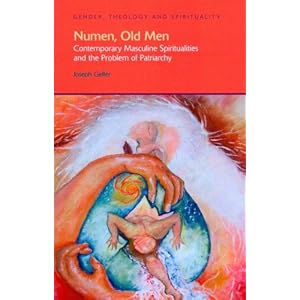
Dr. Joseph Gelfer, who I have featured many times on this blog, is one of the featured guests on this episode of Radio National's Encounter program devoted to men and faith. Gelfer is the editor of the Journal of Men, Masculinities and Spiritualityand he is the author of Numen, Old Men: Contemporary Masculine Spiritualities, and the Problem of Patriarchy, and The Masculinity Conspiracy (which also can be read online for free).

MEN AND FAITH


  • Listen now


  • Download audio


  • Broadcast: Saturday 22 December 2012 

    Over the last few years there’s been a surprising re-emergence of men’s groups, with conservative Christian groups like the Promise Keepers filling sporting stadia in the US, and Catholic men of all ages undergoing initiation ceremonies. So this week on Encounter we’re taking a look at how Christian and Jewish men define masculinity today, and how it affects their relationship to power, women and other men. We’ll also find out about the history of men’s movements and ask about the future for men of faith.

    Publications
    Author: Joseph Gelfer
    Publisher: Equinox Publishing Ltd 2009

    Further Information

    Fr. Richard Rohr

    Spiritual men's group in Brisbane, Qld that runs initiation ceremonies

    Rabbi Ritchie Moss


    Freedom2b assists Lesbian, Gay, Bi-sexual, Transgender and Intersex people from Christian backgrounds on their journey to reconciling their faith, sexuality, and gender identity.

    Wednesday, March 21, 2012

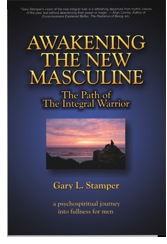
    Book Review: Gary Stamper, Awakening the New Masculine: The Path of the Integral Warrior

    My review of Awakening the New Masculine: The Path of the Integral Warrior, by Gary Stamper, Ph.D. (Berrett-Koehler Publishers, 2012) has just been published today at the Integral Leadership Review. Here is a little section from the beginning of the review:

    Book Review: Gary Stamper, Awakening the New Masculine: The Path of the Integral Warrior

    Is the Mythopoetic Men’s Movement Ready for the Leap to Integral? A Review of Awakening the New Masculine: The Path of the Integral Warrior, by Gary Stamper, Ph.D. San Francisco: Berrett-Koehler Publishers, 2012.

    Reviewed by William Harryman


    When I see a new book coming out from someone involved with the integral movement (Stamper co-founded and led the Seattle Integral salon), and especially the Ken Wilber version of integral theory, I steel myself for the seemingly obligatory two to three chapters that attempt to explain the integral model for those who are not familiar with it. Much to his credit, Gary Stamper, in his new book, Awakening the New Masculine: The Path of the Integral Warrior, has not done that. He has written a book about the work he does with men in his Integral Warrior trainings, work that happens to be deeply influenced by Wilberian integral theory and Spiral Dynamics, both of which require some explication. There is, to be clear, a lot of integralese in this book, but it doesn’t have the heavy-handed feel with which other books based in integral theory are often burdened.

    Essentially, Stamper has written a how-to spirituality book for men. There have been a few of these in recent years, coming mostly from the Jungian world or from a previously scattered group that has coalesced into “muscular Christianity,” a masculinist spiritual Christian movement. The only other books that include integral theory are Martin Ucik’s Integral Relationships: A Manual for Men (2010), David Deida’s The Way of the Superior Man: A Spiritual Guide to Mastering the Challenges of Women, Work, and Sexual Desire (1997), Joseph Gelfer’s The Masculinity Conspiracy (2011, online e-book) and Numen, Old Men: Contemporary Masculine Spiritualties and the Problem of Patriarchy (2009). Both of Gelfer’s books are in-depth academic treatises rather than spiritual how-to books.

    Before continuing, a brief overview of the last 40 or so years of the men’s movement might help to contextualize what Stamper’s Awakening the New Masculine is attempting.

    Tuesday, December 20, 2011

    On Being A Man (1989) Robert Bly & Michael Meade

    I was never a fan of the mythopoetic men's movement - but many men have found meaning in the use of Jungian archetypes and retro-romantic notions of masculinity embraced and espoused by folks like Robert Bly and Michael Meade, among others (like Moore and Gillette).

    There's even drumming in this hour-long series of videos (6 in total). It's the stereotype that has been so often ridiculed.

    On Being A Man (1989) Robert Bly and Michael Meade
    USED WITH PERMISSION FOR EDUCATION AND NON-PROFIT

    A very rare Video, very hard to find so we decided to upload for your entertainment.

    What does it mean to be a man today? How have men's roles changed in the wake of the woman's movement? What has been gained? What has been lost?

    Join poet Robert Bly, storyteller Michael Meade and an audience of 30 Twin Cities men in an hour of interaction, imagery and introspection.


    Wednesday, June 8, 2011

    The Ultimate Men's Summit - The Next Level of the Men’s Movement, Featuring 75 Top Leaders - All Free

    http://ultimatemenssummit.com/sites/ultimatemenssummit.com/files/MensSummit-300.250.jpg

    Another reminder that the Ultimate Men's Summit starts this Friday - so register now, it's all free with registration.

    Are you called to be a 21st century man?

    For this unprecedented virtual event, we are calling forth men from around the world who are boldly committed to lead in a new era - one in which masculine qualities are restored into partnership with the feminine, in which our models of work, family and relationships are ripe for renewal, change and discovery.

    As men, we need to band together in a global brotherhood, educate ourselves and each other, and learn to thrive as we co-create this new culture. The new world we know is possible cannot happen without us. Do you feel called to play a role in this Shift?

    Join us for the Ultimate Men’s Summit where 75+ experts, authors, luminaries and teachers will share their knowledge and wisdom on 21st Century Masculinity. You will:

    • Discover how 21st Century Masculinity can best serve the world
    • Learn to partner with women in a new model of relationship
    • Activate a truly sacred, noble and powerful version of your manhood
    • Gain a new view of “success as a man” in the emerging culture
    • Learn from your elders - the men who began the Men’s Movement
    • Understand your unique psychology as a man
    • Find out how to stay alive and passionate in your relationships over time
    • Connect with other inspiring men in small group discussions
    • And much more... all empowering you to play your highest role in the great changes ahead of us!

    Gain access to powerful sessions on topics such as:

    • How to Create and Cultivate 21st Century Relationships
    • Sex: The Most Fun and the Most Trouble We Can Get Into
    • Five Illusions of Manhood To Get Over - Right Now
    • Activate Your Purpose and Fulfill Your Mission in the World
    • Knights Without Armor: The Quest for the Courage to Be Vulnerable
    • What Women Need to Know about Men, and Secret Truths We Can’t Tell Them
    • The Paradox of Masculine Power: What Works is Being More Fully Yourself
    • The Warrior Spirit - An Ancient Imperative for Modern Man
    • Why Every Man Needs to be Initiated by Other Men - and Where to Go to Find It

    Our goal is to get you into ACTION to improve your life and your relationships. Each session not only offers valuable information about masculinity and manhood, but also practical tools and practices you can bring directly into your life - and out into the world.

    Women who want to understand and empower men are also welcome!

    There are many big names scheduled to speak, including Robert Bly, Sam Keen, Dan Millman, Gary Zukav, and Warren Farrell among the most well-known.

    But I'm looking forward to hearing Robert Augustus Masters, John Welwood, Hal Stone, Michael Kimmel, Chris Kyle, and Gary Stamper, among others. So many great men (and women) lined up to speak.

    Register now, it's free.

    Monday, March 21, 2011

    Tom Matlack - Why We Don't Need a 'Men's Movement' to Be Good Men

    http://www.observer.com/files/full/The-Good-Men-Project-Book-Cover.jpg

    In Tom's new post, he suggests that men do not need Robert Bly or any other leader of men's movements in order to be good, mature, compassionate men. As someone who has never associated with any of the men's movements - and have been critical of some, including the mythopoetic camp and the Mankind Project - I can identify with with this perspective.

    I came to men's work - to becoming a good man - through a recognition that I had been betrayed by my culture in the ways it defined for me what it means to be a man. I could not match my experience with the "rules" I learned as a child (often without awareness I was being indoctrinated).

    But I did not become a follower of some other man or group of men - I sought an understanding of how masculinity develops, how men and women differ or don't, and how I define for myself what it means to be a man. This blog was born of that process - not to tell others how to be men, but to examine my own process and that of others in doing this work.

    In the end, I simply want to help men see that there is life outside the box - that we can shake off the chains of hegemony and create our own versions of masculinity.

    Anyway, here is Tom's take on it - the story of his own process.

    Why We Don't Need a 'Men's Movement' to Be Good Men

    Tom Matlack -Venture capitalist-turned-writer

    Posted: March 21, 2011

    The first and only time I saw Robert Bly, author of "Iron John," the touchstone of the modern "mythopoetic" men's movement, I was in college... and I wasn't sure I was impressed. Although I found the man captivating in many ways, I wasn't convinced that the manhood he was talking about in poetic terms (and accompanied by a lute, no less) was something I aspired to recapture. Beating drums in the woods never seemed to come naturally to me; to me, it sounded more like feminism for guys than the stuff of manhood.

    At the time, I was immersed in the sport of rowing -- a male bonding experience that had little to do with poetry and a lot to do with the testing of physical limits. I suppose the fistfight I had with my best friend during a training session in a cemetery was related to something Bly was getting at, but it sure wasn't poetic. It had to do with my questioning my friend's manhood and his retaliating in kind. We both emerged stronger from the exchange.

    Our coach, Will Scoggins, had watched our fight from a distance, grinning. He told me that the process of developing underlying trust as a team involved spilling your guts along the way, even showing raw emotion. He had made clear from the very beginning that this was about rowing, but it was also about growing up and learning -- the hard way -- how to avoid making excuses. The payoff was that we could use this wisdom in any situation later on in life. To his way of thinking, the fight was a sign of progress -- a sign of growing faith in one another.

    The fight on a cemetery hill with my rowing buddy summarized the kind of men's movement that I respected a heck of a lot more than what I heard accompanied by a lute.

    ♦◊♦

    In many ways, the Good Men Project was born not out of the men's movement, or the men's rights movement, masculism, anti-misandry or MGTOW (men going their own way), but out of the brutal facts of our own lives as fathers, husbands and guys trying to make a living.
    Read the whole post.


    Friday, February 4, 2011

    TEDxTulsa - Brett McKay - "Reviving the Lost Art of Manliness"


    Brett McKay, the founder and editor of The Art of Manliness, speaks at TEDx Tulsa about the purpose and vision of his influential men's site.

    TEDxTulsa - Brett McKay - "Reviving the Lost Art of Manliness"

    Brett McKay is the founder and editor-in-chief of " The Art of Manliness" blog, a men's lifestyle site dedicated to reviving the lost art of manliness. After noticing most of the men's magazines on the stands talked about the same old things every month - six pack abs, $2,000 watches and hat babes - Brett created "The Art of Manliness" in January 2008 to change the tone and discussion on what it means to be a man. "The Art of Manliness" has been featured in the Chicago Tribune and The Toronto Star and on CNN. In 2009, Brett, along with his wife, Kate McKay, tuned the blog into a book and published " The Art of Manliness: Classic Skills and Manners for the Modern Man."


    Tags:

    Wednesday, September 29, 2010

    Secret Lives of Men - SAM KEEN: "Fire in the Belly" & “In the Absence of God”


    Interesting - I never really got into keen's books for some reason. Maybe it was too woo for me, or too old school men's groupie, not sure.

    SAM KEEN "Fire in the Belly" & “In the Absence of God”

    Keen argued in "Fire in the Belly" that men must redefine their identities, going beyond the modern rites of manhood--alienating work, war, performance-oriented sex--the new male "psychonaut" brings forth meaning by undertaking "a spiritual journey into the self." In his latest book, "In the Absence of God" Keen sets out to recover the elemental experience of the sacred in everyday life. By appreciating emotions like wonder, gratitude, anxiety, joy, grief, reverence, compassion, outrage, hope and humility we may once again find ourselves in the presence of an unknowable but all present “G-D.” Keen suggests we may also regain the commonalities between Christians, Jews, Muslims, and other spirit traditions and end the contentious differences that have divided them and our world.

    Listen to internet radio with Secret Lives of Men on Blog Talk Radio


    Saturday, September 25, 2010

    Day One: Evolving Men's Conference - My Reflections

    Evolving Men's Conference

    Evolving Men's Conference

    WOW - I'm freaking wiped out. There is a lot of passion, a lot of energy, and a lot of conflicting worldviews in the room, and it's exciting, creative, and frustrating. Sounds about right, yes?

    The morning began with an attempt by Jayson and his team to build a container for the work to come - but a few guys felt like that was a waste of our time (in all fairness, without that work in the morning, the rest of the day may not have been as creatively volatile, in a good way).

    The leadership team went with the flow they felt in the room (I was a little skeptical at first, like, "You're going to let a few guys derail your agenda?!") - before lunch we broke up into smaller groups to figure just what it is we came to Boulder to do - and some of us came a long way at considerable expense (especially the men from Europe).

    What seemed "up" for everyone was getting to some take-home projects, some way to make this weekend useful going forward - set up some goals, some plans, and some steps to get that done. In retrospect, I am pleased and grateful that Jayson and the other leaders opened the agenda to what they saw coming from the group - I think it was a good decision that led to a very productive afternoon.

    After lunch we engaged in an organic open process to generate ideas for break-out groups - and several came together - a very cool process that I had not seen done before. Those of us who didn't have a specific topic we wanted to propose listened to the others (a 30 second pitch) and voted with our feet, so to speak, by joining the group that moved us.

    I ended up in a group working on the socio-cultural issues that keep men trapped in out-dated models of how to be a man, as well as the issues that keep them from doing "men's work."

    One of the guys behind this topic was sort of, kind of, possibly speaking my language (social constructivism and integral). Although I did not know for sure that he was coming from that perspective, but sensing the potential of a kindred, I was drawn to his ideas as reflective of my own. I was correct in my sense - he's a guy I feel has much to offer in this area, since he works with several men's groups and talks integral without the jargon.

    The jumping off point was identifying three primary "bubbles" (worldviews) that keep bumping up against each other in the men's movement, which also reflect the culture at large - the Biblical/religious perspective (this is how God made us and our holy book tells us so), the essentialist/archetypal perspective (men are masculine because of archetypal masculine essence, or because we are hard-wired as masculine in our biology/neurology), and the socialization model (social constructivism: we are essentially human beings socialized to be masculine, with many possible masculinities, all of which are cool).

    [I threw in a little Ken Wilber color-coding there (amber, orange, and green), for those who know about altitudes and worldviews in his model.]

    So the big question, then, is how do we talk about men and masculinity in a way that appeals to all three perspectives, or at least does not alienate them. If I speak of multiple masculinities that are socially constructed, the religious perspective will shut down immediately. Likewise, if I speak about God or religious origins of masculine identity, the other two wage rebellion or simply do not listen.

    There has to be a way to speak about this work in a way that gets to men, that touches them in the ways in which the little box of hegemonic masculinity does not work for them, causes them pain, and restricts their authenticity - without alienating any the perspectives.

    I suspect that we need to get to the real issues for men - many men are feeling lost, feeling misunderstood, and feeling like we no longer have an identity that is solid and respected as men. This addresses all three perspectives without languaging it in a way that might alienate one or more perspectives.

    This is one of the things I am sure we will talk about tomorrow - so stay tuned.

    Finally -we raised one important issue very briefly that I think needs more attention: Who is invested in preventing men from doing this work? Who wants to maintain the status quo as far as men being stuck in the old models and unaware that they can do and be something else? That is a serious topic for discussion in my perspective.


    Thursday, September 23, 2010

    A Shrink for Men Interveiws Paul Elam of A Voice for Men

    Dr Tara J. Palmatier, PsyD conducted an interesting interview a while back - posted at her blog, A Shrink for Men - with Paul Elam of A Voice for Men and also one of the editors of Men's News Daily (which will be ceasing publication soon).

    Disclaimer: I have been critical of some of the stuff I have read at Men's News Daily and some of the other sites Elam mentions - he and I do not see eye-to-eye on many things. But the men's transformation movement is about men, plural, and that means plural visions and perspectives.

    That said, here is the beginning of the interview:

    Introduction to the Men’s Movement: Interview with Paul Elam of A Voice for Men

    Quantcast


    Last year, Paul Elam of A Voice for Men contacted me to ask if I would contribute to Men’s News Daily, a men’s movement website for which he is the editor. Intrigued, I read through the site and had some misgivings. There’s some material I agree with and some material that I found off-putting. Like any movement, men’s activism attracts different people with different ideologies and agendas. Primarily, I was put off by the extreme, neo-conservative beliefs and rhetoric of some of its members. Paul and I discussed my reservations, which he kindly addressed. He allayed my misgivings and I agreed to republish some of my material on MND.

    I believe men and women need to organize and fight for fair legislation regarding domestic violence laws and divorce and custody legislation. Our system is sick and many people are stuck in sick workplaces and relationships that sap them of energy and the ability to make healthy decisions. When you’re in a sick system, you think, “this is just the way it is.” The dysfunctional system is so pervasive, many people don’t stop to think, “this isn’t how it should be and what can I do to change for the better.” A sick system programs you to tolerate abuse and injustice and tells you that there’s something wrong with you if you try to buck the system.

    The post-feminist pendulum has swung too far to the other extreme. How is it just that a man can be forcibly removed from a home he paid for based on nothing more than an unsubstantiated claim of abuse? (Just do a search for ‘how do I get my husband out of the house.’) How is it just that one adult, by virtue of his sex, is financially responsible for another able-bodied adult just by virtue of her sex after the relationship ends and often for the rest of his lifetime? Even child support ends when a child becomes an adult. Why isn’t custody automatically presumed 50/50 in every state? Why aren’t women required to pay support for the 50% of the time the children are with their fathers (if the father is lucky enough to get 50/50 custody)? Why aren’t women prosecuted for making false abuse claims and violating court orders?

    The present laws are unfair and they’re not going to change until the people who are the targets of this kind of injustice and the people who care about them organize, pitch in and fight to level the playing field. Both men and women need to join together to do this. To this end, I asked Paul if he would allow me to interview him to provide an introduction to the men’s movement and he very generously agreed:

    1. Paul, in a nutshell, what is the men’s movement, men’s rights or men’s activism?

    Actually, it takes two nutshells, because we are talking about two areas that have some overlap with each other. The first is father’s rights and some other agendas that involve legislation and actual rights as we know them. Clearly, with the bias against men in family courts, and things like false accusation of rape, domestic violence and sexual harassment we are talking about clear cut violations of constitutional rights and due process.

    The rest, and I think equally important area, is what I prefer to call the men’s movement vs. calling it the men’s rights movement. This is a movement that is well underway that is challenging men to examine their roles as men in modern times, and supports them for making more realistic choices about what they expect of themselves, particularly in their relationships with women.

    This is the part of the movement to which I think you, Dr. T., make a particularly valuable contribution. So much of our frustrations as men come from trying to satisfy some very unrealistic and unhealthy expectations from women. That can come up for sure when we encounter personality disordered women in relationships, but also in our dealings with women that we would call normal.

    The fact is that the continued expectations for men to act according to old school gender roles for men are out of sync in a world where women’s roles have changed so significantly. In fact, I’d guess that many of the men you counsel were hobbled in dealing with borderline or narcissistic women, not just because those personalities are so good at manipulation, but because they are particularly adept at manipulating the pressures on men to “man up and take it.”

    I think the men’s movement provides a lot of support to men for changing their expectations of themselves and certainly in placing some more realistic expectations on the women in their lives.

    Read the whole interview.


    Friday, July 30, 2010

    Nathan Hitchcock - Review of Eric Magnuson, Transforming Culture: Inside the Men’s Movement

    http://www.paradigmpublishers.com/images/covers/1594513953_cf150.jpg

    This review appears in the new online issue of Journal of Men, Masculinities and Spirituality. Sounds like and interesting book to add to my reading list.

    June 2010
    Volume 4, Number 2
    Pages: 97-99
    Issue (471 KB PDF)
    Review (93 KB PDF)

    Review of Eric Magnuson, Transforming Culture: Inside the Men’s Movement
    (Boulder, CO: Paradigm Publishers, 2007), 167 pp.
    Nathan Hitchcock

    The mythopoetic men’s movement went underground again after a difficult season of national publicity in the early 1990s. “New men” were presented as those who flee to the woods, take their shirts off, drum, tell fairy tales, weep, howl, hug other men, and come home kinder—but basically the same. Twenty years later only a fraction of mythopoetic groups survive, and, understandably, they make pains to stay out of the limelight. Why, then, does this men’s movement continue to anger and inspire and amuse and haunt us? Eric Magnuson gives a modest but compelling answer: mythopoetic work changes men from the inside-out. For all their political shortcomings, these spiritual-therapeutic groups have constituted a kind of “seed movement” that challenges hegemony and reconstructs a new social order from the bottom up.

    In chapter one Magnuson gives an overview of the mythopoetic men’s movement and evaluations of it. The problem with earlier critiques from Michael Kimmel, Kenneth Clatterbaugh, Judith Newton and the like, he says, was their unwillingness to engage with the movement from within, preferring to dismantle the popular texts. For all their theoretical insight, their criticism tended to miss the liberating reconstruction of masculinity that was happening at the most basic levels. To rectify this, Magnuson presents a longitudinal ethnographic study of one particular men’s group, the Open Plain Men’s Circle. He presents findings from his eight-year analysis of this one independent organization. Through 230 meetings, 55 hours of interviews and hundreds of informal conversations, the author concludes that mythopoetic men are in the process of rejecting the old masculine way of “being unreliable, overly rational, disempowered, emotionally closed off, deceitful, unloving, competitive, and oppressive,” erecting in its place a masculinity that is “reliable, spiritual, open-minded, empowered, emotionally open, truthful, loving, cooperative, and liberational” (p. 18).

    As a sociologist, Magnuson is very conscious about knitting together the macro- and the micro-. He therefore devotes his second chapter to various modern gender theories and argues for the superiority of the semiotic view (which understands gender as symbolic social constructions rather than essential traits inherent in the sexes). This purview aligns him more closely with profeminist critics than with the men’s movement’s major exponents. Magnuson’s methodology assures the reader that the conclusions of his fairly narrow study are not arbitrary. While he succeeds on this score, the most serious shortcoming of Changing Men, Transforming Culture is Magnuson’s claim that the Open Plain Men’s Circle is representative of the mythopoetic men’s movement. It seems to me that his study glosses over the variegated expressions in the work of Joseph Jastrab, Robert Bly, Michael Meade, the ManKind Project, and the hundreds of groups throughout New England, the Northwoods and California. These groups ranged widely with regard to type of organization, programs, essentialistic language and spiritual tenor. On this level, the superior historico-sociological study remains Michael Schwalbe’s Unlocking the Iron Cage (1996). Magnuson compensates for this historical lacuna with a persistent appeal to the theoretical macro-level.

    Perhaps the most important contribution of the book comes in chapter three, in which Magnuson describes the function of the mythopoetic leader as an “organic intellectual.” The leader is the practitioner and interpreter of the big ideas of the movement. Moreover, in bringing material and activities to the group, he is at the forefront of evoking cognitive, practical and even political change within the men. Magnuson details seven functions of the organic intellectual as he guides the group. This leader exerts tremendous influence on the shape of the group through suggestion and manipulation—though his authority is not beyond question. I sense this presentation sheds light even on leaders within (the more typical) democratic men’s group, since one or two men in any given setting tend to become the de facto disseminators of ideas and the gatekeepers of the circle. I also found of interest the wide array of religious practices imported into Magnuson’s own group. There is a pluralistic reconfiguration going on among these men as the leader tries to introduce, filter and harmonize disparate religious customs.
    Read the whole review.