Friday, March 25, 2011

So much for aggression being “male” and conciliation being “female”

http://justjudyjudyjudy.com/wp-content/uploads/2009/10/obama_clinton1232658178.jpg

Maureen Down observes that in the Obama Administration, the liberal men (including generals) waffled on the no-fly zone over Libya, but not the women, the were strongly in favor of taking military action. She sees this as a shift (perhaps fleeting) on the hegemonic view of women as peaceful and conciliatory and men as militant and aggressive. Perhaps - but for Rush Limbaugh to call Obama and his male advisers the "new castrati" is to perpetuate the old stereotypes. But should expect nothing less from a bloviator like Limbaugh.

I see it a little differently.

Obama's leadership style is a little too centered in the "Human Bond" stage of development (worldview), generally seen as "Consensus" leadership, and identified with terms such as egalitarian, feelings, authentic, sharing, caring, and community. To me, this is the biggest flaw in his presidency - he won't simply step up and say, "after consulting with X, Y, and Z, I am going to do . . . ." He wants a consensus, and human beings as politicians are never going to reach much of a consensus about anything, especially if many of them are operating in the same worldview as Obama (or concerned about re-election).

So, in this case, many of the generals were probably hesitant to commit more resources to yet another military action, especially after Iraq and Afghanistan (and remembering Rwanda). And my guess is that many of Obama's advisers feared the liberal response that was vocally opposed to this action, while fearing if they did not act the GOP (McCain wanted to send in troops) would brand him as a effeminate wimp.

Looks like he got both responses anyway - which is all the more reason to make a choice and make it happen. He needs to stop worrying about getting people to agree - he is president now, not a community organizer.

Certainly, as this article suggests, there were some gender differences - but as the explanation also details, the differences in opinion between the men and the women were more a factor of experience, which in this case the women had and the men did not (and those men with experience did not want to get sucked in to another regional skirmish).

In the end, this is yet another example of Obama lacking the fluidity to adapt his leadership style to the situation at hand (added to health care reform, closing Guantanamo Bay, corporate regulation, and all the other instances where he has failed to step up and take charge).

Fight of the Valkyries

By MAUREEN DOWD
Published: March 22, 2011

They are called the Amazon Warriors, the Lady Hawks, the Valkyries, the Durgas.

There is something positively mythological about a group of strong women swooping down to shake the president out of his delicate sensibilities and show him the way to war. And there is something positively predictable about guys in the White House pushing back against that story line for fear it makes the president look henpecked.

It is not yet clear if the Valkyries will get the credit or the blame on Libya. But everyone is fascinated with the gender flip: the reluctant men — the generals, the secretary of defense, top male White House national security advisers — outmuscled by the fierce women around President Obama urging him to man up against the crazy Qaddafi.

How odd to see the diplomats as hawks and the military as doves.

“The girls took on the guys,” The Times’s White House reporter, Helene Cooper, said on “Meet the Press.”

Rush Limbaugh mocked the president and his club of “male liberals,” saying: “Of course the males were opposed. It’s the new castrati. ... They’re sissies!”

Susan Rice, the U.N. ambassador and former Clinton administration adviser on Africa, was haunted by Rwanda. Samantha Power, a national security aide who wrote an award-winning book about genocide, was thinking of Bosnia. Gayle Smith, another senior national security aide, was an adviser to President Clinton on Africa after the Rwandan massacre. Hillary Clinton, a skeptic at first, paid attention to the other women (putting aside that tense moment during the ’08 primaries when Power called her “a monster”). She also may have had some pillow talk with Bill, whose regrets about Rwanda no doubt helped shape his recommendation for a no-fly zone over Libya.

How odd to see Rush and Samantha Power on the same side.

We’ve come a long way from feminist international relations theory two decades ago that indulged in stereotypes about aggression being “male” and conciliation being “female.” And from the days of Helen Caldicott, the Australian pediatrician and nuclear-freeze activist who disapprovingly noted the “psychosexual overtones” of military terminology such as “missile erector” and “thrust-to-weight ratio.” Caldicott wrote in her book “Missile Envy:” “I recently watched a filmed launching of an MX missile. It rose slowly out of the ground, surrounded by smoke and flames and elongated into the air — it was indeed a very sexual sight, and when armed with the ten warheads it will explode with the most almighty orgasm.”

There have been women through history who shattered gender stereotypes, from Cleopatra to Golda Meir to the “Iron Lady” Margaret Thatcher, whose critics on the left sniffed that she was not really a woman. As U.N. ambassador, Madeleine Albright pushed back against Colin Powell on a Balkans intervention — “What’s the point of having this superb military that you’re always talking about if we can’t use it?” she asked him — and Condi Rice pushed ahead with W. and Dick Cheney on invading Iraq.

When President Obama listened to his militaristic muses, it gave armchair shrinks lots to muse about. As one wrote to me: “Cool, cerebral president chooses passion and emotion (human rights, Samantha, Hillary, Susan) over reason and strategic thinking (Bob Gates, Tom Donilon). Is it the pattern set up by his Mom and Michelle — women have the last word?”

White House aides smacked back hard on the guys vs. girls narrative. A senior administration official e-mailed Politico’s Mike Allen that Power, Smith and Hillary Clinton weren’t even in the meeting where the president decided to move forward and tell Rice to seek authority at the U.N. for a no-fly zone. Maybe they were already nervous that the president was sightseeing in Rio with his own girls and watching drum performances while senators like James Webb and Richard Lugar were charging him with overstepping his authority in Libya, and Dennis Kucinich talked impeachment.

Whatever the reason, the spinners were so afraid that the president would seem to be a ditherer chased by Furies that they went so far as to argue that three of the women were not even in the room for The Decision. So the women were in their place? Where, the kitchen?

As compelling as the gender split is, it’s even more interesting to look at the parallels between Obama and W. Candidate Obama said about a possible strike on Iran, “The president does not have power under the Constitution to unilaterally authorize a military attack in a situation that does not involve stopping an actual or imminent threat to the nation.”

Yet both men started wars of choice with a decision-making process marked more by impulse and reaction than discipline and rigor.

Denouncing the last decade of “autopilot” for presidents ordering military operations, Senator Webb told Andrea Mitchell on MSNBC: “We have not had a debate. ... This isn’t the way that our system is supposed to work.”


Men Fuel Rebound in Plastic Surgery

http://plastic-surgery-costs.com/wp-content/uploads/2010/09/1283568502-39.jpg

Mickey Rourke (I think)

Guys, WTF? Facelifts, moob jobs (reductions), liposuction . . . . Seriously men, it's bad enough that women feel pressured (by men, often enough) into the insanity of plastic surgery, but now we do it too? Sad . . . .

I don't even really see this is an image problem, or a self-esteem issue - to me, it's a health issue. Elective surgery is not something I think I would ever do. My fear of mistakes, infections and so on is strong enough to get my ass into the gym and to eat healthy foods.

Men Fuel Rebound in Plastic Surgery: Sizeable Increases in Facelifts and Other Surgical Procedures for Men

ScienceDaily (Mar. 21, 2011) — Statistics released by the American Society of Plastic Surgeons (ASPS) show that more men are going under the knife. Overall cosmetic plastic surgery procedures in men were up 2 percent in 2010 compared to 2009. However, many male surgical procedures increased significantly. Facelifts for men rose 14 percent in 2010 while male liposuction increased 7 percent.

2010 ASPS statistics show that men underwent more than 1.1 million cosmetic procedures, both minimally-invasive and surgical. The majority of the the Men's Top 10 fastest-growing cosmetic procedures are surgical, which bucks the previous trend of growth in minimally-invasive treatments.

"The growth in cosmetic surgical procedures for men may be a product of our aging baby boomers who are now ready to have plastic surgery," said ASPS President Phillip Haeck, MD. "Minimally-invasive procedures such as Botox® and soft tissue fillers work to a point. However, as you age and gravity takes over, surgical procedures that lift the skin are necessary in order to show significant improvement."

Men's Top Ten: Fastest-Growing Male Cosmetic Procedures (by percentage increase)

The list comprises the fastest-growing surgical and minimally-invasive procedures from 2009 to 2010. Criteria for inclusion: Procedure performed on at least 1,000 men in 2010. (Surgical procedures are listed in bold).

  1. Facelift -- 14% Increase
  2. Ear Surgery (Otoplasty) -- 11% Increase
  3. Soft Tissue Fillers -- 10% Increase
  4. Botulinum Toxin Type A -- 9% Increase
  5. Liposuction -- 7% Increase
  6. Breast Reduction in Men -- 6% Increase
  7. Eyelid Surgery -- 4% Increase
  8. Dermabrasion -- 4% Increase
  9. Laser Hair Removal -- 4% Increase
  10. Laser Treatment of Leg Veins -- 4% Increase

Plastic surgeons say that another trend they see in male plastic surgery is the type of patient seeking their services.

"Typically people think of celebrities and high profile men going under the knife," said Stephen Baker, MD, an ASPS Member Surgeon based in Washington DC. "And while that may be true, the typical male cosmetic surgery patient that I see is an average guy who wants to look as good as he feels. Most of my patients are 'men's men,' the kind of guy you might not think would have plastic surgery."

Dr. Baker said that baby boomers who are now reaching retirement age are the new face of the male plastic surgery trend. "They want to look good. So when they have the financial means to do it, they are ready to do it now," said Dr. Baker.

In fact, one of Dr. Baker's patients is an "average Joe" named Joe Marek. Joe recently underwent a facelift and eyelid surgery. The 57-year old said, "I didn't feel that old. I felt young. I was working out. I was pretty active and I wanted to look like I felt inside."

Joe also said his 52-year-old girlfriend supported his decision to have plastic surgery.

Men's Top Ten: Most Popular Male Cosmetic Procedures (by volume)

This list comprises the top five surgical and top five minimally-invasive procedures by volume in 2010:

2010 Top Five Male Cosmetic Surgical Procedures

  1. Nose Reshaping (64,000)
  2. Eyelid Surgery (31,000)
  3. Liposuction (24,000)
  4. Breast Reduction in Men (18,000)
  5. Hair Transplantation (13,000)

2010 Top Five Male Cosmetic Minimally-Invasive Procedures

  1. Botulinum Toxin Type A (337,000)
  2. Laser Hair Removal (165,000)
  3. Microdermabrasion (158,000)
  4. Chemical Peel (90,000)
  5. Soft Tissue Fillers (78,000)
Source:
American Society of Plastic Surgeons (2011, March 21). Men fuel rebound in plastic surgery: Sizeable increases in facelifts and other surgical procedures for men. ScienceDaily. Retrieved March 24, 2011, from http://www.sciencedaily.com­ /releases/2011/03/110321093646.htm


Thursday, March 24, 2011

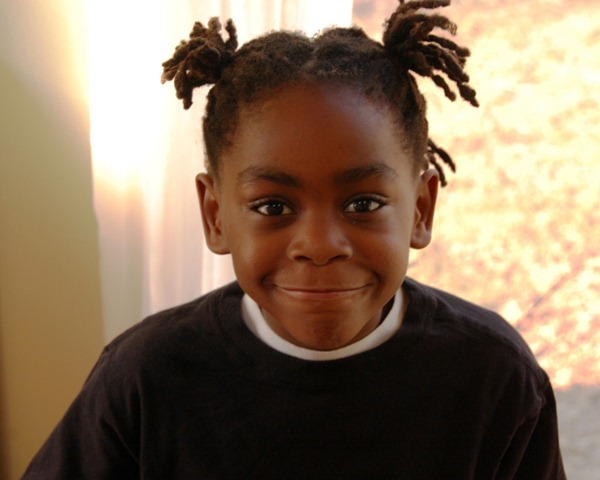
The Sociology of Gendered Masculinity: A Case Study of Two Young Boys

Never a Dull Moment is the family blog of the Johnson-McCormick Family. Kyle and Owen are their adopted twin sons. The wonderful post is about their nearly seven-year-old boys wanting to go to their new school with pony tails for the first time.

Kyle followed through, but Owen decided to wear purple nail polish instead. The really cool part, besides them wanting to something like this, is that their family supports them in defining their gender how ever they want to define it - and helps them prepare for the teasing and ridicule they will get at school. (I can't say what role the family has in encouraging their gender fluidity, but it seems a very healthy way to raise their kids, as long as it is not coerced).

So very awesome.

Their mother, Heather (an Associate Professor of Sociology at Lehigh University), knows that they have some power and privilege (they are exceptional athletes, and in boys that confers power) that gives them more freedom to challenge gender norms. But Heather is clear that freedom and privilege like theirs carries some responsibility.

The Sociology of Gendered Masculinity: A Case Study of Two Young Boys

kyle's ponytails 2

I snapped this picture of Kyle right before he left for school this morning. For the past few days he has been planning this day: Wednesday—the day he was going to wear ponytails to his new school for the first time. On a few occasions K & O had gone to school with ponytails in their hair at their old school, but they were much younger then. The older they get, the more deeply engrained gender is amongst their peers; the more firm the gender divides; and the more established the unwritten rules, roles, and expectations become around gender. So, when Kyle first started talking about wanting to wear ponytails to his new school (now, at age 6.75), I was nervous for him. We talked about it quite a bit, and quite often, over the past few days.

Me: “So, you know some kids will make fun of you, right? What will they say?”

Kyle: “They’ll say, ‘Boys can’t wear ponytails! Only girls wear ponytails!”

Me: “And what will you do when they say that?”

Kyle: “I’ll say, ‘Boys CAN wear ponytails! Because SEE?!! I’m wearing ponytails!!!!!! And I’m a boy!!!!!!!!”

Both Owen and Kyle were fully on board with this. Owen ended up wearing purple nail polish to school today instead of ponytails… with the same intended point to make to his peers. We talked and talked about it, mainly with me playing devils advocate, verbally hypothesizing all the possible scenarios, and them explaining in detail how they’d handle each one. And I also asked questions. Throughout they were self-confident about their plan, calmly excited to do it, and determined.

Me: “Why do you want to do this?”

K & O: “We don’t know! We just want to!”

I’ll admit— it makes me both proud of them, and anxious for them. There is a part of me that—at this point (as they are almost 7)—wants to frantically prohibit them from doing it, in a panicked desire to protect them from possible damage that might result. They are, after all, black boys in a fairly diverse, but still, majority white school. Their new school is a Quaker Friends School – we’d like to hope it would be the place where gender bending could safely happen – and yet we know the reality of the situation: gender bending is a social risk for boys in virtually any arena… even the most liberal of mainstream spaces. And so, I was tempted to try to convince Kyle to not wear the ponytails. I was tempted to try to convince Owen to not wear the purple nail polish. I was tempted out of my fiercely protective motherly instinct. But another part of me felt really proud of my self-confident, self-assured, playing-around-with-the-rules, and questioning-the-status-quo boys.

As their sociologist mother, I am sure it is no coincidence that their chosen day to make their big statement was a Wednesday. I am not sure if they are fully cognizant of it or not, but there are two reasons why Wednesdays are significant for this: 1) Every Wednesday is an all-school assembly, so they will be seen by everyone, and thus get the biggest possible reaction, and 2) Wednesdays they have basketball after school.

Kyle and Owen are, by far, the best basketball players amongst their peers. They are, unquestionably, superb athletes. They are too young to play for the school’s real team, so basketball for them is the once-weekly-basketball-intramural-program for the kids younger than 4th grade. It is sort of the “Junior Varsity” of the elementary school set, if you will. The coach quickly noticed what good players Kyle and Owen are, and established a rule that they needed to be separated onto different teams for any scrimmage or match (because otherwise they will ridiculously dominate). Yesterday when they played basketball outside during recess Kyle and Owen somehow managed to get themselves onto the same team, and they won 22 to 1 (according to them, they “let the other team get that one basket,” because, “they felt sorry for them”). According to Kyle and Owen, the other kids “told on them,” saying it wasn’t fair, that it was no fun to play if K & O are allowed to be on the same team, and in response the teachers apparently set a new school rule that even at recess Kyle and Owen must always be on separate teams. This is all just to say: they are really good at basketball. And this is important. Because, of course, for boys, athletics and masculinity go hand-in-hand.

Kyle and Owen’s athletic superiority is unquestionable. And thus, Kyle and Owen have that extra-special-privileged shield of boyhood: the shield of unquestioned masculinity. And thus, they can get away with wearing ponytails and purple polish to school. Even on an All-School-Assembly day where everyone will notice.

Kyle and Owen also have a deep, core, forward-presented self-confidence. While as their mother I intimately know the vulnerable places of their fragile souls, the world sees them as unabashedly self-assured. I don’t think they are perceived as cocky (at least not yet, thank God, and we’ll need to continue to work on making sure that doesn’t develop as the years go on), but their self-confidence and social extrovertedness is unmistaken. This, for sure, only adds another layer to the unquestioned masculinity which gives them the gumption to do the “crazy” things that they do where gender is concerned.

In a strange coincidence (or maybe it isn’t a coincidence?), we are reading Barrie Thorne’s Gender Play in my undergraduate Sociology of Children and Childhood class right now. Yesterday I had the students come to class prepared to read aloud their favorite quotes from the book and then explain why they had chosen the quotes that they had. It led to the best discussion we’ve had this semester. As I listened to my college students talk about gender and childhood I couldn’t help but think of Kyle and Owen. As the discussion turned to gender-bending I told the class about my boys’ ponytails-and-purple-polish-plans for today. One of my favorite students of all time (I’ve had him in several courses), happens to be in that class. He’s a smart-as-a-whip, incredibly-nice-and-polite, gorgeous, very popular, huge, dark-skinned, black super-star football player from Nevada. He spoke articulately about the social power of boys who excel at athletics, about their unquestioned masculinity, and about how he himself used to wear pink sneakers and carry a pink backpack during high school. And then he said, “Don’t worry Heather, they’ll be just fine!” And in that instant I truly was assured. While I knew it to be true intellectually (from Gender Play and a hundred other studies I’ve read on the matter), it took that moment in class to allow me to know it to be true emotionally.

And so, this morning as they left for school, at my intellectual, moral, philosophical, and emotional-motherly core I was more than o.k. with the ponytails and purple polish. While I could write a whole other post on the fundamentally problematic complications that all of this raises in regards to the privilege my boys carry that other boys don’t (etc., etc., etc.), for now I am alright with savoring this moment of watching my boys use this part of their privilege to question the power structures of gendered masculinity and femininity. It is a first step in one of the most basic things we’re trying to convey to them in our parenting: that with great privilege comes great responsibility, and we must use our privilege to question the power structures. As they walked out the door, I was, in my mind’s eye, jumping up and down in the bleachers, ecstatically cheering for them on the court of this gender game. Just like I scream, “THAT’S MY BOY!” when they shoot the ball into the hoop, I was screaming “THAT’S MY BOY!” watching them head off to school.

three 1


Will H. Courtenay - Dying to be Men: Psychosocial, Environmental, and Biobehavioral Directions in Promoting the Health of Men and Boys

I found this book on a site called Psychotherapy and Counseling Arena, which I believe is an arm of Routledge Publications (they also include Guilford and Psychology Press). This looks like a good book - added it to my wishlist.

Any book that addresses issues of mental and physical health for boys and men and does so in a comprehensive way is a useful and important book. Unfortunately, this is not a book that mainstream readers will buy - it's aimed at academics and healthcare professionals.

Amazon has it for under 30 dollars (pb) - it lists at 39.95.

Dying to be Men - Psychosocial, Environmental, and Biobehavioral Directions in Promoting the Health of Men and Boys

By Will H. Courtenay

Series: Routledge Series on Counseling and Psychotherapy with Boys and Men.

Masculinity has a powerful effect on the health of men and boys. Indeed, many of the behaviors they use to "be men" actually increase their risk of disease, injury, and death. In this book, Dr. Will Courtenay, an internationally recognized expert on men’s health, provides a foundation for understanding this troubling reality. With a comprehensive review of data and literature, he identifies specific gender differences in the health-related attitudes, beliefs, and behaviors of men and boys and the health consequences of these differences. He then describes the powerful social, environmental, institutional, and cultural influences that encourage their unhealthy behaviors and constrain their adoption of healthier ones. In the book’s third section, he more closely examines the health needs of specific populations of men, such as ethnic-minority men, rural men, men in college, and men in prisons. Courtenay also provides four empirical studies conducted with multidisciplinary colleagues that examine the associations between masculinity and men and boys’ health beliefs and practices. Finally, he provides specific strategies and an evidence-based practice guideline for working with men in a variety of settings, as well as a look to the future of men’s health.

Medical professionals, social workers, public health professionals, school psychologists, college health professionals, mental health practitioners, academics, and researchers from a broad array of disciplines, and anyone interested in this topic will find it to be an extensively researched and accessible volume.

Table of Contents

I. Why Men and Boys Get Sick and Die Young 1. Key Determinants of the Health and Well-Being of Men and Boys: An Overview. 2. Behavioral Factors Associated with Disease, Injury, and Death Among Men and Boys.

II. Why Men and Boys do the Things that Make Them Sick and Kill Them Introduction: Who are the Men in "Men's Health"? 3. Engendering Health: The Social Construction of Gendered Health Beliefs and Behaviors. 4. Constructions of Masculinity and Their Influence on Men's Well-Being: A Theory of Gender and Health.

III. Specific Populations Introduction: Ethnicity Matters 5. Rural Men's Health: Situating Men's Risk in the Negation of Masculinity. 6. College Men's Health. 7. Preventive Health Strategies for Men in Prison.

IV. Emerging Research on Men, Masculinity, and Health Introduction: Youth Violence? Let's Call it What It Is. 8. Gender and Ethnic Differences in Health Beliefs and Behaviors. 9. Masculinity and Gender Role Conflict: Influence on Men's Likelihood of Engaging in High-Risk Behaviors. 10. Measurement of Men's Help Seeking. 11. The Drive for Muscularity and Masculinity.

V. Reaching Men Introduction: Making Health Manly: Social Marketing and Men's Health. 12. Counseling Men about Their Health: An Evidence-Based Practice Guideline. 13. Designing Effective Programs and Services for College Men: Applying the Six-Point HEALTH Plan and Other Evidence-Based Strategies.

VI. Looking Forward Introduction: Teaming Up for the New Men's Health Movement. 14. A Global Perspective on the Field of Men's Health.

The book has endorsements from a lot of big names, including . . . .
  • Ronald F. Levant, EdD, ABPP, 2005 President, the American Psychological Association; Professor of Psychology, the University of Akron
  • Christopher Kilmartin, Ph.D., Professor of Psychology, University of Mary Washington
  • Michael Kimmel, PhD, Professor of Sociology, SUNY at Stony Brook
  • Jed Diamond, PhD, LCSW, founder and Director of MenAlive
  • William S. Pollack, PhD, ABPP, Associate Clinical Professor, Harvard Medical School; Founder and Director, Centers for Men & Boys

The Onion News Network - Cases Of Shaken Manchild Syndrome On The Rise

A little humor to start the day. While frustrated parents may feel driven to violently shake their video game-playing grown children who still live at home, it can have serious medical consequences. Ben Stiller has even filmed a PSA to help people become aware of this serious issue.


Cases Of Shaken Manchild Syndrome On The Rise


Wednesday, March 23, 2011

In Male Mice, No Serotonin = No Sexual Preference

http://funnydb.com/full_241215799720.jpg

Somehow I doubt it's that simple in humans. If you could knock out serotonin in humans, assuming they lived (which is a big assumption), you'd have some seriously depressed and/or anxious and/or violent human beings. Probably not a good idea.

Besides, we've been messing with human serotonin levels for nearly 50 years now - you think someone might have noticed if there were any serious side effects . . . like changing sexual preference.

Sexual preference chemical found in mice

Mice

Serotonin controls a male mouse's choice of partner.

A chemical in the brain controls sexual preference in mice, according to scientists in China.

Male mice bred without serotonin lose their preference for females, a report in Nature says.

The researchers say it is the first time that a neurotransmitter has been shown to play a role in sexual preference in mammals.

Experts have warned about the dangers of drawing conclusions about human sexuality.

The research team first bred male mice whose brains were not receptive to serotonin.

A series of experiments demonstrated that these mice had lost the preference for females shown by unmodified males.

When presented with a choice of partners, they showed no overall preference for either males or females.

"Any potential links between serotonin and human sexual preferences must be considered somewhat tenuous” ~Professor Keith Kendrick, Neuroscientist

When just a male was introduced into the cage, the modified males were far more likely to mount the male and emit a "mating call" normally given off when encountering females than unmodified males were.

Similar results were achieved when a different set of mice were bred. These lacked the tryptonphan hydroxylase 2 gene, which is needed to produce serotonin.

However, a preference for females could be "restored" by injecting serotonin into the brain.

The report concludes: "Serotonergic signalling is crucial for male sexual preference in mice. This is the first time, to our knowledge, that a neurotransmitter in the brain has been demonstrated to be important in mammalian sexual preference."

Humans

Sexual behaviour in mice is thought to be driven by their sense of smell.

Professor Keith Kendrick, a neuroscientist at the Babraham Institute in Cambridge, said: "In terms of having potential relevance to understanding human sexual preference/orientation, we are of course far less influenced by odour cues in this context than mice are.

"There is some very limited evidence for altered responses to selective serotonin uptake inhibitors (SSRIs) in the brains of homosexuals, but we have been using psychoactive drugs which either increase or decrease serotonin function for quite some time now, and while effects on sexual arousal, impulsivity and aggression have often been reported, no effects on sexual preference/orientation have.

"At this time therefore any potential links between serotonin and human sexual preferences must be considered somewhat tenuous."


DocMosh - Manning Up (On Kay Hymowitz)

http://www.seth-rogen.com/Seth-Rogen-Wallpaper-2-big.jpg

DocMosh is the new blog from my friend, co-author, and occasional teacher, Dr. Mosher. In one of his first posts, he tackles the recent interview with author Kay S. Hymowitz about her new book, Manning up: How the rise of women has turned men into boys.

Before getting to the point, here is his statement of purpose for his new blog:
My point of view is that of a trained social scientist, musician, and consumer of popular culture. I hold no authority as a spokesperson for any community represented here (how ultra post-modern of me), nor do I claim that all my personal stories are factual, mine, or logical. The purpose of these posts is to raise questions around community, sexuality, gender, popular culture, education, psychology, and sociology. Well, and to have fun. Camus and Sarte spent many hours expressing concepts related to who we are: who am I and why am I alone? In the 21st-century, I want to ask, where are we, and what is aloneness? My intent is to deconstruct narrative, raise questions around the constructs, solicit responses for discussion, and attempt to reassemble meaning; part academic, part amusement = acamusement or edutainment. I better stop before I assign too much meaning to all this. Enjoy and post away! I await your contribution.
OK now, here is a taste from that interview with Kay Hymowitz.
MyDaily: What inspired you to write this book? Did you expect it to be so controversial?
Kay Hymowitz: I was inspired for three reasons. One, I had three children who were either in their twenties or nearing their twenties, and it seemed that they were confronting a very different culture and economy than I encountered at their age. Two, I was aware that something very new to human experience was happening with women, as in, having women who were more educated, earning more (as single, childless woman are) and by all counts more ambitious than the men who were their peers. Three, I started to wonder about this persona that was so popular in the media; the kinda goofy, schlubby young guy. Who was he appealing to and why was he so prevalent? Why were we getting all these movies with stars like Will Ferrell and Adam Sandler?

About the controversial aspect of it -- I think the original excerpt that appeared in the Wall Street Journal gave an impression of the book as more anti-male than it is.

Don't get me wrong, I'm very happy with the publicity, and I don't mind people arguing about it, as long as I can get my two cents in.

OK, so since they're at the heart of your book, what exactly is a "pre-adult"?
Pre-adults are young, educated, single people between the ages of about 21 and 35, approximately. Sociologists have come to the conclusion that we are witnessing a new life stage. Most of them refer to it as "emerging adulthood." I thought that a better term was "preadulthood."

It's a new stage because people are reaching the usual milestones of adulthood later than they have in the past. And those milestones, at least in this culture, are usually considered to be independent living, marriage, and children. So those things are happening late, but there's something else that's different, which is that we have this enormous group of young people living on their own, usually in the city (because that's where the jobs are), and creating their own subculture. People have married later at other points in history, but what's different is that they were not able to live on their own or with roommates, because they didn't have their own money, and so they had very little social presence.

What is a child-man?
So the child-man is the young guy who finds himself in this new era of preadulthood and doesn't quite feel himself a man, and is of course not a child, but is still very attached to many of his adolescent pleasures, and hangs out a lot with his bros. He's the audience for a lot of the new media that have arisen to entertain him. And I'm referring to Maxim magazine, plenty of cable channels, and characters played by Seth Rogen and Adam Sandler.

I see the child-man as representing a continuum of characters. On the one hand you have the most noxious versions, like Tucker Max (lest we forget or try to pretend that he doesn't actually exist -- he's selling a million copies of his book about drinking, hooking up, and his bathroom exploits). And then we have the nerds and geeks who are just not quite comfortable with women, who are still a little boyish in their relations with the opposite sex. And then you get another type, which is kind of passive or listless. The guy who just isn't sure what he's supposed to be doing next. The best representation of that is a fictional charter created by Benjamin Kunkel in the novel "Indecision." I don't believe the character is completely fictional...
So the child-man can take varied forms.
I have my own perspective this, which is more about cultural transformation than it is about a new life-stage, a la Erik Erikson. I see a lot of young men these days operating in a liminal space between the old hegemonic way of being men and the not-yet-articulated (perhaps self-authored) way of being men. I see these guys as the New Middle Men - stuck betwixt and between.

DocMosh has a little different take on it:

Kay, I do admire your analysis of sociopolitical and sociohistorical trends. You are correct. This is such a unique time for young men. Being 38 myself, I still feel the nips of fire on my heels as I look for social rules, norms, and contexts for being a young, gay, masculine man in this society. I assure you, though, changes in expectations, rules, norms, and values are for the better. Men can be emotional, and not just towards women. Men can love, and not just their wives. Men can engage in meaningful relationships, and not just with potential young female mates. Men are not defined by women alone. We are defined by what we see, what we buy, what we consume in popular culture, what we want, and what we…feel. Yes feel. These archtypes you speak of (e.g., Seth Rogen, and I might add Michael Cerra) are refreshing, liberating, scared, threatening, in-touch and NEW. Their NEW forms of masculinity are needed. The path you project leads to loveless marriages, over population, heterosexual norms, assumed hegemonic heterosexuality, and, dare I say, war.

William Pollack and Dan Kindlon both support the ideas that young men need more emotional input in their lives. I am of the opinion that we need new forms of masculinity in this new millennium. Emo boys can grow up to be emo contributors to society; soft spoken, reflective, sensitive boys can grow up to be confident leaders. Do the founders of Google and Youtube fall into the man-child category? Kay, I admire your attempts to show us what is happening, and wonder if you might want to adapt the context of change to what is already happening not to old standards and dead values.

I share a lot of his sentiments here - and I want to take the metaperspective - both/and is the way to go.

I look forward to seeing more from DocMosh.


Tuesday, March 22, 2011

Do We Need a Prescription to Get Quality Fish Oil?

I've seen the commercials, you've probably seen them too. Big Pharma has produced a prescription grade omega-3 supplement, er medicine, that they want us to buy instead of eating fish or taking regular fish oil supplements.

Chris Shugart at T-Nation noticed the commercials and asked Mike Roussell, a PhD nutritionist and the founder of Naked Nutrition, for his take on this topic. He offers a good review of the limited comparative research - which shows the isolated prescription formula performed worse than the "normal" fish oil.

I edited out the Biotest advert at the bottom, so here it is, briefly, and up front:

Highly-purified, molecularly distilled fish oil supplements like FlameoutTM (a Biotest product) provide a safe and potentially more effective alternative to prescription omega-3s.

Supplement Research Update: The Truth About Prescription Fish Oil

In the Beginning...

In the early days, fish oil supplementation was crude. You couldn't get the high doses needed without suffering the unwelcoming side effects: fishy taste, heartburn, diarrhea, and fish farts. (1)

The purification process for fish oil supplements began to advance as the demand for high-quality products grew. Today you can easily get your hands on the good stuff, but sadly, the shelves of your local discount retailer are still lined with fish oils containing impurities.

Enter Big Pharma

Lovaza fish oil Pills

Reliant Pharmaceuticals saw the need for "pharmaceutical grade" fish oil and began to devise a way to make a fish oil product that was +80% EPA/DHA compared to the 30% EPA/DHA that you'd find at the discount retailer. (2, 3) They were able to achieve this through a patented purification process, which housed EPA and DHA as ethyl esters instead of triglycerides.

Now, the triglyceride form is how EPA and DHA are normally found, with three fatty acids connected by a common "backbone."

In Big Pharma's ethyl ester form, EPA and DHA exist individually and not in the naturally occurring triglyceride structure.

Omega-3 ethyl esters were studied extensively, with the largest study containing over 18,000 subjects. (4) As a result of that study, the FDA approved omega-3 ethyl esters for the treatment of high triglycerides.

Thus, the first prescription fish oil supplement was born under the name Omacor. Today it's called Lovaza.

$200 Fish Oil Anyone?

While scientists worked on developing omega-3 ethyl esters, other scientists were optimizing molecular distillation techniques that allowed for 60% EPA/DHA purity – double the discount store's variety.

Despite the different chemical make-up of omega-3 ethyl esters and natural fish oil supplements, I've never heard a researcher refer to omega-3 ethyl esters as being superior to fish oil.

Are they? Does your body process the omega-3 ethyl esters differently than it would if you ate a piece of salmon or took some FlameoutTM? If so, do these differences warrant an omega-3 ethyl ester price tag upwards of $200 a month?

Comparing Purity

The higher percentage of EPA/DHA in your supplement, the less room there is for other fats, and more notably, the less room there is for chemical impurities like dioxins.

Molecularly-distilled fish oil products, like FlameoutTM, have impurities removed. The World Health Organization's standard for dioxins is less than two parts per million.

A molecularly-distilled fish oil product can contain as little as 0.3 parts per million dioxins. Would the 85% pure omega-3 ethyl ester product contain less? Probably. Is this difference going to impact your health? Probably not.

Comparing Effectiveness

So from a contamination standpoint, molecularly-distilled fish oil supplements and omega-3 ethyl esters stack up about the same. How does your body treat them? Up until this year there wasn't that much research to answer this question.

Two studies now point to a difference in bioavailability.

The first study, published in the journal of Prostaglandins, Leukotrienes and Essential Fatty Acids (or what I like to call "light bedtime reading") examined the bioavailability differences between fish oil supplements, including omega-3 ethyl esters. (3)

Researchers found the bioavailability of the omega-3 ethyl esters was -27% compared to the control fish oil (which was basically the equivalent of squeezing the EPA and DHA out of a salmon filet).

The difference wasn't statistically significant, although omega-3 ethyl esters were consistently worse performers in the different tests. Still, the findings didn't support omega-3 ethyl esters as being a superior product.

The European Journal of Clinical Nutrition published a study last month with twice as many subjects as the first one. (5) During the six-month time span, researchers gave subjects either a high-quality fish oil supplement – in the naturally occurring triglyceride form – or an omega-3 ethyl ester.

Researchers even measured subjects' omega-3 index to find the amount of EPA and DHA in red blood cell membranes. This is the best way to measure omega-3s in the body, because when EPA and DHA are in your red blood cell membranes they're locked and loaded, just waiting to be clipped off by the right enzyme and put to use.

The researchers found at months three and six that those receiving the high-quality triglyceride fish oil supplement had a much higher omega-3 index at both time points. Sorry, ethyl esters.


Research:

1) Belluzzi A, Brignola C, Campieri M, Pera A, Boschi S, Miglioli M. Effect of an Enteric-Coated Fish-Oil Preparation on Relapses in Crohn's Disease. New England Journal of Medicine 1996;334:1557-1560.

2) Bays H. Clinical overview of Omacor: a concentrated formulation of omega-3 polyunsaturated fatty acids. The American Journal of Cardiology 2006;98:71i-76i.

3) Dyerberg J, Madsen P, Mller JM, Aardestrup I, Schmidt EB. Bioavailability of marine n-3 fatty acid formulations. Prostaglandins, leukotrienes, and essential fatty acids 2010;83:137-141.

4) Dietary supplementation with n-3 polyunsaturated fatty acids and vitamin E after myocardial infarction: results of the GISSI-Prevenzione trial. The Lancet 1999;354:447-455.

5) Neubronner J, Schuchardt JP, Kressel G, Merkel M, von Schacky C, Hahn A. Enhanced increase of omega-3 index in response to long-term n-3 fatty acid supplementation from triacylglycerides versus ethyl esters. European journal of clinical nutrition 2011;65:247-254.


Vanna Le - Ask an Academic: The Secrets of Boys

http://www.karianna.us/reviews/Friends_Boys_Young.jpg

From the The New Yorker, Vanna Le interviews Niobe Way about her new book (March 15), Deep Secrets: Boys’ Friendships and the Crisis of Connection. Way found that young boys often describe their male friendships in deeply intimate ways. But as they grow older, they become increasingly distrustful, isolated, and alone.

I remember having those close friendships as a boy - and I remember feeling as though many of my friends were "competition" as a teenager. In the middle school years, a lot of things seemed to shift - the obvious hormones, increased social awareness, formation of more rigid in-groups and out-groups (in younger boys, these groups are more fluid), and of course, girls.

Along the way, we internalized some hard and fast rules about being men (be tough, be a player, be capable, and never be feminine). I'm sure there were other rules, but those are the ones that stick out for me.

Ask an Academic: The Secrets of Boys

secrets.jpg

In the late nineteen-eighties, Niobe Way worked as a counselor at an urban public high school, where she spent hours each day listening to teen-agers, especially boys, speak about their struggles with friendship, betrayal, and heartbreak. Boys and men are often seen through stereotypes as emotionally illiterate, stoic, and extremely independent. But that rings a bit false, as Way remembers, because the boys she worked with were much more complicated.

In her new book, “Deep Secrets: Boys’ Friendships and the Crisis of Connection,” Way reveals the intense intimacy that exists within boys’ friendships. Her research includes interviews with black, Latino, white, and Asian-American boys as they progressed through adolescence. In the first chapter, we meet Justin, a fifteen-year-old boy:

[My best friend and I] love each other … that’s it … you have this thing that is deep, so deep, it’s within you, you can’t explain it. It’s just a thing that you know that that person is that person … and that is all that should be important in our friendship … I guess in life, sometimes two people can really, really, understand each other and really have a trust, respect and love for each other. It just happens, it’s human nature.

Based on what Justin says, one might predict that this is a friendship bound to last, but as Way points out in the book, boys tend to become more distrustful, lose their friendships, and begin to feel increasingly isolated and alone as they reach “manhood.” Recently, Way, a professor in the Department of Applied Psychology at N.Y.U.’s Steinhardt School of Culture, Education, and Human Development, discussed her new book with me. An edited version of our conversation appears below.

Why boys?

My interest in boys’ development grew out of listening to my younger brothers and the boys I met while working as a counselor. I became fascinated by the discrepancy between the stereotypes of boys and what boys actually sounded like. I wanted to learn about their social and emotional developments, particularly during adolescence—the age during which boys are most heavily stereotyped as stoic and only interested in one thing (i.e., sex). I discovered that while boys do sound and act like stereotypes at times, they also often implicitly challenge such stereotypes especially in the context of their closest male friendships.

NiobeWay.jpg

Boys openly expressed to us their love for their friends and emphasized that sharing “deep” secrets was the most important aspect of their closest male friendships. They also told us that they would go “wacko” without these friends. I realized that these patterns among boys have been ignored by the larger culture because such expressions are considered by this culture as girlish and gay. Thus, to admit that boys have or want emotionally intimate male friendships, or to reveal their emotional sensitivity, is to implicitly accuse them of being gay. Rather than questioning why emotional sensitivity and emotionally intimate friendships are given a sex (female) and a sexuality (gay), we simply ignore boys’ friendships and the ways in which they do not fit our gender stereotypes.

What do boys want in friendships (with other boys)? How does that change as they grow older?

Boys want “deep depth” friendships with other boys in which secrets are shared, trust is total, and they have the confidence that their friend will not betray them or laugh at them when they are feeling vulnerable. These themes of intimacy are particularly evident during early and middle adolescence. During late adolescence, however, boys begin to lose their closest male friendships, become more distrustful of their male peers, and in some cases, become less willing to be emotionally expressive. They start sounding, in other words, like gender stereotypes. When they talk about intimacy that might remain in their closest male friendships, they use the expression “no homo” to underscore their heterosexual status. Questions about close friendships from the interviewers become, for the boys during late adolescence, questions about sexuality. Many of the boys in our studies spoke about feelings of loneliness and isolation during late adolescence and how they missed their formerly close male friendships. We heard these patterns of loss and distrust right at the moment in development that the rates of suicide among boys in the United States jumps up to become four times the rate of girls.

Why do these changes happen?

These changes occur during late adolescence because cultural pressures to become a “man” are intensified during this period of growth. In American culture, becoming a man is linked with being emotionally stoic, autonomous, and physically tough. If boys do not follow these dictates of manhood, they are perceived as gay or girlish—and boys who are heterosexual don’t want to be perceived in such ways. These changes also occur because boys, like girls, increasingly buy into the cultural belief that having a romantic partner makes you mature and happy and that these relationships are more important than friendships. They begin to believe that friendships should be sacrificed for the sake of romantic relationships.

Is this specific to just American boys?

My studies have focused almost exclusively on American boys. But, the studies I’ve done of boys (and girls) in China suggest that the patterns of intimacy among boys are also found in Chinese adolescent boys. Yet I do know that many cultures around the world emphasize the importance of male friendships much more than Americans do. American culture is a hyper-masculine one in which you might rarely see two heterosexual men holding hands. Such signs of affection are common in many parts of the world outside of the States.

Throughout the book, you bring up the phrase “no homo,” something that boys—both younger and older—will use to indicate that they are not homosexual. How did this term originate, and why is it used so often?

This term is used to indicate that what they are saying is not evidence of homosexuality. Boys, particularly during late adolescence, used this phrase when they revealed something that could be misinterpreted as evidence of homosexuality in our culture…. For example, boys would say: “I will stick by him through thick and thin, no homo,” or “I share all my deep secrets with him, no homo.” This is strong evidence that while we may think we live in a progressive culture in which being gay or a girl is considered as positive as being a heterosexual boy, we remain in a culture that uses “gay,” “girly,” or simply “girl” as a slander for boys and girls (e.g. “you are such a girl”). The phrase “no homo” is used so often by heterosexual boys. This also includes those from New York City, who don’t want to be perceived as gay or girlish even if they wear skinny jeans or tight T-shirts.

Why should we be alarmed by the pattern and nature of boys’ friendships?

We should be alarmed because research about the relationships between boys consistently reveals that friendships are key to all aspects of well-being. Close friendships provide a sense of self-worth, validation, and connectedness to the larger world and significantly enhance psychological, physical, and academic health. Adolescents without close friendships are at risk of depression, suicide, dropping out, disengagement from school, early pregnancy, drug use, and gang membership. Research has even suggested that the effects of the quality of friendships on adjustment may be stronger for boys than for girls. Health researchers find that people with strong friendships are less likely to get colds and common illnesses than people with fewer friends. Study after study has underscored the importance of close friendships throughout the lifespan.

In addition, much of the way we think about parenting and schooling boys is based on gender stereotypes. Even the most recent school reforms, such as creating curriculums, are based on gender stereotypes. The fact that boys do not consistently fit gender stereotypes suggests that we need to rethink how we parent boys as well as what we are doing in schools to foster boys’ development. Recent scholarship in neuroscience, developmental psychology, psychiatry, and evolutionary anthropology are emphasizing the empathic and coöperative nature of all humans. Thus, we should also be relieved, and not simply alarmed, to discover that boys and men are human, too.

How can we help boys and girls (as well as men and women) to remain better emotionally connected to one another?

We need to rethink how we are defining maturity, which, in this culture, is equated with independence, autonomy, and separating from others. I think maturity should be defined as the ability to have mutually supportive, intimate, and deeply empathic relationships. If that was the epitome of maturity, the way we think about parenting and about schooling our children would radically change. In addition, if we paid attention to the decades of research underscoring the importance of friendships for the psychological health of males and females, we would also change the way we parent and school our children. Rather than autonomy, independence, or critical thinking being the goal of development, the goal would be to foster children’s social, emotional, and cognitive capacities so that they can thrive in all areas of their lives.

A program called “Roots of Empathy” is now being implemented in schools across Canada, in which they try to foster empathy among school children to try and prevent bullying and other sorts of negative school behavior. Schools that have integrated this curriculum into their schools have lower rates of bullying and higher rates of positive engagement in school. The U.S. should follow Canada in this respect. Parents and teachers need to understand that fostering children’s social and emotional well-being is just as important as fostering their academic achievement and that student achievement is linked to social and emotional well-being. Once we recognize that fact, we will be off to a brighter future.


Monday, March 21, 2011

Poem: "in the ruins" by Mark Conway

http://freshideasnutritainment.files.wordpress.com/2009/04/gloria-in-ruins.jpg?w=300&h=318


in the ruins

by Mark Conway
we drank in the remains
of ruined buildings
and we sat in a cave or
wrecked houses on farms given back to the bank
listening to men who'd been raised
in ways that were lost
and we strained to make out
the use of their news
they were crazy or passed out
speed notched with a cross
they drank from the flask and the mouth
they came in and shook off the rain
inflamed and dismayed
calm and arcane
the least one seethed chanting whitman for hours
then wept at the dregs of the fire
foam formed at the edge of their lips
we drank and waited for something to drop
you and I looking and sifting
for signs written in wax
we were young we knew how to die
but not how to last
a small man who claimed he was blake raged
all night and probably he was
he had god in his sights
white crosses shone in our eyes or acid mandalic
in the ruins the men talked:
seraphic and broken
glowing with gnosis and rubbish
we sorted their mad sacred words
these dog-headed guides to the life after
and the life after that