Monday, May 23, 2011

Mushroom compound suppresses prostate tumors

http://www.mushroommaster.com/images/mushrooms/turkeytail.jpg

If this is true, it's a huge breakthrough, but I am skeptical. I'll run it by my client who does cancer research tomorrow and get her take on it.

Mushroom compound suppresses prostate tumors

Posted On: May 23, 2011

A mushroom used in Asia for its medicinal benefits has been found to be 100 per cent effective in suppressing prostate tumour development in mice during early trials, new Queensland University of Technology (QUT) research shows.

The compound, polysaccharopeptide (PSP), which is extracted from the 'turkey tail' mushroom, was found to target prostate cancer stem cells and suppress tumour formation in mice, an article written by senior research fellow Dr Patrick Ling in the international scientific journal PLoS ONE said.

Dr Ling, from the Australian Prostate Cancer Research Centre-Queensland and Institute for Biomedical Health & Innovation (IHBI) at QUT, said the results could be an important step towards fighting a disease that kills 3000 Australian men a year.

"The findings are quite significant," Dr Ling said.

"What we wanted to demonstrate was whether that compound could stop the development of prostate tumours in the first place.

"In the past, other inhibitors tested in research trials have been shown to be up to 70 per cent effective, but we're seeing 100 per cent of this tumour prevented from developing with PSP.

"Importantly, we did not see any side effects from the treatment."


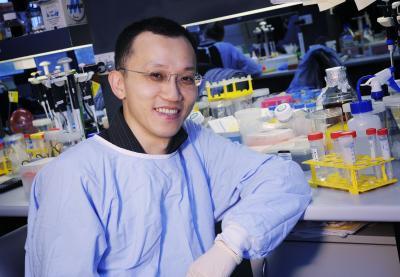
Dr. Patrick Ling says this is the first time the PSP compound has been proven to have anti-cancer stem cell effects.

(Photo Credit: Erika Fish, QUT.)

Dr Ling said conventional therapies were only effective in targeting certain cancer cells, not cancer stem cells, which initiated cancer and caused the disease to progress.

During the research trial, which was done in collaboration with The University of Hong Kong and Provital Pty Ltd, transgenic mice that developed prostate tumours were fed PSP for 20 weeks.

Dr Ling said no tumours were found in any of the mice fed PSP, whereas mice not given the treatment developed prostate tumours. He said the research suggested that PSP treatment could completely inhibit prostate tumour formation.

"Our findings support that PSP may be a potent preventative agent against prostate cancer, possibly through targeting of the prostate cancer stem cell population," he said.

He said PSP had been previously shown to possess anti-cancer properties, and 'turkey tail' mushrooms (known as Coriolus versicolor or Yun-zhi) had been widely used in Asia for medicinal benefits.

However, Dr Ling said it was the first time it had been demonstrated that PSP had anti-cancer stem cell effects.

Although 'turkey tail' mushrooms had valuable health properties, Dr Ling said it would not be possible to get the same benefit his research showed from simply eating them.


Psych Central - Hard to Find a Male Therapist?

http://i.cdn.turner.com/cnn/2010/LIVING/06/21/tf.dragged.husban.counseling/story.husband.therapy.ts.jpg

Yesterday I posted an article from the New York Times on the challenges of finding a male therapist - and the likelihood that it will get tougher in the future as current therapists retire and the current 5:1 ratio of women to men becomes more felt in the marketplace.

Dr. John Grohol, the CEO and founder of Psych Central, basically says, "So what?"

I think he is seeing the issue only from a mental health perspective - there seems to be no recognition of the gender issues some men may have in choosing a therapist. As the NYT article suggests, many men (not all, but a significant number) would prefer to have a male therapist.

Likewise, there are many instances when a male therapist is desirable for women, too. Several women who read the last post felt that a male therapist was their preference and was necessary for their growth. I am about to begin my practicum and internship at a facility that works with sexual assault victims - I will be the only male intern, and they are glad to have me.

I was told that they sometimes prefer a male therapist for some clients to allow a powerful transference (my supervisor is classical psychoanalytic) and to act as a model of a male who is not violent and who does not treat them badly.

Considering these factors and others, there is a need for more male therapists, in my opinion.

Hard to Find a Male Therapist?

By John M Grohol PsyD
Founder & Editor-in-Chief

Hard to Find a Male Therapist

Well, yes. Fewer men are choosing clinical psychology as a profession.

We’ve known this for many years, as graduate programs in psychology — both Master’s level and doctoral — have increasingly become female-dominated. In my graduate class of 1990, over 75% of the class was female. That percentage has only increased in the past two decades.

So Benedict Carey’s new article in the New York Times is a bit of a puzzler. The angle is that because of this gender discrepancy, a good male therapist is increasingly becoming difficult to find:

Researchers began tracking the “feminization” of mental health care more than a generation ago, when women started to outnumber men in fields like psychology and counseling. Today the takeover is almost complete.

And I say, “So what?”

I say that only because while I think everyone should have their choice of therapist gender, there’s virtually no research demonstrating that there’s any relationship between therapist gender, client gender and treatment outcomes. Since there’s no data, it’s hard to get too worked up about a trend that started over 30 years ago.

So instead of data, Carey trots out a few — mostly male — therapists to sound the warning bells:

“There’s a way in which a guy grows up that he knows some things that women don’t know, and vice versa,” said David Moultrup, a psychotherapist in Belmont, Mass. “But that male viewpoint has been so devalued in the course of empowering little girls for the past 40 or 50 years that it is now all but lost in talk therapy. Society needs to have the choice, and the choice is being taken away.”

Actually, without data, we don’t know that “the choice is being taken away.” We know that there are less male therapists than there were 30 years ago. But we don’t know whether that makes any difference. Are fewer men seeking therapy because of it? Are men who do seek therapy from a woman when they wanted to see a male worse off because of it?

These are good questions to ask. But without research, we don’t know the answers.

Despite these complaints - and more, so read the whole article - Grohol still recommends the NYT article.


Sunday, May 22, 2011

Poem: "Handshake Histories" by Jeff Hoffman

https://blogger.googleusercontent.com/img/b/R29vZ2xl/AVvXsEgS2TksnDE_SprwIxTONxVQSMow_Ac4Mk-HZTClWtaYRFCNjHO32otZfXogD4ASKLerH2krG2e66QiigVLYGhyGimqb8PajnYHnCgQZUs1Bea45JSL9cPeZsfNh1GO5Dw1-8p1qkQtPawoF/s1600/wooden_cigar_indian.jpg


Handshake Histories
by Jeff Hoffman

          Summer, 1983   They're locked together outside a gift shop outside the Badlands: a statue Indian shaking hands with a statue cowboy. The Indian's head feathers  hang down, subdued; the cowboy's hat tilts up at the front— invitation, forgiveness. His six-shooter, holstered, juts out from the wood, and I trace it, guiding two fingers  along a well-worn stream that ends at the Indian's leather vest tassels: When I touch them they should be soft but are not. My family floats somewhere apart from me;  I do not think of my family. The Indian creeps into the mist of a forest, lifts his hatchet toward a rustle in the distance. The cowboy kicks  the ribs of his horse, wrecks onward through a blizzard of dust. And far away the speck of Rushmore's faces scoured—by sun, by wind—one layer more lean.


Need Therapy? A Good Man Is Hard to Find


In my counseling program, the average male to female ratio is about 4:1 or 3:1 at best (my cohort). In recent years, there have been several cohorts with only one or two males. The article reports a 5:1 ratio.

In yesterday's New York Times, Benedict Carey posted an article - Need Therapy? A Good Man Is Hard to Find - about the dearth of male therapists and the resulting inability of men who want therapy to find a male therapist with whom to work.

I've seen only one male therapist in my life, for a men's group, and I would have to say my experience with female therapists was mostly good - and it had nothing to do with their sex. But, on the other hand, I was dealing with some issues that are not gender specific, so there was not the absence of experience that Dr. Levant mentions later in this article.

Researchers began tracking the “feminization” of mental health care more than a generation ago, when women started to outnumber men in fields like psychology and counseling. Today the takeover is almost complete.

Men earn only one in five of all master’s degrees awarded in psychology, down from half in the 1970s. They account for less than 10 percent of social workers under the age of 34, according to a recent survey. And their numbers have dwindled among professional counselors — to 10 percent of the American Counseling Association’s membership today from 30 percent in 1982 — and appear to be declining among marriage and family therapists.

Some college psychology programs cannot even attract male applicants, much less students. And at many therapists’ conferences, attendees with salt-and-pepper beards wander the hallways as lonely as peaceniks at a gun fair.

The result, many therapists argue, is that the profession is at risk of losing its appeal for a large group of sufferers — most of them men — who would like to receive therapy but prefer to start with a male therapist.

“There’s a way in which a guy grows up that he knows some things that women don’t know, and vice versa,” said David Moultrup, a psychotherapist in Belmont, Mass. “But that male viewpoint has been so devalued in the course of empowering little girls for the past 40 or 50 years that it is now all but lost in talk therapy. Society needs to have the choice, and the choice is being taken away.”

The reasons for the shift are economic as well as cultural, most people in these professions agree. Managed care took a bite out of therapists’ incomes in the 1990s. Psychiatry, the most male-dominated corner of therapy, increasingly turned to drug treatments. And as women entered the work force in greater numbers, they proved to be more drawn to the talking cure than men — in giving the treatment as well as in receiving it.

“Usually women get blamed when a profession loses status, but in this case the trend started first, and men just evacuated,” said Dorothy Cantor, a former president of American Psychological Association who conducted a landmark study of gender and psychology in 1995. “Women moved up into the field and took their place.”

The impact of this gender switch on the value of therapy is negligible, studies suggest. A good therapist is a good therapist, male or female, and a mediocre one is a mediocre one. Shared experience may even be a impediment, in some cases: therapists often caution students against assuming that they have special insight into person’s problems just because they have something in common.

Still, perception is all important when it comes to seeking help for the very first time. In a recent study among 266 college men, Ronald F. Levant, a psychologist at the University of Akron, found that a man’s willingness to seek therapy was directly related to how strongly he agreed with traditionally male assumptions, like “I can usually handle whatever comes my way.” Such a man on the fence about seeking treatment could be discouraged by the prospect of talking to a woman.

“Many men like this believe that only another man can help them, and it doesn’t matter whether that’s true or not,” Dr. Levant said. “What’s important is what the client believes.”

Both male therapists and men who have been in treatment agree that there are certain topics that — at least initially, all things being equal — are best discussed within gender. Sex is one, they say. And some men are far less ashamed about affairs when speaking to another man.

Aggression is another. Many men grow up in a world of hostile body language and real physical violence that is almost entirely invisible to women. A bar fight that sounds traumatic to a female therapist may be no more than a good night out for a man. Likewise, a stare-down in the sandbox that looks vanishingly trivial from a distance may lie like a poisoned well in the stream of the unconscious.

In some men’s groups he used to run, Dr. Levant passed out index cards and had each participant write down the one thing he was most ashamed of, that he was reluctant to admit to himself, much less to anyone else. “I would get things like, ‘I backed down from a fight in junior high school,’ ” he said, “and these were mostly middle-aged, married guys.”

In just the past few years, psychologists have identified a number of issues that are, in effect, male versions of the gender-identity issues that so many mothers face in the work force: the self-doubt of being a stay-at-home father, the tension between being a provider and being a father, even male post-partum depression.

“In the same way that there is something very personal about being a mother, something very important to female identity, the experience of fathering is also very powerful,” said Aaron Rochlen, a psychologist at the University of Texas, Austin. “And some men, I think, prefer to talk about that — the joy of being a father, the stress, how it’s impacting them — with a therapist who’s had the same experience,” from the same point of view.

If they can find one, that is. “I remember when I started training, I looked around and realized that for the first time in my life, I was an endangered minority,” said Ryan McKelley, a psychologist at the University of Wisconsin, La Crosse. “Now I tell my male students, if you’re interested in clinical care, you can write your own ticket. You’ll be hired immediately.”

I think that as men become more aware of their entrapment within traditional masculinity models and roles, there will be an increase in men seeking therapy - and there will be a need for more male therapists.

For a lot of men still living in the traditional roles, there is likely a suspicion that a female therapist could not possibly understand them. If they get to the point of seeking therapy, they may only feel comfortable talking to another man.

They should have that option available to them.


Saturday, May 21, 2011

In Tennessee You Can't Say Gay, so Say Takei!

http://img.perezhilton.com/wp-content/uploads/2011/05/dont-say-gay-not-okay__oPt.jpg

So if you can't say the word "gay," gay people cease to exist in our children's world? Is that the logic of pretending that gay people don't exist (but only until the kids are in 8th grade, then they all suddenly exist again)? Maybe that would work with poverty and ignorance, too?

What a bunch of dumbasses. Maybe I should be compassionate toward their ignorant and backward thinking, but I can't - they are trying to teach kids, albeit indirectly, that 3-5% of the population does not exist.

Tenn. Senate OKs ban on teaching of homosexuality

Critics deride the chamber's passage of the "don't say gay" bill

Tenn. Senate OKs ban on teaching of homosexuality
Wikimedia/Kaldari
Tennessee State Capitol building

A bill passed Friday by the Tennessee Senate would forbid public school teachers and students in grades kindergarten through eight from discussing the fact that some people are gay.

Opponents deride the measure as the "don't say gay bill." They say it's unfair to the children of gay parents and could lead to more bullying. Supporters say it is intended to give teachers clear guidance for dealing with younger children on a potentially explosive topic.

The bill isn't likely to be taken up by the House before lawmakers adjourn this spring, but the sponsor there has said he would push it forward in 2012 when the General Assembly comes back for the second year of the session.

Passage would make Tennessee the first state to enact such legislation, according to the National Conference of State Legislatures. In 2003, Washington defeated a proposal similar to Tennessee's, as did California in 2005 and 2006. A Louisiana law forbids the use of sexually explicit materials depicting homosexuality in sex education classes.

Read more - unless is will make your head explode.

On the lighter side, if you can't say "gay," say Takei - George Takei. This bit of levity comes from The New Civil Rights Movement:

Post image for George Takei Says, Can't Say Gay? Say Takei! (Video)

George Takei, star of Star Trek TOS, and a popular LGBT activist and cult hero, has a few words for our friends in Tennessee. The Tennessee state senate this week passed a bill that bans the use of the word “gay,” or any reference to homosexuality. The “don’t-say-gay” bill could be passed in the House next year and if the Governor signs it, it will become law.

So George Takei has offered his services — and his name — to the state of Tennessee.

If you can’t say “gay,” say, “Takei!”

Oh, and if you’re in Tennessee, there’s a rally on Sunday to protest (what must be) the unconstitutional bill.

Remember, it’s OK to be Takei! (all proceeds go to charity)

Start The Day With A Protein-Rich Breakfast To Reduce Food Cravings, Prevent Overeating Later

http://pickyeaterblog.com/wp-content/uploads/2011/04/blueberry-cottage-cheese-bowl.jpg

This has been my approach - since doing so I dropped about 15 lbs of bodyfat and added about 5 lbs of muscle - and when I want to build a little more muscle, I just add a little complex carbs at the mid-day meal.

My standard breakfast is 2 cups of low-fat (2%) cottage cheese with two cups of mixed dark cherries and blueberries (both frozen), and 5 gram of creatine. This totals up to about 750 calories and 56 grams of protein, with a lot healthy antioxidants and some fiber (around 10 grams).

Most days, however, aside from an apple later in the day as a snack (with protein-enriched peanut butter), the carbs from the berries and cherries are the only carbs I eat in the day.

Start The Day With A Protein-Rich Breakfast To Reduce Food Cravings, Prevent Overeating Later

A University of Missouri researcher has found that eating a healthy breakfast, especially one high in protein, increases satiety and reduces hunger throughout the day. In addition, using functional magnetic resonance imaging (fMRI) the researchers found that eating a protein-rich breakfast reduces the brain signals controlling food motivation and reward-driven eating behavior.

"Everyone knows that eating breakfast is important, but many people still don't make it a priority," said Heather Leidy, assistant professor in the MU Department of Nutrition and Exercise Physiology. "This research provides additional evidence that breakfast is a valuable strategy to control appetite and regulate food intake."

In the study, Leidy assessed physiological hunger and satiety by measuring perceived appetite sensations and hormonal markers in combination with psychological reward-driven motivation to eat, using fMRI to identify brain activation in specific regions related to food motivation and reward.

The researchers decided to target 'breakfast-skipping' teens for two reasons, Leidy said. First, breakfast skipping has been strongly associated with unhealthy snacking, overeating (especially at night), weight gain and obesity. Second, approximately 60 percent of adolescents skip breakfast on a daily basis.

For three weeks, the teens either continued to skip breakfast or consumed 500-calorie breakfast meals containing cereal and milk (which contained normal quantities of protein) or higher protein meals prepared as Belgium waffles, syrup and yogurt. At the end of each week, the volunteers completed appetite and satiety questionnaires. Right before lunch, the volunteers completed a brain scan, using fMRI, to identify brain activation responses.

Compared to breakfast skipping, both breakfast meals led to increased fullness and reductions in hunger throughout morning. fMRI results showed that brain activation in regions controlling food motivation and reward was reduced prior to lunch time when breakfast was consumed in the morning. Additionally, the higher protein breakfast led to even greater changes in appetite, satiety and reward-driven eating behavior compared to the normal protein breakfast.

"Incorporating a healthy breakfast containing protein-rich foods can be a simple strategy for people to stay satisfied longer, and therefore, be less prone to snacking," Leidy said. "People reach for convenient snack foods to satisfy their hunger between meals, but these foods are almost always high in sugar and fat and add a substantial amount of calories to the diet. These findings suggest that a protein-rich breakfast might be an effective strategy to improve appetite control and prevent overeating in young people."

Notes:

The article, "Neural Responses to Visual Food Stimuli after a Normal vs. Higher Protein Breakfast in Breakfast-Skipping Teens..." has recently been published online in Obesity. The Department of Nutrition and Exercise Physiology is a joint effort by MU's College of Agriculture, Food and Natural Resources, College of Human Environmental Sciences, and School of Medicine. Funding for the research was provided by the National Institutes of Health.
Here is the full abstract and citation for this article:

Neural Responses to Visual Food Stimuli After a Normal vs. Higher Protein Breakfast in Breakfast-Skipping Teens: A Pilot fMRI Study.

Source

1] Department of Dietetics & Nutrition, University of Kansas Medical Center, Kansas City, Kansas, USA [2] Department of Nutrition & Exercise Physiology, University of Missouri, Columbia, Missouri, USA.

Abstract

This functional magnetic resonance imaging (fMRI) pilot study identified whether breakfast consumption would alter the neural activity in brain regions associated with food motivation and reward in overweight "breakfast skipping" (BS) adolescent girls and examined whether increased protein at breakfast would lead to additional alterations. Ten girls (Age: 15 ± 1 years; BMI percentile 93 ± 1%; BS 5 ± 1×/week) completed 3 testing days. Following the BS day, the participants were provided with, in randomized order, normal protein (NP; 18 ± 1 g protein) or higher protein (HP; 50 ± 1 g protein) breakfast meals to consume at home for 6 days. On day 7 of each pattern, the participants came to the laboratory to consume their respective breakfast followed by appetite questionnaires and an fMRI brain scan to identify brain activation responses to viewing food vs. nonfood images prior to lunch. Breakfast consumption led to enduring (i.e., 3-h post breakfast) reductions in neural activation in the hippocampus, amygdala, cingulate, and parahippocampus vs. BS. HP led to enduring reductions in insula and middle prefrontal cortex activation vs. NP. Hippocampal, amygdala, cingulate, and insular activations were correlated with appetite and inversely correlated with satiety. In summary, the addition of breakfast led to alterations in brain activation in regions previously associated with food motivation and reward with additional alterations following the higher-protein breakfast. These data suggest that increased dietary protein at breakfast might be a beneficial strategy to reduce reward-driven eating behavior in overweight teen girls. Due to the small sample size, caution is warranted when interpreting these preliminary findings.

Citation:
Leidy HJ, Lepping RJ, Savage CR, Harris CT. (2011, May 5). Neural Responses to Visual Food Stimuli After a Normal vs. Higher Protein Breakfast in Breakfast-Skipping Teens: A Pilot fMRI Study. Obesity, Volume 19, Issue 6 [Epub ahead of print].


TEDxUWI - Brandon O'Brien: Compassion as 21st Century Enlightenment

In his TEDx talk (University of the West Indies), Brandon O'Brien outlines how compassion can be used to border the differences between society and push towards a new unity. He conceives of compassion as the "Art of Activism."


Friday, May 20, 2011

"The Men's Project" on Secret Lives of Men


The Men's Project (TMP) was founded in Ottawa on July 1, 1997. The creation of TMP was initiated by its two founders: Larry Gauthier, MSW, and Rick Goodwin, MSW RSW, and the National Capital Region YMCA-YWCA. TMP was created to fill existing gaps in community-based counselling resources for men.

This is a phenomenal idea. Listening to the podcast, in which Chris Blazina interviews one of the founders, Rick Goodwin makes me want to find some way to do that here in Tucson. This is a community that really needs community counseling that addresses men, and only men - from police and fire departments, from Davis-Monthan Air Force Base, from Fort Huachuca, from the various reservations, and perhaps most importantly, from the multitude of gangs that make Tucson their battleground.

The Center for Life Skills Development offers men's counseling, but I would never seek counseling at a place whose web page reads like it was written by a third grader.

Anyway, maybe this is what I want to do as a counselor . . . . .

"The Men's Project" on Secret Lives of Men

Broadcasting live from Canada this week, we visit with Rick Goodwin Director of "The Men's Project." The Men's Project is a non-profit charitable men's counselling agency that has been providing services to men and their families since 1997.The men's Project provides individual and couple counseling, as well as a specialized healing program for men who have experienced sexual or physical abuse as children, anger management, emotional intelligence and fathering.The services are specifically designed for men and professionally facilitated by accredited psychotherapists.

Listen to internet radio with Secret Lives of Men on Blog Talk Radio


Big Think - We're Not As Moral As We Think (And How That Gets Us in Trouble)

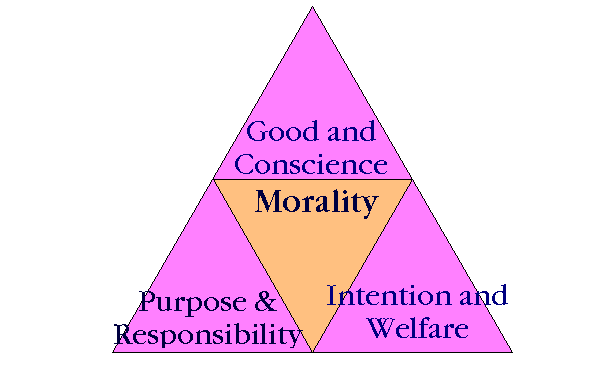
http://www.marxists.org/reference/archive/hegel/triads/morality.gif

Studies have often shown that we overestimate the degree of our moral positions - we tend to think we are more morally aligned than our desires and actions would seem to indicate. This brief article from Big Think looks at how this misalignment gets us into trouble.

In this interview, Nitin Nohria, Dean of Harvard Business School, argues that "since we are so often convinced that we will "never be led astray," when we actually face a complex moral choice we lack the critical skills necessary to do the right thing." Furthermore, he feels that we err when we assume that someone who has made a mistake is a "bad seed," or is flawed in character - we all make mistakes.

We need to bring more compassion to these situations.

We're Not As Moral As We Think (And How That Gets Us in Trouble)

Daniel Honan on May 20, 2011

Fallenangel

What's the Big Idea?

Nearly any man can stand adversity, said Lincoln, but "if you want to test a man's character, give him power." America's 16th president certainly knew a lot about that. Consider Lincoln's frustrations with the egomaniacal commander George B. McClellan, who was just one in a long succession of incompetent generals Lincoln ended up firing.

Numerous bankers, politicians, athletes and celebrities have proven Lincoln true, time and again. And yet, that does not necessarily make all of these people bad, per se, argues Nitin Nohria in his interview with Big Think.

Nohria, the dean of Harvard Business School, is not looking to create excuses for mistakes or immoral actions. Instead, Nohria is trying to get us to think beyond the "knee-jerk reaction" of simply labeling a person good or evil, as if a character flaw is the only thing that motivates us to do bad things, or that the only kind of person capable of moral failure is simply a "bad seed."

Nohria argues that overconfidence in our own moral capacity is what really gets us into trouble. In other words, since we are so often convinced that we will "never be led astray," when we actually face a complex moral choice we lack the critical skills necessary to do the right thing.

What's the significance?

As dean of Harvard Business School, the idea of teaching these skills is of great importance for Nohria. In fact, Nohria has promoted an MBA oath that pledges socially responsible leadership. Like the Hippocratic Oath in medicine, the MBA oath is a "professional credo for MBA graduates." The oath has been embraced globally and has been signed by over 5,000 students.

If we are to expect the next generation of business leaders--not to mention the future leaders in all fields--to truly honor such a commitment, students must be given the tools to properly evaluate the situations that challenge their moral judgment. Then, in Lincoln's words, the better angels of our nature might prevail.


Thursday, May 19, 2011

Alberto Ledesma - On Being an (Ex) Undocumented Immigrant Father

When I talk with my friends about the status and plight of undocumented immigrants, I don't feel as far outside the mainstream as I do most other times. We do not call them illegal aliens - here in Tucson, some of the undocumented immigrants have family connections to this land going back centuries - those of us with white skin are the aliens here. But we are a small minority. In Arizona, there is a (fluctuating) 70% approval for SB1070, the law that was passed last year allowing police to require proof of residency from anyone they deem suspicious.

Many of us support complete amnesty and making work visas much easier to get.

But many immigrants still fear discovery - especially here in Arizona. Maybe it is living here that makes me sensitive to stories like the one below - the story of what it's like to be in a country where you are not free.

Perhaps I am also sensitive to this story because when I was first in Tucson I managed a warehouse that employed (don't ask, don't tell) undocumented workers. As long as they got through the temp agency, we didn't ask any questions. I saw young fathers working two jobs to support a family and still have enough money to send some back to Mexico. I saw them go "home" for a holiday and never be heard from again, and we assumed they got caught coming through the border.

They did all of this, risked all of this, for one reason - to provide their families with a better a life, with enough food and a safe place to live. I sympathize with that. These men risk everything to be good providers, good fathers. And the country they want so desperately to be a part of hates them because they do not have the correct piece of paper.
As kids, we always think that our parents have more power than they actually do. Mamá and papá were as desperate as I was to understand how to make sense of being undocumented.
By Alberto Ledesma, Alternet
Sofia and I had been making that turn since we had moved to Castro Valley. In those five years, the protesters at the corner of Castro Valley Boulevard and Redwood Road had become an constant example of the way politics worked in the United States. Each time, after I picked her up fromabuelita’s house, we waited for the light to turn while she stared at the protesters.

“What does ‘Impeach Bush’ mean, papá?” Sofia had asked when she was in the third grade. Dozens of car horns had beeped in agreement. “You beep too, papá!” She had implored when our turn came to cross.

A few years later, at the start of Sofia’s fifth grade and more than 12 months after Barack Obama had been elected, she wondered, “Why do they still want to ‘End the War’? Didn’t President Obama say it was over?” That night in December of 2009, as we were again surrounded by the screeching of car brakes and the roaring of engines revving forward, I tried again to explain what I understood about the way American politics works, that foreign policies shift slowly between administrations.

This time, however, she seemed tired, dazed from spending too many hours cooped up in abuelita’s one-bedroom cottage.

It had been another hectic day at Berkeley, I had told her a few hours earlier.

“The 580 was packed. A red Tahoe overturned,” I had told her when she had opened the passenger door. “You’re lucky I picked you up when I did.”

As usual, she had remained quiet those few blocks before we reached the intersection. Instead, she had looked, as she usually did, out the window towards the Safeway parking lot, to the protesters all dressed in black jackets and blue jeans. They were now holding a “Beep for Peace!” banner.

Cars began arriving behind us while we waited for the red light to turn. Then she looked at me and asked, “Papá, what does it mean that you were once illegal?”

***

The only thing I can think of is of that Saturday afternoon in April of 1977 when papá drove us to Hayward in his Ford station wagon. We are heading back home in the green 1969 Country Squire wagon that his buddy, Cheto, had sold him the day before. My sisters Silvia, MarĂ­a, and I are sitting in the back seat, enjoying the smooth ride back to Oakland, happy about the Spirograph drawing toy and Mother Goose potato chips papá had bought us at the K-Mart. We are trying to find any Mexican grocery store along Hayward’s Mission Boulevard. Mamá, who is sitting in the front seat holding my two-year-old brother, Julian, wants to cook us something special.

Alli!,” papá says as he points towards the Hayward hills. At first I can’t tell what he’s found; but, he quickly turns the corner at Carlos Bee Boulevard and the wagon begins to climb the steep road. He parks in front of a lot that’s been over-run by ivies and dandelions.

Esperen aqui,” he says with a smile, and then runs into the thick brush.

This is the first time we have travelled to this part of Hayward. Outside the station wagon, we are surrounded by recently built apartments, three- and four-story complexes made of beige-colored stucco and white-trimmed balconies decorated with ferns. Now and then, cars pass near us on their way up the hill. Mostly, they seem to be newer-model sedans, all piloted by blondes wearing sunglasses.

Maybe because she is sensing our restlessness or because she is feeling restless herself, mamá asks us if we want to step outside and wait for papá under the shade of the oak tree closest to the curb. Julian loves it. He runs from one patch of grass to the other while mamá hovers behind him.

Close to an hour passes and mamá can’t wait any longer. Julian is crying. The sun is making us thirsty even under the shade. Mamá has no choice. “¡Viejo! ¡Ya es tiempo!” From somewhere behind the bushes, papá’s voice screams, “ya mero!” Another 20 minutes crawl by.

It is Silvia who finally spots the “No Trespassing” sign nailed high on the light post. It is a barely legible cardboard placard that’s been faded by countless days of direct exposure to the Hayward sun.

“¿Que quiere decir TRES-PASSIN?” Mamá asks.

Silvia is 14, almost in high school. As always, it is she who is expected to translate for mamá.

“Dice que no debemos estar aqui.” Whatever Silvia means, mamá knows that we need to go.

“¡Viejo! ¡Ya vamonos!”

Finally, papá emerges from the bushes holding a mountain of prickly cactus leaves on a piece of cardboard. He loads them in the back of the wagon and we are off.

On our way home, I keep searching for papá’s eyes in the rearview mirror. I want to ask him why he stopped and disappeared into some strange person’s lot without telling us; but mamá is too busy talking about the chile con nopalitos she will be cooking when we get home.

I can’t tell what Silvia or MarĂ­a are thinking because they, too, are slumped in the back seat of papá’s new wagon. So we travel down Mission Boulevard and onto East 14th Avenue never talking about what papá did. And that’s how it remains for years.

* * *

If I were a more responsible parent, Sofia wouldn’t be sitting in the front seat of my sedan. She would be in the back, with me taking only opportunistic glances through my rear-view mirror to make sure she is okay. During the past year, however, I’ve become dependent on these little conversations we have when she is sitting by my side. There is no Nickelodeon, YouTube, DS, iPod, or her guinea pig, Tubby Tux, to distract us.

Except, this time I’m the one who’s quiet. I don’t know how to answer her question.

I glance towards her and notice that she still seems upset about me picking her up late, that her brown eyes seem as tired as mine. I didn’t think that it would be at 10 years old that she would ask me that question. The red van in the next lane honks when I start drifting. I hope that whatever I say turns out well.

“You know Sofia,” I stutter while staring at the road ahead, “I was about your age when my dad asked my mom to bring us across the border.”

Her eyes are focused on my lips.

“Things are complicated,” I tell her. “At first we thought that we were just coming for the summer. Then it became a year. Then I graduated from high school and met your mom.”

Now, it occurs to me, we are living in the same hills where my dad once stole cactus to celebrate buying his new car.

She is listening carefully, as if weighing the sincerity of each of my words. But I am lost.

“So, where did you learn the word 'illegal'?” I ask her.

“I dunno. Somewhere, I guess.” She answers abruptly, the same way she does whenever she has done something wrong and knows that she will get reprimanded.

“Illegal is such a terrible word,” I tell her. “Its only purpose is to make some people angry at other people without either understanding the true reasons for their anger.”

I hear myself recounting only a few of the key events that happened when we crossed. All she hears is how MarĂ­a, Silvia, and I were smuggled in the back seat of some strange lady’s red Camaro. How we pretended to sleep so that the border guard would not ask us questions as he reviewed someone else’s birth certificate for each of us. I am not really explaining how I felt, how terrified I was about what we were doing.

I can tell that she is paying attention to my tone, to the inflection of each of my words.

“I really didn’t have a choice.” I tell her. And I am not sure if I believe it, am bothered because it almost sounds as if I am repudiating my parent’s decision-making, as if I’m critiquing two people Sofia absolutely adores.

Ahead, just past the KFC next to CVS Drugs, a blonde teenager in baggy jeans and a beige bomber jacket is waiting to jaywalk. I slow down and let him pass. And I remember my own transgressions.

* * *

I am 16 when papá and I have our first real argument about our immigration status. I want to get out of the house: to stroll down East 14th Avenue with my friends on Friday nights. To hang out with the homies at the Giant Burger on 38th Avenue watching their lowriders hop by. To catch the midnight creature feature at the Grand Lake Theatre without worrying about what time I have to be home. But eight years after our arrival and we are still hiding.

Papá doesn’t seem to be in the mood for any argument.

No seas tonto.” Don’t be a fool, he tells me for the umpteenth time. There are things that you can’t do “as long as you are ilegal,” he glares in my direction. “It doesn’t matter how good you think your English is.”

It’s not fair. The only times we seem to get out are when we go to Los Mexicanos Market for the week’s groceries. On Sundays we go to St. Louis Bertrand for the morning mass, maybe to the mall for Chinese food and strawberry Slurpees if the week’s been good. We travel as a group, always within sight of each other.Mamá’s greatest fear is that someone will abandon her in the middle of JC Penny’s just as the store is closing.

I’ve had enough of it. I am now in high school. I want to go places by myself, to explore this new world and the people in it, to be the kind of teenager that appears in a John Hughes movie.

That night, papá and I are sitting across each other at the kitchen table. He is drinking his Coors while I am toying with what is left of the chicken molĂ© Mamáserved us for dinner. There’s talk of more layoffs at the foundry. He is low man on the totem pole. Mamá wrings her hands on her apron and tells him that, con el favor de Dios, everything’s going to be okay.

If this were a different night, if it were a different event, I would think twice about what I’m about to do.

But this is supposed to be my first high school dance. I’ve been dressed for it since papá returned from the pool hall, my white shirt is still as pristine as on Sundays before we leave for church, in spite of the molĂ©. And it’s getting late. And Roberto and Sergio are already waiting for me inside the high school gym. And papá is the only one who can give me a ride.

“I thought you were going to drop me off at school,” I say. There is something about the way I’m looking at him that seems to offend him. He frowns, his eyes fixed on me as I plead.

“My friends are waiting for me. The dance has already started. I told you about it this morning.”

He turns, pretends to ignore me, his eyes now focused on the television that’s been left on in the other room.

“This is not right,” I tell him. “You are keeping us locked up as if we were in prison.”

He turns to face me and tells me that that’s enough, that no one in this house is going anywhere tonight, that I’d better shut up and show some respect.

“Well, if you won’t take me, I’ll walk to the bus stop.”

I see him getting up from his seat as if in slow motion. His brown irises are frozen on me and his jaw is tensed. Suddenly, I feel the weight of his palm across my left cheek. It doesn’t hurt. Really. There are no more words. Instead, he turns, stomps to the front room, and closes the door.

An hour later, after I’ve locked myself in the back room, it is mamá who coaxes me out and walks me to papá’s station wagon. He is waiting for me there, ready to take me to the dance, his jaw still tensed and his eyes still fixed forward. As always.

* * *

As kids, we always think that our parents have more power than they actually do. Undocumented immigrant kids are no exception. I never thought in those early years of being in the United States that mamá and papá were as desperate as I was to understand how to make sense of being undocumented.

As a kid, I thought mamá and papá were in full control of their decisions, that it would be just as easy for papá to stop going to the pool hall and mamá to stop her infatuation with religious discipline as it would be to flip a switch. Now, a father, I am beginning to realize they were as lost as I was.

Truth be told, I don’t know what I would have done had I been in my father’s shoes. Mine, after all, is not the perspective of someone who was driven by a need to provide for his family and consciously chose to cross the border illegally -- how I hate that word. I was brought over, a refugee created by what my parents decided was best for us, like so many other kids who have had so many other fights with their own undocumented fathers and mothers.

One thing that I am convinced of, however, is that only through active communication will we be able to come to terms with the psychological ravages that being undocumented causes within families. This, after all, is what Sofia’s question made me realize. It is better to share even those ambiguous moments of truth than keep her in the dark about a painful experience that has already profoundly shaped who I am and, by extension, who she is. My undocumented immigrant heritage is also hers, just like my father’s anxieties are now mine. What matters is what I do with them. That’s why she deserves to know. And that’s also why every other kid whose parents have also experienced being undocumented in the United States deserve to know what their parents went through.

But unlike so many now living in limbo and in fear, my family and I were lucky. We were able to legalize our status during the amnesty of 1986. We are now all citizens and vote regularly during elections.

* * *

Eight months after Sofia asked me her question, her elementary school had its last open house of the year. The parking lot was already full by the time I arrived, late from work again. I parked at the market across the street. It was a long enough walk that Leticia had to call to ask where I was, to say that the teacher was already addressing the parents.

My own elementary school -- and Leticia’s for that matter -- was never as nice as Sofia’s. Manicured lawns, flat-screen computer monitors, new books, and pristine black-boards. We moved to Castro Valley so that she could have what we never had. Then again, this is exactly what my own parents must have thought when they first visited my own elementary school. They had never gone past the third grade in Mexico, had brought their kids across a dangerous border, to East Oakland, so that we could have a better life. When they had enrolled us in our own elementary school, it must have appeared to them as luxurious as Sofia’s school now appeared to me. Maybe even more.

“It’s been a pleasure to teach your children this year,” Sofia’s teacher was finishing her comments when I walked in the door. The teacher was young, still enthusiastic about her work, in spite of what state budgets portended.

“Please have a look around. See what your kids have created. And please take all your child’s work home when you leave.”

Parents struggled to stand up from the minuscule chairs. Soon we were brushing past each other, examining the projects students had produced for this exact event. There were posters covering every inch of the walls. Sofia directed us to her desk.

“This is what I did,” she said as she picked up a stack of papers.

That’s when I saw it. It was a laminated roll of paper as wide as a strip of toilet tissue. She had recorded all the major events in her life and predicted what she hoped to experience up until 2029. She called it “Sofia’s Life Line.”

There was a cartoon of a baby swaddled in a pink blanket for the first event. Under it she had written, “I am born. San Francisco, 1999.” Above the cartoon she had also written the words, “Yay! It’s a girl!”

I don’t know why, but seeing her images moved me. There was an innocence to them. They seemed uninhibited by limits, as if she had enjoyed drawing each of them, as if she had taken her time to sketch each one and gently elbowed her friends so they could see the clever things she had thought of. I smiled, proud of what she had captured with each stroke of her pencil.

I unfurled the timeline and read each event. She had recorded the many times we had moved since she had been born, first, from San Francisco to San Lorenzo, then, from San Lorenzo to Alameda. She had drawn our move to Castro Valley, a tiny U-Haul truck with smoke coming out of its tailpipe. She had also drawn events in my own life that we had discussed in our rides from abuelita’s house; I was a smiley face stick-figure with glasses and a buck-tooth smile holding a magazine with the following caption, “After five tries, papá’s story finally gets published.”

Yet, what made my eyes tear up, what made me look at her and feel the urge to pick her up and hug her in front of all her friends -- something she passionately dislikes -- was the last item of her timeline. In 2029, Sofia wants to publish her own book. And, if my work continues to inspire her, I will keep writing forever though I may never publish another word.