Read the rest of the article.Feminist men: friends or foes?
Gender and concepts of masculinity strongly shape feminist men’s experience as feminists in a world that considers them to be neither real men, nor real feminists, writes Rosalie Scolari.
When you opt to conduct academic research on a controversial topic, I have discovered you are not in for an easy ride.
In my case, I was fighting against decades of feminist research, by arguing that there are men who deserve to be seen as legitimate, committed feminists, and deserve a position of camaraderie in our quest for women’s rights.
Now, this is not an easy thing to do when feminism is often marked for “women-only”, or defined in the competitive terms of male versus female privilege.
Any utterance about my research was met with a barrage of catch cries, often from women, demanding: What right do men have to muscle in on what is about and for us? Isn’t feminism and men a contradiction of terms? Or my personal favourite: If anything with a pecker actually truly gave a shit about me, my rights and my body, I would hand over my first born and join the circus.
For me, however, looking at worthy men, and seeing and accepting them as feminists, was conflict-free. Because of how I choose to define feminism, and what I consider its goals to be, the connection between feminism and men was no more controversial than the connection between feminism and women.
What does a feminist look like?
It is important to remember that the terms “feminist” and “woman” are not synonymous. Similar to Simone de Beauvoir’s observation that one is not born a woman, but rather, society creates women, academics like Judith Butler and Judith Grant, suggest that the experiences of women are not necessarily indicative of the standpoint of a feminist.
Rather, it is only with what Grant calls an “interpretive feminist lens,” that women’s experiences come to be part of feminism. In other words, feminism may claim to speak for all women, but not all women speak for feminism.
Despite this obvious truth, the association of feminism with women is overwhelming. Over the years, numerous authors have proposed various definitions of feminism.
While there are often ideological disagreements over exactly what a feminist should stand for, there appears to be some general agreement that since men cannot experience women’s oppression, they cannot be feminists.
I find the experience argument problematic. I just need to compare my own experience as a white, western, middle-class, queer, 26-year-old woman to any women not of the same race, class, country, sexuality or age, to understand that I could not possibly experience oppression like others.
Perspectives and knowledge of all people, regardless of gender, are partial and situated. A full understanding of oppression requires that we recognise these multiple realities, each valid from the perspective of those having the experiences.
It is experience that also shapes men’s relationship to feminism, with some forming a feminist worldview after objecting to the sexism they see around them, reflecting on their own sexist behaviour, or when they have experienced oppression themselves (often racism or homophobia).
Take a story from one of my research participants for example:
“I was sexually assaulted by a group of boys, not long after I came out in year 12. It was a crime of hate ... I know what it feels like to be violated, to have your rights stripped away, to be oppressed daily. Understanding and relating to women’s oppression has always been easy ... and I will do everything in my power to fight for a world where their safety and rights are never compromised.” (Dan)
Women have been burnt, however, and some reject men as feminists because of personal experiences with so-called feminist men, who have turned out to be phallocentric misogynists.
Sadly I too have had encounters with such types, and it is very disheartening. However, I feel much the same when the likes of Girls of the Playboy Mansion, or the delightful (insert sarcasm here) Sarah Palin declare themselves as feminists too.
I wanted to see the pathways men travelled to become feminist, and how this act shapes their lives.
For my honours research I gathered the social, personal and theoretical reflections of 12, self-identified feminist men (six being heterosexual, five being homosexual and one identifying as “queer”).
These men see feminism as a social movement that seeks equality of opportunity for all people, regardless of gender. To them, it is a political perspective that uses gender to critically analyse power – who has it, who doesn’t, who abuses it and why.
Let’s take Nick for example: Nick is a 27-year-old vegan, who works in a music store. Nick believes girls and women should not be raped, abused, discriminated against, and should have control over their own bodies.
Feminism provided him with the tools to start thinking critically about his gender and his unearned privileges as a heterosexual white male. As a result, he tries in his everyday life to avoid doing things that oppress other people, and he attempts to confront oppression when he sees it.
Nick an active member of various communities and organisations that fight for women’s rights.
Now, while many feminist women may find no conflict, and may even applaud Nick’s convictions, the problem often lies in the adoption of the term “feminist”, which “was not designed for men, it was designed because of them.”
So, what is in a name?
While some men who recognise problems of gender oppression, misogyny, sexism and the politics of domination take a stand by identifying as feminists, others call themselves pro-feminists, feminist allies or even menists.
Although I personally see actions as more important than labels, I recognise, like the men in my study, that labels can be used as a powerful display of our politics. Therefore I see the bold, political act of identifying as a feminist, as a profound act of solidarity.
“I call myself a feminist because for me, it politically makes a lot of sense. Sex and gender binaries need to go, and in my ideal world, anyone who believes in equal treatment of the sexes can call themselves a feminist. I think if men can’t call themselves feminists, then perhaps feminism will always been seen as something that only women should care about.” (James)
Friday, April 23, 2010
Can Men Be Feminists? And Is It Good When They Are?


Thursday, April 22, 2010
Andrew Peterson - The Male Brain: Attachment, Neural Development, and Masculinity
This post by Andrew Peterson (who is a therapist) offers a better review of the book than most of the mainstream book reviews I have seen - very cool.
Read the whole post.The Male Brain: attachment, neural development, and masculinity
Maybe there’s something wrong with me, but when I hear the phrase “developmental neuro-endocrinology” I get really excited.
Allow me to explain.
Like many psychotherapists, I’ve grown increasingly interested in the rapidly advancing understanding of how neural processes guide the formation of our personalities and shape our present moment experience. My initial interest in this subject arose out of my training in attachment theory and attachment-focused therapy. Through this training I came to appreciate the complex and interdependent relationship between brain development and secure attachment, which might be summarized like this: proper neural development is what makes healthy relationships possible…but it cannot occur without the experience of healthy relationships during childhood development.
In addition to attachment, my other passion in therapy is masculinity. In fact, these days I work almost exclusively with men. As a result, I spend a great deal of my time helping men understand the workings of their own minds – both in and of themselves, and also in relation to women’s minds. Because men are so deeply conditioned to discount their own capacity for emotional insight, it is very often a revelation to discover that the ways men’s and women’s minds operate is in fact understandable. And it can be life-transforming to discover that it is possible for these two sorts of minds to understand each other and to communicate constructively across the gender divide. That’s why, to my patients I often describe my role as a “translator.”*
Developmental neuro-endocrinology seems to me to be a sort of bridge between attachment-based and gender-specific psychotherapeutic work. Which is why I read Louann Brizendine’s The Male Brain with great interest. In this book Brizendine (as she did in her previous book The Female Brain) isolates a particular aspect of the vast field of neurological research: the way in which the brain’s growth is shaped by developmentally-triggered releases of gender-specific neuro-hormones. How (and when) testosterone, vasopressin and other such hormones are released into the brain creates the subjective experience of “maleness” and leads to the objective behaviors that we identify as typically male.
Brizendine is working in the tradition of writers who integrate a complex body of inter-disciplinary research into a coherent narrative, making visible patterns and relationships between the data that might otherwise be unavailable to a larger audience. Dan Siegel and Allan Schore are masters of this particular art, and they are undeniably more rigorous in their approach. In fact, Brizendine has been strongly criticized for presenting isolated and un-replicated pieces of research to make overly broad claims in support of a reductive and stereotypical image of masculinity across the life span.
I suspect that these criticisms are accurate. But at the same time I found that many of Brizendine’s assertions rang fundamentally true to my clinical experience. And that is the heart of the dilemma that I experience with The Male Brain.
Without in any way wishing to minimize the importance of male gender-role socialization, I agree with Brizendine’s central premise – that there are certain aspects of both masculinity and femininity which are powerfully biologically determined, and which no amount of socialization can combat. (Certainly any parent will recognize the truth in her description of the differences between boys’ and girls’ play. While you can get a boy to play with dolls, he’s very likely to turn Barbie into a gun; and you can get a girl to play with toy cars, but she’s just as likely to turn them into a little car family.) To my mind, accepting that these biologically-determined gender differences exist is the first step toward developing approaches to parenting, education, and therapy which can help us raise boys into good men. Having some understanding of where biologically-determined leaves off and socialized behavior allows us to raise boys in ways which ameliorate rather than exacerbate those biological tendencies. And I sincerely believe that raising good men is essential if we are to survive and thrive as a species.


Wednesday, April 21, 2010
Mike LaBossiere - Being a Man I: Social Construct
Here is his first installment from a a few days back.
I look forward to seeing what else he has to say on this topic.Being a Man I: Social Construct
By Mike LaBossiere ⋅ April 18, 2010
Apparently some men are having trouble figuring out what it is to be a man. There are various groups and individuals that purport to be able to teach men how to be men (or at least dress like the male actors on the show Mad Men).
Before a person can become a man, it must be known what it is to be a man. There are, of course, many conceptions about what it is to be a man.
One option is to take the easy and obvious approach: just go with the generally accepted standards of society. After all, a significant part of being a man is being accepted as a man by other people.
On a large scale, each society has a set of expectations, stereotypes and assumptions about what it is to be a man. These can be taken as forming a set of standards regarding what one needs to be and do in order to be a man.
Naturally, there will be conflicting (even contradictory) expectations so that meeting the standards for being a man will require selecting a specific subset. One option is to select the ones that are accepted by the majority or by the dominant aspect of the population. This has the obvious advantage that this sort of manliness will be broadly accepted.
Another option is to narrow the field by selecting the standards held by a specific group. For example, a person in a fraternity might elect to go with the fraternities view of what it is to be a man (which will probably involve the mass consumption of beer). On the plus side, this enables a person to clearly be a man in that specific group. On the minus side, if the standards (or mandards) of the group differ in significant ways from the more general view of manliness, then the individual can run into problems if he strays outside of his mangroup.
A third option is to attempt to create your own standards of being a man and getting them accepted by others (or not). Good luck with that.
Of course, there is also the question of whether there is something more to being a man above and beyond the social construction of manliness. For some theorists, gender roles and identities are simply that-social constructs. Naturally, there is also the biological matter of being a male, but being biologically male and being a man are two distinct matters. There is a clear normative aspect to being a man and merely a biological aspect to being male.
If being a man is purely a matter of social construction (that is, we create and make up gender roles) than being a man in group X simply involves meeting the standards of being a man in group X. If that involves owing guns, killing animals, and chugging beer while watching porn and sports, then do that to be a man. If it involves sipping lattes, talking about Proust, listening to NPR and talking about a scrumptious quiche, then do that. So, to be a man, just pick your group, sort out the standards and then meet them as best you can.
In many ways, this is comparable to being good: if being good is merely a social construct, then to be good you just meet the moral standards of the group in question. This is, of course, classic relativism (and an approach endorsed by leading sophists).
But perhaps being a man is more than just meeting socially constructed gender standards. If so, a person who merely meets the “mandards” of being a man in a specific group might think he is a man, but he might be mistaken. But, this is a matter for another time.

Tuesday, April 20, 2010
Mindful Muscle - Meditation May Increase Gray Matter
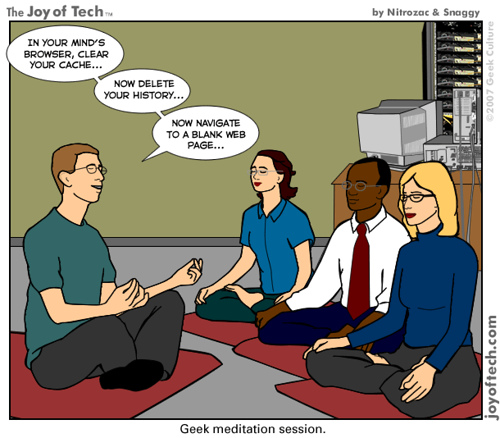
Cool article from the Mindful Muscle blog. We should be treating meditation the same way we treat weight training - as a necessity for a healthy body-mind. Which means we need to make time for it in our daily lives. Even as little as little 10 minutes can increase/improve cognitive function.
The important aspect of this study is that it showed that meditators had significantly larger volumes in regions known for regulating emotions (the hippocampus, and two areas in the orbito-frontal cortex, the thalamus and the inferior temporal gyrus).
When we have greater ability to regulate emotions, we are less likely to be reactive and to lose our tempers or act out of destructive emotional states. We are more balance human beings.
Push-ups, crunches, gyms, personal trainers — people have many strategies for building bigger muscles and stronger bones.
But what can one do to build a bigger brain?
That’s the finding from a group of researchers at UCLA who used high-resolution magnetic resonance imaging (MRI) to scan the brains of people who meditate. In a study published in the journal NeuroImage and currently available online (by subscription), the researchers report that certain regions in the brains of long-term meditators were larger than in a similar control group.
Specifically, meditators showed significantly larger volumes of the hippocampus and areas within the orbito-frontal cortex, the thalamus and the inferior temporal gyrus — all regions known for regulating emotions.
“We know that people who consistently meditate have a singular ability to cultivate positive emotions, retain emotional stability and engage in mindful behavior,” said Eileen Luders, lead author and a postdoctoral research fellow at the UCLA Laboratory of Neuro Imaging. “The observed differences in brain anatomy might give us a clue why meditators have these exceptional abilities.”
Research has confirmed the beneficial aspects of meditation. In addition to having better focus and control over their emotions, many people who meditate regularly have reduced levels of stress and bolstered immune systems. But less is known about the link between meditation and brain structure.
In the study, Luders and her colleagues examined 44 people — 22 control subjects and 22 who had practiced various forms of meditation, including Zazen, Samatha and Vipassana, among others. The amount of time they had practiced ranged from five to 46 years, with an average of 24 years.
More than half of all the meditators said that deep concentration was an essential part of their practice, and most meditated between 10 and 90 minutes every day.
The researchers used a high-resolution, three-dimensional form of MRI and two different approaches to measure differences in brain structure. One approach automatically divides the brain into several regions of interest, allowing researchers to compare the size of certain brain structures.
The other segments the brain into different tissue types, allowing researchers to compare the amount of gray matter within specific regions of the brain.
The researchers found significantly larger cerebral measurements in meditators compared with controls, including larger volumes of the right hippocampus and increased gray matter in the right orbito-frontal cortex, the right thalamus and the left inferior temporal lobe. There were no regions where controls had significantly larger volumes or more gray matter than meditators.
Because these areas of the brain are closely linked to emotion, Luders said, “these might be the neuronal underpinnings that give meditators’ the outstanding ability to regulate their emotions and allow for well-adjusted responses to whatever life throws their way.”
What’s not known, she said, and will require further study, are what the specific correlates are on a microscopic level — that is, whether it’s an increased number of neurons, the larger size of the neurons or a particular “wiring” pattern meditators may develop that other people don’t.
Because this was not a longitudinal study — which would have tracked meditators from the time they began meditating onward — it’s possible that the meditators already had more regional gray matter and volume in specific areas; that may have attracted them to meditation in the first place, Luders said.
However, she also noted that numerous previous studies have pointed to the brain’s remarkable plasticity and how environmental enrichment has been shown to change brain structure.
ZEN QUESTION & RESPONSE:
The students of Tibetan Buddhist Kalu Rimpoche and Providence Zen Center founder Seung Sahn arranged for them to meet and engage in dialogue. When Seung Sahn arrived, he picked up an orange, held it in front of Kalu Rimpoche, and asked: “What is this?” The students awaited an insightful reply, illuminating the nature of reality, but Kalu Rimpoche looked stumped. Seung Sahn repeated his question with greater emphasis but Kalu Rimpoche had no answer. Seung Sahn put forth the question a third time. Finally Kalu Rimpoche responded, “It seems that Seung Sahn has never seen an orange before.”

Monday, April 19, 2010
Bette Gordon & Nick Proferes: Masculinity in Film ("Handsome Harry")
SoA prof. examines masculinity in film
"Handsome Harry," from School of the Arts professors Bette Gordon and Nick Proferes, looks at the experiences of Vietnam veterans.
By
Published April 14, 2010

Though “Handsome Harry” tells the story of of Vietnam veterans coming to terms with the past, the story resonates now.
Courtesy of Bette Gordon
“Sometimes,” director and Columbia School of the Arts professor of professional practice Bette Gordon says, “it takes a woman to discover new perspectives on masculinity.”
In “Handsome Harry,” her most recent feature, Gordon does just that: She examines the lives of six Vietnam veterans as they struggle to define their masculinity in a world where military values—like conquest and dominance—no longer define what it means to be a man.
“Handsome Harry” tells the story of Harry, a 52-year-old Vietnam veteran (Jamey Sheridan) who is, as Gordon puts it, “living a lie.” An electrician with a passion for singing, Harry lives a quiet, small-town life, until his old Navy buddy, Tom Kelly (Steve Buscemi) calls him from his deathbed, desperate to clear his conscience about a terrible moment from their past. Tom’s guilt resurrects Harry’s own torment, and sets him off on a quest to visit his other friends from the war, in pursuit of the truth.
“Handsome Harry” is a collaboration between two Columbia University School of the Arts professors–director Bette Gordon, best known for her features Variety (1984) and Luminous Motion (2000)–and writer Nick Proferes, directing professor at Columbia School of the Arts and experienced editor, cameraman, documentary director, producer and screenwriter. The collaboration proved successful.“Handsome Harry” delivers a potent, character-driven story, which raises both emotional and social issues subtly.
Gordon’s use of enclosed spaces and tight dialogue create a palpably affecting psychological space, magnifying Harry’s physical and emotional entrapment. Throughout his journey, we find him cornered: in a bedroom with another man’s wife, on a golf course with a friend unwilling to get in the car and drive, and finally, alone, in a restaurant, unable to forgive himself for the pain in his past.
Sheridan’s sincerity and “every-man” appeal make his portrayal of Harry’s guilt that much more gut wrenching. He is a sweet person, incapable of delivering himself from his own purgatory. As Gordon put it, “Harry can’t forgive himself.” Even if the audience wants to help, his fate lies in his own hands. Is there hope for a man like Harry?
Though “Handsome Harry” features an older generation of men, it also raises pertinent questions about contemporary codes of masculinity—especially about what it means to be a homosexual in the military. The struggles of characters in the film are undoubtedly relevant for homosexuals in the military today. Though definitions of masculinity have changed since the ‘70s, the “don’t ask don’t tell” policy still exists. “Handsome Harry,” however indirectly, addresses what these individuals have to deal with.
The cast, including Sheridan, Buscemi, Campbell Scott, John Savage, and Aidan Quinn, among others, delivers the cocktail of fragility and machismo Gordon and Proferes were aiming for. “Handsome Harry” is handsomely done.
In “Handsome Harry,” a woman did discover new perspectives on masculinity. Gordon delivers again.

Sunday, April 18, 2010
Late Night Live - 'Boys' - Adelaide Festival of Ideas

This is an excellent series of talks on the issues facing boys (in Australia, but also in Europe and the United States). It's from 2005, but little has changed, and more than likely, things have gotten worse.
My Facebook friend, Luke Fullager, offered this observation in response to this episode:'Boys' - Adelaide Festival of Ideas
28 July 2005
Download Audio
(full program)GuestsA panel of speakers address the topic of 'Boys'. Why do societies so frequently attach the words 'trouble' and 'boys'? In dominant cultures and minority cultures, the pressures on boys seem to be growing as traditional expectations change. The focus of much of the discussion is the schooling process and various ideas on how to nurture respect and hope in boys.
Larissa Behrendt
Professor of Law and Indigenous Studies, University of Technology, Sydney.Gary Costello
Principal of Mt Gambier High SchoolLisa Delpit
Educator, author and Executive Director for the Center for Urban Education & Innovation, Florida International UniversityGermaine Greer
Author, academic and feministStory Researcher and Producer
Donna McLachlan
There was a large percentage of the boys in our failing classes, and when I did the statistics and started talking to boys in the school, I found that there was six-times the number of boys being suspended as girls.I could not agree more. I was one of those boys as a teen - and that mask of anger and indifference cracks pretty quickly when someone really sees the kid, really understands his pain and fear. The way Luke relates to them is crucial - we need more understanding and less punishment.
Behind those behaviours, what often came to pass when we had the chance to talk about it was that I found boys trapped in masculinities from which they did not see an escape. They thought the masculinity they had was the one they were destined to have, even though they knew it gave them limited options and less joy.
Behind that though, often when they came into my office and we got talking, there would often be boys who couldn't articulate what through their demeanor and body language expressed a very deep and profound sadness. If they could put it into words, it would be something like: "No one gives an 'F' whether I'm alive or dead", and when the response was "Are you telling me that nobody loves or cares for you?", what would often happen is that the mask would crack and the boys, even the toughest one in the school, would dissolve into tears - because what we were doing, and what I realised we need to do, is to give boys permission and the words to express their deepest feelings, because they do feel things very deeply, but that had to happen initially free from the scrutiny of their peers."
Saturday, April 17, 2010
Is the Creation of "Males Studies" Part of the War on Men?

The recent announcement about creating a male studies program (it's called the Foundation for Male Studies), to offer an alternative to the long-standing women's studies programs (and the men's studies programs which grew out of their efforts) seems to me a good idea. However, A LOT of feminist blogs were outraged. My concern is that right wing, traditionalist groups will hijack the idea, as this article seems to suggest.
This summary article comes from The Journal of Higher Education's Inside Higher Ed (for a sense of how this idea is being received, check out the comments from this post):
I have some serious issues with their antagonism toward women and feminism, but I will reserve judgment until I see some papers from these folks. But I also have issues with rejecting the need for more a comprehensive version of men's/male studies.More than anything else, the event was a chance for supporters to frame men and boys as an underrepresented minority, and to justify the need for a male studies discipline in a society that many perceive to be male-dominated.
Lionel Tiger, a professor of anthropology at Rutgers University, said the field takes its cues “from the notion that male and female organisms really are different” and the “enormous relation between ... a person’s biology and their behavior” that’s not being addressed in most contemporary scholarship on men and boys.
““I am concerned that male-averse attitudes are widespread in the United States and that masculinity is becoming politically incorrect,” said Christina Hoff Sommers, a resident scholar at the American Enterprise Institute and author of The War Against Boys: How Misguided Feminism Is Harming Our Young Men.
The culprit, said Tiger, is feminism: “a well-meaning, highly successful, very colorful denigration of maleness as a force, as a phenomenon.”
Paul Nathanson, a researcher in religious studies at McGill University and co-author of a series of books on misandry -- the hatred of men and boys -- conceded that “there is some critique of feminism that’s going to be involved” in male studies. “There are some fundamental features of ideological feminism over the last 30 or 40 years that we need to question.”
He also decried “the institutionalization of misandry” which, he said, is “being generated by feminists, [though] not all feminists.”
Male studies’ combative tone toward feminism and women’s studies programs is one reason why Robert Heasley, president of the American Men’s Studies Association, turned down an invitation to speak at the event. "Men's studies came out of feminist analysis of gender, which includes biological differences" -- the very thing male studies says is different about its approach.
Heasley, an associate professor of sociology at Indiana University of Pennsylvania, also sees the “new” discipline as an affront to his field, which has been around for three decades. “Their argument is that they’re inventing something that I think already exists.”
Why shouldn't we try to understand men and how men might become more mature, healthy individuals from a variety of perspectives? Why wouldn't EVERY woman on the planet think this is a great idea? Maybe it's the silly anti-feminism tone of the people launching this program idea?
Apparently even some men are not in favor of this new academic program. I can see why a lot of feminists might be offended by the tone of the initial conference. And I guess I can see why some immature or insecure men might not like this idea - they might get called out to grow up, be more in touch with their emotions, or at the very least to put the seat down when they're done pissing.
My guess is that this guy whose article appeared in the Calgary Herald is one of those later guys.
Last week there was an academic conference at Wagner College on Staten Island, New York.The focus was an emerging movement toward men's studies at universities. I think the desire to even out the time and money spent on studying issues unique to each sex -- Women's Studies consume more than 90 per cent of budgets for gender-specific research -- is well intentioned, but I suspect it is ultimately misguided.
What men need most is not to be studied but to be allowed to be men. It is not possible to save or revive masculinity by over-analyzing it.
At our core, we men are uncomplicated and straightforward if allowed to be.
If a man asks "Is that what you're wearing to the party?" that's what he wants to know: Is that the outfit you will be wearing this evening? He doesn't really mean "You're not planning on wearing that, are you?"
Men are simple, not simpletons. For the most part we want to earn a living and provide for those we love. We desire to be proud of what we do and respected for it, even if only by those close to us -- family and friends. Not every man desires to be a celebrity, but he would like to be known at work or in the neighbourhood as the best butcher, salesman or handyman.
We want to come out on top (or at least near the head of the pack) in much of what we do; we are competitive by nature, especially while we're young, even if just on a small scale.
We like sex on a more or less regular basis, yet we also desire to be left alone, not all the time, but for enough time each day, each week, each year to unwind.
That, I think, is a difference between men and women: More women than men need to unwind by unburdening their stresses to a spouse or friend or book club. By contrast, more men deal with their daily strains and pressures by burying themselves in a hockey telecast or renovation project. Woodwork can be a challenge, but at least the maple doesn't talk back or insist you open up about your feelings.
It's a good thing that men and women are different in this regard, as in many others. Each sex has a moderating influence on the other. Left on their own, men's desire for "alone time," could make us reclusive and sullen. We need a little drawing out now and then.
But as with so much in the relationships of men and women, the pendulum has swung too far. It seems generally believed these days that men's natural need for quiet is a danger sign, evidence that men are suppressing their inner feelings. Stoic behaviour, which was once seen as a sign of inner strength, has become socially unacceptable -- as have most masculine traits. The strong, silent type is no longer respected, but looked on with suspicion.
I am definitely not advocating a return to some sort of "good old days." The world is an infinitely more interesting place when the members of both sexes are free to plot their own courses, when men and women have been released from old stereotypic roles.
But Western civilization is in danger of becoming like elementary schools -- an environment where masculinity is not only unwelcome, but undesirable. There is a mistaken belief among too many politicians, bureaucrats, academics, cultural leaders and psychological and sociological experts that if girls are to achieve their full potential, boys cannot be allowed to be boys.
However, there is a vast difference between patriarchy and masculinity; the latter does not have to be eradicated in order to eliminate the former.
Indeed, since masculinity is natural, it is impossible (not to mention unwise) to attempt to abolish it. Efforts to do so will merely provoke extreme manifestations of masculinity. Eliminating chivalrous behaviour may free women from the "indignity" of having doors opened for them or having men defer to them in line, but if enforced politeness is done away with, some men will find far less acceptable expression for their masculinity.
Chivalry was initially created to curb a nature tendency toward boorishness by some men. Therefore diminishing a culture of civility toward women will merely release the boors to be boorish once more. Violence, drunkenness, infidelity, abandonment -- all will increase in the absence of old norms.
That is not a defence of old norms, but rather a caution that new norms have to be found to address the natural tendencies of both sexes before the old ways are discarded entirely.
Christina Hoff Sommers, a scholar at the American Enterprise Institute and author of The War Against Boys: How Misguided Feminism is Harming our Young Men, told the Wagner College conference that men acting like men are too often thought of sociopaths. "I'm concerned that male-averse attitude is widespread . . . that we're in a society where masculinity is politically incorrect."
We need not devote hundreds of millions of dollars to new university departments studying declining masculinity. We need to stop disparaging the masculine as unthinking, unconcerned and unwanted.
Lorne Gunter is a columnist with the Edmonton Journal.
As long as they do not go about this by attacking women and feminism, I'm on-board with this agenda. It must be recognized that militant feminism has had some negative impacts on men and masculinity - and our place and rights in Western culture. But that does not mean we need to attack and dismantle all forms of feminism, which still has a ways to go in achieving equal rights and access for women.Why “Male Studies” and not “Men’s Studies”?
Male Studies refers to the multidisciplinary study of the male human being, boys and men. Men Studies, by definition, has focused on fully grown men. Male studies will be comprehensive of males of all ages.
How is Male Studies related to Gender Studies?
Male Studies is independent scholarship without ideological ties to Men’s Studies, which emerged within Gender Studies to complement Women’s Studies. Male Studies focuses on the experience of being male and not only behavior (masculinity).
Is Male Studies grounded in one discipline?
No. While Men’s Studies grew out of sociology, Male Studies recognizes that all of the sciences have specialized knowledge about males. Most disciplines have something unique to contribute to understanding the experience of being male. They include anthropology, biology, psychology, medicine, history and education.
Is Male Studies a reaction to other scholarship?
No. Male Studies has emerged out of the conviction that the experience of what it means to be male can be approached while abstaining from cultural and ideological preconceptions about the phenomenon.
Is Male Studies a Western discipline?
No. Male Studies recognizes that while being male has been interpreted in a variety of ways in Western culture, it is experienced differently in different cultures and historical periods. Its goal is to be cross-cultural and international in scope.
Is Male Studies essentialist?
One fundamental question of Male Studies is whether there are essential features of being male. Having a male body is clearly one of them. Male Studies raises the question of whether there are other fundamental features of being male such as an inner experience of being male.
Does one have to identify as a male to engage in Male Studies?
Male Studies is based on the conviction that anyone is in a position to study the male. It is a scholarly discipline and as such is no more limited to work by males than any other discipline such as anthropology, biology, psychology, medicine or history. Males and females have made major contributions to all of these disciplines.
Why has Males Studies emerged at this time?
After thousands of years, previously isolated and independent cultures are now being exposed to each in unprecedented ways by means of the media, including especially television and the internet. Cultures previously divided from one another are meeting in an emerging global culture. Among the basic elements of this culture is the nature of being male. Bracketing ideological commitments is especially important at such a time. Instead, scientific research based on the view that it is important to allow the phenomenon to speak for itself must be given support. Male Studies is one area of such research. The effects of sophisticated technologies (birth control medications, sexual surrogacy) on reproduction are also of primary interest in Male Studies.
How is the concept of being male related to the concepts of gender, masculinity, and manhood?
Concepts of gender—masculinity and femininity—and their cultural institution as manhood and womanhood are of interest to Male Studies, but they are seen as secondary to a phenomenology of being male. Scholars in Male Studies believe that a complementary area of scholarship, Female Studies, would be a welcome addition to the scientific study of human beings.
What is the relation of Male Studies to misandry?
As a human science, Male Studies is opposed to the hatred of other human beings based on their genetic make-up, including misogyny (the hatred of females because they are female) and misandry (the hatred of males because they are male). It is opposed to hatred of a group of human beings based on sexual genetic variations (for example, Turner’s Syndrome or Kleinfelter’s Syndrome) or genetic variations leading to a unique physical habitus (for example, dwarfism). It is opposed to hatred of individuals based on their behavioral style, sexual orientation or religious conviction. There is now a body of research, however, that suggests the presence of an unacknowledged underlying theme of misandry in popular culture, in recent legislation (international and national), and in academe. Male Studies is concerned to confirm or refute this research.
What are some topics of Male Studies?
As an emerging discipline, the topics of Male studies are only now being identified. Several topics are clearly of interest to scholars in the discipline: the documented deterioration of boys’ engagement and performance in education at all levels, and the remarkable extent of suicide among males as compared to females. Certain psychological disorders that are for the most part identified in young males deserve our attention. They include learning disabilities, conduct disorders (including violence against females and other males), and depression (which is often masked as irritability or lack of involvement in activities of everyday life). In the technology-dominated culture of the West, the declining numbers of males entering and completing tertiary education must be explained.
Thursday, April 15, 2010
Suspend Ben Roethlisberger for the Whole Season - Without Pay

I am a Pittsburgh Steelers fan, so this is hard to say - Ben Roethlisberger needs to be suspended for the WHOLE SEASON, without pay. Not by the NFL, who will no doubt suspend him for up to four games (I'm guessing), but by the Steelers organization.
No other team in football has the "moral code" that Pittsburgh enforces. They just gave away a Super Bowl MVP receiver for almost nothing because of his off-field issues (drugs, domestic violence, etc.). A superstar quarterback should not get any less punishment for his off-field behavior (a life-threatening motorcycle crash, and two sexual assault accusations in the last year). But he is the franchise quarterback, so they probably won't trade him. Yet he needs to be disciplined or he is never going to grow up and act like a man - there can't be a double standard for Big Ben.
The first time he faced accusations of assault, I gave him the benefit of the doubt. This time, the situation is obvious and it's wrong.
There is some kind of violent concept of masculinity that allows him to think he can do things like this and that it's alright - or his right as a superstar athlete. He clearly had issues with alcohol consumption in both incidents, which seems to be part of why police have not filed charges either time.
The records were released today:
The reality is that the police/prosecutor could prove rape beyond a reasonable doubt, which is a legal definition not a moral definition. He did it - the evidence is clear, though maybe not enough to convict.A friend of the woman who accused Ben Roethlisberger of sexual assault told authorities that Roethlisberger's bodyguard "dragged" the woman into a bathroom where the Pittsburgh Steelers quarterback and woman had sexual relations.
In 500-plus pages of documents released Wednesday, Nicole Biancofiore told investigators from the Georgia Bureau of Investigations that her friend, a student at Georgia College & State University, "was dragged by a bodyguard to the back room in Capital [City, a local nightclub]. She was extremely intoxicated and not aware of what was happening."
"He had sex w/me and meanwhile his bodyguards told my friends they couldn't pass them to get to me," the accuser wrote in her statement, which was reported in the Pittsburgh Post-Gazette.
The woman also told him "no, this is not OK," according to the statement.
Roethlisberger was not charged in the incident, which occurred in the early morning hours of March 5 in Milledgeville, a central Georgia college town about 30 miles from where Roethlisberger owns a lake home.
Ocmulgee Circuit District Attorney Fred Bright said Monday that after exhaustive interviews and inconclusive medical exams, the student's accusations could not be proved beyond a reasonable doubt. He also revealed the young accuser no longer wanted him to prosecute.
Terry Bradshaw, who knows a bit about alcohol abuse, has been tough on Roethlisberger in the last couple of days.
Bradshaw didn't back off his pointed comments yesterday.
"I've always been real good to him on TV, and he's deserved my good comments as well as he deserves my comments now," said Bradshaw, who is an NFL studio analyst for FOX. "My honesty says this: Clean your act up. You are about to (throw) away a career.
"If you need help, the Rooneys will get you help. If you need to fire the bodyguards, then you have get rid of them. Build a wall around yourself. Dedicate yourself to your career. He's on the right path of being one of the greatest that ever played, and now he's dragging baggage with him."
Bradshaw drank to self-medicate depression, for which he eventually sought treatment.
Ben may have an alcohol problem, or he may be dealing with some kind of mental health issues - if he wants to stay in the league and play as a Steeler, he needs to clean up his act - and if he needs help, he needs to be strong enough to say, "I need help." That may take more strength for him to admit than anything he ever does on a football field."It's hard for me to put into words the horrific feeling of being depressed," says the NFL Hall of Famer and current co-host of Fox NFL Sunday. "It is the most sickening feeling in the world when you believe you are miserable and you're all alone."
And like many people struggling with depression, Bradshaw looked for a way to numb the pain he was feeling by self-medicating.
"I was drinking a lot, and I didn't like the path I was on," Bradshaw admits. "I was frightened by what might happen. I wasn't sure if I was going to drink myself to death."
Bradshaw finally confided to his preacher and began a process of counseling that involved first his preacher then a psychologist and finally a psychiatrist. The latter eventually prescribed anti-depressants.
I'm not a fan of athletes, actors, or musicians being held up as role models, but the reality that people do exactly that, which raises a whole other issue in this situation. Ben has gotten off twice now without going to jail for rape or assault. He may have to pay out some money in civil suits, but he has plenty and will make a lot more. This sets a very bad example - both his actions, and the DA decision not to prosecute him.
The "'no' really means yes thing" in this situation is a serious problem in this country, especially with athletes it seems. Mitch Abrams, PsyD who writes the Sports Transgressions blog at Psychology Today, has some thoughts on this whole case.
The Dangerous Message the Roethlisberger Case Delivers
Athlete's non-prosecution may steer male athletes wrong about sexual assault.When Ocmulgee Circuit District Attorney Fred Bright announced on Monday April 12th that he would not be prosecuting Pittsburgh Steeler Quarterback Ben Roethlisberger for the alleged sexual assault of a 20 year old college student, he simultaneously communicated some very dangerous messages to young men about sexual responsibility and legality.
In his press conference, Bright reported the following facts of the case. He stated that on March 5, 2010 Roethlisberger was barhopping in Milledgeville, Georgia while drinking with his friends in celebration of his 28th birthday. He bumped into a student and her sorority sisters several times through the night and later he invited them to a VIP section of a club and bought them a round of shots. Eventually, that student and Roethlisberger were in a small bathroom and the student later told police that she had been sexually assaulted.
Medical reports were inconclusive of whether or not a rape could definitely explain a cut, bruises and vaginal bleeding found in the examination. The DNA that was found was not enough to match; hence why Roethlisberger was not asked to submit a DNA sample.
He concluded that, taken in totality, the evidence did not produce a viable prosecution. Bright stated, “I know when I have a case, and I know when I don’t. I don’t have enough evidence to convince twelve jurors beyond a reasonable doubt that Mr. Roethlisberger was guilty of the crime of rape.” He also added that, “We do not prosecute morals. We prosecute crimes.” Being the District Attorney of that county in Georgia, I have no doubt that he knows far more about the laws of Georgia than I do, but, there are some crucial aspects to this case that young men need to hear in a different light; especially since, in some states, the evidence that was reported in the conference might very well have led to winnable case.
A principal legal component regarding sexual assault, and this is also the central theme that is stressed when doing dating violence prevention, is the importance of the victim’s consent; specifically the lack thereof. Young men are socialized to believe that when a woman says, “No”, she really means, “Yes”. While there are times in sexual encounters that communication may be misconstrued, the burden to make sure that the woman is consenting to the activity is on the person who may be arrested if in fact she isn’t. Often I entitle trainings for young athletes, “Did You Get My ‘Yes’?”
Further, there are many circumstances (and there is variability in state laws) that explain what constitutes when someone is unable to give consent. If the victim is underage, they don’t have the moral development to appreciate the rightness/wrongness of sexual behavior and hence, statutory rape captures any such situation. In many states, if the woman is unconscious, in a coma, severely mentally disturbed or incapacitated due to being under the influence of alcohol or drugs, they may no longer have the mental capacity to give consent, and under those situations, anyone who has sex with her may find themselves arrested for sexual assault.
In some state law, the issue of “forcible compulsion” can also be used to prosecute a sexual assault. This is when a victim complies with sexual action out of fear that if they don’t, they will be seriously harmed, kidnapped or killed. This can be via an overt or implied threat. For athletes that may be large and intimidating, one could argue, that a woman complied because of what she feared he would do if she didn’t. Time and time again, I educate athletes, if you’re going to be sexually active, allow there to be no doubt that she is as consenting as you are. It is the epitome of safe sex.
The laws in many states have swung to make sexual assault prosecution easier because there were so many victims that either refused to come forward because of the retraumatization that cross-examination can cause or because they were dissuaded that the legal process would not lead to their perpetrators being brought to justice. The shift was necessary. Too many women are sexually assaulted. Depending on the statistics you refer to, most average that 1 in 4 women will be a sexual assault victim over the course of their lives. This effects our society and the only way rape isn’t a man’s issue as well is if he has no females in his life that he cares about.
When people work hard to give young people education about rape prevention, and your cautioning men about the legalities of sexual behavior that they should be sensitive to, and then a multi-millionaire athlete seems to “get off”, there is the real danger that young men throw away all that they are trained.
Women have the right to say no. Men should be clear that anyone they are sexually active with is consenting to do so. Assuming that they are consenting can be perilous.
There is a huge difference between guilty and convictable. DA Bright did not say that Roethlisberger was not guilty. His conclusion was that he was not convictable. The only two people who know whether what happened was truly a sexual assault are Roethlisberger and the victim; and that only leaves Big Ben if the victim was too intoxicated to remember, let alone consent, to any behavior. I have no interest in presuming Roethlisberger guilty, but I have great concern about what young men, especially athletes, may conclude wrongly, about what is sexual assault and what is not.
There are some seriously mess-up beliefs about men, women, sex, and power in this country - and we need to educate young men in particular that this kind of behavior is not tolerable. The only way to do that is to set an example of what can happen when you abuse your power or status.
There is NEVER any situation in which a man can have sex with a woman who has said NO in any way, shape, or form, or is otherwise unable to give proper consent (due to alcohol, drugs, mental defect, or being a minor). To disregard that NO is rape . . . every time . . . no matter what . . . end of story.
In this case, the woman said No, and she was too drunk to consent. Ben Roethlisberger raped her. And his body guards are accomplices in that crime.
Is Testosterone a Limiting Factor for Women in Choosing Mates?
However, the explanation in this article is a little lame because it relies on "evolutionary psychology" to explain the effects of testosterone on selectivity and mating preferences in women - too biological for me, and not enough recognition of the fact that cultural and social variables are also important.
Here is what the article presents:
The link is testosterone, the hormone behind manly muscles, strong jaws, prominent eyebrow ridges, facial hair and deep voices. Testosterone is immunosuppressive. This means a man must be healthy and in good condition to withstand its effects on his development. Testosterone is also linked to other traits related to strength: fitness, fertility and dominance. From an evolutionary perspective, masculinity is basically man's way of advertising good genes, dominance and likelihood to father healthier kids. When disease is a real threat, as it had been—and arguably still is—heritable health is invaluable.Masculinity, however, can come at a high price. Women often think of high-testosterone types as uncooperative, unsympathetic, philandering, aggressive and disinterested in parenting.
The assumption here is that men with higher testosterone cannot also be intelligent, emotionally aware, loyal partners, and good fathers. I call BULLSHIT. This is a faulty generalization in my opinion. Biology is not destiny.
The article does present an alternative view, near the bottom:
Then again, women have always asked, why must we choose either/or in a mate, and not all-in-one? In a study of 107 American married couples, evolutionary psychologists David Buss and Todd Shackelford found that beautiful women (as determined by averaged ratings of eight teams of male and female interviewers) want it all in a partner: masculine, physically fit, loving, educated, desirous of home and children, a few years older than themselves and with a high income potential.
They then assume that only the most attractive women can have these expectations, while "normal" women will have to settle for the "best combination of traits" they can find.
Why Women Don't Want Macho Men
New research suggests that women from countries with healthier populations prefer more feminine-looking men. Jena Pincott on the science behind attraction and masculinity, and the future for manly men.
![[CovJump1]](http://si.wsj.net/public/resources/images/PT-AO186_CovJum_G_20100326151530.jpg)
A pair of faces from the Face Research Laboratory study to evaluate
women's preferences. The image on the left has more masculine features
like thicker eyebrows and a wider jaw.(See Correction & Amplification below .)
Sometime within the past year, nearly 4,800 women participated in an experiment at Faceresearch.org, the online psychology laboratory of the Face Research Laboratory at the University of Aberdeen in Scotland. They were young women, mostly in their early- to mid-twenties, and all identified their ethnicity as white. Later, researchers at the lab would confirm from IP address data that the participants came from 30 countries including Argentina, Sweden, Russia, Australia and the United States. The women's country of origin was an important part of the experiment.
After registering on the site, the women clicked through to a listing of psychology experiments, including "face preferences" and "attractiveness at different ages." Upon making their selection, they received instructions, in English or in translation, telling them they would be presented with pairs of men's faces. For each set they would need to select the face they considered more attractive and indicate how much they preferred it to the other one.
The faces, it turned out, looked eerily alike and yet subtly different, like identical twins. They were created by software that masculinizes or feminizes a person's features in a few keystrokes. Only by examining the faces closely could one discern that the man on the left, say, had slightly rounder eyes and a narrower jaw than the one on the right. Some of the faces had slightly thinner lips than their doppelgängers, or wider-set eyes, or thicker archless brows. It took most women fewer than 10 minutes to click through the 20 pairs of male faces and select which ones they found hunkiest.
After crunching the data—including the women's facial preferences, their country of origin and that country's national health index—the Face Lab researchers proved something remarkable. They could predict how masculine a woman likes her men based on her nation's World Health Organization statistics for mortality rates, life expectancy and the impact of communicable disease. In countries where poor health is particularly a threat to survival, women leaned toward "manlier" men. That is, they preferred their males to have shorter, broader faces and stronger eyebrows, cheekbones and jaw lines. The researchers went on to publish the study in this month's issue of the scientific journal Proceedings of the Royal Society: Biological Sciences.
![[Cover_Main]](http://si.wsj.net/public/resources/images/PT-AO180_Cover__DV_20100326200451.jpg)
The New York Times; Getty Images (5)To a person unfamiliar with the field of evolutionary psychology, this may sound a little far-fetched. How is it even possible to link a woman's masculinity preferences to the health of her nation? The answer begins with the theory of sexual selection. It goes that women are the choosier sex because they take on most of the risk and burden of reproduction and child rearing. While a man can sleep around with 100 women in a year's time and have 100 kids, a woman who sleeps with 100 men in a year will only have one baby (barring multiples). She has more at stake in each pregnancy. Therefore, it is in her best interest to at least choose a high-quality mate. And one of the hallmarks of a quality male is good health.
But what does health have to do with masculinity? The link is testosterone, the hormone behind manly muscles, strong jaws, prominent eyebrow ridges, facial hair and deep voices. Testosterone is immunosuppressive. This means a man must be healthy and in good condition to withstand its effects on his development. Testosterone is also linked to other traits related to strength: fitness, fertility and dominance. From an evolutionary perspective, masculinity is basically man's way of advertising good genes, dominance and likelihood to father healthier kids. When disease is a real threat, as it had been—and arguably still is—heritable health is invaluable.
Masculinity, however, can come at a high price. Women often think of high-testosterone types as uncooperative, unsympathetic, philandering, aggressive and disinterested in parenting. In fact, there is evidence that they really do have more relationship problems than other men. In a small study led by psychologist James Roney at the University of California, Santa Barbara, 29 women were asked to look at photos of men and rate their masculinity and fondness for infants. (The men had already been tested for child-friendliness and testosterone levels.) The men who were rated as the most masculine generally had higher testosterone levels; the women also were generally accurate in assessing child-friendliness.
In another study of 2,100 Air Force veterans, men with testosterone levels one standard deviation above the mean were 43% more likely to get divorced than men with normal levels, 31% more likely to leave home because of marital problems, 38% more likely to cheat on their wives, and 13% more likely to admit that they hit or hurled things at them.
In this light, manifest masculinity doesn't sound like such a good deal. At least not in a significant relationship. A woman might be attracted subconsciously to a high-testosterone man because he'll give her kids an edge health-wise. But if health comes at the expense of fidelity and good parenting, how much does masculinity really matter?
The apparent answer is not so much—if you're a woman living in a country with a decent health-care system and few harmful pathogens. While a masculine father's "good genes" may confer health advantages to children, so do good medical attention and a clean environment. In the Face Lab study, women with the weakest masculinity preferences tended to live in some of the healthiest countries: Sweden, Finland, Denmark and Austria. Other countries in the study with low masculinity preferences are Romania, Greece and New Zealand. Women with the weakest masculinity preferences of all lived in Belgium, a country considered to have one of the best publicly funded health-care systems in Europe (alongside Denmark and the Netherlands in the health-care index).
Meanwhile, women with the strongest masculinity preferences tended to hail from the countries with higher disease and mortality rates and some of the poorest scores on the health-care index: Mexico, Brazil, Bulgaria and Argentina. (The researcher included only white subjects to control the experiment, and Asian and African nations were not included in the study.)
And where does the U.S. stand in the masculinity ranking? The answer is fifth out of the 30 countries in the study, one of the highest. This is, after all, the home of James Dean and Clint Eastwood. And where does America stand in the health index ranking? Twentieth of 30 countries, one of the least healthy.
This is not to say that cultural factors other than health care don't play a role in women's mate preferences. The Face Lab researchers acknowledge that there are variables they did not take into consideration. For instance, women's equality and control of resources would likely influence preference for masculinity. The same goes for violent crime. In cultures where physical strength and dominance are a primary means of security and social mobility, a masculine mate seems like a valuable asset. Yet, generally speaking, the researchers found that a nation's health index explained more of the variation in women's masculinity preferences than did many culture-specific female norms identified in previous studies.
The big question that comes of the study is this: Is it possible that modern medicine—and by extension modern life—inadvertently devalues masculinity? Possibly. Is the Marlboro Man, that smoking-hot icon of American manhood, under threat of being extinguished? Given American women's apparently strong masculinity preferences, the answer is no. We are not ready to get rid of our macho men. (Then again, we also have yet to improve our health index ratings.) Yet there are some smoke signals that suggest change is just over the horizon.
As the social environment shifts, so may women's mate preferences. While Stone Age forces once wired women to associate strong cues of masculinity with their children's chance of survival, times are changing. The promise of improved health care in America could be one example of a shift.
Another is women's financial freedom. In 1970, women represented only 43.3% of women of the labor force, compared to 55.8% today. Moreover, the recession in America has been a tremendous blow to men in traditionally masculine jobs such as construction and manufacturing; 82% of job losses affect men. Right now in the U.S. many families find themselves economically dependent on one working parent: Mom. Over 70% of mothers have jobs outside the home. No longer as reliant on men's genes or jobs to ensure the health and wealth of their children, women may come to value other qualities in a mate. It may become evolutionarily adaptive to prefer men who are cooperative, communicative, caring and better parents over traditional "manly men."
Then again, women have always asked, why must we choose either/or in a mate, and not all-in-one? In a study of 107 American married couples, evolutionary psychologists David Buss and Todd Shackelford found that beautiful women (as determined by averaged ratings of eight teams of male and female interviewers) want it all in a partner: masculine, physically fit, loving, educated, desirous of home and children, a few years older than themselves and with a high income potential.
While exceptionally attractive (or wealthy) women may indeed capture this ideal male, most are forced by circumstance to settle for the best combination of traits. Some husband-seekers trade off masculinity for companionship and good parenting. Others forfeit compassion in exchange for wealth. ("I want a man who's kind and understanding," Zsa Zsa Gabor once griped. "Is that too much to ask of a millionaire?") To secretly have it all, some women adopt a "dual mating" strategy—marrying a solid, faithful guy and enjoying trysts with hunks. As a result, up to 10% of babies born in some populations have fathers who are presumed to be their biological dads but aren't.
Will any of this change as American women become increasingly secure economically, socially and medically? A study led by psychologist Fhionna Moore at the University of St. Andrews finds that as women's level of "resource control" increases—that is, they become more financially independent—their preference for good-looking men increases. So will it be considered progress if women start pursuing "metrosexuals"—impeccable guys who exfoliate, order salads for dinner and carry man purses? This remains an open question, and it's fun to speculate. Perhaps the vision of artist Corita Kent will come to pass: "Women's liberation is the liberation of the feminine in the man and the masculine in the woman."
—Jena Pincott is the author of "Do Gentlemen Really Prefer Blondes?"Correction & Amplification
Studies related to women's perceptions of masculinity and preference for attractive males were led by researchers at the University of California, Santa Barbara and the University of St. Andrews, respectively. A previous version of this article incorrectly referred to those institutions as the University of Santa Barbara and the University of Andrews.
![[Cover_Main]](javascript:dj.util.Url.openWin('http://online.wsj.com/public/resources/documents/info-enlargePic07.html?project=imageShell07&bigImage=MANLY-WSJ-100326.jpg&h=923&w=959&title=WSJ.COM&thePubDate=20080826','',974,700,'on',true,40,10,10);)
Tags:
Wednesday, April 14, 2010
Marsha Lucas, Ph.D. - Stay-At-Om Sex: Bigger is better, but not where you think
Stay-At-Om Sex: Bigger is better, but not where you think
As a psychologist, I see people in my practice all the time who complain that the thrill of sex dies down after awhile. It gets, well, routine. Same-old, same-old. Going through the motions. Sometimes, they get around to asking what they can do to spice things up.
"Yes, there is," I say.
Their eyes get a little wider, their hearts jump a bit.
They're not always thrilled when I tell them they need to change their brain structure. And sometimes even less thrilled when I tell them one of the best ways to change their brain for better sex, is mindfulness meditation.
A key factor in having better sex is actually being there when you're having it. Being there not just physically -- being fully present, in thought, word and deed. (Not exactly what the Boy Scouts had in mind with that catchphrase.) It isn't about adding props or toys or costumes -- it's about really showing up and tuning in, to the moment, yourself and your partner.
To do this it's essential to have a better flow of information between what your body is sensing, on up to the lower parts of the brain where those sensations are sorted out a bit, and then further up into the higher parts of your brain, where it registers in your awareness, and understood as an emotion. If you could improve that flow of information, you could be:
- less defensive, and better able to hear and respond to what's actually going on in the moment instead of reacting out of old habits
- more receptive to genuine connection (emotional and physical), and better able to foster it
- more physically present, which makes for a better physical connection, leading to a better sexual connection
- more emotionally present, which makes for a better emotional connection, leading (again) to a better sexual connection.1
So what you want is for that flow of information between you body, brain, and mind to become like the mighty Mississippi.
Take a look at the following list of some of the things going on between your body, brain, and mind when it comes to sex:
Scenario A:
Let's say that your mind isn't tuned in to your body, to your partner, and to the moment. Just to pick a few common examples, maybe you're worried about your performance, or whether your body looks good enough, or if this relationship is working if the sex is going downhill.Or let's just say that you pick up on the fact that your partner seems to be kinda checked out -- going through the motions. The fight-flight-fear button in your limbic brain (that lower, deep-in-the-brain area that's largely responsible for the fight-flight-freeze response) gets busy sounding the alarms.
And guess what? When those alarms sound, your body gets the message to constrict blood vessels, reducing blood flow everywhere except for the body parts you need to fight or run. As you might guess, your genitals are not part of that package. Erections, vaginal engorgement... bye-bye.
Scenario B:
If, on the other hand, you've got it going on when it comes to being here, now -- you're aware of your body, present and accounted for in your mind, and attuned to your partner. That means that the activity in another part of your brain, the anterior insula, is increased.The Anterior What?
Your insula, a radically underappreciated part of the brain, has been called by Daniel Siegel, MD the "the information superhighway" that runs up and down between higher, cortical brain areas; lower, limbic areas; and the body. Experiments in which brain images are taken while the brain is emotionally "in action" have shown that the insula has an important role in the perception of bodily experiences, but also in the experience of a number of emotions.
How does the insula seem to help thee? Let me count the ways:
- Having a bigger, juicier, busier insula can help you be better able to experience all of the fantastic bodily sensations and changes that are part of the real deal in sex, in ways that can seem magnified compared to the way you've been feeling them if you've been underutilizing your insula.
- When your insula is more active, you're better at expressing your feelings through your body, as well as perceiving the emotions of your partner through his or her body.
- If your mind and your body are both paying attention to what's going on here and now (something for which the insula is key), you're also better able to be attuned to your partner's state of mind, making you a better lover.
- Note also that if your partner perceives that you're better attuned, he or she will be more attuned and present, as well, adding to the fabulousness.
- And, last but not least, there is a study out of Dartmouth that found a correlation between activation of the insula and the quality of orgasm in women.
Okay, then! The insula seems like an excellent place to focus on trying to get things to go better in regulating your body's power (or abuse thereof) in driving your feelings and reactions during sex.
How do you re-wire your insula for good sex?
I'm glad you asked.
Mindfulness Meditation and the Insula
As regular readers of my blog know, the more we experience or practice something, the more our brain commits resources to creating new neural connections and even new neurons in response to that experience.
Now, consider this: In 2005, Sara Lazar and her colleagues at Harvard looked at the brains of mindfulness meditators and compared them to the brains of people who did not meditate. The biggest difference between the groups was that brains of the meditators had anterior insula which were significantly thicker than in those who did not meditate.
Another study done in 2007 used different brain-measurement techniques to look at the brains of experienced mindfulness meditation practitioners, comparing them to non-meditators. That study also found that the meditators' brains had thicker anterior insula.
The brains of the meditators, through their repeated practice, had developed richer, thicker pathways and connections in their insula.
The insula was then in a better connected, plumper position to be able to send the information to the higher-level brain - a much less "knee-jerk" way of figuring out what your response should be than just letting your limbic brain run the show. Then, the better-considered decision of how to respond to the outer world can flow back down, the limbic brain gets soothed, the stress chemicals stop flowing, and all of your resources are more available for connecting and enjoying (instead of fighting or fleeing).
So, bigger is better when it comes to sex - a bigger insula, that is.
Makes you kinda wanna... y'know, meditate.
Marsha Lucas, PhD is a psychologist / neuropsychologist in Washington, DC. Learn more about rewiring your brain at ReWireYourBrainForLove.com, where she offers a free mindfulness meditation download and a monthly e-newsletter with meditation tips. You can also follow @DrMarsha on Twitter, and join her on her Facebook page.
..........................................................
1(Of course, if you have significant issues that have led you to feel unsafe with your partner, those need to be dealt with before you're going to be able to convince your amygdala to stop pressing the alarm button. Similarly, if you have a history which leaves you feeling unsafe in sexual situations, you may want to seek professional help before you'll feel safe enough to have greater emotional connection with a sexual partner.)