Tuesday, September 23, 2014

Daniel Genis - A Gentleman's Guide To Sex In Prison

From The Concourse, Deadspin's home for culture/food/whatever coverage - follow them on Twitter: @DSconcourse. In this article from Daniel Genis, the reader gets taken on a rather up close and honest trip through the nature of prison sex. In this author's experience, rape is not as common as one might think, but nearly everything is common.


A Gentleman's Guide To Sex In Prison


Thursday, September 18, 2014 | The Concourse
A Gentleman's Guide To Sex In Prison
When I tell people that I recently finished serving a 10-year prison sentence for armed robbery, mostly in maximum-security facilities, I often feel a question lingering in the air. The moment I sense it, I try to respond to the awkward silence in some offhanded way, though it is hard to be blithe and whimsical when you're telling people you were never raped in prison.

I can speak only for myself, but in my own time in the New York State system, I rarely saw or even heard about non-consensual sex between men. Perhaps I was just very lucky. Maybe I'd been incarcerated only in the "softer" corners of the penal system. Rape does happen, and all over any prison there are signs with a number to call to anonymously report it, which I always thought was less a matter of sodomy than of legal liability.

But more common, from what I could see, was an older prisoner taking a young and inexperienced kid under his wing. Most often, this kid has no money and likes to get high; there are many such people in prison, and they tend to burn their bridges early and totally. And so the older man, who has usually already served major time, feeds the kid, and gets him a little something to smoke or snort. Now the kid has become a "fish." They start working out together, then showering together, then there is a massage, and finally, the kid is asked to "help" the older guy out. He's "no homo," but he has needs ….

These predators are called "booty bandits" in English, which sounds ridiculous, but in Spanish, the word is much more picturesque and of an older etymology: bugaron. The literal translation would be "buggerer," but most people stick with the Spanish. In any case, very few bugarons—at least not the ones I personally came across or heard about—operate by force. The ones who do have nicknames that ring bells all across the state system: Mother Dearest and Pissy Black are the two most famous ones, both big guys who don't take no for an answer. The latter, with a physique honed by two decades of prison weightlifting, was known for using shower-room fog to facilitate his surprise attacks, though it was said that he could be warded off with a knife, as he feared scarring his handsome face. The former, on the other hand, already had a cross-hatched mug, so keeping one's distance was the only solution.

The potential "fish" are warned immediately, usually by a member of his own race, as prison is still as segregated as it was in the '50s. However, those inside for sex crimes are fair game to the booty bandits, and everyone knows that. In the through-the-looking-glass moral universe of incarceration, the bugarons are applauded for teaching the rapos a lesson, never mind the fact that they too are rapists.

The butt pirates—another actual, commonplace term—do not consider themselves gay in the least; sometimes they have wives and children, who may become victims themselves, if there are any diseases to be passed on. (AIDS testing is suggested but not mandatory in prison, and, statistically, the incarcerated population has a much higher rate of infection.) In any case, it is only the receiver in the act who is considered gay. 

But the hunger for touch does not always involve sex. Men in prison slap each other on the back and rub each other's necks and hug and give elaborate handshakes and do strange exercises in which the men use each other's body weight. It is all an excuse for touch. The condition of being a prisoner, in a point made by Foucault in his brilliant Discipline and Punish, is that of a sexless thing, and much of the experience of incarceration is the prisoner's reflexive effort, as a human being, to resist that state.

Consensual sex between incarcerated men happens all the time. There are rules against it, as it is considered an "unhygienic act," and you can go to the Special Housing Unit (aka the Box) for it. Which is ironic, because then you will be locked in a room with another man for 24 hours of the day, with barely any supervision. Solitary, at least in New York State, is not solitary at all but รก deux, as it is cheaper to house men this way. If ever there was a venue for either forcible or consensual sex between men, it is therein provided.

Openly gay men are not as oppressed as one might fear. The feminine ones are often desired, and there is quite a bit of prostitution going on. I once saw oral sex performed in exchange for two cigarettes and a honey bun, a bargain offered by Dirty Tommy, who told people he had "the AIDS" as soon as they met him. There are many transsexuals (still called "shemales" in the system), especially in the maxes, for some reason. Some truly look like women, and as a consequence they are well taken care of by their admirers. Others just look like men with breast implants. There was one called Grandma who was quite a fright, but apparently had customers anyway, because his dentures came out. The old-timers call these guys "lizards" and have nothing to do with them, but the younger guys who grew up with Will and Grace and so forth are more easygoing about it.

It was my understanding that if you declared yourself to be out upon arrival at the clearinghouse called Downstate, they'd send you somewhere safe (unless you yourself were not actually very safe, according to your record). I spent two years in a place like that, called Groveland Correctional Facility. It was a beautiful campus of a prison with a huge gay population. They had to cut the bushes down to discourage some of the activities taking place around them. There were even competing gay gangs. The most established one was led by Becky, who had been in for 35 years and who, it was said, had cut out his lover's heart back when he, Becky, was a teenage girl in a boy's body. There were also plenty of young twinks sunning themselves and plotting evening escapades. 

But where could they do it? The guards used this quiet and safe prison as a nice place to spend their last few years before retirement, so they knew all the tricks of the trade. The showers were monitored, the bathroom stalls had no locks, and with every year, the vegetation was further reduced. I may never have learned the secret had I not had the pleasure and misfortune of being a library clerk. I remember working on reclassifying the James Pattersons in the Young Adult section one day when I noticed a rhythmic movement out of the corner of my eye. I turned around and there was Dirty Tommy, hard at work with his hand under a table and another fellow with his eyes rolled up to the ceiling. This was too much; they were so close that I was practically a participant. I told Tommy he couldn't ply his trade here, and that I wouldn't let him into the library if this was how he intended to use it, but he was just worried about a certain Aryan Brotherhood member finding out. Apparently Tommy had sworn fidelity to this dangerous, and apparently jealous, fellow. I kept his secret.

I have heard countless myths about female correctional officers being unable to resist the enormous sexual appeal of a prisoner and pulling him into a broom closet, but in my 10 years, though it was discussed endlessly, I knew for certain of only two such couplings. The first beneficiary was a guy called Willy, a handsome bodybuilder-type who was in for steroids and a gun. Apparently he had a brief affair with a farm-girl-turned-cop dazzled by his big-city appeal, though the rumor afterward was that she gave him herpes. When I asked about that, he denied it.

Then there was Nikos, a Greek murderer who left his wife for a prison nurse. I knew the nurse: She was not a young woman, but she was well preserved. Obviously such liaisons are frowned on by the authorities, who technically deem any relationships between prisoners and staff as statutory rape. After one of the many informants hoping for any kind of break made the relationship public, the nurse chose to keep her job rather than her prisoner boyfriend. He wound up getting transferred as far upstate as it's possible to go.

Meanwhile, almost all of the sex that prisoners have with women is done through the Family Reunion Program (FRP), which was a direct result of the prison reforms instituted after the Attica Riot in 1971. I am grateful that I got sentenced into a kinder, gentler incarcerated world. Also, I'm glad I was in New York: Conjugal visits are available in only three states out of 50. (California and Washington are the others.)

As a result, most of the maximum-security prisons in New York, except for the ones considered disciplinary, have modules called "trailers" built into them. These are later additions constructed in the past 30 years, so they look like six-unit motels jammed into the corners of Victorian fortresses. Each of the units has two bedrooms, as most wives come for their visits with children in tow. I once accidentally stepped on a child and was heckled as "Bigfoot" by a gaggle of kids who had surprisingly little apprehension of their bizarre circumstances. There are toys, video games, and a swing set.

The second bedroom is obviously for sex. To go on a trailer visit, which is possible about four times a year in prisons close to New York City and much more frequently in the ones near Canada, you have to be a good boy. No serious disciplinary infractions, and do your programs. (Depending on one's crime, there are mandatory classes. I had to take one about substance abuse and another on violence; there are others for parenting and sex abuse. Refusing a mandatory program forecloses any possibility of a trailer visit.) Then come the urine checks—the authorities are aghast at the idea of couples doing drugs together on these visits. The first test comes two days before the visit, then another the morning of your trailer, and once more the second you depart. The middle urine check is so that if the final urine turns up dirty, you can't argue that you did the drugs before going out to see your family.

In fact, I did know one couple who spent their trailers shooting dope together; she brought the needles and heroin, and he was on morphine anyway because of cancer, so they got away with it. But most people are more eager for different physical pleasures. I witnessed a little boy locked out of his trailer the moment the wife arrived. The unattended child soon slipped on some ice and gashed his forehead open. When the cops arrived, the prisoner suggested his son be sent to get stitched up in the prison clinic, where they had plenty of experience with this sort of thing. His trailer visit was immediately terminated.

My wife and I had no children to worry about; we'd been married only six months at the time I was incarcerated, so we had a lot of making up to do. The trailer visits last up to 44 hours, though it's harder to schedule weekends. Considering the need for at least a bit of sleep, plus the nice outside food that wives are permitted to bring with them (mine brought me lamb and trout and sushi and filet mignon), the big question was always: How many times? The guys in the prison yard who went on trailer visits and had the youth and stamina to really give it a go were endlessly competing. In 44 hours, we all professed to hit double digits; if you removed the obvious braggarts' numbers, it left an average of 14. I found this to be accurate.

For the wives, coming to prison to make love to their husbands is not, I would imagine, the ideal vacation. Some have been doing it for 20 years and simply consider it a part of their marriage; my wife always thought of it as a temporary workaround and cried at the end. I also used to return to the cell hollow and depressed. During those 44 hours, you sleep with a woman on a mattress and not a cot with a howling neighbor nearby, and you eat unprocessed food with a loved one, slowly, no cop staring at you because you're dawdling over corn flakes. Forty-four hours is just enough time to feel normal again and then, when they're up, to remind you just how far from normal the rest of your week is.

The sex itself ... well, the first time is always awkward. I'll be candid here. After years of masturbation, regular sex feels ... different. But the feel and smell and love of a woman is an indescribable luxury in prison. Touch is something most human beings require, and most touch in prison comes in the form of a frisk or a smack.

The FRP was the best thing prison had to offer. Even the men who were not married used to go so they could go eat a steak with their mothers. By the way, "sisters" and "cousins" and "daughters" were technically allowed to visit, but rigorously vetted. There once was big business in sending working girls up to clever guys for trailer visits. My own friend Dmitry boasted of having dozens of "sisters" visit over 20 years. It helped that his mother was a madame, but in any case, those days are over, as all attractive, young female visitors are double-ID'd. The trailers are technically part of the Family Reunion Program, so no girlfriends or "girlfriends" are allowed: only wives with a marriage certificate on record, along with parents and children. (Cousins, too, but those were checked out extra-thoroughly.)

There was some sex outside of trailers, of course: I was told tall tales of the female guards at Sing Sing moonlighting in the world's oldest profession back in the '90s (and then being protected by their union when the ring got busted). This is purely anecdotal—I never saw such a thing myself. But I did witness many furtive sexual acts in the jailhouse visiting rooms. Handjobs under the plastic table are de rigueur; if there are children nearby, their eyes stay fixed on the vending machines. Women in skirts sit in men's laps, and in the little yards built for the visitors and prisoners to smoke in, there is a lot of very dirty dancing. Apparently holes are cut in pant pockets for this.

But the most extreme case I personally witnessed was with Nikos, the Greek murderer. He had a charming "666" tattooed on his head, but his girlfriend didn't seem to mind. She was no beauty, but she was a real, live woman. They'd begun as pen-pals, and then she started to visit. Unfortunately, he'd already killed one woman to come to prison, so Nikos had no access to trailers. Their courtship took place entirely on the visiting floor (where my wife and I could watch it all unfold), and it culminated in a marriage. Prisons don't like marriages but are obligated by the courts to allow them. If a woman wants to marry a prisoner, the Department of Corrections will make them wait, and take endless HIV tests, and throw all kinds of obstacles in their way, but eventually there will be a wedding (of sorts), and the couple will be officially married. Nikos and his wife managed it, but the consummation of their union required a soda machine.

The couple had already done everything possible with hands and even feet (she was a nimble woman), but eventually they realized there was just enough room behind a Pepsi machine for them to hump for a few minutes while the guards gorged on their lunches. My wife and I played lookout, though once they'd gotten started, there really was no stopping them. Unlikely as it may seem, a child was born of this unorthodox and rapid union. They had either the humor or perversity to call the little girl Pepsi.

Much later, when Nikos informed his wife about his affair with the nurse, she threw a bottle of breast milk in his face. Sex behind bars comes with enough complications that many prisoners avoid the whole mess altogether.

Instead, they masturbate. A friend of mine once made me visualize the rivers of semen that have been flushed away down prison toilets. Not all states allow pornography, somehow getting around the First Amendment, and sex offenders are not allowed to possess it, but there is nevertheless a lot of porn in prison. I have to assume that the publishers of magazines like Fox and Big Black Ass exist purely for the incarcerated market. When the hardest porn around is only a click away, at least in the unincarcerated world, who needs to go to Times Square to buy Screw?

Onanism is not usually a spectator sport, so convicts find various ways of establishing the privacy necessary to rub one out. In medium-security prisons, where men live in dormitories, the last toilet stall is usually reserved for masturbation. If a towel is draped over the top, that's the sign to back off. In maxes, where men live in cells with open bars, usually a sheet is fixed up, covering the view. That is theoretically for defecatory modesty, but the cops know what it really means and love knocking the sheet down with their sticks to embarrass a prisoner. Sometimes they don't succeed—the guys who have decades in possess little shame and don't even hang up a sheet, preferring instead to work out in the open. That is how dehumanization is achieved.

There is also a separate anti-masturbation subculture, like a temperance league or a bowling team. These are usually also men who are either very religious or very exercise-oriented—while some believe jerking off is a great sin (notwithstanding their present address), others believe that the release involved results in a lower bench-press weight. The exercisers were usually respected for their self-control, while the hypocrites had porn stuck to their lockers when they were away.

As for the rest of us, most men in prison collect pornography with great aplomb and sometimes become completists. A Hasidic Jew I knew had every Buttman ever printed, and Buttman has been coming out for 20 years and costs as much as $20 per issue, new. Obviously, there is a resale market: "Bookmen" in the yard are not guys with the cart from Fiddler on the Roof offering old copies of How to Win Friends and Influence People. (Actually, that book is popular in prison.) Instead, they sneak around the compound with porn hidden in their belts and under their shirts, selling "books" for about a pack of cigarettes each. They sell out, and usually the bookman knows his clientele: He buys up the porn in stacks from those about to go home or die, and picks out what his clients like.

A Gentleman's Guide To Sex In Prison

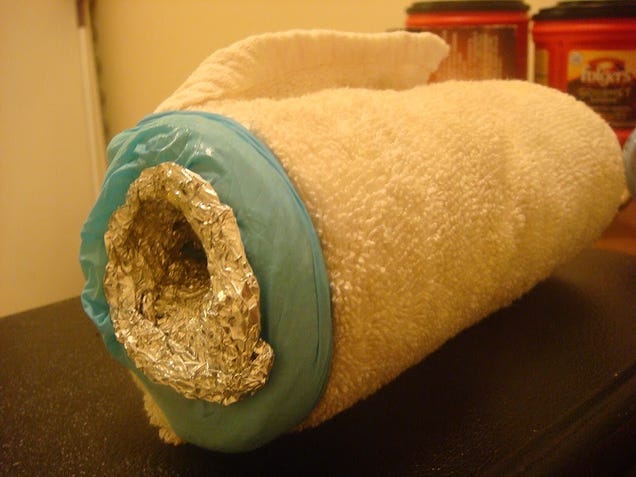
Lotions are also in demand, for exactly what you think, but for some, nothing beats the "fifi." It's called a "Suzy" in other prison systems, but it amounts to the same thing: a handmade vaginal substitute. This is accomplished by inserting a bag or glove into a tightly rolled-up towel and filling it with lotion. Then it is tightened up. This leaves a rather unwieldy cylinder for humping, but apparently it works. For extra verisimilitude, an open tuna can is left around. I never used fifis myself, but I know men who swear by them. As you read this, there is someone in a jail cell, staring at an issue of Buttman and bouncing a fifi on himself.

This is always a tense subject simply because prison was intended, like the Garden of Eden, to be a place without sex. Sex in prison has not been stamped out; it's still there , whether via the reunion program or illicit visiting-room sex, whether with a "fish" or merely a fifi. It's all sex of one kind or another, but forced into the crooked shapes of incarcerated life. I think it must demonstrate something about human nature. We'll fuck whether you want us to or not. We'll fuck even if all we're fucking is a rolled-up towel filled with lotion, with no more mood in the air than what an open can of chunk light can provide. There's no stopping sex, no locking it away. Organized religion hasn't managed, and neither has the Department of Corrections. 


Daniel Genis is working on a memoir of his incarcerated reading life for Penguin/Viking, titled 1,046 for the number of books he read while in prison. You can also follow him on Twitter here and read his other work here.

Image by Sam Woolley. 

The Concourse is Deadspin's home for culture/food/whatever coverage. Follow us on Twitter: @DSconcourse.

Sunday, September 21, 2014

Domestic Violence Appears More Likely for Same-Sex Couples

http://www.washingtonblade.com/content/files/2014/03/domestic_violence_insert_by_Bigstock.jpg

I've seen research suggesting that this is true in the past - but this adds to the evidence. It would be useful, too, to get a more comprehensive assessment of male same-sex domestic violence. As the article below notes, most of the research has been conducted on lesbians, not gay men or bisexuals.

We need to increase prevention eduction to the LGBT community, not just professional athletes and other high profile people.

Domestic Violence More Likely for Same-Sex Couples

By Janice Wood Associate News Editor
Reviewed by John M. Grohol, Psy.D. on September 21, 2014


Domestic violence occurs at least as frequently — and likely more so — between same-sex couples, according to a review of literature conducted by researchers at Northwestern Medicine.

“Evidence suggests that the minority stress model may explain these high prevalence rates,” said senior author Richard Carroll, associate professor in psychiatry and behavioral sciences at Northwestern University Feinberg School of Medicine and a psychologist at Northwestern Memorial Hospital.

“Domestic violence is exacerbated because same-sex couples are dealing with the additional stress of being a sexual minority. This leads to reluctance to address domestic violence issues.”

Previous studies have shown that domestic violence affects 25 percent to 75 percent of lesbian, gay, and bisexual individuals. However, researchers believe that a lack of representative data and underreporting of abuse suggests even higher rates.

An estimated 25 percent of heterosexual women experience domestic abuse, according to researchers, who note that that percentage is “significantly lower” for heterosexual men.

“There has been a lot of research on domestic violence, but it hasn’t looked as carefully at the subgroup of same-sex couples,” Carroll said. “Another obstacle is getting the appropriate samples because of the stigma that has been attached to sexual orientation. In the past, individuals were reluctant to talk about it.”

The research that has examined same-sex domestic violence has concentrated on lesbians rather than gay men and bisexuals, according to the Northwestern scientists.

“Men may not want to see themselves as the victim, to present themselves as un-masculine and unable to defend themselves,” Carroll said.

He suggests that homosexual men and women may not report domestic violence for fear of discrimination and being blamed for abuse from a partner. They also may worry about their sexual orientation being revealed before they are comfortable with it.

“We need to educate health care providers about the presence of this problem and remind them to assess for it in homosexual relationships, just as they would for heterosexual patients,” Carroll said.

“The hope is that with increasingly deeper acceptance, the stress and stigma will disappear for these individuals so they can get the help they need.”

The review was published in the Journal of Sex & Marital Therapy.

Source: Northwestern University

Friday, September 19, 2014

Fitness Friday - Fitness News You Can Use

http://i.telegraph.co.uk/multimedia/archive/03043/jens_3043716b.jpg

We start this week's Fitness Friday with a sports story that exemplifies fitness. Yesterday, in Switzerland, 43-year-old Jens Voigt broke the Hour Record, becoming the oldest man to hold the record. He rode 51.115 km in the 60 minutes of pain, topping the previous record by more than a kilometer. AND he did this as the last race in his long career, having announced his retirement earlier this season. Hats off to one of the great cyclists of his generation.

* * * * *

Okay then, back to the usual format. This week we have a research study suggesting cardio BEFORE weights offers a better hormonal response, a primer of squat patterning from Tony Gentilcore, some fire-breathing finishers from Eric and Ryan Johnson, and some excellent kneeling exercises from Brett Contreras (the later two articles come from T-Nation).

First up, from Breaking Muscle:

Cardio Before Strength Elicits Better Hormonal Response

Doug Dupont
Contributor - Health and Fitness News, Reviews
 
***
Conclusion

The most common wisdom in the gym is to perform strength training before cardio. However, evidence is mounting that cardio first is a superior approach. While we need more research to be certain, we now have good reason to try out new methods. 
References:
Claudio Rosa, et. al. (2014). Order effects of combined strength and endurance training on testosterone, cortisol, growth hormone and IGFBP-3 in concurrent-trained men. Journal of Strength and Conditioning Research. DOI: 10.1519/JSC.0000000000000610
* * * * *

From Tony Gentilcore (scroll down past the stories of his European Adventure):

Squat Patterning 101: How to Clean Up Your Squat. Like a Boss


Just so we’re clear: I think the squat is a basic movement pattern that everyone should be able to perform. I’m not insinuating that everyone should be able to walk into a gym on day #1 and drop it like it’s hot into a clean, deep squat and/or be able to load it to a significant degree.
Not everyone can (or should) squat deep. I’ve written on the topic several times, and for those interested you can go HERE and HERE.

* * * * *

The next 2 articles are from T-Nation:

4 Fire-Breathing Finishers 

by Eric Johnson, Ryan Johnson | 09/16/14


Here's what you need to know...

  • Developing the ability to control your breathing will allow you to deliver more oxygen-rich blood to your muscles, efficiently lower your heart rate and blood pressure, maintain optimal conditions at the biochemical level, and most importantly, kick some butt.
  • These combinations were designed to optimize breathing in a stressed state. Each of them will teach your body how to respond in the absence of oxygen so that you can keep your composure, perform at your highest levels, and come out victorious.
Walking back to your corner, your lungs feel like they're on fire. Your heart rate is racing towards unknown territories. You only have sixty precious seconds to lower your heart rate, catch your breath, and resume the battle.

You look across the ring at your opponent. He resembles a lion patiently waiting to attack his prey – cool, calm, and collected. In this moment, he's gained the advantage over you.

The question is, why aren't you cool, calm, and collected? Why didn't you develop the ability to control your breathing, to switch your nervous system from a state of fight or flight to a parasympathetic one? This would have allowed you to deliver more oxygen-rich blood to your muscles, efficiently lower your heart rate and blood pressure, maintain optimal conditions at the biochemical level, and most importantly, kick some ass.

Before the next time, you should practice these four fire-breathing finishers that were designed to leave you gasping for air. These combinations were designed to optimize breathing in a stressed state. Each of them will teach your body how to respond in the absence of oxygen so that you can keep your composure, perform at your highest levels, and come out victorious.
* * * * *

There are some excellent exercises in the post from Brett Contreras, especially like the half-kneeling overhead press (did it yesterday with the trap-bar after reading the article). If you try these, do NOT load up the bar with weights you might be more familiar with - start light and get a feel for the exercise first.

A lot of the half-kneeling presses are excellent if you have access to a landmine anchor in your gym, or a solid corner to plant the end of the bar.

13 Exercises That'll Floor You 

by Bret Contreras | 9.18.2014

Here's what you need to know...

  • Don't roll your eyes. These aren't wimpy rehab exercises. There are several difficult kneeling exercises that will challenge even the most advanced lifter.
  • The half-kneeling cable anti-rotation press is one of the most underestimated core exercises in existence.
  • Louie Simmons uses heavy loads on the kneeling squat to target the glutes of certain powerlifters.
  • The Nordic ham curl is an incredible hamstring exercise. Highly advanced lifters can do these without the use of their hands to reverse the direction at the bottom of the movement.
  • The half-kneeling overhead press is an amazing shoulder exercise that transfers well to the military press, spares the spine, and allows for sound levels of balance and stability.
Get ready for some challenging new exercises that'll leave you floored... literally. Here are 13 different movements performed from a kneeling position that are worth including in your program from time to time.
 

Thursday, September 18, 2014

Generation X Finally Grows Up (via Esquire)

As an actual member of Generation X (The Harvard Center uses 1965 to 1984 to define Gen X), this article from Esquire, which riffs on a recent column by A.O. Scott in the NY Times, is both insulting and frustrating. Gen X has been judged in large part by its most visible representatives - actors, musicians, etc. Most of us do not fit so neatly into these stereotypes, which is the insulting and frustrating part.

http://archer-associates.com/wp-content/uploads/2014/02/generations.png

We are the in-between generation - some say the 13th generation in American history - sandwiched between 80 million Boomers and 78 million Millennials, and nearly half their size at 46 million. Yet, much of the world we live in today was created by Gen Xers:
Jeff Bezos, founder of the retail giant Amazon.com was born in 1964. YouTube was co-founded by three former Paypal employees, Chad Hurley, Steven Shih Chen, and Jawed Karim, born in 1976, 1978, and 1979 respectively. MySpace was first overseen by Brad Greenspan (b. 1975), Chris DeWolfe (b 1966), and Tom Anderson (b. 1970). The creator of Twitter, Jack Dorsey, was born in 1976; and Wikipedia, the first collaborative, multilingual online encyclopedia was the brainchild of Jimmy Wales (b. 1966) and Larry Sanger (b. 1968).
Gen X also includes novelist Brett Easton Ellis, Pearl Jam's Eddie Vedder, actors Rob Lowe, Robert Downey, Jr, Halle Berry, Kiefer Sutherland, Julia Roberts, Uma Thurman, and Drew Barrymore, as well as musicians Trent Reznor, Lenny Kravitz, Tracy Chapman, Shania Twain, Kurt Cobain, Billy Corgan, Dr. Dre, and Ice Cube.

For a more realistic look at Gen X, see this site.

Generation X Finally Grows Up

Nineties icons are ready to face adulthood after all


By Stephen Marche on September 12, 2014


Jennifer Aniston in Cake at TIFF and Ethan Hawke in Boyhood.

Read more of our dispatches from the 2014 Toronto International Film Festival

Generation X is famously the generation that wouldn't grow up. This week, A.O.Scott has written a New York Times obituary for American adulthood, identifying a well-established phenomenon that Adam Sternbergh noticed nearly a decade ago: the rise of adults who are not really adult, at least in the traditional sense. The trend has coincided neatly with the rise (or semi-rise anyway) of the children born to the Boomers. It began in the nineties and has continued to swell since then. Which is why the Toronto International Film Festival this year may actually prove to be something of a turning point. In 2014, several different icons from the nineties, who are right at the heart of Generation X, are trying desperately to be grown-ups. They're even succeeding to some degree. Ethan Hawke, Reese Witherspoon, and even — gasp — Jennifer Aniston have made excellent, deadly serious movies that are, for lack of a better word, mature.

Jennifer Aniston's movie, Cake, may be the event of the festival. Its reception here has been highly reminiscent of the reception Dallas Buyers Club received last year. Standing ovations. Industry people crying in their seats. Matthew McConaughey won an Oscar for Dallas Buyers Club, and it would not surprise me if Aniston repeated the act for Cake. It would certainly be weird if she weren't nominated. That's certainly why the movie exists. The story itself is classic suffering-redemption-porn Academy bait. Aniston plays a woman recovering from a car accident that killed her son. The emotional trauma is secondary to the chronic pain she must endure. Popping massive quantities of Percocet and OxyContin, which she sometimes has to buy in bulk from a Tijuana pharmacist, she doesn't kill herself mainly because she doesn't have the guts.

Much will be made of the "look" of Jennifer Aniston in this movie. She wears no makeup and is covered in scars, including her face. "Ravaged" would be the correct word. No matter what she does to herself physically, however, she's still going to be Rachel and everyone watching will sympathize with her instantly. That sympathy is a powerful weapon given the subject of chronic pain. The character's constant, unremitting discomfort, which is alleviated only by drugged stupor, makes the audience's skin crawl. There is not a moment to settle down and relax, not one. You feel bad for her the entire 98 minutes. The misery is compounded, and complicated, by the fact that Aniston's character is a bitch — a self-aware bitch, but a bitch nonetheless. It's a courageous position to take: This woman's pain does not mean that she is a good person. Rather the opposite: The pain just makes her already nasty traits nastier. This is much, much braver than any other attempt by Aniston to recreate herself. She is willing to trade in on her strengths as an actress while pushing the audience as far as they can go. In other words, she is acting like somebody who wants to make something truly great and is willing to make personal sacrifices to help achieve it. In other words, she is acting like a grown-up. 

Ethan Hawke, too, is doing some maturing this year, a year that may also turn out to be McConaugheyesque for him. He was in Boyhood, of course, one of the greatest films ever made about the nature of maturity and immaturity. And he has come to the festival with two great follow-ups. The most unlikely is a documentary about Seymour Bernstein, a classical pianist who teaches lessons in his single-room apartment in Manhattan, as he has done for nearly 59 years. It is a quiet, contained portrait of a single eccentric individual that nonetheless reaches far enough to ask questions about what the nature of art may be, what qualifies as a successful life, and where craft and ecstasy meet in the psychology of the artist. It is a film, really, about what creative work means. And it eschews the usual banalities about authenticity and personal expression in favor of a straight look into the minutiae of the business. Apparently Hawke had finally, mercifully abandoned the bullshit of Dead Poets Society and (shudder) Reality Bites.

Then there's Reese Witherspoon in Wild, which is most explicitly about maturation. The film version of Cheryl Strayed's memoir about hiking the Pacific Coast Trail, it is literally a pilgrimage away from the bad behavior of her youth — heroin, screwing random guys — and away from her grief at her mother's death, into a new life, into as she says "becoming the woman my mother thought I could be." In other words she had become an adult. The woman who was Tracy Flick in Election has finally grown up. The woman from Legally Blond has finally grown up.

All these actors are, or were, icons of the grand Peter Pan syndrome that has generally gripped culture, and which A.O Scott is the latest to identify. But I wonder if Scott may have spoken too soon. Adulthood hunger is starting to rear its head, although it's also possible that his piece is a symptom of the desire for maturity as much as an identification of its reality. At least these three actors show a kind of reprieve in the onslaught of kids' stories being the only stories. Eventually, acting like a kid gets boring. One of the most unexpected results of growing up is that everything gets much more interesting, even as it gets much harder and much more complicated.

Wednesday, September 17, 2014

Boys to Men: Myth and Masculinity | John Varieur | TEDxLongwood

https://gallery.mailchimp.com/88de8efce470e4bf0c6b19fdd/images/banner_4.jpg

This TEDx talk is from earlier this summer - it's short but it makes some good points. Varieur uses fairy tales to illustrate the traditional processes by which boys become men.

Boys to Men: Myth and Masculinity | John Varieur | TEDxLongwood

Published on Jul 7, 2014


Have you ever considered where fairy tales come from and what their real meanings are? In this talk, John uses a well known children's fairy tale to explain the process of how boys become men.

John Varieur is an in-home therapist for Arbour-Fuller Hospital in Attleboro, Massachusetts. He is also a member of Lead Now, a locally based leadership company. A jack of all trades, John has been a high school teacher, a roofer, a bartender, and a banker.

Between bartending and psychology, John has heard more fairy tales then all of us combined.

Tuesday, September 16, 2014

Why You Want to Skip Steroid Shots for Pain

This is not a topic specific to men, but it's from Men's Journal. Steroid injections for pain are a mixed bag - sometimes they help and sometimes they can make things worse (when you can't feel the pain, it's very easy to re-injure).

The study discussed below showed that PT (physical therapy) is just as effective as cortisol injections for pain caused by tendonitis, bursitis, or partial rotator cuff tears.

Why You Want to Skip Steroid Shots for Pain


Why You Want to Skip Steroid Shots for Pain
Credit: Getty Images
To relieve nagging shoulder pain, you might want to skip the steroid injections and try physical therapy instead. A new study found that steroid injections are no more effective than PT for treating pain caused by tendonitis, bursitis, or partial rotator cuff tears.

Researchers gave shoulder pain sufferers either one shot of steroids or six PT sessions over three weeks and then monitored their progress throughout the next year. The two treatments worked equally well. On average, both groups saw 50 percent improvement in their pain levels and shoulder functionality. However, almost 40 percent of the injection group required additional shots to ease their pain, and 19 percent wound up needing physical therapy anyway. All of this, plus the fact that there are health risks involved with injections, leads the researchers to side with physical therapy.

RELATED: A Steroid-Free Back Pain Remedy
 
"Although injections can help decrease pain in the short term, they don't address the underlying issue," says lead researcher Daniel Rhon of Brooke Army Medical Center in Texas. "Therefore, you might need more injections and more health care visits in the long run." But getting multiple steroids shots can be risky. "Steroids can weaken and damage tissue if they are used too often," Rhon says. "There's also a low risk of skin reactions and infection."

Physical therapy, on the other hand, does address the root cause of pain and is virtually risk-free, Rhon says. "Manual physical therapy, which includes appropriately prescribed exercises, can certainly help with [the cause of the pain] and should never aggravate symptoms," he says.
This isn't the first study to come down hard on injectable steroids. Last year, Johns Hopkins researchers found that they didn't work any better to ease back and neck pain than injections of a simple saline solution.  

Bottom line? Every case of shoulder pain is different, so you need to thoroughly discuss your treatment options with your doctor. Together, you can weigh out the pros and cons of steroid injections and determine whether that, or perhaps just physical therapy, is the better route. Though Rhon adds, "I think it would rarely hurt to try physical therapy first." 


Monday, September 15, 2014

One in Five Men Reports Violence Toward Intimate Partners

http://cdn.medicalxpress.com/newman/gfx/news/2014/oneinfivemen.jpg

That is a scary number, but it matches the number of women who report being the victims of intimate partner violence. It's worth noting, however, since it is seldom discussed, that intimate partner violence is almost equally perpetrated by women and men (53% by men, 47% by women, according to the CDC), but men cause more damage.

One in five men reports violence toward intimate partners


September 15, 2014
Source: University of Michigan Health System

Summary:
Intimate partner violence is more prevalent than diabetes, research shows. One in five men in the U.S. reports violence towards their spouse or significant other, says a new nationally-representative study. The analysis also found that male aggression toward a partner is associated with warning signs that could come up during routine health care visits, including irritable bowel syndrome (IBS) and insomnia, in addition to better known risks like substance abuse and a history of either experiencing or witnessing violence as a child.
One in five men in the U.S. reports violence towards their spouse or significant other, says a new nationally-representative study by the University of Michigan.

The analysis also found that male aggression toward a partner is associated with warning signs that could come up during routine health care visits, including irritable bowel syndrome (IBS) and insomnia, in addition to better known risks like substance abuse and a history of either experiencing or witnessing violence as a child.

The findings appear in the Journal of the American Board of Family Medicine and are based on the most recent data available from the National Comorbidity Survey-Replication from 2001-2003. The survey assesses intimate partner violence and characteristics among male perpetrators.

"When people think of men who abuse their partners, they often think of violent people who they have never come across, or people they have only heard about in the news," says lead author Vijay Singh, M.D., MPH, MS, a clinical lecturer in the Departments of Emergency Medicine and Family Medicine at the University of Michigan Medical School.

"However, our study showed one out of every five men in the U.S. reported physical violence toward an intimate partner. It's likely that we've all met these men in our daily environment. This is an issue that cuts across all communities, regardless of race, income, or any other demographics."

Domestic violence has become a growing health concern. In the U.S. each year, roughly 320,000 outpatient health visits and 1,200 deaths among women are due to intimate partner violence, and $8.3 billion is spent in related medical and mental health services alone. The new U-M findings show that the prevalence of partner violence in the country is even greater than that of diabetes.

The subject has also recently been in the headlines, with the case of NFL running back Ray Rice. The Baltimore Ravens released Rice after a video of him hitting his wife in a casino elevator surfaced in the news.

The U-M study found that more than half of the men who reported violence toward a partner had at least one routine health visit over the last year and nearly one third noted at least one emergency room visit over the last year.

"Most of our efforts to prevent intimate partner violence have focused on screening and improving outcomes for women who are victims, because their health and well-being is our priority. Very little work, however, has been done on how to identify male perpetrators," says Singh, who is also a member of the University of Michigan Injury Center and Institute for Healthcare Policy and Innovation.

"Our research shows that male perpetrators of intimate partner violence seek routine medical services, and they have physical symptoms that are common reasons patients seek medical care. This suggests that we may be missing an important opportunity in the primary care setting to identify their aggressive behavior and potentially intervene."

Singh says further work needs to be done on developing identification and intervention programs focused to on male aggression toward a partner.

The nationally-representative sample included 530 men with an average age of 42. Roughly 78 percent were non-Hispanic white, 56 percent were educated beyond high school and 84 percent were employed.

Intimate partner violence was defined as pushing, grabbing, shoving, throwing something, slapping or hitting, kicking, biting, beating up, choking, burning or scalding, or threatening a partner with a knife or gun.

Story Source:
The above story is based on materials provided by University of Michigan Health System. Note: Materials may be edited for content and length.

Journal Reference:
V. Singh, R. Tolman, M. Walton, S. Chermack, R. Cunningham. (2014). Characteristics of Men Who Perpetrate Intimate Partner Violence. The Journal of the American Board of Family Medicine; 27(5): 661 DOI: 10.3122/jabfm.2014.05.130247

The National Intimate Partner and Sexual Violence Survey (NISVS) infographic

Gender Studies, Masculinity and Television (via Utne Reader)

http://ecx.images-amazon.com/images/I/51lIcjN9IWL._SY344_BO1,204,203,200_.jpg

This is an interesting look at the dearth of analysis of male characters on television in gender studies. The majority of characters are male, yet they are seldom studied within their gender performance context, while women have been often studied over the last several decades.

This brief article is an excerpt from the Introduction to Cable Guys: Television and Masculinities in the 21st Century (NYU Press, 2014), by Amanda D. Lotz.

Gender Studies, Masculinity and Television


Why gender studies should examine male television characters like Archie Bunker and Tony Soprano more closely.

 
By Amanda D. Lotz
September 2014

Despite the number of male characters in American television, the study of these men—and their roles as men in society—are not among the popular topics when discussing gender studies. Photo by Fotolia/migfoto

Women’s roles on television have been analyzed over the course of television’s history. Through the 20th century and into the 21st century, the evaluation of gender roles has come mostly through the analysis of women. Why not men? In Cable Guys: Television and Masculinities in the 21st Century (NYU Press, 2014), Amanda D. Lotz attributes the lack of analysis and typology to the abundance of types of male characters in television, which leads to an audience who is more accepting of the male characters they see on television. In the following excerpt from the introduction, Lotz examines why male television characters have not been analyzed in depth under gender studies while many male film characters have. 


What Do We Know about Men on Television?


It is revealing that so little has been written about men on television. Men have embodied such an undeniable presence and composed a significant percentage of the actors upon the small screen—be they real or fictional—since the dawn of this central cultural medium and yet rarely have been considered as a particularly gendered group. In some ways a parallel exists with the situation of men in history that Michael Kimmel notes in his cultural history, Manhood in America. Kimmel opens his book by noting that “American men have no history” because although the dominant and widely known version of American history is full of men, it never considers the key figures as men. Similarly to Kimmel’s assertion, then, we can claim that we have no history of men, masculinity, and manhood on television—or at best, a very limited one—despite the fact that male characters have been central in all aspects of the sixty-some years of US television history. It is the peculiar situation that nearly all assessments of gender and television have examined the place and nature of women, femininity, and feminism on television while we have no typologies of archetypes or thematic analyses of stories about men or masculinities.

For much of television studies’ brief history, this attention to women made considerable sense given prevailing frameworks for understanding the significance of gender representation in the media. Analyses of women on television largely emerged out of concern about women’s historical absence in central roles and the lack of diversity in their portrayals. Exhaustive surveys of characters revealed that women were underrepresented on television relative to their composition of the general populace and that those onscreen tended to be relegated to roles as wives, love interests, or sex objects. In many cases, this analysis was linked with the feminist project of illustrating how television contributed to the social construction of beliefs about gender roles and abilities, and given the considerable gender-based inequity onscreen and off, attention to the situation of men seemed less pressing. As a result, far less research has considered representations of men on television and the norms or changes in the stories the medium has told about being a man.

Transitioning the frameworks used for analyzing women on television is not as simple as changing the focus of which characters or series one examines. Analyzing men and masculinity also requires a different theoretical framework, as the task of the analysis is not a matter of identifying underrepresentation or problematic stereotypes in the manner that has dominated considerations of female characters. The historic diversity of stories about and depictions of straight white men has seemed to prevent the development of “stereotypes” that have plagued depictions of women and has lessened the perceived need to interrogate straight white men’s depictions and the stories predominantly told about their lives. Any single story about a straight white man has seemed insignificant relative to the many others circulating simultaneously, so no one worried that the populace would begin to assume all men were babbling incompetents when Darrin bumbled through episodes of Bewitched, that all men were bigoted louts because of Archie Bunker, or even that all men were conflicted yet homicidal thugs in the wake of Tony Soprano. Further, given men’s dominance in society, concern about their representation lacked the activist motivation compelling the study of women that tied women’s subordinated place in society to the way they appeared—or didn’t appear—in popular media.

Gender Studies: Focusing on Men


So why explore men now? First, it was arguably shortsighted to ignore analysis of men and changing patterns in the dominant masculinities offered by television to the degree that has occurred. Images of and stories about straight white men have been just as important in fostering perceptions of gender roles, but they have done their work by prioritizing some attributes of masculinity—supported some ways of being a man—more than others. Although men’s roles might not have been limited to the narrow opportunities available to women for much of television history, characteristics consistent with a preferred masculinity have pervaded—always specific to the era of production—that might generally be described as the attributes consistent with what is meant when a male is told to “be a man.” In the past, traits such as the stoicism and controlled emotionality of not being moved to tears, of proving oneself capable of physical feats, and of aggressive leadership in the workplace and home have been common. Men’s roles have been more varied than women’s, but television storytelling has nevertheless performed significant ideological work by consistently supporting some behaviors, traits, and beliefs among the male characters it constructs as heroic or admirable, while denigrating others. So although television series may have displayed a range of men and masculinities, they also circumscribed a “preferred” or “best” masculinity through attributes that were consistently idealized.

The lack of comprehensive attention to men in any era of television’s sixty-some-year history makes the task of beginning difficult because there are so few historical benchmarks or established histories or typologies against which newer developments can be gauged. Perhaps few have considered the history of male portrayal because so many characteristics seemed unexceptional due to their consistency with expectations and because no activist movement has pushed a societal reexamination of men’s gender identity in the manner that occurred for women as a component of second-wave feminism. Male characters performed their identity in expected ways that were perceived as “natural” and drew little attention, indicating the strength of these constructs. Indeed, television’s network-era operational norms of seeking broad, heterogeneous audiences of men and women, young and old, led to representations that were fairly mundane and unlikely to shock or challenge audience expectations of gender roles.

One notable aspect of men’s depictions has been the manner through which narratives have defined them primarily as workers in public spaces or through roles as fathers or husbands—even though most male characters have been afforded access to both spaces. A key distinction between the general characterizations of men versus women has been that shows in which men functioned primarily as fathers (Father Knows Best, The Cosby Show) also allowed for them to leave the domestic sphere and have professional duties that were part of their central identity—even if actually performing these duties was rarely given significant screen time. So in addition to being fathers and husbands, with few exceptions, television’s men also have been workers. Similarly, the performance of professional duties has primarily defined the roles of another set of male characters, as for much of television history, stories about doctors, lawyers, and detectives were necessarily stories about male doctors, lawyers, and detectives. Such shows may have noted the familial status of these men but rarely have incorporated family life or issues into storytelling in a regular or consistent manner.

This split probably occurs primarily for reasons of storytelling convention rather than any concerted effort to fragment men’s identity. I belabor this point here because a gradual breakdown in this separatespheres approach occurs in many dramatic depictions of men beginning in the 1980s and becomes common enough to characterize a subgenre by the twenty-first century. Whether allowing a male character an inner life that is revealed through first-person voice-over—as in series such as Magnum, P.I., Dexter, or Hung—or gradually connecting men’s private and professional lives even when the narrative primarily depicts only one of these spheres—as in Hill Street Blues or ER—such cases in which the whole lives of men contribute to characterization can be seen as antecedents to the narratives that emphasize the multifaceted approach to male characters that occurs in the male-centered serial in the early 2000s. Though these series offer intricately drawn and complex protagonists, their narrative framing does not propose them as “role models” or as men who have figured out the challenges of contemporary life. The series and their characters provide not so much a blueprint of how to be a man in contemporary society as a constellation of case studies exposing, but not resolving, the challenges faced.

The scholarly inattention to men on television is oddly somewhat particular to the study of television. The field of film studies features a fairly extensive range of scholarship attending to changing patterns of men’s portrayals and masculinities. While these accounts are fascinating, the specificity of film as a medium very different from television in its storytelling norms (a two-hour contained story as opposed to television’s prevailing use of continuing characters over years of narrative), industrial characteristics (the economic model of film was built on audiences paying for a one-time engagement with the story while television relies on advertisers that seek a mass audience on an ongoing basis), and reception environment (one chooses to go out and see films as opposed to television’s flow into the home) prevent these studies of men on film to tell us much about men on television. Further, gender studies and sociology have developed extensive theories of masculinity and have been more equitable in extending beyond the study of women. Although theories developed in these fields provide a crucial starting point—such as breaking open the simple binary of masculinity and femininity to provide a language of masculinities—it is the case that the world of television does not mirror the “real world” and that the tools useful for exploring how societies police gender performance aren’t always the most helpful for analyzing fictional narratives. Sociological concepts about men aid assessments of men and masculinity on television, but it is clearly the case that the particularities of television’s dominant cultural, industrial, and textual features require focused and specific examination.


Reprinted with permission from Cable Guys: Television and Masculinities in the 21st Century by Amanda D. Lotz and published by NYU Press, 2014.


Related Content

Sunday, September 14, 2014

The Real Story of How Women Evaluate Men’s Junk

This interesting article from Salon looks at women are now objectifying men in the ways they have often complained that men objectify them. This is especially true with a man's penis (aka, his junk).

The author notes the polar extremes of how women talk about a man’s dick — in praise of his virility and masculinity, and as a form of total and complete emasculation. Nice. Just sharing the love, now, aren't we?!

http://cdn03.cdn.justjared.com/wp-content/uploads/headlines/2014/09/jared-leto-grabs-a-giant-bulge-in-his-pants.jpg 

This [above] is the Jared Leto crotch-grab referenced in the subtitle.

The real story of how women evaluate men’s junk

From "Bachelor in Paradise" to Jared Leto's crotch-grab, reminders this week that women objectify men's bodies too


Tracy Clark-Flory
Wednesday, September 10, 2014

(Credit: Camrocker via iStock)

“He has an uh-mazing dick.” Those were the words of Michelle Money — yes, that is her real name — on this week’s season finale of “Bachelor in Paradise.” She was referring to the appendage of Cody, her now-boyfriend, with whom she had just had an overnight date. Even before she saw the aforementioned member, she told the camera in a pre-date interview that she was excited to see what she would find that evening. “Like, sometimes I get the impression that guys with that big a body have a small dick,” she said, her mouth blurred on the final word, on top of an obscuring bleep. “But I could be totally wrong. Maybe his dick is very muscular, like the rest of his body. Like the hulk.”

I must admit, when she said this, I pumped my fists in the air. That’s not because I enjoy seeing men, or women, reduced to their genitals — quite the contrary! I don’t like it when sexual aptitude is conflated with penis size, either. I’m very pro-“motion of the ocean” thinking, for the record, and to any straight man concerned that his penis is not large enough, allow me to direct you to a diagram of the vagina and, importantly, the G-spot. But it was refreshing to see sex talked about so blatantly on a TV franchise that historically has only allowed allusions and metaphors — and a whole lot of slut-shaming. But beyond all that, here was a woman talking about a penis in public like I’ve only heard women talk in private.

That wasn’t the only time that happened in the show’s finale. Following an overnight date during which her beau Robert wore his jeans to bed, contestant Sarah told the camera, “I don’t even know if he has a penis.” In that two-hour-long season finale, we saw the polar extremes of how women talk about a man’s dick — in praise of his virility and masculinity, and as a form of total and complete emasculation. It also happens that this week Jared Leto inspired a bunch of penis-fawning by grabbing his junk during a performance, which Lauren Yapalater broke down on BuzzFeed via several stills and commentary such as, “WHOSITSWHATITSBALLOOGAAAHELGSKHGLSNDGMSD?????!!!” Just to fully convey her enthusiasm, know that I had to cut off the latter part of the exclamation points, along with special characters, to fit the quote on this page.

We’re used to hearing the kind of despicable “guy talk” that evaluates women according to their bra size or even … interior dimensions — but not so much women. So all these ladies talking about peen made me proud, it made me ashamed — and then I decided to talk to some of my lady friends about how we talk about penises.

My friend “Susan” says she started her sex life fooling around with guys who all had what she described as “very standard-issue schlongs.” Then in college, she started sleeping with men of all different sizes and shapes. ”It was neat, actually — a lesson in the depth of human variety,” she said. “I started to realize that the way people talked about penises — bigger is better, basically — was a symptom of shallow and unimaginative sex.” She did sleep with one man with an especially large penis and says, ”He practically broke my cervix. Oh god, it hurt. There is nothing good about a cervix-banger.”

Small penises are not an issue for her, she says. “I think that becomes more of a problem in a very standard, missionary-style sexual relationship. I know I’m old-fashioned, but I do think that good sex is less about genitalia and more about the way you feel when you’re together — your ability to let go, to surrender, to connect. The soul stuff.”

As for the recent reality-TV dick talk, Susan says, ”I find it funny how women have adopted the objectifying language that is so crude in men. The idea that a woman is ‘a good piece of ass’ or ‘a nice rack’ is pretty diminishing, but somehow, when I turn on reality TV, it seems to be crammed with women who want to ogle a guy’s six pack and talk about his junk.” And now I feel ashamed for cheering them on.

Another friend, the phenomenal sex writer Anna Pulley, is bisexual and in a committed relationship with a woman. “My straight friends always tell me about the penises of the guys they date,” she said, noting that I am the exception (leave it to someone who writes publicly about her sex life to be demure in real life). “‘He had a nice dick,’ has been used more than once as the sole reason to keep sleeping with someone, regardless of personality. Other friends have held up pinkies to illustrate their displeasure with a dude’s size.” Ah, the ol’ pinkie move!

What about men who are not well endowed but have the right moves, though? “I’ve literally never heard ‘he was small but knew how to use it,’” she said. “I think women are a lot more size-ist than they want to be.” Real talk from this one! Although now is a good time to mention that another friend of mine did enthuse to me about her boyfriend, ”It’s small but he knows how to work it!” Pulley added: “I personally enjoy smaller wangs because I am hella tight.” All around, good news for all sizes.

My friend “Georgia” tells me, “When I’m describing a man’s penis to my friends, I often find girth more impressive than length. Curve is often the thing that makes the penis unique. Does it curve up? To the right a little? All of these thing contribute to the experience and are important notes to be shared.” Usually she employs the measuring stick of “thick, thin or average.” A couple of women weighed in on my inquiry via Twitter: One said she once described a penis as “serviceable,” while another told friends of a particularly “huge” member, “I almost died when I first saw it.”

On the harsher side of things, my friend “Mary” tells me that she had a friend who broke up with her boyfriend and then began referring to him as “needle dick.” “We laugh every time,” she says. “She was, like, at one time describing it to me and she said she remembered thinking, ‘Is it in?’” On Facebook, responding to my call for women’s firsthand accounts of how they have talked about penises, a woman wrote, “Stubby. Sorry, Rob, but I was waiting for you to penetrate me and, um, you already had. Then you said your oral capabilities made up for it. They didn’t.”

I suppose it’s fair to conclude that the reality of how women talk about penises is both men’s best fantasy and worst nightmare.

~ Tracy Clark-Flory is a staff writer at Salon. Follow @tracyclarkflory on Twitter and Facebook.

Friday, September 12, 2014

Fitness Friday - Fitness News You Can Use

It's another Fitness Friday. Today we have Eric Cressey on the negative impact of sitting all day, Christian Thibaudeau on how hard do we need to work out, Tony Gentilcore on mastering the kettlebell swing, and Travis Pollen on adding static contractions to the end of our sets for added growth.

How Chronic, Prolonged Sitting Impacts Your Body – and What to Do About It


Written on September 9, 2014, by Eric Cressey

Last week, over the course of two days, I made the long drive from Hudson, MA to Jupiter, FL. Suffice it to say that all those hours in the car gave me a newfound appreciation (or distaste?) for just how hard sitting is on the body. As such, it was really timely when my friend Michael Mullin emailed along this guest post on the subject. Enjoy! -EC

I would like to have you read the scenario below and let me know if you would want this job.

“Congratulations on being selected for the position of top minion here at Do Everything Against Design, Inc. (DEAD). Our company is a prestigious purveyors of thneeds—and a thneed is a thing that everyone needs (5). We pride ourselves on our commitment to being on the cutting edge of business and we use only the best, most up-to-date information possible to dictate how we run our business.”

“Let me start off by saying that this job will provide all kinds of potential benefits. It is up to you to decide how committed you are. The potentials are endless—overuse injury, chronic pain, depression, increased alcohol use, drug or medication use, cancer, increased general mortality, even bullying—that’s right, just like when you were a kid—are all very real possibilities here at DEAD, Inc.”

* * * * *

How Hard Do You Need to Work Out? 

by Christian Thibaudeau | 09/08/14


Here's what you need to know...
  • You need to train very hard to progress optimally, but if you train so hard that it affects the quality of your other workouts or causes so much stress that performance decreases, it's a bad move.
  • If you train a muscle only once a week, you'll be able to impose a lot more punishment without too many ill-effects than if you train each muscle several times in a week.
  • Testing your mettle with challenge-based workouts can be a great way to see how physically capable you are and preparing for those challenges can boost your training motivation significantly.
  • If you don't go borderline crazy from time to time you lose sight of what training hard means. An occasional lesson in pain in the gym will allow you to keep things in perspective.
  • Puking may make you seem hardcore, but vomiting during a workout simply means that you mistimed your food intake and training, which really doesn't make you that hardcore at all.
Feeling the burn. Driving yourself into the ground. Feeling crippling soreness. Puking. Not being able to walk after leg day. Not being able to drive after arm day.

All of the above are badges of honor for many lifters, but none of them guarantee that your workout was positive and will lead to improvements. Regardless, many of us prefer to focus on these elements rather than on objective progression.

Why? Because doing madman workouts makes you look hardcore, like a warrior. Your workout often turns into a test of how much suffering you can endure. But do you really need to drive yourself into the ground every single workout to make progress?

* * * * *

Master the Kettlebell Swing 

by Tony Gentilcore | 09/10/14


Here's what you need to know...
  • The hip hinge serves as a precursor to everything you probably want to improve, from athletic performance to body composition.
  • The ultimate hip hinge or hip snap movement is the kettlebell swing... and you're probably doing it wrong.
  • Many lifters and athletes make the mistake of breaking with their knees first and making it more of a squat pattern. This is wrong. You want to hinge with the hips first, "attack the zipper," and keep the kettlebell as close to the body as possible.
Hip Hinging for Strength and Fat Loss

The hip hinge is a crucial ingredient for pretty much every lower-body movement you'll perform in the gym that doesn't involve a machine or sitting down. Get it down now and it makes everything easier down the road.

The hip hinge is nothing more than any movement which involves flexion/extension originating at the hips and which also involves a posterior weight shift. Breaking it down more, it's important to note that the hip hinge is in no way associated with a squat pattern.
Hip Hinge = maximal hip bend, minimal knee bend.
Squat = maximal hip bend, maximal knee bend.
While grooving both patterns is important, I'll place more emphasis on the hip hinge because, well, most people move like shit and don't perform it properly. As a coach, the sooner I can correct the pattern and get an athlete or weekend warrior to perform it right, the sooner I can introduce any exercise I want. The hip hinge makes the learning curve infinitely smaller.

* * * * *

6 Ways to Bring the Pain

Deadly Dynamic-Static Compound Sets
by Travis Pollen | 09/10/14


Here's what you need to know...
  • Static holds have long been known to build impressive amounts of mass, if you can stand the pain.
  • By pairing a static hold performed at the hardest part of a bodyweight exercise with a heavy compound lift for the same muscles, you have yourself a time-effective - and brutal - way to gain size.
  • Advanced lifters can ramp it up again by performing a third static hold.
When it comes to building muscle, time under tension (TUT) is king, or at least a big part of the royal court. Historically speaking, many bodybuilding greats have used isometric training to help build their imposing physiques, sometimes doing sets lasting upwards of three minutes. The trouble is, most of us neither have the time nor the patience to hold an isometric lateral raise all damn day. Fortunately, there's a way to reap these same muscle-building benefits with iso holds lasting a third of the time. I call it the dynamic-static compound set.