Tuesday, February 18, 2014

C.S. Sloan - On Literature, Beer, and the Joy of Heavy Squats (Among Other Things)

This comes from C.S. Sloan's Integral Strength blog. Sloan is a contributing editor for Iron Man magazine and Planet Muscle Magazine, strength athlete, martial artist, and convert to Orthodox Christianity (with a Stoic and integral bent, I might add). I have featured his writing here several times over the years.

I resonated with this new post because I love to read (and to discover new authors), I love good beer (i.e., not mainstream and corporate), and I love heavy squats.

On Literature, Beer, and the Joy of Heavy Squats (Among Other Things)


I am sorry that it has been so long since I last posted something here. It has been a few weeks. I will try my best to do better with more frequent postings. That being said, I hope you enjoy my latest (slightly philosophical) rant...

There are a few things in life that I love. I love studying philosophy. I love the feel of a new book in my hands—along the same lines, I love discovering a new author, for it is a deep joy; and I worry deeply about people who do not understand the joy to be found in such a discovery.

But there are still greater things that I love even more. I love God[1]. I love cold beer[2] (and worry even more deeply about those who do not understand how great a thing a beer can be). I love holding my wife in my arms.

Last—but certainly not least—I love the feel of deep squats with a heavy barbell on my back. (Oh, what a loathsome life it must be to not love literature, beer, and heavy squats.)

I love all of these things because of what they have taught me in life. And, to be honest, they are all integral to one another. For instance, I trust God, however much I may not understand the Mystery that lies at the depths of the Divine’s Existence[3]. And because of this trust, I can say with conviction that my life is not my own. Whatever God decides to give to me or take away from me, that is His business. It is not mine. Mine is to live my life to the best of my ability with what has been given to me, and with what is under my control. The things under my control are my thoughts and my actions. And because I understand this—because I know this, and am not concerned with the frivolities that many men spend in the baneful existence with which they claim to be a life—I can focus all of my strength and willpower on what is important when lifting, or, hell, when drinking a beer.

The beer—when it’s good beer, at least; please do not waste your money or time on cheap beer just for its alcohol content—is a joy to drink because it, too, is a gift given to me by God (or by Fate, or perhaps the Fates themselves, if you choose to be of a more non-theistic bent[4]). I enjoy it, but I know that it may be my last, for who knows how much longer I have upon this earth. I certainly do not. The beer is in the present, where things actually exist for now. How many men concern themselves with thoughts of the past—worries over what might have been, or reliving “glory days” that they can never get back? The past is gone. Do not give it one more thought, except to learn from your mistakes so that you might live with the utmost dignity, self-respect, and values for the things which do matter. And how many men concern themselves with thoughts of the future—worries over their inevitable losses or fixations upon owning more monetary things? The truth is that the future will take care of itself—and it will be a good future—if you but live for today, concerned only with doing what is right with the thoughts and actions under your control.

Live for the heavy squats that you must do today. Give your attention to them, your time to perfecting them and other heavy, basic lifts. If you want to be big and strong (or lean and strong), then that is a good goal to aim for, but it is not something that you should be fixated upon. Train your squats heavy—learn the joy of simply squatting heavy weights without thought of the results they will bring—and the results will naturally come of their own accord.

Notes

[1] When I use the word “God” I am talking about the ground of all Being, not the mythical “sky god” that so many take to be God, but is nothing more than a construct of their own making, for their own whims.

[2] Beer is great, but you must choose a good beer. My favorite beer—as far as the more popular brands go—is “Newcastle.” It’s a brown ale that, perhaps people who like their beers “hoppier” might complain to be too bland, but I have found that it’s what I usually return to the most after trying an assortment of others. By and large, I do not like mainstream American beers. There is little worse than a Bud Light, a Miller Lite, or a Coors Light. Sure, Bud Light sells more than any other beer in the U.S.A., but that ought to tell you something about how bad it is, not how good. I do enjoy drinking beers from smaller breweries in the U.S. Currently, my favorite beer from a local brewery is “Truck Stop Honey Brown Ale” made by “Back 40 Beer Company” right here in Alabama.

[3] I am using “existence” more for nomenclature than any kind of ontological proof. To be honest, you cannot say that God “exists” at all. He doesn’t. Created beings and creatures exist. God is That which is beyond all existence.

[4] Although I don’t agree with it on either metaphysical or epistemological grounds, I am not opposed to good, well thought-out non-theism. Much of the philosophy espoused in this article is of a Stoic bent. Stoicism can certainly be very good and still be non-theistic.

Monday, February 17, 2014

In an Attempt to Be Gender-Neutral, We May Have Become Gender-Neutered

From The New York Times Magazine, this is an interesting article on the issue of gender roles and sexual expression. The more gender neutral relationships are in terms of division of labor, the less sexually satisfied the couple (especially the woman). It seems we "need" more traditional gender roles in relationships to maintain the sexual tension (need might be the wrong word).

This is a long article, but it's worth a read, especially if you are in or desiring a more egalitarian relationship.

Does a More Equal Marriage Mean Less Sex?

By LORI GOTTLIEB | FEB. 6, 2014


Photo illustration by Craig Cutler for The New York Times
Not long ago, I was at a dinner party with several couples in their 40s, all married except for my boyfriend and me. The mood was jovial until, over dessert, one guest made an offhand joke about Internet porn.

His wife took issue, and during a tense back-and-forth between them, the rest of us sensed that we were about to learn way too much about their personal lives. Fortunately, another husband deftly maneuvered to a safe topic for middle-aged parents (kids and screen time!), and after a lively discussion about iPads, we made our excuses to leave.

In the car, I turned to my boyfriend and said, “I bet there won’t be any sex happening in their bedroom tonight.”

He smiled and shook his head. He predicted that the hosts would be the least likely to have sex that night. 
I thought he was kidding. This couple were my “model marrieds,” true equals who share the housework and child care, communicate openly and prioritize each other’s careers. The best friends of happy-couple cliché. Earlier in the evening, I watched them work together in the kitchen, cheerfully cooking and cleaning: She bringing out the hors d’oeuvres, and he chopping and dicing. When their 6-year-old woke up with a nightmare, they wordlessly agreed that he would be the one to soothe her. It was the kind of marriage many people wish for. 
“Exactly,” my boyfriend said. “Least likely.”

Marriage is hardly known for being an aphrodisiac, of course, but my boyfriend was referring to a particularly modern state of marital affairs. Today, according to census data, in 64 percent of U.S. marriages with children under 18, both husband and wife work. There’s more gender-fluidity when it comes to who brings in the money, who does the laundry and dishes, who drives the car pool and braids the kids’ hair, even who owns the home. A vast majority of adults under 30 in this country say that this is a good thing, according to a Pew Research Center survey: They aspire to what’s known in the social sciences as an egalitarian marriage, meaning that both spouses work and take care of the house and that the relationship is built on equal power, shared interests and friendship. But the very qualities that lead to greater emotional satisfaction in peer marriages, as one sociologist calls them, may be having an unexpectedly negative impact on these couples’ sex lives.

A study called “Egalitarianism, Housework and Sexual Frequency in Marriage,” which appeared in The American Sociological Review last year, surprised many, precisely because it went against the logical assumption that as marriages improve by becoming more equal, the sex in these marriages will improve, too. Instead, it found that when men did certain kinds of chores around the house, couples had less sex. Specifically, if men did all of what the researchers characterized as feminine chores like folding laundry, cooking or vacuuming — the kinds of things many women say they want their husbands to do — then couples had sex 1.5 fewer times per month than those with husbands who did what were considered masculine chores, like taking out the trash or fixing the car. It wasn’t just the frequency that was affected, either — at least for the wives. The more traditional the division of labor, meaning the greater the husband’s share of masculine chores compared with feminine ones, the greater his wife’s reported sexual satisfaction.

Granted, some might
view a study like this with skepticism. Correlations don’t establish causation, and especially when it comes to sex, there’s always a risk of reporting bias and selective sampling, not to mention the mood of a subject at the time of the survey. (Was she answering the questions while standing next to a big pile of garbage that hadn’t been taken out?) What’s more, while this study used the most recent nationally representative data that included measures of sexual frequency and a couple’s division of labor, it was drawn from information collected in the 1990s. (Julie Brines, an author of the chores study, explained, however, that many studies on housework since then show that not much has changed in terms of division of labor.) But as a psychotherapist who works with couples, I’ve noticed something similar to the findings. That is, it’s true that being stuck with all the chores rarely tends to make wives desire their husbands. Yet having their partner, say, load the dishwasher — a popular type of marital intervention suggested by self-help books, women’s magazines and therapists alike — doesn’t seem to have much of an effect on their libido, either. Many of my colleagues have observed the same thing: No matter how much sink-scrubbing and grocery-shopping the husband does, no matter how well husband and wife communicate with each other, no matter how sensitive they are to each other’s emotions and work schedules, the wife does not find her husband more sexually exciting, even if she feels both closer to and happier with him.

I first noticed this while doing a yearlong training in marriage therapy. I was seeing a couple who had been married for five years and wanted to work out some common kinks related to balancing their respective jobs, incomes and household responsibilities in, as the wife put it, “an equal way.” Over the course of treatment, the couple reported more connection, less friction and increased happiness. One day, though, when their issues seemed largely resolved and I suggested discussing an end to their therapy, the husband brought up a new concern: His wife now seemed less interested in having sex with him. He turned to her and asked why. Was she still attracted to him? After all, he wondered, why did she appear less interested now that their relationship seemed stronger in all the ways she wanted?

“I’m very attracted to you,” she said earnestly. “You know when I really crave you? It’s when you’re just back from the gym and you’re all sweaty and you take off your clothes to get in the shower and I see your muscles.”

Her husband countered by saying that this very situation had occurred that morning but that his wife became irritated when he tossed his clothes on the floor, which led to a conversation about his not vacuuming the day before, when she worked late. He had worked late, too, which accounted for the lack of vacuuming, but still — she hated waking up to a messy room, and it was his turn to vacuum.

“Right,” she agreed. “I wasn’t focused on sex, because I wanted you to get out the vacuum.”

“So if I got out the vacuum, then you’d be turned on?”

His wife thought about it for a minute. “Actually, probably not,” she said slowly, as if hearing the contradiction even as she was speaking it. “The vacuuming would have killed the weight-lifting vibe.”

Brines believes the quandary many couples find themselves in comes down to this: “The less gender differentiation, the less sexual desire.” In other words, in an attempt to be gender-neutral, we may have become gender-neutered. It’s interesting to note that when I asked Justin Garcia, a research scientist at the Kinsey Institute, whether lack of gender differentiation affects the sex lives of gay couples, he said that male couples, who have more sex than lesbian couples, tend to differentiate by choosing partners sexually unlike themselves — who, say, want to be in the more submissive sexual position — and that lesbians don’t follow as much of a pattern of seeking their sexual opposites. I posed the same question to Pepper Schwartz, a sociology professor at the University of Washington who coined the term “lesbian bed death,” and she pointed out that gay male couples differentiate from each other in other ways, too. For gay men, she said, “the initial filter is erotic, so they’re more likely to end up with somebody who’s very different in terms of education or social class.” But, she continued, “a gay woman thinks like the heterosexual woman who asks: ‘Do we share common goals? Do we like to do things together? Is he smart?’ ” She believes that lesbian and heterosexual couples share sexual challenges because both relationships involve women who tend to seek similar mates. As she put it, most men, regardless of sexual orientation, prioritize the erotic, but “heterosexual men have to deal with heterosexual women.”

This isn’t to say that egalitarian heterosexual couples aren’t happy. Lynn Prince Cooke, a professor of social policy at the University of Bath in England, found that American couples who share breadwinning and household duties are less likely to divorce. And Stephanie Coontz, author of “Marriage, a History,” told me that having a partner who does housework and child care has become a bigger factor in women’s marital satisfaction than many other factors that used to predict marital happiness, like a man’s level of income or shared religious beliefs.

The chores study seems to show that women do want their husbands to help out — just in gender-specific ways. Couples in which the husband did plenty of traditionally male chores reported a 17.5 percent higher frequency of sexual intercourse than those in which the husband did none. These findings, Brines says, “might have something to do with the fact that the traditional behaviors that men and women enact feed into associations that people have about masculinity and femininity.” She calls these associations and behaviors sexual scripts. Men and women, she said, are continuously sending out cues that signal attractiveness to a potential partner, and often these cues involve “an ongoing reminder of difference and the sense of mystery and excitement that comes with the knowledge that the other person isn’t you.” When I asked Esther Perel, a couples therapist whose book, “Mating in Captivity,” addresses the issue of desire in marriage, about the role sexual scripts play in egalitarian partnerships, she explained it like this: “Egalitarian marriage takes the values of a good social system — consensus-building and consent — and assumes you can bring these rules into the bedroom. But the values that make for good social relationships are not necessarily the same ones that drive lust.” In fact, she continued, “most of us get turned on at night by the very things that we’ll demonstrate against during the day.”

Power — and the act of balancing it — is a common topic with the couples I see in therapy. They’re eager to talk about leveling the domestic playing field but tend to feel awkward about bringing the concept of power into conversations about sex, mostly because it can feel so confusing.

One woman in her late 30s, for instance, who has been in a peer marriage for 10 years, said during couples therapy that when she asked her husband to be more forceful, “rougher,” in bed, the result was comical.

“He was trying to do what I wanted,” she explained, “but he was so . . . careful. I don’t want him to ask, ‘Are you O.K.?’ I want him not to care if I’m O.K., to just, you know, not be the good husband and take charge.” And yet, she said, his caring and his concern that she’s O.K. with what he’s doing are what she loves so much about him in every other area of their marriage, ranging from which brand of toilet paper to buy to what to feed their children to where their money is spent and which nights each of them can stay late at work. “I don’t want him to take charge like that with anything else!” she said.

I mentioned this situation to Dan Savage, the sex columnist, who told me that he sees similar themes in the letters he receives and the questions he fields at personal appearances. At a recent talk, for instance, one woman asked him if a certain sex act was “loving or degrading?”

“My reply was, ‘Yes,’ ” he told me. “Why can’t it be both?” He continued: “People have to learn to compartmentalize. We all want to be objectified by the person we love at times. We all want to be with somebody who can flip the switch and see you as an object for an hour. Sometimes sex is an expression of anger or a struggle for power and dominance. They work in concert. People need to learn how to harness those impulses playfully in ways that are acceptable in equal relationships.”


“I know what a 50-50 marriage should be like. But what is 50-50 sex supposed to be like?” Photo Illustration by Craig Cutler for The New York Times

A desire for equality, and the lack of desire that equality can create, may make scientific sense, even as it challenges conventional wisdom. As Daniel Bergner has written in his book “What Do Women Want?” and in this magazine, many studies show that women often report fantasies, like those involving submission, that tend to be inconsistent with our notion of progressive relationships.

But Pepper Schwartz says that while women may have always had these types of fantasies, now they have permission to give voice to them because of how much power they have in real life. “The more powerful you are in your marriage, and the more responsibility you have in other areas of your life, the more submission becomes sexy,” Schwartz says. “It’s like: ‘Let me lose all that responsibility for an hour. I’ve got plenty of it.’ It’s what you can afford once you don’t live a life of submission.” Married women, she adds, may have had a very different relationship to their fantasies back in the ‘50s, but even so, “this mixture of changing gender roles and sexual negotiation is tricky.”

So tricky, in fact, that when I was speaking about relationships at a conference and mentioned that I was writing about this topic, a large group of women who had just waxed poetic about “Fifty Shades of Grey” suddenly seemed outraged. Was I saying people can’t have good sex in egalitarian marriages? (No, I wasn’t.) Isn’t marriage better over all when partners have equal power? (In my opinion, yes.) Then why write about this kind of thing? (Because when a roomful of women who just raved about “Fifty Shades of Grey” don’t want me to write about “this kind of thing,” that tells me it should be talked about.)

Men, of course, can feel just as uneasy with overt expressions of power in marriages that are otherwise based on equality. During a couples session, one woman in her early 40s said that it wasn’t until she came across some porn scenes her husband had viewed online that she felt comfortable telling him about her fantasies, which happened to be very similar to what she found. She thought he’d be thrilled, but although he enacted the scenes with her, she was surprised by his lack of enthusiasm.

“I felt like he was just doing it because I asked him to, not because he wanted to,” she said. I wondered if she was putting her husband in a double-bind, analogous to, “He bought me flowers on Valentine’s Day because he knows he’s supposed to — not because he really wants to.”

No, she said. It was something else: It bothered her that her husband acknowledged being turned on by watching the fantasy online but not by doing it in real life with her. “I felt so rejected,” she said. “I told him, ‘I want you to want to dominate me,’ but he said he just doesn’t see me that way, that he doesn’t see us that way.”

For this couple, the experiment felt so awkward that they quickly reverted to their routine: sex in the usual roles and positions during a window between 10:30 and 11 p.m. when they were both tired but not yet asleep. When I turned to her husband for his perspective, he seemed relieved that he could express his puzzlement.

“It’s nice,” he said about the sex they have. “It’s not superhot all the time, but it’s really nice. I’m attracted to her, and I like being with her, and I’m very happy with our sex life. I don’t know what she expects. If I don’t clean up the bathroom, if I don’t give her equal time with her work, if I make a decision without consulting her, she wouldn’t want that. I’m so used to interacting with her as an equal — and I also want that — but I like what we have, and occasionally I like getting the other stuff on the Internet. Isn’t being a good husband and father and wanting to have semirespectful sex with my wife enough? Before we got married, we always said we’d have a 50-50 marriage, and you’d think that would be great for our sex life, but instead it’s the one area where we’re having trouble. Everything else is great. It’s the sex we don’t agree on.”

He took a deep breath before adding: “I know what a 50-50 marriage should be like. But what is 50-50 sex supposed to be like?”

Sex in any marriage is idiosyncratic and complex — and if it’s consensual and enjoyable, it’s nobody’s business, frankly. But the idea that married sex should be steamy is reflected in our culture. Take the fascination with MILFs — consistently one of the most-searched porn categories and a staple in mainstream media — in which mothers are depicted as alluring and sexually lively. In the past, a fantasy woman may have been the young, single secretary; now she’s the middle-aged mother of three with a graduate degree. In a way, this might seem like an encouraging shift for married moms. Instead of becoming invisible, we’re wanted and capable of doing it all: work, play dates and having hot sex lives. But these sorts of portrayals also create a false sense of reality.

“The passionate marriage used to be a contradiction in terms,” Esther Perel, the couples expert, told me. The quality of sex in marriage — and not just the frequency — is a relatively new conversation that has come about with more egalitarian marriages. In today’s marriages, she said, “we don’t just want sex; it has to be intimate sex. It has to be transcendent and self-actualizing.”

Which brings me back to the dinner party where that husband made a joke about Internet porn. The conversation started innocuously enough, with the husband making the observation that with men and women both balancing the responsibilities of work and household, even sex needs to be outsourced sometimes. By day’s end, he said, men feel so worn out that they, too, “get headaches” because they don’t necessarily have the energy to make sex happen or, more specifically, to make it happen in the way their wives want it to. The modern marital tableau, he quipped, is two overwhelmed people trying to relax before bed: he on Pornhub, she on Pinterest. Then they kiss and go to sleep.

The men at the dinner party laughed; the women smiled uneasily. His wife seemed perplexed. If men found release on Pornhub, what about women’s sexual needs? That’s when things got dicey. Without missing a beat, the husband deadpanned, “Vibrators do for modern men what dishwashers did for modern women.” His wife became upset, calling the comment “selfish.” He defended himself by saying that he gives his wife frequent back rubs, while she has given him a massage “maybe 10 times in our entire marriage.” (Every man at the table nodded in recognition.) As we averted our gazes, I’m guessing we were all thinking the same thing: How impossible it often feels for two exhausted equals to meet each other’s sexual needs.

Porn, of course, doesn’t tend to be about reciprocity. “Here’s the essence of porn,” Terry Real, a couples expert in Boston, told me. “What will you never see in a porn video? ‘Honey, I don’t like that, could you stop doing that, could you take a shower first?’ The archetype of the porn queen is that she’s a woman who derives sexual pleasure by giving the man pleasure, and — here’s the key — everything he does is absolutely perfect! What you don’t see in porn is anything that needs to be negotiated, the woman having needs of her own or the roles being reversed.”

In other words, it’s the antithesis of peer marriage. In “Marriage: A History,” Coontz writes that one recent marital development “is that husbands have to respond positively to their wives’ requests for change.” Yet no matter how many requests wives make and how hard their husbands try to accommodate them, the women may still end up disappointed. After all, women are now coming into marriage with sexual histories and experiences on par with men’s, leading to expectations that are difficult to replicate in any marriage, especially now that people live longer and will be having sex, presumably with the same person, for decades more.

Similarly, older c​ouples who can now wait and marry for love have less time together during their sexual primes and, if kids are in the plan, they may even miss that year or two of newlywed abandon. (Ask a 40-year-old couple trying and failing to conceive how much fun the sex is.) Pepper Schwartz, who serves as AARP’s relationships expert, observes that 50-year-olds of the past were often grandparents without great expectations about their sex lives. Now those same 50-year-olds might have a 10-year-old, placing them in a life stage formerly occupied by people in their 30s and subjecting them to pressure to maintain the culture’s view of “youthful sexuality” in marriage, especially with the ubiquity of Viagra and Estrace.

One day I was talking about these expectations with a friend, a 41-year-old married father. He and his wife, who have two young children, are in a minority in their Los Angeles social circle: She takes care of the house and kids, and he provides all of the income. He said that he and his wife consider their sex life to be good.

“We use X number of positions and various forms of oral and manual stimulation, and we’re happy as clams,” he said. “But a lot of people think it’s supposed to be more exciting than this.”


The risk of divorce is lowest when the husband does 40 percent of the housework and the wife earns 40 percent of the income. Photo Illustration by Craig Cutler for The New York Times

He believes that we have to accept that we’re not going to get everything we want in our marriages and our sex lives, instead of constantly complaining about it or wondering if we might not be compatible with our spouse. “How much are you going to let the 10 percent of your differences dictate your future?” he asked. “Is anal sex more important than your marriage?”

I shared my friend’s observation with Helen Fisher, a senior research fellow at the Kinsey Institute who studies sexual attraction. She noted that even people who are satisfied with their sex lives often crave more nowadays. She told me about a study she conducted that asked participants who had had affairs why they did so. Fifty-six percent of her male subjects and 34 percent of her female subjects said they were “happy” or “very happy” in their partnerships but cheated anyway.

While past research has shown that men have higher rates of infidelity than women, those rates are becoming increasingly similar, particularly in younger people in developed countries, where recent studies have found no gender differences in extramarital sex among men and women under 40. This may be because younger women are more likely to be in peer marriages — and conditions in peer marriages make female infidelity more probable than in traditional ones. A large national study in the late 1990s found that women who were more educated than their husbands were more likely to engage in sexual infidelity than if they were less educated than their husbands. Studies also find that people who work outside the home and whose partners remain in the home cheat more — and the traditional gender roles in this situation are now frequently reversed. As women increasingly work in professions that are not female-dominated, they have more sexual opportunities with peers than ever.

Helen Fisher told me that women’s expectations for sexual fulfillment are changing so much that when she conducted a survey last year asking, “Would you make a long-term commitment to someone who had everything you were looking for but to whom you did not feel sexually attracted?” the least likely group to say yes was women over 60. At any age, companionship, it seems, is no longer enough of a draw on its own.

There’s a phrase I often use in therapy with couples: “competing needs.” What do partners do when they have needs that directly conflict with those of their spouses? What if both have to work on the same weekend or be out of town at the same time? Who goes to the school play or compromises without feeling resentful? It used to be that husbands and wives operated largely in their own spheres with so little overlap that these questions rarely came up. But women now make up almost half of the U.S. labor force, and 23 percent of married mothers with children under 18 have a higher income than their husbands. In fact, total income is higher in families in which the woman is the primary breadwinner. When a 2010 study of business-school graduates asked, “What is success to you?” surprisingly, it was more women than men who chose “career goals,” while more men than women picked “personal growth.”

As Sheryl Sandberg encourages women to “lean in” — by which she means that they should make a determined effort to push forward in their careers — it may seem as if women are truly becoming, as Gloria Steinem put it, “the men we want to marry.” But these professional shifts seem to influence marital stability. A study put out last year by the National Bureau of Economic Research shows that if a wife earns more than her husband, the couple are 15 percent less likely to report that their marriage is very happy; 32 percent more likely to report marital troubles in the past year; and 46 percent more likely to have discussed separating in the past year. Similarly, Lynn Prince Cooke found that though sharing breadwinning and household duties decreases the likelihood of divorce, that’s true only up to a point. If a wife earns more than her husband, the risk of divorce increases. Interestingly, Cooke’s study shows that the predicted risk of divorce is lowest when the husband does 40 percent of the housework and the wife earns 40 percent of the income.

Ian Kerner, a sexuality counselor and the author of “She Comes First,” sees couples struggle to find a ratio that works. “I work a lot with stay-at-home dads and men who work from home,” he said, “and one thing I hear a lot is that in theory they’re really happy balancing flexible work with stay-at-home responsibilities, while their wives are out working full-time in corporate jobs. But at the same time, a common complaint is that Mom comes home and feels guilty for being away all day, and so much time has to be made up connecting with the children, who take first priority, that these dads feel lost in the mix.” In many couples, Kerner says, the wives start to feel disgruntled because their husbands get to see more of the kids, and the husbands, whose wives are controlling more of the spending, start to feel “financially emasculated.” Sometimes, he says, a vicious cycle begins: The husband feels marginalized and less self-confident, which causes the wife to lose respect for and desexualize him. Under these circumstances, neither is particularly interested in sex with the other.

A writer who works from home in New York told me that was exactly what happened when he reduced his work hours and took on child-care responsibilities so that his wife could rise to partner at her company. According to him, she said, “When we met, you said this was going to be a two-income family.” And he said: “It is! Your income is bigger because I take care of the kid.” They would talk about it — given his flexibility, they both agreed it made more sense for him to do more at home — but the tension would resurface, and ultimately they stopped having sex.

Now that they are divorcing, he’s still confounded. “For all the men from the days of ‘Mad Men’ who felt like the woman’s place was in the home, all the sexist troglodytes who might have thought that way, or even the enlightened men who cared deeply about their partners’ happiness,” he said, “you could round up a thousand of them, and not one would say the woman should watch the kids, clean the house, do the cooking and at the same time make the same amount of money as the guy. So when my wife had those expectations, it seemed a bit unrealistic. She’d say, ‘I work 10 hours a day.’ I’d say, ‘I work 16, and half of those I don’t get paid for.’ ”

Certainly, there are couples who have no problem with, and even genuinely enjoy, these types of arrangements. But frequently I hear from husbands and wives who say they want progressive marriages, in which women have the option to do anything their husbands do and vice versa, then start to feel uncomfortable when that reality is in place. And that discomfort, more often than not, leads to less sexual desire — on both sides.

Recently, a male therapy client who came to me because he began feeling depressed said that he had tremendous empathy for what women have been voicing all these years. “I have to hold down a job, I have to juggle the kids’ schedules, I have to get dinner on the table three nights a week, I have to volunteer at school, I have to get the bills sent in each month and on top of this I have to be the fun dad and the sensitive husband and then be ready to romance my wife if I want sex before bed — usually after listening to the rundown of her day and going over the list of what needs to happen the next day,” he said. “I rarely even have time to get to the gym, which is the one thing that relieves my stress.” As he tries to balance work and parenthood and his marriage and household responsibilities, he’s going “a bit mad — and I mean that in both senses of the word.”

I asked how interested he was in having sex with his wife, and he looked at me and laughed.

I met my boyfriend online, and like many marriage-minded people clicking on search criteria, I was seeking a partner similar in intellect, background and interests. I shared this with Betsey Stevenson, a well-known economist who studies relationships and whose egalitarian partnership was profiled in The New York Times two years ago, and asked how she feels about so much similarity. In her view, she said, going through life with a peer is a positive development.

“It used to be,” she explained, “that you lived your life in one way, and he lived his in another. With equal partners, there’s more of a sense of people who are kindred spirits. Now you have people who have similar interests and lifestyles.”

On an emotional level, “kindred spirits” sounds lovely. But when it comes to sexual desire, biology seems to prefer difference. Helen Fisher, for one, pointed me to the famous “sweaty T-shirt” experiment, conducted in 1995 by the Swiss researcher Claus Wedekind. He had women sniff the unwashed T-shirts of various men and asked them which scent they were most attracted to. Most women selected the T-shirts of men with genes markedly different from their own in a certain part of the immune system. Other studies confirmed these findings. Presumably this attraction to genetic variation is an evolutionary adaptation to prevent incest in our ancestral environments and improve the survival prospects of offspring. Interestingly, a later experiment found that women partnered with men who had genes similar to their own in this part of the immune system were more likely to be unfaithful; and the more of these genes a woman shared with her partner, the more she was attracted to other men.

There’s an important exception, though. These findings didn’t apply when women were on the birth-control pill: They responded differently to the T-shirt test by selecting partners who had similar immunity and were less “other.” One study even suggested that when “a woman chooses her partner while she is on the pill and then comes off it to have a child, her hormone-driven preferences change, and she may find she is married to the wrong kind of man.”

Of course, we are not driven by biology alone. There were certainly some cultural factors that caused us to choose difference in the past. Until recently, Stephanie Coontz said, “the idea was that you’re only half a person and you can’t be complete unless you get the opposite half. Both men and women were trained to find attractive somebody who did things and had things and were things that they were not.” But now that women do and have and are many of the things that they used to seek in their partners, Pepper Schwartz says that a result can be something more sibling-like than erotic. Her research likewise suggests that too much similarity in egalitarian marriages leads to boredom and decreased sexual frequency. “When you’re best friends with your partner, there’s less frisson,” Schwartz says. “Introducing more distance or difference, rather than connection and similarity, helps to resurrect passion in long-term, stable relationships.” She also found that in lesbian couples in which there’s a high degree of intimate conversation, there’s less sex.

And yet a married friend who described his wife as his “best friend” said he was happy to take a high degree of simpatico over a high degree of sexual pull. “I can walk down the street and be attracted to 10 people and want to have sex with them,” he said, “but it doesn’t mean they’re going to make me happy. It doesn’t mean I’d want to live the day-to-day with them. There are always going to be trade-offs.”

Is the trade-off of egalitarian marriage necessarily less sexual heat? It’s possible that the sexual scripts we currently follow will evolve along with our marital arrangements so that sameness becomes sexy. Regardless, more people marrying today are choosing egalitarian setups for the many other benefits they offer. If every sexual era is unhappy in its own way, it may be that we will begin to think of the challenges of egalitarian marriages less as drawbacks and more like, well, life, with its inherent limitations on how exciting any particular aspect can be.

“It’s the first time in history we are trying this experiment of a sexuality that’s rooted in equality and that lasts for decades,” Esther Perel said. “It’s a tall order for one person to be your partner in Management Inc., your best friend and passionate lover. There’s a certain part of you that with this partner will not be fulfilled. You deal with that loss. It’s a paradox to be lived with, not solved.”


* * * * *  

Correction: February 7, 2014 An earlier version of this article used an incorrect term for an experiment in which women sniff the unwashed T-shirts of men. Selecting the T-shirts of men with genes markedly different from their own is not a form of assortative mating, which is the choosing of similar genes, not different ones.

Lori Gottlieb is a psychotherapist in Los Angeles. She is the author of “Marry Him: The Case for Settling for Mr. Good Enough” and a contributing editor for The Atlantic.

Sunday, February 16, 2014

Omnivore - Incoherent Masculinities

From Bookforum's Omnivore blog, a collection of links on masculinity - coherent, cultural, genetic, and all kinds of other topics.

Incoherent Masculinities

Feb 13 2014  
9:00AM

Saturday, February 15, 2014

Erika L. Sánchez - The Truth About "Macho" Men (via Alternet)

File:Tattoo withchild.jpg

This article from Alternet is an interesting discussion of research on machismo. A pretty standard definition of machismo, according to Celia Falicov, PhD, might be:
“the better man is the one who can drink the most, sire the most sons, defend himself the most, dominate his wife, and command the absolute respect of his children. It is also part of the configuration to have strong sexual drives and seek variety in sexual relationships, while being possessive and jealous toward the faithful wife.”
On the other hand, there is also the concept of caballerismo:
"which consists of positive aspects and traits, is a often overlooked when addressing machismo. [Dr. Yobany] Pardo points out that protectiveness, leadership, and participating in the education, for instance are all part of caballerismo. 'It involves caring for partner and family and feeling that it's honorable,' he says."
Here is a broader definition from Wikipedia:
"Caballerismo" or "Caballerosidad", is a Latin American understanding of manliness that focuses more on honour and chivalry.[12] The literal translation is horseman (see below) but the figurative translation is gentleman. Latin American scholars have noted that positive descriptors of machismo resemble the characteristics associated with the concept of caballerismo.[4] Understandings of machismo in Latin American cultures are not all negative; they also involve the characteristics of honour, responsibility, perseverance and courage, related to both individual and group interaction.[4][13] Studies show Latin American men understand masculinity to involve considerable childcare responsibilities, politeness, respect for women's autonomy, and non-violent attitudes and behaviors.[14] In this way, machismo comes to mean both positive and negative understanding of Latin American male identity within the immigrant context. Therefore, machismo, like all social constructions of identity, should be understood as having multiple layers[4][15]
It sounds as though caballerismo is similar to the older versions of chivalry in Western cultures - which is a good foundation upon which to build masculine values.

The Truth About "Macho" Men

A macho man is a domineering, controlling, chauvinistic type of male -- what does this image do for men, women and families?


February 12, 2014 | By Erika L. Sánchez


Latinos and other men from traditionally “sexist cultures” don't have a monopoly on machismo, so why is it that they're so often scapegoated for backwards attitudes when it comes to gender? How can entire continents and counties be compromised of completely chauvinistic men? And where does this “macho” the media insists on perpetuating come from?

Celia Falicov, PhD, author of Latino Families in Therapy, [3] points to the work of Matthew Gutmann [4], who traced the rise of this figure to the Golden Era of Mexican cinema in the 1950s. These movies, Falicov says, glorified certain macho qualities, such as gun slinging and objectifying women. According to Falicov, although these movies showed both the negative and positive qualities of machismo, the negative traits were the ones that were glorified and have really endured. Many still continue to permeate the media's representation of Latino men.

Machismo, Falicov says, is the greatest representation of patriarchy while sexism is the milder representation of male dominance. In her article Changing Constructions of Machismo for Latino Men in Therapy: ‘‘The Devil Never Sleeps [5], she writes: “the better man is the one who can drink the most, sire the most sons, defend himself the most, dominate his wife, and command the absolute respect of his children. It is also part of the configuration to have strong sexual drives and seek variety in sexual relationships, while being possessive and jealous toward the faithful wife.”

There is no denying that machismo is detrimental and often deadly for women, and failing to understanding the origins, nuances, and contexts is a disservice to everyone. Falicov and other mental health experts feel there needs to be a more comprehensive and less stereotypical definition.

Dr. Yobany Pardo, lead researcher of the study Machismo and Marital Satisfaction in Mexican American Couples [6], says that the traditional definition of a macho is a domineering, controlling, chauvinistic type of male, but he's “arguing for a less stereotyped definition, one more congruent with real characteristics.” He believes that we should be looking at specific behaviors in specific scenarios for a newer, more accurate definition, one that is both social-cultural driven and contextual.

His study, for instance, found that wives’ endorsement of positive machismo beliefs was associated with higher levels of their own marital satisfaction, while moderate levels of positive machismo were associated with higher levels of marital satisfaction for husbands.

Pardo believes that his study's findings demonstrate “a more nuanced understanding of positive and negative machismo and challenge stereotypical notions of machismo still prevalent in popular culture and research as intrinsically pathological.” Part of the problem may be that the effects of machismo on the marital satisfaction has not been studied sufficiently. According to Pardo's study, [7] the field of marriage and family research with Latinos in the U.S. was completely underdeveloped in the 80s and 90s.

Pardo and Falicov believe that caballerismo, which consists of positive aspects and traits, is a often overlooked when addressing machismo. Pardo points out that protectiveness, leadership, and participating in the education, for instance are all part of caballerismo. “It involves caring for partner and family and feeling that it's honorable,” he says.

According to Pardo's study, extreme dominance and lack of gentlemanly traits reduce the satisfaction that husbands and wives experience in a relationship. Contrary to the common one-dimensional portrayal, Pardo found that in Mexican families, “ideologies of honor have been found to simultaneously protect women from spousal abuse and at the same time empower men to act violently.”

He also points out that sometimes positive and negative views can conflict in the same person. “In extreme cases you will have couples who can't deal with conflict because there's no compromise,” he says. “Usually, I'll ask them to recognize the challenges in maintaining that status. It's taxing. It may work for him, but not the system. If a man endorses a lot of positive attributes, it's important to help him recognize and appreciate those traits. I don't think there's a man who only has negative attributes.”

When it comes to the issue of machismo, much of the discourse is justifiably centered on the ways it affects women; however, by ignoring the negative influence of these attitudes on men, it's difficult to effectively dismantle these damaging ideologies. If men are the often the perpetrators of violence and oppression, it makes sense to examine how machismo can also wound their psyches.

Oswaldo Neri, who grew up in a strict Catholic home, says that his father's machismo created a severe distance between them. Even as an adult, his relationship with his father continues to be strained. “I feel like they [his parents] didn't give me the tools to deal with emotions or sex,” he says. “I had to navigate my way alone as a Hispanic man.” Neri believes that because he was not equipped to compromise or to be vulnerable, he prematurely abandoned many of his relationships.

Neri says the media also plays a big role in perpetuating unhealthy attitudes about men. “It's promoting the idea that you're incomplete with out material things and a pretty girl.” While women are grossly objectified, of course, men are victims, too, he says. If men are not successful, handsome, and posses the right cars, clothes, and phone, for instance, they are seen as failures, “Your humanity is reduced to that of a consumer. Without your 'manhood,' you're nobody,” he says.

“It's an act to fool others,” says Joe Putignano, model and author of Acrobaddict: A Contortionist's Heroin Romance [8]. “People who are doing it are extremely detached emotionally.” Putignano says his relationship with his absent alcoholic father had a profound affect on his romantic relationships with men.

“We're trying to mimic straight relationships because that's all we have,” he says. “There hasn't been enough time to establish or define what two men bring.” Putignano gives the example of one of his previous partners who was sexually aggressive because he felt he was “supposed to be a man.” As a result, Putignano says he was not in tune with his needs. “Two people are instruments and they're there to make music,” he says.

When it comes to the media, he says, “That's a beast that probably will never change, but my hope is that people are waking up.”

“Men are silent sufferers,” agrees Robert de Leon. “Men have to live up to this standard portrayed in the media, the idea of being 'a real man.' We definitely don't want this label for men. We're all going to have different characteristics.”

de Leon witnessed a dangerous form of machismo while growing up. His father was so physically abusive towards his mother that she often feared for her life. “I grew up with this feeling that I never wanted to be like my dad,” he says. “I didn't want to relive the things I saw and have my kids one day see that.”

But de León says he could not completely escape that macho mentality. While he was never physically abusive, he describes his former self as a “typical guy” who felt a sense of ownership over the women he dated.

Because de Leon was eventually able to transform his notions of masculinity, he founded Bromodels [9] to share this knowledge with other young men. The program is dedicated to “engaging and mobilizing men and boys to prevent violence before it starts” and de Leon and his friends offer free workshops in schools and in the community.

“The program is a chance to express who they really are,” he says. “It's a life-changing and life -saving experience.” de Leon hopes to receive funding to expand their programming and reach more young men. “Liberation, that's what I feel when I share this love with other men,” he says. “These actions should not be multigenerational because we have the choice. We need to stop the cycle of abuse.”

Falicov has also noticed that attitudes are rapidly shifting, partly, she says, due to women's liberation and laws against domestic violence. She believes machismo is becoming increasingly less acceptable both in the US and other other counties. Most of her male clients, Falicov adds, are also willing to participate in therapy if they know it will benefit their families.

“You cannot have a whole continent of men classified this way without understanding deeply what's going on,” she says

Source URL: http://www.alternet.org/truth-about-macho-men

Links:
[1] http://alternet.org
[2] http://www.alternet.org/authors/erika-l-sanchez-0
[3] http://www.amazon.com/Latino-Families-Therapy-First-Edition/dp/1572305932
[4] http://www.amazon.com/The-Meanings-Macho-Mexico-Masculinity/dp/0520250133
[5] http://www.ncbi.nlm.nih.gov/pubmed/20831763
[6] http://Machismo+and+Marital+Satisfaction+in+Mexican+American+Couples
[7] http://jcc.sagepub.com/content/44/2/299.short
[8] http://www.amazon.com/Acrobaddict-Joe-Putignano/dp/1937612511
[9] http://www.bromodels.org/
[10] http://www.alternet.org/tags/macho
[11] http://www.alternet.org/tags/latin
[12] http://www.alternet.org/%2Bnew_src%2B

Thursday, February 13, 2014

5 Sketchy Facts You Didn't Know About Valentine's Day . . . Because, You Know, Tomorrow Is Valentine's Day and Stuff

Via Cracked, where I often learn stuff I did not know, and then wish I had left well enough alone.


5 Sketchy Facts You Didn't Know About Valentine's Day

By Brendan McGinley | February 13, 2014

Good news! For yet another year, I am prepared to rock Valentine's Day like a hammock in a hurricane. I would share my schemes for the 14th so you can copy them as your own, but you'd have a difficult time even finding a blue garnet, let alone infiltrating the Sports Illustrated Swimsuit Issue release party. But even though only one of us is going to have sex in space this year, that doesn't mean you have to sit home alone cursing the holiday.

Some folks hate Valentine's Day because it reminds them that they're alone, others because they have to make an effort. The solution is for the latter group to outsource their relationships to the lonely folks. But that's a lot of paperwork, so until the spreadsheet is complete, take heart: This entire holiday is a sham.

And I don't mean in the "excuse to sell greeting cards and candy" way. I mean that a historical examination reveals Valentine's Day to be so screwy, it's amazing people even bother falling in love these days. And I think it's all a big conspiracy.

Here's the twisted story of everything Valentine's Day isn't.

#5. It's Based on Pure Legend


Valentine's Day celebrates the idea that true love finds us, and that idea shines in our hearts even amid our modern V-Day celebration of expensive dinners, cheap lingerie, and acrid candy that can only be legally called chocolate in America.


I'm looking at you, Whitman, you alkaline devils. But I'm not tasting you. I can't be hurt like that again.

That idea is based on the story of St. Valentine of Rome, a priest who married couples against the emperor's orders, because married men couldn't be drafted. That was at odds with Emperor Claudius Gothicus' plans to build an army of unfeeling terminators. That's right, there was a brief time when love was against the law and the ultimate crime was to follow your heart. Valentine put it all on the line to win, even winning the heart of his jailer's daughter ...


The third century was very 1980s in that love was a battlefield.

... and was executed. But victory was his, for true love never dies!

The reality is that Valentine appears to have been executed for much more traditional "pagan vs. Christian" theological debate reasons after neither he nor the emperor could convert the other. The ban on Roman soldiers getting hitched never actually occurred, and for good reason: Marriage benefited both Rome and the Legion. It'd cause less uproar to change the rules to draft married men than to ban them.

However, if you want to hate Claudius, there's his much more real, much more damnable statement that his army "had captured so many women that each victorious soldier could take two or three women each."


War: Making monsters of everyone since 200,000 B.C.

Well, great. Only one entry in and we're already looking at this month's most callous fiend on Cracked unless E. Reid Ross writes an Albert Fish retrospective.

#4. Nobody Knows Which Valentine the Holiday Honors


Legend or no, St. Valentine of Hallmark shares billing with two other Sts. Valentine today, neither of whom had anything to do with love (and, thankfully, nothing to do with pillage).

Our Valentine may actually be the same guy as one of them: Valentine of Terni, a bishop who (probably?) died at the same time in (definitely) the same place. The records are muddled, and we know next to nothing about either martyr. The Roman Empire was a mess at that time, and an outlaw religion necessarily had to avoid keeping records. But that was 1,700 years ago, when Rome was still a corrupt bureaucracy in the thrall of a few vicious thugs looking to shift public ire to outsiders.


Italy is home to one of the world's oldest cultures, and maybe one day will stop living in it.

There are 14 Saints Valentin or Valentine (plus one Valentinian who doesn't count because I said so), three of whom died on February 14. That means 2 out of 14 Valentines are celebrated on 2/14, which has a 21.4 percent mortality rate for Valentines. Now, I don't know much about math, but I know a lot about conspiracy theory ramblings, where visually similar numbers indicate a clear plot by the Jewish reptoid freemasons who run the Vatican. If your name is Valentino, or Val, or even just Hart, I recommend you stay inside that day.

I mean, you were probably going to anyway, just to avoid everyone's terrible jokes, but don't answer the door if any Romans or lions ring the bell.


That was a joke. Never turn down a lion fight. What do you want, to live long enough to die of renal failure with no exciting stories?

Whether or not these two are the same person, neither one died to see love thrive, and they're sharing real estate with a third Valentine, who's the patron saint of nothing except dying unknown.


And the Duke of Milan had JUST pardoned him, poor, unlucky bastard.

So far, February 14 has as much in common with romance as my left hand, which is to say: all the feeling, none of the meaning, and with a serving of depression. Although both the holiday and my hand are connected to three dead foreigners who can no longer be identified. Interesting? Highly. Seductive? Only if you're E. Reid Ross.

#3. The Romance Angle Is Relatively New


You know who agrees with me that so far this has been a thoroughly unsexy holiday comprised of aught but state-sanctioned crimes against humanity? A millennium of Western civilization. For roughly 1,000 years after the martyrdom of St. Valentine, this was just another holy remembrance day -- probably a day to reflect on all the things we've done wrong and maybe eat some cheese, which is the only hobby Europe had in those days besides war and playing the hurdy-gurdy.

It's only in the second half of the 14th century (see? CONSPIRACY!) that the print record finally shows shades of seduction. In the medieval Adam Sandler movies that are the works of Geoffrey Chaucer, Valentine's Day had become the romantic subplot. In "Parlement of Foules," he lays a pretty sexy scene: naked love goddesses, birds peacocking their way to sex-victory, and Nature herself "pricking [them] to sweet pain." That's a whole lot of fetishes compressed into a single phrase, but Chaucer was a poet.


You don't want to read his erotic couplets about red-hot pokers.

So yeah, St. Valentine's Day has been a romantic holiday (possibly thanks to Chaucer) since the 14th century, but that's only about half as long as it was a time for personal reflection. And even after the switch, you know that England probably spent another 300 years baking sexy desserts like a sheep stomach wrapped around boiled fish heads.

The other half of the poem is about a Roman general pondering his own immortality before he commits genocide. Eroticism!

#2. It Doesn't Exist Anymore


Still confused by all those Valentines running around Imperial Crisis-era Roman Empire? So are the people cataloging them! That's why at the Second Vatican Council Pope Paul VI eliminated all 12 feasts of St. Valentine from the Liturgical Calendar. How's that for a St. Valentine's Day massacre?

That's right: Valentine's Day hasn't really been St. Valentine's Day since 1969.

Their official reason was that they couldn't verify or distinguish most of the Sts. Valentine, but I think we all know the real cause. It was 1969, and the world was still suffering the effects of the Sex Crisis two years earlier, when the Summer of Love drained most of humanity's love reserves. Which, in turn, is why we needed more oil to lubricate our shameful sex acts, causing the energy crisis a few years after that.

With that, the holiday was unfettered, free to become a morass of Necco candy and roses purchased at a gas station at a 600 percent markup.

#1. It's Originally a Fertility Holiday


But let's go all the way back to antiquity and see if we shouldn't celebrate it after all ... albeit more ingenuously.

The legend of Rome's founders, Romulus and Remus, says that as infants they were nursed in infancy by a wolf -- although the Latin word "lupa," or "she-wolf," was also a slang term for a prostitute. Rome preferred the wolf version of the legend, because it was embarrassing for a city founded in rape and fratricide to have its origins in sex work.


We shall call her Wolf Nurse.

All this took place in a cave called the Lupercal, which archaeologists probably unearthed in 2007. Wolf Nurse was honored every February 13 to 15 during Lupercalia -- although just to confuse things the holiday was primarily dedicated to the god Lupercus, a Latin name meaning "He who throws bitchin' parties." During "The Festival of the Wolf," his priests, the Brothers of the Wolf, dressed up in goatskins to honor him. Not wolfskins, because that would make sense, although he did have goat legs. Yeah, he was basically Pan.


He looks like every guy named Gary you've ever known.

Meanwhile, Rome's noble youths ran naked through the streets, giving zero fucks but many lashings to any woman they ran across "with shaggy thongs." This supposedly conferred healthy, hearty pregnancies, because babies are stronger when they're conceived in kink. That's a science FACT, friend, and you can look it up in your Encyclopedia Dominatio.


Cracked's lawyers prefer that I don't Photoshop a baby in a gimp mask, so enjoy this leather strop.

A great many ladies of the republic placed themselves in the way of these wildlings to have their hands stropped, because a healthy pregnancy begins with open wounds in a country that doesn't use soap.

Now, a lot of scholars will tell you that there isn't enough of a connection to call Lupercalia a precursor to Valentine's Day. But what do they know? They haven't even been flogged by werewolves, and so they cannot speak to the truth known by the human heart -- that love comes in many forms at many times, but if any of them loved you, they'd buy you chocolate.
_____

Brendan is a lover, not a writer. He exposed the even bigger sham of offloading expired Valentine's Day products with his takedown of Sweetest Day.

Related reading: Brendan wanted to know What Love Is, and he wanted you to show him. He also unveiled more holiday mysteries in 5 Reasons Cinco de Mayo Is the Most American Holiday.

Always on the go but can't get enough of Cracked? We have an Android app and iOS reader for you to pick from so you never miss another article.

Do you have a pop culture muse? Channel it in our T-shirt latest contest and you could win $500.

Wednesday, February 12, 2014

Eggs Don’t Cause Heart Attacks — Sugar Does by Mark Hyman, MD


Mark Hyman, MD, is the author of The Blood Sugar Solution 10-Day Detox Diet: Activate Your Body's Natural Ability to Burn Fat and Lose Weight Fast (2014), The Blood Sugar Solution: The UltraHealthy Program for Losing Weight, Preventing Disease, and Feeling Great Now! (2012), The UltraSimple Diet: Kick-Start Your Metabolism and Safely Lose Up to 10 Pounds in 7 Days (2009), and many other books. By the way, the only way you are losing 10 lbs in 7 days is if you are losing mostly water, so don't be fooled by claims such as that (even though they are literally true, they are deceptive).

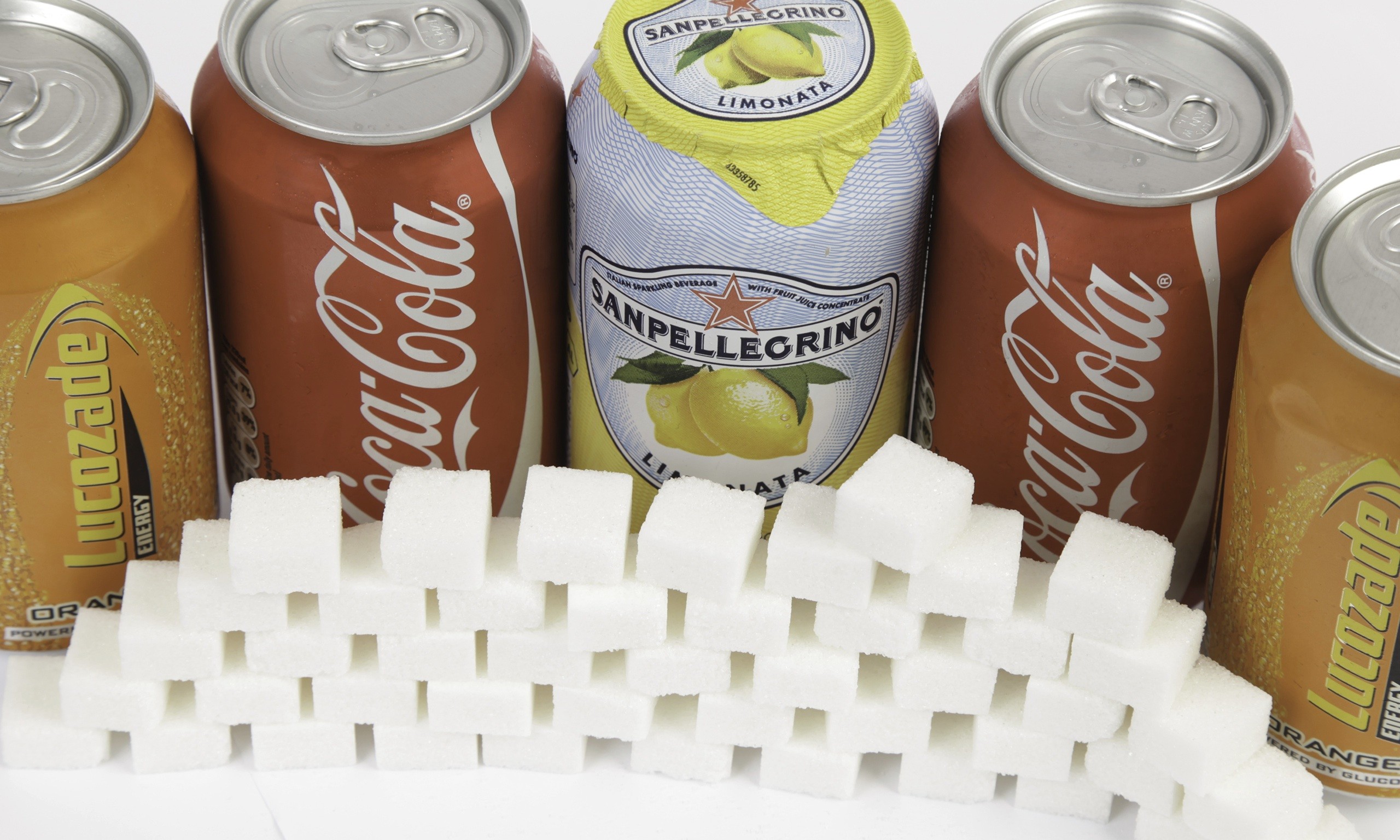
This is simply an article reviewing new research that a high-sugar diet raises the risk of heart attack by 400% - even one 20 oz. soda raises the risk by 30%.

Eggs Don’t Cause Heart Attacks — Sugar Does

by Mark Hyman, MD
Last Updated February 7, 2014

It’s over. The debate is settled.

It’s sugar, not fat, that causes heart attacks.

Oops. Fifty years of doctors’ advice and government eating guidelines have been wrong. We’ve been told to swap eggs for Cheerios. But that recommendation is dead wrong. In fact, it’s very likely that this bad advice has killed millions of Americans.

A rigorously done new study shows that those with the highest sugar intake had a four-fold increase in their risk of heart attacks compared to those with the lowest intakes. That’s 400%! Just one 20-ounce soda increases your risk of a heart attack by about 30%.

This study of more than 40,000 people, published in JAMA Internal Medicine, accounted for all other potential risk factors including total calories, overall diet quality, smoking, cholesterol, high blood pressure, obesity and alcohol.

This follows on the heels of decades of research that has been mostly ignored by the medical establishment and policy makers. In fact, the Institute of Medicine recommends getting no more than 25% of your total calories from added sugar. Really?? This study showed that your risk of heart attacks doubles if sugar makes up 20% of your calories.

Yet more than 70% of Americans consume 10% of their daily calories from sugar. And about 10% of Americans consume one in every four of their calories from sugar.


Failed Dietary Guidelines


U.S. Dietary Guidelines provide no limit for added sugar, and the U.S. Food and Drug Administration (FDA) still lists sugar as a “generally regarded as safe” (GRAS) substance. That classification lets the food industry add unlimited amounts of sugar to our food. At least the American Heart Association recommends that our daily diet contain no more than 5% to 7.5% added sugar. Yet most of us are eating a lot more. Most of us don’t know that a serving of tomato sauce has more sugar than a serving of Oreo cookies, or that fruit yogurt has more sugar than a Coke, or that most breakfast cereals — even those made with whole grain — are 75% sugar. That’s not breakfast, it’s dessert!

This is a major paradigm shift. For years, we’ve been brainwashed into thinking that fat causes heart attacks and raises cholesterol, and that sugar is harmless except as a source of empty calories. They are not empty calories. As it turns out, sugar calories are deadly calories. Sugar causes heart attacks, obesity, type 2 diabetes, cancer and dementia, and is the leading cause of liver failure in America.

The biggest culprit is sugar-sweetened beverages including sodas, juices, sports drinks, teas and coffees. They are by far the single biggest source of sugar calories in our diet. In fact, more than 37% of our sugar calories come from soda. The average teenage boy consumes 34 teaspoons of sugar a day, or about 544 calories from sugar. Even more troubling, this isn’t just putting kids at risk for heart attacks at some remote later date in their lives. It’s killing them before their 20th birthday.

This new research syncs with decades of data on how sugar causes insulin resistance, high triglycerides, lower HDL (good) cholesterol and dangerous small LDL (bad) cholesterol. It also triggers the inflammation we now know is at the root of heart disease.

And fats, including saturated fats, have been unfairly blamed. With the exception of trans fats, fats are actually protective. This includes omega-3 fats, nuts and olive oil, which was proven to reduce heart attack risk by more than 30% in a recent large randomized controlled study.

Here’s the simple fact: Sugar calories are worse than other calories. All calories are not created equal. A recent study of more than 175 countries found that increasing overall calories didn’t increase the risk of type 2 diabetes, but increasing sugar calories did — dramatically.


How to Cure Our Sugar Addiction


America lags far behind the rest of the world in addressing this problem. Mexico, for example, responded after learning that when soda consumption increased to 20% of calories for the average citizen, their rates of obesity and type 2 diabetes skyrocketed. Public health officials there researched effective solutions to combat obesity and diabetes from around the world.

The key interventions they implemented included taxing soda, banning junk food television advertising, and eliminating processed foods, junk food and sugar-sweetened beverages from schools. More than 15 countries have targeted sugar-sweetened beverages by taxing them — a strategy that’s proven successful.

Another effective strategy is revamping food labeling to make it clear if a food is good, should be consumed with caution, or is bad for you. In the United States, even someone with a Ph.D. in nutrition has trouble deciphering food labels. How can the average person be expected to know?

Recent and mounting scientific evidence clearly proves that sugar — and flour, which raises blood sugar even more than table sugar — is biologically addictive. In fact, it’s as much as eight times more addictive than cocaine.

The average American consumes about 152 pounds of sugar and 146 pounds of flour a year. It’s imperative that we revamp our outdated and dangerous national dietary guidelines. And we need clear strategies and medical programs to help people understand and address the health risks and addictive nature of sugar and refined carbohydrates.

That’s how we can reverse this tsunami of obesity and chronic disease that is robbing us of our health and crippling our economy.

In my new book, The Blood Sugar Solution 10-Day Detox Diet, which will be released on February 25, I provide an easy, step-by-step plan to rid yourself of sugar addiction and reverse your risk of heart attacks. To download a sneak preview of this book, go to www.10daydetox.com and pre-order the book on Amazon.

Wishing you health and happiness,
Mark Hyman, MD

About Mark Hyman, MD

MARK HYMAN, MD is dedicated to identifying and addressing the root causes of chronic illness through a groundbreaking whole-systems medicine approach called Functional Medicine. He is a family physician, a six-time New York Times bestselling author, and an international leader in his field. Through his private practice, education efforts, writing, research, and advocacy, he empowers others to stop managing symptoms and start treating the underlying causes of illness, thereby tackling our chronic-disease epidemic. More about Dr. Hyman or on Functional Medicine. Click here to view all Press and Media Releases
View all posts by Mark Hyman, MD →

Tuesday, February 11, 2014

Robert King - 6 Ball-Busting Finishers (T-Nation)

Finishers are a new component of weight training, an after-the-strength-portion of the workout calorie burner and metabolism booster. I don't know if these are the "magic bullet" that some people (who sell finishers as a workout time-saver and super-fat-burner) claim they are, but they can be fun if you enjoy the sensation of your heart trying to jump out of your chest.

Seriously, finishers are a GREAT way to add cardiovascular conditioning (metabolic conditioning) to a serious weight session without resorting to the treadmill or elliptical.

6 Ball-Busting Finishers

by Robert King
T-Nation | 2/07/14


Here's what you need to know...

•  Getting in better shape typically requires some form of cardio work, but that doesn't mean hours on a treadmill or elliptical machine.
•  A finisher is a short burst of high intensity performed at the end of a workout designed to speed up fat loss, boost recovery, and build conditioning.
•  Finishers are elegantly simple, with most requiring very little specialized equipment – just a bar, dumbbells, and your own bodyweight.
You want to get lean, fast, but the thought of getting on an elliptical or treadmill makes your testicles crawl up inside you. You're not alone. So let's save you the torture of treadmills with TV's and offer up some finishers that will help you lose fat and feel awesome – without taking more than 10-15 minutes to complete.

What's a Finisher?


A finisher is a short burst of high intensity performed at the end of a workout designed to speed up fat loss, boost recovery, and build conditioning. Most require very little specialized equipment – just a bar, dumbbells, or even your own bodyweight.

To get you acquainted with this hyper-efficient exercise modality, here are five finishers designed to take your fat loss efforts and conditioning to another level.

1. Pyramid Training


Pyramids are great finishers. They only take 10 minutes to perform and help stimulate recovery after a hard and heavy lifting day. The concept is simple. Pick an exercise, pick a rep number, and start counting backwards.

For example, let's pick a 135-pound barbell squat. I know, that's not heavy at all, but remember the goal is to get your heart rate up and sweat.

Set 1: 135 x 10 reps
Rest 30 seconds
Set 2: 135 x 9 reps
Rest 30 Seconds
Set 3: 135 x 8 reps
Continue until you reach 1 rep

It becomes even more fun when we pair exercises together. Let's look at a push/pull upper body finisher.

Exercise A: Dumbbell Bench Press
Exercise B: Dumbbell Rows (two-arms at once)

Set 1
Dumbbell Bench Press x 10 reps
Rest 30 seconds
Dumbbell Rows x 10 reps
Rest 30 seconds
Dumbbell Bench Press x 9 reps
Rest 30 seconds
Dumbbell Rows x 9 reps

Continue until you reach 1 rep. Be forewarned, even though it's a finisher, the pump from combined pyramids is sick.

Below is a strength pyramid incorporating the dumbbell bench press, weighted carry (using the Dead-Squat™ Bar, and deadlifts. Here you'd start at 5 reps and work your way down to 1 rep.


2. Bar Complexes


It's amazing what you can do with a straight bar and some basic movements done at a high speed. With a bar complex you select six exercises. Be sure to think about the flow of the exercises as ideally they should segue into each other. Remember, speed is the key with bar complexes.

An example of a bar complex could be:

A1 Stiff Leg Deadlift
A2 Clean
A3 Military Press
A4 Good Morning
A5 Squat
A6 Jump Squat

The goal is simple. Do 10 reps of each exercise, AFAP (as fast as possible), with good form, and watch the clock for your time. These are intense – most bar complexes only last from 45 seconds to 90 seconds. Oh, and watch for the puddle of sweat and your heart beating out of your chest when you're done.

To make these even more intense, record the time from set 1 and then try to beat your time in set 2. Continue to do so for a total of 6 sets.

You have considerable options in terms of exercise groupings, so have fun and get creative. Remember though, bar speed is priority number one.


3. Timed Challenges


As a finisher, it doesn't get much simpler than this. Pick a basic exercise, such as a conventional deadlift. Pick your weight, set up the bar, and set a timer for a certain time, say 5 minutes.

Now start deadlifting. Get as many reps as possible in 5 minutes. Rest only as needed and make sure to maintain perfect form. The goal here isn't to lift heavy, but to push yourself as much as possible.

Once the timer is up, record your reps. Try to beat your reps the next time you do it. Keep the exercises basic. Deadlifts, squats, and bench presses all work well.

4. Body Weight Challenge Workouts


These are fun and make you feel amazing. Pick a rep target (500 in this example) and choose 5 exercises:

Push-Ups x 100
Jump Squats x 100
Knee Grab Sit-Ups x 100
Pike Push-Ups x 100
Lunges x 100 (50 per leg)

Set the timer and get after it. The exercise order can change but you have to get in every rep.

The nice thing about bodyweight workouts is that they require very little space and no equipment. You can do these anywhere. Shoot for a time of less than 15 minutes.

5. Weighted Carries


At my gym, we do a number of weighted carries as our daily finishers. Here are a few of my favorites: 

Timed Carries

Set a timer for a specific amount of time (I'd suggest starting at 2-3 minutes), push start, grab a set of dumbbells, and start walking.

The goal is simple – don't drop the weight. If you do have to drop the dumbbells, rest as little as possible and then go again until the timer reaches zero. You can make this harder by adding more weight, increasing your time, or both.

A few guys at our gym do 5 minute weighted carry challenges – this will test your mental toughness as much as your physical capacity. 

Distance Carries

We have 15-meter lanes in my gym so it works great, but if you don't have lanes or turf simply find any straight space and start walking.

Grab a weight, start your carry, and record how many times you walked that distance without dropping the weight. These carry challenges can be done in about 5-10 minutes maximum.


6. Weighted Stair Climbs


You rarely see anyone doing weighted stair climbs anymore. I think the main reason is because they're so damned hard. I used to do these years ago when I was training for the Fire Fighter Combat Challenge (the hardest 2 minutes in sports).

It's very simple. Grab a set of dumbbells and walk up the stairs as fast as you can. When you get to the top, walk back down. Rest as needed and go again. Repeat until your heart explodes out of your chest, your lungs collapse, or your legs give out. Whatever comes first.

It's simple, yes, but easy? Don't kid yourself. I promise you that after 5-10 minutes you'll be done.


Finito


There's a reason gym owners have a lot of cardio machines. They're basically idiot proof and keep the members occupied for half an hour or more. All you need to do is plug them in and presto, instant "training."

You can do better. Take some of these finishers out for a test drive. You'll be pleasantly surprised, not to mention thoroughly exhausted.