Thursday, January 17, 2013

Jack Kornfield - Set the Compass of Your Heart


Jack Kornfield is the author, most recently, of A Lamp in the Darkness: Illuminating the Path through Difficult Times. This brief excerpt comes from that book.

Jack Kornfield - Set the Compass of Your Heart 
BRIEF TEACHINGS

You need a reliable compass to set your direction and steer through the rough waters when you are going through hard times, when you’ve been betrayed, when you’ve lost your job, when you’ve lost friends or loved ones, when you’re in conflict with your family, or when you’re going through illness.

But how can you set your direction when you can’t see any clear harbor? And how can you navigate through difficult waters when you’re swamped by overwhelming emotions, when so much of your awareness is taken over with trying to figure out who’s at fault and who did what to whom, or creating stories about who’s wrong and who’s right and why?

When we’re overwhelmed by a difficult situation, sometimes we know we’re behaving in a way that is only making matters worse, but we don’t know how to stop.

No matter what situation we find ourselves in, we can always set our compass to our highest intentions in the present moment. Perhaps it is nothing more than being in a heated conversation with another person and stopping to take a breath and ask yourself, “What is my highest intention in this moment?” If you can have enough awareness to take this small step, your heart will give you an answer that will take the conversation in a different, more positive direction. With simple steps like these, you can behave in ways that at least will not fuel your difficulties—or anyone else’s.

Whatever your difficulties—a devastated heart, financial loss, feeling assaulted by the conflicts around you, or a seemingly hopeless illness—you can always remember that you are free in every moment to set the compass of your heart to your highest intentions. In fact, the two things that you are always free to do—despite your circumstances—are to be present and to be willing to love.

Adapted from A Lamp in the Darkness: Illuminating the Path through Difficult Times by Jack Kornfield © 2011. Reprinted with permission of Sounds True.

Wednesday, January 16, 2013

Bisexual Men On the 'Down Low' Run Risk for Poor Mental Health


This makes sense, from my own experience. Bi-men might receive acceptance from family and friends when "coming out," but in other situations (often with female partners) being honest can result in getting rejected, which no doubt negatively impacts mental health.

More importantly, however, the study shows that bisexual men who are concerned about concealing their same-sex behavior also experience lower levels of social support and more internalized homophobia - negative attitudes toward their own same-sex behavior.

Bisexual Men On the 'Down Low' Run Risk for Poor Mental Health

Jan. 2, 2013 — Bisexual men are less likely to disclose and more likely to conceal their sexual orientation than gay men. In the first study to look at the mental health of this population, researchers at Columbia University's Mailman School of Public Health found that greater concealment of homosexual behavior was associated with more symptoms of depression and anxiety.

The study published in the American Psychological Association's Journal of Consulting and Clinical Psychology, examined bisexual men "on the down low," a subgroup of bisexual men who live predominantly heterosexual lives and do not disclose their same-sex behavior, a group that has not been studied to date. The researchers studied 203 nongay-identified men in New York City, who self-reported being behaviorally bisexual and had not disclosed their same-sex behavior to their female partners.

According to findings, men who live with a wife or girlfriend, who think of themselves as heterosexual, and who have a lower frequency of sex with men were more likely to conceal their same-sex behavior. Greater frequency of sex with women also correlated with greater concealment. Men with a household income of $30,000 or more per year reported greater concealment about their same-sex behavior than men with lower incomes.

"Our research provides information on the factors that might contribute to greater concealment among this group of behaviorally bisexual men," said Eric Schrimshaw, PhD, assistant professor of Sociomedical Sciences and lead author. "Such information is critical to understanding which of these bisexual men may be at greatest risk for mental health problems."

Nearly 38% of the men reported that they have not shared with anyone that they have sex with men. Only 41% reported that they had confided in a best friend or parent.

Dr. Schrimshaw and colleagues found that greater concealment correlated with more symptoms of depression and anxiety and lower positive emotions. However, disclosure to a few close friends or family did not seem to help; disclosure to confidants was not associated with good mental health.

"The fact that concealment, but not disclosure, was associated with the mental health of these bisexual men is critically important for the way therapeutic interventions are conducted in this population," said Karolynn Siegel, PhD, professor of Sociomedical Sciences and co-author. "Although disclosure may result in acceptance from family and friends, in other cases -- particularly with female partners -- disclosure may also result in rejecting reactions, which are adversely associated with mental health."

The research also suggests reasons why concealment was negatively associated with mental health. Bisexual men who were more concerned than others about concealing their same-sex behavior also tended to report lower levels of social support and more internalized homophobia -- that is, negative attitudes toward their same-sex behavior.

The findings indicate that publically disclosing their same-sex behavior may not be necessary to their mental health, as long as bisexual men have adequate emotional support to cope with other stressors in their lives. Professionals who do therapeutic work with bisexual men may wish to focus instead on helping such men reduce their perceived need to conceal their same-sex behavior and accept their sexual orientation.

Citation:
Eric W. Schrimshaw, Karolynn Siegel, Martin J. Downing, Jeffrey T. Parsons. Disclosure and Concealment of Sexual Orientation and the Mental Health of Non-Gay-Identified, Behaviorally Bisexual Men. Journal of Consulting and Clinical Psychology, 2012; DOI:10.1037/a0031272

Tuesday, January 15, 2013

Lance Armstrong [sort of] Comes Clean - May Testify Against UCI and WADA Officials


Leaks from last night's Oprah interview with Lance Armstrong are all over the Internet (the interview is scheduled to air on Thursday). It seems Armstrong offered a limited admission to using to performance enhancing drugs (PEDs) during his career.

However, the bigger news is that he plans to testify against officials of the International Cycling Union, the governing body of professional cycling, about their involvement with doping in cycling, but he apparently will not testify against other riders.

Part of his motivation in testifying is that he is named in a whistle-blower lawsuit filed by Floyd Landis, a former teammate, who filed the case in 2010 against Armstrong and other principals of the Postal Service team (where he and Armstrong were teammates). Landis's lawsuit claims US Postal and Armstrong "defrauded the government because its riders used performance-enhancing drugs in violation of its sponsorship contract." Armstrong could be liable for millions of dollars in damages if the Justice Department decides to join the case (they are close to making a decision).

According to CBS News, Armstrong and possibly his longtime agent, Bill Stapleton, has offered to repay several millions of dollars of the more than $30 million the Postal Service spent sponsoring the team, as part of their cooperation as witnesses in the case, which would seem to be his way to avoid being named as a co-defendant in the lawsuit.

It seems Armstrong has met with the U.S. Anti-Doping Agency (USADA) including its chief executive, Travis Tygart, to discuss what he needs to do to lessen the punishment against him so that he can compete in running and triathlon events from which he is banned under the ruling that stripped him of his racing titles.

Armstrong Admits Doping, and Says He Will Testify

By JULIET MACUR
Published: January 14, 2013

In an interview with Oprah Winfrey that is scheduled for broadcast on her network on Thursday, Lance Armstrong confessed that he used performance-enhancing drugs during his cycling career, according to two people briefed on the interview, which was recorded Monday in Austin, Tex.

It is unclear, though, how forthcoming Armstrong was about his doping program, which the United States Anti-Doping Agency has said was part of the most sophisticated, organized and professional doping scheme in the history of sports. Armstrong, when reached by e-mail Monday, said he could not discuss the interview.

Acknowledging his doping past has cleared the way for Armstrong to take the next step in trying to mitigate his lifetime ban from Olympic sports. He is planning to testify against several powerful people in the sport of cycling who knew about his doping and possibly facilitated it, said several people with knowledge of the situation.

Armstrong, 41, is planning to testify against officials from the International Cycling Union, the worldwide governing body of cycling, about their involvement with doping in cycling, but he will not testify against other riders, according to the people familiar with his plans.

He is also in discussions with the United States Department of Justice to possibly testify in a federal whistle-blower case. That case involves the cycling team sponsored by the United States Postal Service, and Armstrong would testify against several of the team’s owners, including the investment banker Thom Weisel, and other officials, one person close to the situation said. That person did not want his name published because the case is still open.

Floyd Landis, one of Armstrong’s former teammates, filed the whistle-blower case in 2010 against Armstrong and other principals of the Postal Service team on which he and Armstrong competed together for several years. Landis claimed the team defrauded the government because its riders used performance-enhancing drugs in violation of its sponsorship contract.

Now Armstrong and possibly his longtime agent, Bill Stapleton, are seeking to repay several millions of dollars of the more than $30 million the Postal Service spent sponsoring the team, as part of their cooperation as witnesses in the case, said the person with knowledge of the matter. (CBS News first reported Armstrong was in talks to return money to the Postal Service.) The Department of Justice is considering whether to join the case as a plaintiff and is close to making that decision, the person said.

Armstrong, who for more than a decade vehemently denied doping, would be willing to testify against the cycling union officials and his former team’s officials because he badly wants to compete in triathlons and running events again. Last fall, he was barred from many of those events because they are sanctioned by organizations that follow the World Anti-Doping Code, the rules under which he is serving his lifetime ban. Armstrong said that lifetime ban was unfair.

He met with United States Anti-Doping Agency officials, including Travis Tygart, the agency’s chief executive, last month to discuss what he needed to do to mitigate his ban. Several people with knowledge of the discussions said Tygart would be willing to reduce Armstrong’s punishment if Armstrong would testify against the people who helped him dope. That would possibly include Pat McQuaid, the president of the cycling union, and Hein Verbruggen, who was the cycling union’s president from 1991 to 2005, a time when doping in the sport was rampant. Verbruggen, who is close with the International Olympic Committee president, Jacques Rogge, is also the cycling union’s honorary president and an honorary member of the I.O.C.

David Howman, director general of the World Anti-Doping Agency, said in a telephone interview Monday that he would not believe that Armstrong would testify in other cases to help clean up the sport until it happens.

“This guy is an enigma and nobody really knows what he is going to do, no matter what he says,” Howman said. “I think he’s got his own demons to deal with, but nothing can be done about his lifetime ban when he hasn’t done anything to help us yet.”

Last fall the United States Anti-Doping Agency called Armstrong the kingpin of the doping program on his Tour de France winning teams when it made public evidence that he had doped and had encouraged his teammates to dope. During his interview with Winfrey, Armstrong rebutted the claim that he was a leader of the doping program, saying he just did what his teammates were doing, according to the two people who did not want their names published because they are not authorized to speak about the interview.

Before heading to the Winfrey interview in downtown Austin, Armstrong stopped at the headquarters of his cancer charity, Livestrong, and apologized to the staff. He told them he was sorry for letting everyone down and for putting so much stress on the organization because of his doping scandal.

He did not confess to using performance-enhancing drugs, but spoke for about 20 minutes in the organization’s boardroom, eliciting tears from some of the employees, said Rae Bazzarre, a spokeswoman for Livestrong.

“It was emotional and he choked up for a moment,” she said. “But we were all glad to see him.”

Armstrong had not been at the headquarters since Oct. 21, Bazzarre said, about two weeks before he resigned from Livestrong’s board of directors.


A version of this article appeared in print on January 15, 2013, on page B11 of the New York edition with the headline: Armstrong Will Implicate Officials.

Jim Harrison's New Collection of Novellas Details the Life of Men

NPR's Alan Cheuse reviewed the new collection of novellas (longer than a short story, but not long enough to be a novel - or, novellas "are to novels as the sonata is to the full weight of the symphony"). Harrison is a master of this form, and in the new collection he offers two pieces that take very different perspectives on the life of men in all their humanness.

Harrison's New Novellas Present Men In Full

by ALAN CHEUSE
January 09, 2013


The River Swimmer: Novellas
by Jim Harrison
Hardcover, 240 pages
More on this book:
NPR reviews, interviews and more
Two years have gone by since I first suggested to President Obama that he create a new Cabinet post, and appoint distinguished fiction writer Jim Harrison as secretary for quality of life. The president still has not responded to my suggestion, and meanwhile Harrison has gone on to publish his latest book of novellas, which deepens and broadens his already openhearted and smart-minded sense of the way we live now, and what we might do to improve it.

It may be that our president, otherwise skilled in every way, has a blind eye when it comes to the novella form. I hope not. As someone who loves to compose novellas — which we might say are to novels as the sonata is to the full weight of the symphony — I've been counting the productions by Harrison, the reigning master of the form. With the publication of this new pair of pieces in this blooming good but intermediate form, it now comes to 17 for him, in six volumes over the years. Yours truly, lagging way behind him with only half a dozen, salutes Harrison — and continues to hope for his appointment to Cabinet status.

I have to say that Harrison has been hard put to better his personal best, "Legends of the Fall" (which came out in 1979), an epic in under a hundred pages about 20th century western American life. But with the lead piece in this new book, the autumnal novella he calls "The Land of Unlikeness," he comes quite close. "Legends" gave us the war-torn life spans of two generations of a larger-than-life Montana family, their land and their country, their loves and desires, the politics and history that enfolded them. All of this stretched out to fill the space between its boundary lines like an inter-mountain range of peaks and valleys. The new novella is much smaller in scale, giving us two weeks rather than two generations of time and focusing mainly on one character rather than a family-sized cast. But it's no less intense, as it enriches and enlarges an emotion-charged period in the life of Clive, a divorced Midwestern painter-turned-critic. Estranged from much of his family, Clive has returned from his usual Eastern haunts to his childhood home in rural northern Michigan to keep company with his aging mother, an ardent bird-watcher and churchgoer.

Jim Harrison is the author of more than 30 books, including Legends of the Fall and The Farmer's Daughter. Wyatt McSpadden/Courtesy of Grove/Atlantic

Clive longs for company and cohesion in his dessicated post-painting, post-married life. But he discovers almost immediately that he has wildly underestimated the power of the home place and the Proustian sense of "how memories reside in the landscape and arise when you revisit an area." Mooning over Laurette, his first girlfriend — long divorced herself, and living nearby in her old family farmhouse with a flirtatious female companion — Clive takes up painting again in order to re-create the grandest erotic encounter of his early manhood.

There's a lot more virtual eros in the companion novella, the title piece Harrison calls "The River Swimmer." The main character, a Midwestern boy named Thad, is in years not yet a man, but in experience triumphantly erotic. He swims great lakes and rivers, has visions of water babies swimming around him beneath the surface, and becomes involved with beautiful, attractive and willing girls his own age — with, as it happens, overbearing and successful fathers who sometimes try to kill him, and sometimes nearly succeed. In his outsized — almost cartoonlike — philosophical ambition, Thad declares "I just want to feel at home on earth ..." He already feels quite at home in water, which makes up a large part of our planet's surface, so when he strives to achieve his goal of feeling at home — not unlike that longing of Clive, his much more mature companion in this volume — he seems to have a good chance. No fathers wielding tire irons or tempting him with a life of luxury seem capable of deterring him much from his goal.

A boy with hopes as vast as oceans, a mature man entering into the solemnity of wholeness in a narrow range of life: together they make up what Tom Wolfe once announced — and failed to produce — as "a man in full."

What does the male version of quality of life really mean? Something like this, something like this. And female readers who don't give over some time to studying Harrison's version of it will be as foolish as the men.

Monday, January 14, 2013

Is Fighting a Part of Manhood?


Robbie Dillon recently had an article at AskMen.com on "The Joy of Punching," in which he argues that fighting is a cornerstone of his masculine identity- that having beaten others and been beaten himself is a "badge of honor."

Interestingly, AskMen linked to another article from their site that outlines the Top Ten: Masculinity Myths, one of which is that "real men fight."
Real men fight 
We’re still not sure why some men resort to fisticuffs in order to prove their manliness. There’s perhaps nothing more barbaric than watching two boozy meatheads trade blows outside a club, usually for reasons as mundane as a scuffed sneaker. Don’t get us wrong. We’re the first to promote fighting as a method of defending yourself or the ones you love from physical harm. But punching someone in the face because you like the way spilled blood looks on the sidewalk or the way a shattered nose feels against your knuckles isn't manly; it’s moronic.
Dillon seems to take some pride in being a man who fights and who will always fight. Here is the beginning of his article:
You’re a nice guy. I get that. You think violence is stupid and unnecessary, and you’re right. But let’s play make-believe for a minute. It’s Saturday night. You’re walking out of the movies with your girlfriend, or maybe you’re in the lineup at a club. Some jerk eyes your date up and down and says, “Hey, baby girl. Where you goin' tonight?” She ignores him. So far, so good. Then he grabs her arm and pulls her toward him. You tell him to let her go. He shoves you away with his free hand and says, “Whatta ya gonna do about it?” 

So? What are you going to do about it?

I've been in a few scraps in my day. Some I’m a little ashamed of, a lot more I feel pretty good about. I once kneed a racist cop in his balls so hard that I lifted him three inches off the ground. His buddies gave me a good working over in the back stairwell of the police station, but hard as they tried, they couldn't smack the grin off my face. I laid another guy out with a single punch after he insulted my aunt and her girlfriend down at the local bar one night. People who were there still talk about it.

I've also taken my share of beatings, which, as far as I’m concerned, is a badge of honor -- no one can accuse me of picking my shots. I've been punched, kicked, slashed with knives and had guns pointed in my face. I once took a boot to the back of the head that put me in a coma and left me with dizzy spells and blurred vision for the better part of a year. Still, my biggest regrets are the handful of fights I've had to walk away from.

Don’t get me wrong -- it’s not like I go looking for trouble, but when it comes knocking, I don’t exactly bar the door. I’m not a violent person, but I know that fighting has always been, and probably always will be, a part of my life. The ability to defend myself and those close to me, to stand up for those who can’t protect themselves, is one of the cornerstones of my identity, inseparable from my idea of what it means to be a man.
Huffington Post does a podcast, HuffPost Live, and they tackled this article and the idea of fighting as an element of masculinity. One of the Good Men Project editors (Social Justice Editor, Cameron Conaway) participated, as well as GQ and Vice writer Gavin McInnes, and some others.

McInnes offered up the old-school tough-guy masculinity norm (read: bullshit): “You’re not a real man, until you've had your heart broken, you've broken a heart, you've beaten someone up and you've had the crap beaten out of you.

Ivan "Doc" Holiday, who runs a bouncer school, is even more pugilistic than Dillon or McInnes.


Conaway (a former MMA fighter), along with the moderator, was the lone voice of reason, in my opinion. He argued that fighting to protect oneself is much different than fighting because you have a short fuse (like McInnes).

Here is the conversation from HuffPost:


The question asked at the Good Men Project is: "What do you think? Is Cameron right that there’s a big difference between fighting to protect oneself (as even the Dalai Lama said he would do, if necessary) and allowing adrenaline to shorten one’s wick?"

I have not hit anyone since I was in college (one punch to a drunk guy harassing a female friend). Before that it had been several years. However, when I was in 3rd-6th grades, I fought a LOT.

First, while I still lived in California, it was protecting myself and my friends from bullies. When I moved to rural Southern Oregon, fighting was how the boys established who was the alpha male, but this was not punching each other in the face fighting, it was basically wrestling each other into submission. Moving there in the 4th grade, I was the new guy, so I was challenged frequently.

I agree with some of these guys that when there is no other option, it may be necessary to fight. But there are always other options. And if those fail, brawling is not the answer, either. If it comes to that point, ideally one should incapacitate the threat as quickly and efficiently as possible (knees, nose, eyes, and shoulders/elbows are the easiest ways to drop a guy). Exchanging punches is a losing proposition all around.

It was my father who taught me how to defend myself, but it was also my father who taught me that a quick mind is much more effective than a quick temper.

Sunday, January 13, 2013

Author Barry Lopez Confronts Childhood Sexual Abuse

Barry Lopez is the author of Arctic Dreams, for which he received the National Book Award, Of Wolves and Men, a National Book Award finalist for which he received the John Burroughs and Christopher medals, and eight works of fiction, including Light Action in the Caribbean, Field Notes: The Grace Note of the Canyon Wren, and Resistance. He contributes regularly to Granta, The Georgia Review, Orion, Outside, The Paris Review, Manoa and other publications in the United States and abroad. His work has appeared in dozens of anthologies, including Best American Essays, Best Spiritual Writing, and the “best” collections from National Geographic, Outside, The Georgia Review, The Paris Review, and other periodicals. His most recent book is Home Ground: Language for an American Landscape, a reader's dictionary of regional landscape terms, which he edited with Debra Gwartney.

One of my favorites from him is the two book collection, Desert Notes: Reflections in the Eye of a Raven and River Notes: The Dance of Herons. I also love his children's book, Crow and Weasel (illustrated by Tom Porht).

Enough about his writing, this is about Barry Lopez, the man. The man who, as a fatherless child was sexually molested for four years by a [fraudulent] doctor whom his mother trusted (sounds like the Sandusky tragedy, eh?), beginning was he was seven years old. The doctor told him there was something wrong with him, and that rape was the cure.

Here is a little excerpt from the Harper's story, which is behind a paywall.
After a while, Shier began dropping by the house in the evening, just as my brother and I were getting into our pajamas. He’d bring a tub of ice cream along, and the four of us would have dessert together. One evening he arrived without the ice cream. He’d forgotten. He suggested I accompany him to the grocery store, where I could pick out a different dessert for each of us. 
A few minutes after we left the house, he pulled his car up alongside a tall hedge on an unlit residential street off Lindley Avenue. He turned me to the side, put me facedown on the seat, pulled down my pajama bottoms, and pushed his erect penis into my anus. As he built toward his climax he told me, calmly but emphatically, that he was a doctor, that I needed treatment, and that we were not going to be adding to Mother’s worries by telling her about my problem.
Every time a man - especially a man with a public presence - can speak out about his sexual molestation as a child, the freedom for other men and boys to do so increases. For that I am incredibly grateful to Barry Lopez, as well as other men, like Gabriel Byrne (abused by priests), Tyler Perry (abused by a friend's mother and three other men prior to that), and New York Mets pitcher, R.A. Dickey (baby sitter), to name only a few.

In 'Sliver Of Sky,' Barry Lopez Confronts Childhood Sexual Abuse
January 10, 2013 5:00 PM

Listen to the Story


Barry Lopez / David Liittschwager / Barry Lopez

Barry Lopez is known for writing about the natural world. His books include Arctic Dreams and Of Wolves and Men, where he explores the relationship between the physical landscape and human culture. But in a new essay in the January issue of Harper's Magazine, Lopez writes that he was sexually molested by a family friend when he was a boy, and says the man was never brought to justice.

The abuse began when Lopez was 7 years old. The man, named Harry Shier, oversaw the alcoholism treatment for a relative of Lopez's mother at the sanatorium Shier supervised in North Hollywood, Calif. He presented himself as a doctor. Lopez writes that Shier said there was something wrong with Lopez, and that the rape was treatment for that problem.

"I was a child," he tells Fresh Air's Terry Gross. "I was 7 years old, and the world of medicine and the world of treatment and the world of how we take care of each other was a tabula rasa for me. I knew that when I saw these degrees from prestigious institutions — all of which were fraudulent — on his wall that I was in the hands of somebody that I knew the adult world respected, and as a young person trying to learn the world, I was trying to understand things that were new to me, and that just fell into that category.

"I think one of the things that's difficult for adults to understand about pedophiles who really prey on children is that the child is not an adult, so the perspicacity and the insight and the intuition that an adult might have in a situation like this [to] sniff the fraud out before it takes on the scope that it did for me and for others — you can do that as an adult but you can't do that as a child. And a child can be manipulated 10 ways to Sunday. All the while, the child is trying to pay attention and trying to understand a foreign world, and this was just part of that foreign world."

Shier, Lopez says, pretended to court his mother, who was recently divorced and struggling financially. And so, Lopez says, "[Shier] was extremely good at creating an atmosphere in our home where he would be highly regarded and appreciated by my mother and, you know, trying to control me was as simple as keeping a ... dog in a box. You're just a prisoner of something you can't understand."

Lopez, who lives in Oregon, says this piece is the hardest he's ever written.

"The advantage that I had," he says, "is that I've been a writer all my life, and I had somebody at Harper's — Chris Cox — who was an exceptional editor, who could do what I could not do, which is I could not find and hold the emotional distance that I needed from this material in order to write about it in the way that I thought I had to, which is, in the end it's not about me, it's about us."

Interview Highlights


On the difficulties of self-protection for young victims of sexual abuse

"This went on for four years, and during those four years I think I went through every scenario I could imagine as a child about how to protect myself, but I never found any path to follow where I knew somebody would intervene and protect me. ... Many of the children who end up in situations like this come from families where there is only one parent, and you are trying to figure out who you are when you're also dealing with this traumatic experience, and you're not old enough to frame the question that lets you go to an adult and say, 'I think something's really wrong here.' "

On what is lost to those who are sexually abused

"Certainly innocence is gone and sexual and gender confusion is introduced, but you can actually talk about things like that. What is taken that you can't talk about is the sense of your own dignity as a human being, and what's taken from you is the ability to articulate your meaning in the world. Everyone wants to mean something in the world, and without having to state it, to have it recognized by other human beings ... and that is part of what is set fire to you when somebody treats you like a rag doll. You have no voice, you have no physical ability to resist."
Read Lopez's Essay In Harper's Magazine (subscription required)
"Sliver Of Sky: Confronting The Trauma Of Sexual Abuse" by Barry Lopez
On what prompted him to write the story

"I've basically been silent about this all of my adult life, and one of the things that precipitated my decision to write the story. ... I wrote this piece before the Sandusky thing [the Penn State sex abuse scandal] broke so that it wasn't the newspaper story that compelled me to do something — I had become impatient with the cast of newspaper articles that suggested that in the legal pursuit of pedophiles what young men and women were most interested in was winning a financial judgment or in punishing, seeking vengeance. And it struck me that that was the last thing, really, you'd be interested in as somebody who had been serially molested. What had been taken from you was a sense of self-worth and dignity, and the only way you can get those things back is in open, unjudged relationships with other people, and then you ... have a chance to develop again a sense of self-worth. ... So what you really want, in the simplest terms, is for somebody to believe what happened, to take you at face value and not to manipulate you in a courtroom, for example, to seek justice."

On whether he blames his mother for not intervening or understanding what was happening

"The whole mindset of being a victim and pointing at somebody else and accusing them — that's not a very productive place to go, and it's certainly a terrible place to stay. We're all of us human, and we fail — we fail miserably in moments when we wish to show how we love. So I don't know what happened for her. All I really wanted from her was clarity. I wanted to be able to say to her, 'What happened to you during these years?' and 'Are you OK?' But couldn't, you know. She was dying of cancer in a hospital in Manhattan, and I sat with her off and on almost every day. And I asked her if she wanted to talk about what happened in California, and she didn't or wouldn't answer me. She just turned away and wept, and then she died."

On how the outside world has helped him cope with the turmoil of his inner one

"I know this: That when I was so compromised as a child that there was no zone of safety for me, no place was safe and especially adults weren't safe for me, the thing that felt safe in the sense that I felt that surge towards lyricism when ... I saw something outside myself, the world beyond the self ... and I felt this surge of lyrical pleasure in the way the wind sounded, for example, in eucalyptus trees. I knew that I could carry that with me. I could carry it as a memory, and I could carry it as a structure to help me build a safe place in the world."

Saturday, January 12, 2013

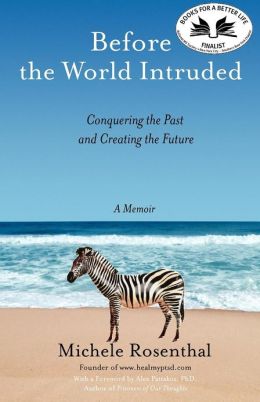
Conquering the Past and Creating the Future - The Secret Lives of Men Podcast


This episode of the Secret Lives of Men podcast features Dr. Chris Blazina talking to his guest, Michele Rosenthal about her new book, Before the World Intruded: Conquering the Past and Creating the Future, A Memoir, which details the author's struggles to overcome the trauma of having nearly died as a thirteen-year old.

You may ask yourself what this has to do with men, but all of us experience trauma in our lives, whether it's a near-fatal illness, an auto accident, the death of a loved one, or any number of other wounds we can experience. How we recover from these traumas has been a learning experience for many of us. In this discussion (and in her book), Ms. Rosenthal offers some insights that can aid all of us in our healing.


Conquering the Past and Creating the Future - The Secret Lives of Men Podcast

Listen to internet radio with Secret Lives of Men on Blog Talk Radio
Before the World Intruded: Conquering the Past and Creating the Future, A Memoir, is one woman’s quest to triumph over trauma — and the very unexpected way she did it. At the age of thirteen Michele Rosenthal survived such a rare, life-threatening illness none of her doctors had actually seen a case. Out of the hospital and making a full recovery, she believed if she only looked toward the future she could escape the trauma in her past. Twenty-five years later, however, the young girl had become a woman imprisoned by memories, fear, and Post-Traumatic Stress Disorder. In a bid to reclaim her life and heal her soul Michele boldly left the world she knew in search of a self she could barely imagine. In her transformation lie the seeds for anyone who wants to conquer the past and create the future. This transcendent book shows what can happen when you discover who you are and then choose who you most deeply want to be. 
~ Michele Rosenthal is an award winning blogger, speaker, poet, post-trauma coach, and radio talk show host. A trauma survivor who struggled with Post-Traumatic Stress Disorder (PTSD) for over twenty-five years, today Michele joyfully lives 100% free of PTSD symptoms. She is the founder of www.healmyptsd.com and sits on the board of Hope4PTSDvets.org and St. Clair Butterfly Foundation. For more information visit, HealMyPTSD.com. To receive over $1,900 in free trauma recovery support resources, take your Amazon sales receipt number and visit: http://yourlifeaftertrauma.com/trauma-project-give-back/free-gifts/

Friday, January 11, 2013

What Is Gender and Why Does It Matter? - Bookforum Omnivore

From back in early December, here is a collection of links related to gender issues, from feminism to men's rights and a whole lot in between. One of the excellent articles comes from the Socialist Worker (Canada) and examines the misogyny of the men's rights activists. The whole article is included below.

What is gender and why does it matter?

DEC 5 2012
9:00AM


Here is the article from the Socialist Worker (Canada). I don't fully agree with everything Jesse McLaren writes here, but I think he makes an excellent collection of points overall.

Why “men’s rights” groups are wrong
Posted on November 7, 2012

Misogynist Warren Farrell, invited by “Men’s Issues Awareness at UofT”, gets exposed by UofTstudentsAgainstSexism@gmail.com

By Jesse McLaren

“Men’s rights” groups are a growing phenomenon, with “men’s centres”, and “men’s issues awareness” clubs appearing on campuses. Manipulating men’s anxieties faced with neoliberalism and austerity, “men’s issues” groups ignore the poverty, racism, ableism, homophobia and transphobia that men and women face, and instead scapegoat the women’s movement and progressive movements in general.

Men’s Issues Awareness at UofT claims it wants to “build a movement centered on Men’s Issues which will engage in consciousness-raising, public education and efforts to change public policy” in order to “engage in critiques of contemporary society” and “focus on positive activism to advance a healthier society.” This group is part of the “Canadian Association for Equality”, who claim they “believe the goal of true equality and human rights is best served by conducting inclusive conversations based on facts and evidence, not by promoting ideology or special interest agendas.” They want “men’s centres” on every university campus.

The rhetoric of “equality”, “diversity”, “human rights” and “inclusivity” that these groups use can certainly seem appealing, as can their claim to “provide support for individuals whose equality rights have been denied.” And their claim of “evidence not ideology” gives them a semblance of objectivity, which they apply to issues many people are concerned about: “men’s health, fathers and family issues, boys issues, suicide, violence, safety, workplace issues, crime and punishment.”

There is certainly a kernel of truth to what these groups claim: men do experience bullying, suicide, occupational injuries, violence, and specific health issues. But nobody has ever denied that (contrary to claims that these issues are being ignored in general, and undermined by women’s issues specifically). The problem with “men’s rights” is how they generalize these experiences, who they ignore and who they blame. These groups claim there is a “large societal pattern of discrimination, ignorance and harmful public policy that disadvantages boys and men.” This implies that men are oppressed as men, and in relation or because of women—a claim that is justified using simplistic sound-bytes and “evidence” that is cherry-picked, ideologically-driven, and easily debunked.

SOUND-BYTES

1) health: “prostate cancer gets less funding than breast cancer.”

This is partially because women’s health has been ghettoized into what some have called “bikini medicine” that reduces women’s health to breasts, ovaries, uterus. Women have higher rates of misdiagnosed heart disease because their symptoms have been called “atypical”—because the science on heart attack symptoms (amongst others) was derived from middle-class white men. And as the documentary Pink Ribbons Inc shows, funding for breast cancer awareness is part of a strategy that generates billions for corporations while ignoring the occupational and environmental factors that contribute to all forms of cancer—and ignoring health concerns of the global south. The complaint that prostate cancer gets less funding implies that men’s health suffers because of one simplistic measure of women’s health. But there is no feature of men’s health that is so systematically attacked like abortion rights—with violence and harassment at clinics and motions in Parliament.

2) bullying: “boys have high rates of being bullied”

Yes they do, but this is an abstract statement that ignores the main perpetrators and reasons. Boys are not bullied by girls for being boys, they are mainly bullied by other boys—who also bully girls. The main causes of bullying are sexism, racism, ableism, homophobia and transphobia—issues “men’s issues” ignore. Boys are not subjected to the systematic sexist bullying that drove Amanda Todd to suicide, and when boys have been drive to suicide it is often from homophobia by other boys—not “reverse sexism” from girls.

3) suicide: “more men kill themselves than women”

Another abstract statement. Men do not kill themselves because of men’s oppression, they kill themselves of poverty and other real forms of oppression along lines of sexuality, ability, and race. And many more girls attempt suicide than men, often related to a history of sexual abuse—an endemic problem that “men’s issues” clubs ignore.

4) violence: “men are victims of violence”

In terms of interpersonal violence, the vast majority of domestic abuse and rape victims are women. There was no recent epidemic of men being assaulted in Toronto’s Christie Pits Park, and when men are assaulted the police don’t blame them for dressing like “sluts.” When men are victims of interpersonal violence it is usually from other men, and often related to police brutality, racism and Islamophobia, ableism, homophobia and transphobia. It’s true that more men die on the jobs (though less men are sexually assaulted on the jobs), but this is not because of women but because of the (often male) boss—and the solution is to strengthen trade union rights, another issue ignored by “men’s issues” clubs. More men die in the trenches of war, because women—and queers—have until recently been excluded from the military; but women are not excluded from the civilians raped and killed by war. When male soldiers are sent to kill and die, they are sent by male generals and male presidents, not women, and the solution is to build a united movement against war and the racism and sexism that drives it.

5) education: “women do better on some educational indicators, like test scores or enrollment”

The main threats to education for men and women is corporatization, which increasingly imposes a rigid reliance on test scores (like was tried in Chicago), while undermining accessibility through tuition hikes (like was tried in Quebec). These threats to education harm both men and women, and a united fightback is necessary. Chicago teachers fought to defend education, and Quebec students fought back the tuition hike—while emphasizing that women would be more affected because they earn less. Despite advances in some educational indicators, women have still not achieved equality in the labour market.

6) legal: “women have higher rates of custody over children”

Given women provide the majority of unpaid labour raising children, it’s no surprise that courts might award more custody cases to the mother. But the legal system is not generally skewed towards women—as survivors of sexual assault and domestic violence can attest to. The legal system fails to challenge endemic sexism, while incarcerating poor, indigenous and racialized men—groups who also get no mention from “men’s issues” groups.

7) work: the major features of work are not considered by “men’s issues’ groups

In the home, women still do the majority of unpaid labour, despite entry into the labour market. In Canada 60 per cent of women are part of the paid workforce, but comprise 70 per cent of part-time workers, two-thirds of minimum wage earners, perform two-thirds of unpaid caregiving work, and earn 70 cents per dollar of what men are paid

There’s a pattern to these sound-bytes: framing these issues as “men’s issues” erases the dynamics of race, class, ability and sexuality that are at the heart of so many experience of men (and women). “Men’s issues” fail to address any issues related to men, and instead scapegoat women—appealing to two different audiences: the confused and the misogynist. The rhetoric of “men’s issues awareness” goups clearly appeal to people sympathetic to the language of equality and concerned about men’s health and safety. But this rhetoric hides the main drivers of “men’s rights” movement: misogynists who scapegoat women in specific and progressive movements in general.

“MISANDRY” = MISOGYNY

Paul Nathanson, who the Men’s Issues Awareness at UofT invited last month, has written extensively on so-called “misandry.” His theories begin with a heteronormative view of human society as rigidly divided between men and women, where men’s identity was biologically determined by “the male body’s distinctive characteristics: its size, strength and speed.” His view of hunter-gather societies claims humans began with social structures like the 1950s (the era to which “men’s rights” look to with so much nostalgia), where men hunted for all the food and women provided the babies. According to Nathanson, the whole march of civilization has been a series of attacks on the mythical male identity: “Masculine identify has become increasingly problematic due to technological and cultural changes over the past 10,000 years, beginning with the horticultural and agricultural revolutions but gaining momentum with the industrial, military and reproductive revolutions. Egalitarian feminists have unwittingly exacerbated the problem, leaving men unable to make even one contribution to society, as men.”

Particular targets include any deviation from patriarchal family—including single mothers, same-sex marriage and abortion rights: “The reproductive revolution undermined the only remaining source of masculine identity for men: fatherhood. Many factors have contributed to this problem: new movements that trivialize fatherhood (single mothers by choice, and same-sex marriage)…new legislation that undermines even the remnants of fatherhood (abortion on demand as a private matter ‘between a woman and her doctor’).”

Contrary to claims of inclusivity free from ideology, “men’s issues” groups directly attack feminism—relying on right-wing alliances like the National Post’s Barbary Kay, who claimed at a previous talk that “feminist-inspired policies have contributed to a devaluation of boys and men and their purpose in society…social services discriminate against men as a direct result of an ideological belief system that permeates university programs and churns out biased policies.”

Warren Farrell, author of The Myth of Male Power, is one of the most mysoginyst of their leaders, and has built a career promoting and profiting from the backlash against women—dismissing women’s oppression and comparing feminism to Stalinism:
“Hearing women’s internal stories – without hearing men’s – made the world seem unfair to women. Ironically, because we didn’t know men’s stories were being left out, the more we heard from women the more we thought we’d been neglecting women. Soon it became politically incorrect to interrupt her flow. So women’s stories became women’s studies, not to be interrupted by men’s studies… The Iron Curtain shut out opinions considered a threat to Communism. The Lace Curtain shuts out opinions considered a threat to feminism… Feminism has made women-as-victim so credible we would sooner think of saving whales than saving males… Why, though, would the feminists not debate? For the same reason any one party system has no interest in debating. When you have the power you have little to gain and a lot to lose.”
Farrell has dismissed statistics on women’s oppression as “victim data” used to “catalyze Victim Power.” In his book Why Men Are the Way They Are, he defends sexism: “we beg men to express feelings, but then when men do express feelings, we call it sexism, male chauvinism, or backlash.” (As someone who identifies as male I’m insulted by the claim that the only feelings I’m capable of expressing are sexist). He has also defended rape, claiming: “If a man ignoring a woman’s verbal ‘no’ is committing date rape, then a woman who says ‘no’ with her verbal language but ‘yes’ with her body language is committing date fraud, and a woman who continues to be sexual even after she says ‘no’ is committing date lying…We have forgotten that before we began calling this date rape and date fraud, we called it exciting.”

This is the hardcore misogyny at the heart of mens groups, which is why they have been labeled hate groups. But how can they pretend to be building a progressive movement, promoting “equality” through “consciousness raising,” and appealing to men’s perception of powerlessness? Understanding the roots of women’s oppression, and changes of last couple of generation, explains how mens groups attack women directly and scapegoat them for mens anxieties.

WOMEN’S OPPRESSION

Turning Paul Nathanson’s version of history right-side up, the evidence shows that for most of human history people lived in equality, with no rigid division between production/reproduction. There are obvious biological differences regarding childbearing, but child-raising was a collective task—and women also gathered food (which often provided more food than the hunt) and had equal say over community decisions. Without the nuclear family there was a free range of sexualities, and without a capitalist labour market there was neither racism nor disability oppression.

When the agriculture revolution provided a surplus, a small class emerged to control it and the nuclear family emerged to pass on private property. This produced a rigid and unequal division between the sexes: women were separated from production, confined to reproduction, and made subordinate to men who controlled production and the state.

As Engels described in The Origin of the Family, Private Property and the State, the emergence of class society marked “the world historic defeat of the female sex. The man took command in the home; the woman was degraded and reduced to servitude; she became the slave of his lust and a mere instrument for the production of children.”

Capitalism remains dependent on women’s oppression for unpaid labour at home and reduced wages at work—with 30% more wages going to the boss—and attacks any alternative expression, including abortion rights, queer rights, or single parents. Capitalism has also bred racism and disability oppression to lower wages and divide resistance.

NEOLIBERAL BACKLASH

Capitalism has restructured in the past few generations, with women entering the labour force while still doing unpaid labour. With these changes the women’s movement emerged to fight for equality, alongside anti-racist and queer liberation movements.

These has been both a specific backlash against progressive movements and a general neoliberal and austerity offensive against working class. As Susan Falludi, feminist author of Backlash, documented in book Stiffed “the post-war restricting of the economy” has led to a “crisis in masculinity.” (We don’t need “men’s studies” to study masculinity, we have feminist and socialist analysis)

Men are socialized to be dominant and in control. But with capitalist restructuring, working class men are in precarious work, unable provide for their family as they were socialized to do. Working class men work harder for less pay, more tuition, less job security—and don’t see the 30% pay gap that goes to the boss.

“Men’s rights” groups blame this experience on few gains of women’s and queer liberation movements, while ignoring racism and disability oppression. This homogenizes men, and tries to dupe them into thinking they have more in common with 1% of men who exploit most men and women, than the rest of the 99%. The 1% uses sexism to further the austerity agenda—like Ontario Conservative attempts to defund abortion—while dividing resistance movements of the 99% along lines of gender, race, sexuality and ability.

RESISTANCE

It’s by uniting the 99%—by challenging the systemic oppression that divides it—that we all win. Through the process of struggle, men with sexist ideas can come to see they have more in common with women than the 1% of men who rule. The Russian Revolution started on International Women’s Day, culminating in a movement that ended WWI. The Egyptian revolution saw men fight side by side with women, overcoming sexist ideas which the regime is constantly trying to regenerate in order to weaken the revolution.Women were critical to the 1937 Flint sit-down strike that sparked a unionization drive, and the Canadian labour movement has been strengthened by the fight for maternity leave and abortion rights. Chicago teachers and Quebec students fought united strikes against attacks on education, and on November 14 there will be general strikes against austerity in Europe.

If we want “positive activism to advance a healthier society” we have to identify sexism and the backlash against women as a major barrier, and mobilize men and women against it. This means challenging “men’s rights” groups who attack women, manipulate men, and don’t care about poverty, racism, ableism, homophobia and transphobia. Challenging these groups includes patiently explaining to people who are legitimately concerned about equality but have been misled by false rhetoric—and firmly exposing and challenging the misogynists at the core, because free speech doesn’t include hate speech.

Thursday, January 10, 2013

T-Nation: The Four-Minute Push-Up Challenge


I found this "challenge" at T-Nation. It's pretty straight forward - do as many push ups, in good form, as you can in 4 minutes. From Martin Rooney – 12/31/2012.

The Rules
  • Begin the test in the up position.
  • Start the timer before the first descent.
  • For a rep to count, you must go all the way down until the elbow is at least at a 90-degree angle (chest 2 inches off the floor) and lock out the elbows at the top. The core must stay locked and move up and down with every rep using the toes as the fulcrum of the movement.
  • You can rest/stop whenever you want, but the clock must keep running.
  • Poor reps in terms of body position or putting down a knee before a rep is completed don't count toward the total score.
  • Stop counting when 4 minutes have elapsed and record your score.
When I first read this article I thought, "No problem, I should be able to get 100 reps in 3 to 3:30 minutes." It's always a good lesson in humility to seriously over-estimate one's skills or abilities.

So I tried the test this morning (in my defense, I had just finished 10 miles of big gear intervals on my spinner, on nothing more than 6 grams of BCAA and some coffee).

First set, 35 reps. Thinking, "Damn this is gonna be easy - maybe get 100 in under 3 minutes."
Second set, 15 reps. Thinking, "Wow, that was a huge drop-off."
Third set, 10 reps. "Shit!"
Fourth set, 6 reps.
Fifth set, 5 reps. "Holy hell!"
Sixth set, 5 reps.
Seventh set, 3 reps.
Eighth set, 3 reps. Worried, "Hell, I might not even get 100 in four minutes."
Next several sets, 2-3 reps.

Total reps: 100 -- Total time: 4:01


Rooney's Rating Scale
  • Below Average: Under 49
  • Average: 50-84
  • Good: 85-109
  • Excellent: 110-139
  • Extraordinary: 140+
If you try this and are also humbled by it, Rooney offers some excellent tips to increase your ability on this challenge. I found it humbling, and even though I often do 100 push-ups in a workout (since I really don't bench press anymore), I am sure I will be sore tomorrow. Those last few sets of 2-3 reps were complete failure - very humbling.

Wednesday, January 9, 2013

Jayson Gaddis - The Modern Day Spiritual Warrior

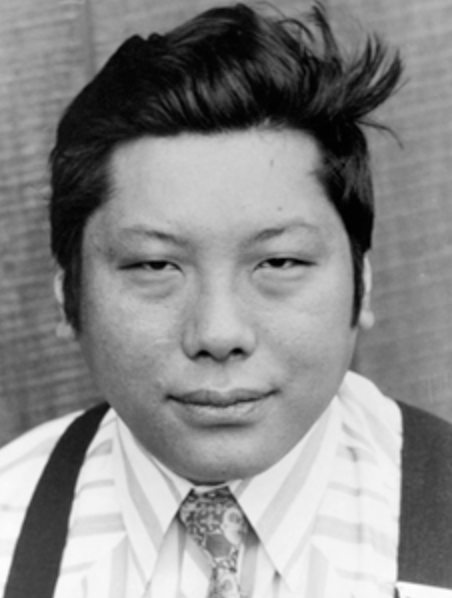
The other day, Jayson Gaddis, over at his personal blog, posted an interesting article on the "spiritual warrior," a concept that comes from Buddhism, and more specifically from Chogyam Trungpa Rinpoche. The post concludes with a short video on his upcoming Warrior Training.

This morning, Tricycle's Daily Dharma quote was from Pema Chodron, a short piece taken from an excerpted section of The Places that Scare You: A Guide to Fearlessness in Difficult Times (2001). In this short section she also addresses the idea of the spiritual warrior, which is fitting since she was Trungpa's student up until his death.

I think these are important first steps in reframing the warrior archetype toward a more compassionate and self-aware ideal. One of the things I like about Trugpa's vision of the spiritual warrior is his emphasis on having a "warrior heart."
Warriorship is so tender, without skin, without tissue, naked and raw. It is soft and gentle. You have renounced putting on a new suit of armor. You have renounced growing a thick, hard skin. You are willing to expose naked flesh, bone, and marrow to the world. 
~ Adapted from Smile at Fear: Awakening the True Heart of Bravery, by Chogyam Trungpa. Copyright 2009 by Diana J, Mukpo.
Jayson's post first:

The Modern Day Spiritual Warrior

January 5, 2013


Chogyam Trungpa Rinpoche

Recently, I realized that I’m in the business of training warriors.

But what is a warrior? what exactly do I mean?

I have not been able to find a better term than warrior. Sure, there is Jedi, Samurai, badass, etc.

But warrior is the closest term I have found for what I’m attempting to describe. And, I love that one of my teachers Chogyam Trungpa Rinpoche spoke of the sacred warrior. He was speaking to the spiritual practitioner who is willing to face their life head on and help others eliminate their suffering. It’s a bold path.

So, the term warrior must be defined here. I get that “warrior” conjures up a lot of historycially and traditional masculine roles. Pick any movie from Gladiator, to Braveheart, to Hunger Games. They all have a hero or heroine who fights to save their people or save the day. But I am not so idealistic or naive here. Sure, we are all great, heros and heroines in our own right. But let’s be realistic and true, meeting our lives directly free from unrealistic expectations, magical thinking, or fairy tales.

So, here’s my definition (or better yet aspiration) of the modern day spiritual warrior:
A modern day spiritual warrior is first and foremost a student of his or her own, direct experience. She is committed to being herself completely and her life journey is about coming home to who she really is. He is always learning, always growing. Her courage gives her the power and choice to face “what is so” directly and head on. He turns toward the darkness in order to transmute it. She learns to train the mind to serve the heart. He learns to “hold his seat” in the midst of life’s challenges. He learns to own and tame his inner stallion so that he may ride him powerfully and elegantly. She is willing to fall down, fail miserably, and get back up in order to be herself. He is embodied, emotionally literate, relationally adept. She is willing to fight, even die, for truth, love, and family. He enjoys the practice of burning up in this way. She desires, and is willing, to go all the way.
And, for the men out there, here’s a quick video about an upcoming warrior training.


And here is the Pema Chodron excerpt:

The In-between State

Pema Chodron points to the perfect training ground for the spiritual warrior—anxiety, heartbreak, and tenderness.

By Pema Chodron
The secret of Zen is just two words: not always so.—Shunryu Suzuki Roshi
It takes some training to equate complete letting go with comfort. But in fact, "nothing to hold on to" is the root of happiness. There's a sense of freedom when we accept that we're not in control. Pointing ourselves toward what we would most like to avoid makes our barriers and shields permeable.
This may lead to a don't-know-what-to-do kind of feeling, a sense of being caught in-between. On the one hand, we're completely fed up with seeking comfort from what we can eat, drink, smoke, or couple with. We're also fed up with beliefs, ideas, and "isms" of all kinds. But on the other hand, we wish it were true that outer comfort could bring lasting happiness.

This in-between state is where the warrior spends a lot of time growing up. We'd give anything to have the comfort we used to get from eating a pizza or watching a video. However, even though those things can be pleasurable, we've seen that eating a pizza or watching a video is a feeble match for our suffering. We notice this especially when things are falling apart. If we've just learned that we have cancer, eating a pizza doesn't do much to cheer us up. If someone we love has just died or walked out, the outer places we go to for comfort feel feeble and ephemeral.

We are told about the pain of chasing after pleasure and the futility of running from pain. We hear also about the joy of awakening, of realizing our interconnectedness, of trusting the openness of our hearts and minds. But we aren't told all that much about this state of being in-between, no longer able to get our old comfort from the our side but not yet dwelling in a continual sense of equanimity and warmth.

Anxiety, heartbreak, and tenderness mark the in-between state. It's the kind of place we usually want to avoid. The challenge is to stay in the middle rather than buy into struggle and complaint. The challenge is to let it soften us rather than make us more rigid and afraid. Becoming intimate with the queasy feeling of being in the middle of nowhere only makes our hearts more tender. When we are brave enough to stay in the middle, compassion arises spontaneously. By not knowing, not hoping to know, and not acting like we know what's happening, we begin to access our inner strength.

Yet it seems reasonable to want some kind of relief. If we can make the situation right or wrong, if we can pin it down in any way, then we are on familiar ground. But something has shaken up our habitual patterns and frequently they no longer work. Staying with volatile energy gradually becomes more comfortable than acting it out or repressing it. This open-ended tender place is called bodhichitta. Staying with it is what heals. It allows us to let go of our self-importance. It's how the warrior learns to love.

This is exactly how we're training every time we sit in meditation. We see what comes up, acknowledge that with kindness, and let go. Thoughts and emotions rise and fall. Some are more convincing than. others. Habitually we are so uncomfortable with that churned-up feeling that we'd do anything to make it go away. Instead we kindly encourage ourselves to stay with our agitated energy by returning to the breath. This is the basic training in maitri that we need to just keep going forward, to just keep opening our heart.

Dwelling in the in-between state requires learning to contain the paradox of something's being both right and wrong, of someone's being strong and loving and also angry, uptight, and stingy. In that painful moment when we don't live up to our own standards, do we condemn ourselves or truly appreciate the paradox of being human? Can we forgive ourselves and stay in touch with our good and tender heart? When someone pushes our buttons, do we set our to make the person wrong? Or do we repress our reaction with "I'm supposed to be loving. How could I hold this negative thought?" Our practice is to stay with the uneasiness and not solidify into a view. We can meditate, do tonglen, or simply look at the open sky—anything that encourages us to stay on the brink and not solidify into a view.

When we find ourselves in a place of discomfort and fear, when we're in a dispute, when the doctor says we need tests to see what's wrong, we'll find that we want to blame, to take sides, to stand our ground. We feel we must have some resolution. We want to hold our familiar view. For the warrior, "right" is as extreme a view as "wrong." They both block our innate wisdom. When we stand at the crossroads, not knowing which way to go, we abide in prajnaparamita. The crossroads is an important place in the training of a warrior. It's where our solid views begin to dissolve.

Holding the paradox is not something any of us will suddenly be able to do. That's why we're encouraged to spend our whole lives training with uncertainty, ambiguity, insecurity. To stay in the middle prepares us to meet the unknown without fear; it prepares us to face both our life and our death. The in-between state—where moment by moment the warrior finds himself learning to let go—is the perfect training ground. It really doesn't matter if we feel depressed about that or inspired. There is absolutely no way to do this just right. That's why compassion and maitri, along with courage, are vital: they give us the resources to be genuine about where we are, but at the same time to know that we are always in transition, that the only time is now, and that the future is completely unpredictable and open.

As we continue to train, we evolve beyond the little me who continually seeks zones of comfort. We gradually discover that we are big enough to hold something that is neither lie nor truth, neither pure nor impure, neither bad nor good. But first we have to appreciate the richness of the groundless state and hang in there.

It's important to hear about this in-between state. Otherwise we think the warrior's journey is one way or the other; either we're all caught up or we're free. The fact is that we spend a long time in the middle. This juicy spot is a fruitful place to be. Resting here completely—steadfastly experiencing the clarity of the present moment—is called enlightenment. ▼

Pema Chodron, an American Buddhist nun, is a founding member and resident teacher at Gampo Abbey, Cape Breton, Nova Scotia, the first Tibetan Buddhist monastery in North America established for Westerners. Excerpted from The Places That Scare You © 2001 by Pema Chodron.