Wednesday, September 18, 2013

Brent Girouex, Confesses to Having Sex with Four Teenage Boys and Gets NO Days in Jail

This is effed up in more ways than I count. Our system is so screwed up - even the original 17 years this pedophile received was not sufficient, especially considering he is clearly delusional based on his comments.

‘Rape Away The Gay’ Pastor Brent Girouex Gets Sentence Reduced 


Rape Away The Gay Pastor Will Not Serve Time

“Rape away the gay” pastor Brent Girouex, a 31-year-old Iowa man, will not serve jail time for confessing to police that he had sex with at least four youths, according to a recent report from KRMG.

Since that confession, eight additional young men have admitted to being violated by the now-former pastor of Victory Fellowship Church in Council Bluffs, Iowa.

If you don’t want to be appalled, fair warning: you may want to skip over this next section.

Apparently, Girouex thought he could rape away the gay by “praying while he had sexual contact” with his victims in an effort to keep them “sexually pure” for God.

 He then allegedly told police that “when they would ejaculate, they would be getting rid of the evil thoughts in their mind.”

Girouex is a married father of four. Since the disturbing revelations have hit the Internet, his wife Erin has spoken out against him and the reduced sentence that he received after initially getting 17 years in prison.

Instead of upholding to that initial ruling, a judge decided to sentence Girouex to five years probation and mandatory sexual offender treatment.

Provided he doesn’t violate the terms of his probation — in other words, victimize someone else — he will not serve a day in jail.

In comments to KCCI, Erin Girouex had this to say about the idea of sending her husband to prison: “If that’s what it takes to get him away from people, then yes … I don’t want (my children) anywhere near him.”

She added that what she wants is for other victims of sexual misconduct to speak out before it’s too late.

Erin plans to file for divorce, but according to KCCI “the hang-up is that her husband wants to see their children.”

Currently, Brent Girouex has a court-ordered, twice-per-month visitation schedule, where he must be supervised by his own mother.

Here’s a mugshot: 

Rape Away The Gay Pastor Mugshot Brent Girouex


The sentence in this case has many Americans understandably perplexed at the lax attitudes toward sexual violence.

Following on the heels of a Montana judge, who only sentenced a convicted rapist to 30 days in jail after his 14-year-old victim committed suicide, it definitely establishes a horrible precedent.

Do you think the case of the “rape away the gay” pastor is proof the US does not take sexual crimes against minors seriously?


‘Rape Away The Gay’ Pastor Brent Girouex Gets Sentence Reduced Rape Away The Gay Pastor Will Not Serve Time “Rape away the gay” pastor Brent Girouex, a 31-year-old Iowa man, will not serve jail time for confessing to police that he had sex with at least four youths, according to a recent report from KRMG. Since that confession, eight additional young men have admitted to being violated by the now-former pastor of Victory Fellowship Church in Council Bluffs, Iowa. If you don’t want to be appalled, fair warning: you may want to skip over this next section. Apparently, Girouex thought he could rape away the gay by “praying while he had sexual contact” with his victims in an effort to keep them “sexually pure” for God. He then allegedly told police that “when they would ejaculate, they would be getting rid of the evil thoughts in their mind.” Girouex is a married father of four. Since the disturbing revelations have hit the Internet, his wife Erin has spoken out against him and the reduced sentence that he received after initially getting 17 years in prison. Instead of upholding to that initial ruling, a judge decided to sentence Girouex to five years probation and mandatory sexual offender treatment. Provided he doesn’t violate the terms of his probation — in other words, victimize someone else — he will not serve a day in jail. In comments to KCCI, Erin Girouex had this to say about the idea of sending her husband to prison: “If that’s what it takes to get him away from people, then yes … I don’t want (my children) anywhere near him.” She added that what she wants is for other victims of sexual misconduct to speak out before it’s too late. Erin plans to file for divorce, but according to KCCI “the hang-up is that her husband wants to see their children.” Currently, Brent Girouex has a court-ordered, twice-per-month visitation schedule, where he must be supervised by his own mother. Here’s a mugshot: Rape Away The Gay Pastor Mugshot Brent Girouex The sentence in this case has many Americans understandably perplexed at the lax attitudes toward sexual violence. Following on the heels of a Montana judge, who only sentenced a convicted rapist to 30 days in jail after his 14-year-old victim committed suicide, it definitely establishes a horrible precedent. Do you think the case of the “rape away the gay” pastor is proof the US does not take sexual crimes against minors seriously?
Read more at http://www.inquisitr.com/946459/rape-away-the-gay-pastor-brent-girouex-gets-sentence-reduced/#21F3izuySEzIyQTK.99

Tuesday, September 17, 2013

Tomorrow (9/18/2013) at Google Hangouts - “What is a Real Man?”

Okay, define real, then define man. If we are going to have this discussion, we will need to agree upon the meanings of the terms. However, I suspect that will not happen to my satisfaction. Besides, I'll be at work during that time, so my two cents are what I just wrote above.

If you would like to hang out and listen or participate, it's the What Kind of Man Do You Want to Be Google Hangout, supported by the Good Men Project - go HERE to get an invitation (required).

Upcoming Google Hangout Asks: “What is a Real Man?”

September 17, 2013 by Marie Roker-Jones


This month on the What Kind of Man Do You Want to Be Google Hangout, the conversation is about the image of a real man and how societal and media masculine standards perpetuates male stereotyping.

Marie Roker-Jones from Raising Great Men will be joined by radio personality and writer Dr. Vibe to discuss how hyper-masculinity and media stereotypes of men influence young men’s thoughts on manhood.

Panelists for the first half of the discussion at 8:00pm EST on September 18th are Enrique Pascal, author of What Does A Real MAN Look Like? and host of Transformation Radio and Alan Bishop, founder of The 365 Effect, producer and creator several television shows .

At 9:00pm EST, also on September 18th, Marie and Dr Vibe will be joined by three young men: Edmund Adjapong, Rey Saint-Vil and Alex Hanse to discuss how media messages have shaped their views on men.

To learn more about the hangout or to join in, see the invitation page on Google+.

Follow Dr. Vibe and Marie Roker-Jones on Twitter for more information.

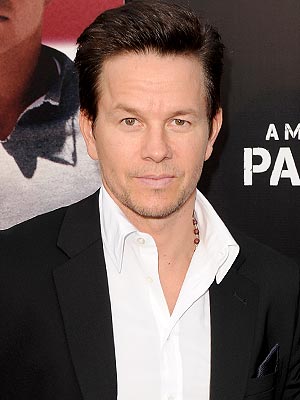
Mark Wahlberg, 42, Earns His High School Diploma

Very cool - I always like to see successful people go back and finish pieces of their education that they walked away from (for whatever reason) at an earlier stage in their life - whether it's getting a high school diploma, a GED, or finishing college.

People Magazine reports that actor and director Mark Wahlberg has gotten his high school diploma at the age of 42. Congratulations to him for doing this, even though he never needs to work again.

Does anyone else remember Marky Mark and the Funky Bunch?


Mark Wahlberg Earns His High School Diploma

By Raha Lewis | 09/16/2013

Mark Wahlberg

Actor and producer Mark Wahlberg has a new title to add to his resume – high school graduate.

The 42-year-old received his diploma in June and tells PEOPLE that his four children were a big motivation for hitting the books. "I didn't want the kids saying, 'You didn't do it, so why do I need it?' They are all wanting to do things in their future that require an education."

The Ted star, who had a troubled childhood and dropped out in the ninth grade being charged with attempted murder, says getting his diploma is "a huge accomplishment."

"It's also a huge sense of relief," he told PEOPLE Monday at an event in Irvine, Calif., for the Taco Bell Foundation for Teens, where he presented scholarships to select Taco Bell employees as part of its pilot program. "I wondered, 'Why didn't I do it when I was there?' It's so much harder at 41 going back and trying to do all these difficult tasks."
 
The most challenging part for Wahlberg, who took online classes, was math, even though he jokes that he's "good at counting money and keeping track of my money."

Wahlberg hired a tutor and studied between takes on the set of Two Guns, but kept it a secret from his costar Denzel Washington.

"Denzel was always asking me what I was doing but I didn't want to share that information with him," he says. "Nobody knew, because I felt like I don't like to count my chickens before they hatch, so I didn't want to say that I was doing it until I actually finished it. What if I said I'm doing this and I didn't finish it?"

Now that Wahlberg has his diploma, he's hoping to further his education.

"I would love to go to USC and study film. I don't want to become a veterinarian or anything, [I want to study] things that further my career and broaden my horizon."

Monday, September 16, 2013

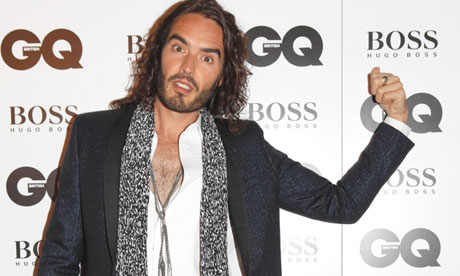
Russell Brand on the GQ Awards: 'It's amazing how absurd it seems'

A couple of days ago I posted on the GQ Men of the Year Awards and Russell Brand's comments (jokes) about Hugo Boss's Nazi history (Boss made their uniforms). Obviously, the folks at GQ (and one might guess, Hugo Boss) were not pleased - they kicked Brand out of the After Party and took down links to him and the "Oracle Award" he received at the ceremony.

Now, Brand has published an article in the Guardian (UK) explaining/defending his comments. One of the reasons I like Brand is that he is very intelligent and he is well-educated (mostly). In this piece he really offers us the context in which he made his comments, and the context is absurd on every level.

The archetypal role of the comedian has always been to speak truth the power (the court jester), and this often requires pointing out absurdity and hypocrisy. Russell Brand is getting quite good in this role.

Russell Brand and the GQ awards: 'It's amazing how absurd it seems'

The comedian on his evening at the GQ awards, from which he was ejected after cracking a joke about sponsor Hugo Boss


Russell Brand

The Guardian, Friday 13 September 2013


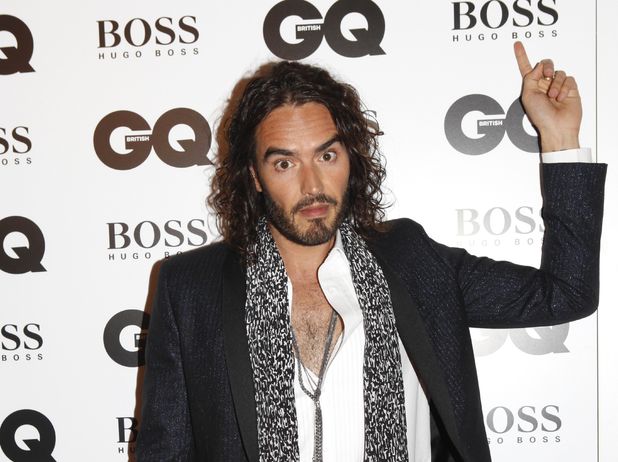
Russell Brand at the GQ awards at the Royal Opera House
Russell Brand at the GQ Men of the Year awards at the Royal Opera House. 
Photograph: Richard Young/Rex Features

Last week, Russell Brand was in hot water again after cracking a Nazi joke at the expense of GQ award sponsors, Hugo Boss. Here, he gives his side of the story:

I have had the privilege of scuba diving. I did it once on holiday, and I'm aware that it's one of those subjects that people can get pretty boring and sincere about, and sincerity, for we British, is no state in which to dwell, so I'll be brief. The scuba dive itself was numenistic enough, a drenched heaven; coastal shelves and their staggering, sub-aquatic architecture, like spilt cathedrals, gormless, ghostly fish gliding by like Jackson Pollock's pets. Silent miracles. What got me, though, was when I came up for air, at the end. As my head came above water after even a paltry 15 minutes in Davy Jones's Locker, there was something absurd about the surface. How we, the creatures of the land, live our lives, obliviously trundling, flat feet slapping against the dust.

It must have been a while since I've attended a fancy, glitzy event, because as soon as I got to the GQ awards I felt like something was up. The usual visual grammar was in place – a carpet in the street, people in paddocks awaiting a brush with something glamorous, blokes with earpieces, birds in frocks of colliding colours that if sighted in nature would indicate the presence of poison. I'm not trying to pass myself off as some kind of Francis of Assisi, Yusuf Islam, man of the people, but I just wasn't feeling it. I ambled into the Opera House across yet more outdoor carpets, boards bearing branding, in this case Hugo Boss, past paparazzi, and began to queue up at the line of journalists and presenters, in a slightly nicer paddock who offer up mics and say stuff like:

"Who are you wearing?"

"I'm not wearing anyone. I went with clobber, I'm not Buffalo Bill."

Noel Gallagher was immediately ahead of me in the press line and he's actually a mate. I mean, I love him: sometimes I forget he wrote Supersonic and played to 400,000 people at Knebworth because he's such a laugh. He laid right into me, the usual gear: "What the fook you wearing? Does Rod Stewart know you're going through his jumble?" I try to remain composed and give as good as I get, even though the paddock-side banter is accompanied by looming foam-tipped eavesdroppers, hanging like insidious mistletoe.


In case you don't know, these parties aren't like real parties. It's fabricated fun, imposed from the outside. A vision of what squares imagine cool people might do set on a spaceship. Or in Moloko. As we come out of the lift there's a bloody great long corridor flanked by gorgeous birds in black dresses, paid to be there, motionless, left hand on hip, teeth tacked to lips with scarlet glue. The intention, I suppose, is to contrive some Ian Fleming super-uterus of well fit mannequins to midwife you into the shindig, but me and my mate Matt just felt self-conscious, jigging through Robert Palmer's oestrogen passage like aspirational Morris dancers. Matt stared at their necks and I made small talk as I hot stepped towards the pre-show drinks. Now, I'm not typically immune to the allure of objectified women, but I am presently beleaguered by a nerdish, whirling dervish, and am eschewing all others. Perhaps the clarity of this elation has awakened me. A friend of mine said: "Being in love is like discovering a concealed ballroom in a house you've long inhabited." I also don't drink, so these affairs where most people rinse away their Britishness and twitishness with booze are for me a face-first log flume of backslaps, chitchat, eyewash and gak.

After a load of photos and what-not, we descend the world's longest escalator, which are called that even as they de-escalate, and in we go to the main forum, a high ceilinged hall, full of circular cloth-draped, numbered tables, a stage at the front, the letters GQ, 12-foot high in neon at the back; this aside, though, neon forever the moniker of trash, this is a posh do, in an opera house full of folk in tuxes.

Everywhere you look there's someone off the telly; Stephen Fry, Pharrell, Sir Bobby Charlton, Samuel L Jackson, Rio Ferdinand, Justin Timberlake, foreign secretary William Hague and mayor of London Boris Johnson. My table is a sanctuary of sorts; Noel and his missus Sara, John Bishop and his wife Mel, my mates Matt Morgan, Mick and Gee. Noel and I are both there to get awards and decide to use our speeches to dig each other out. This makes me feel a little grounded in the unreal glare, normal.

Noel's award is for being an "icon" and mine for being an "oracle". My knowledge of the classics is limited, but includes awareness that an oracle is a spiritual medium through whom prophecies from the gods were sought in ancient Greece. Thankfully, I have a sense of humour that prevents me from taking accolades of that nature on face value, or I'd've been in the tricky position of receiving the GQ award for being "best portal to a mystical dimension", which is a lot of pressure. Me, Matt and Noel conclude it's probably best to treat the whole event as a bit of a laugh and, as if to confirm this as the correct attitude, Boris Johnson – a man perpetually in pajamas regardless of what he's wearing – bounds to the stage to accept the award for "best politician". Yes, we agree: this is definitely a joke.

Boris, it seems, is taking it in this spirit, joshing beneath his ever-redeeming barnet that Labour's opposition to military action in Syria is a fey stance that he, as GQ politician of the year, would never be guilty of.

Matt is momentarily focused. "He's making light of gassed Syrian children," he says. We watch, slightly aghast, then return to goading Noel.

Before long, John Bishop is on stage giving me a lovely introduction, so I get up as Noel hurls down a few gauntlets, daring me to "do my worst".

I thanked John, said the "oracle award" sounds like a made-up prize you'd give a fat kid on sports day – I should know, I used to get them – then that it's barmy that Hugo Boss can trade under the same name they flogged uniforms to the Nazis under and the ludicrous necessity for an event such as this one to banish such a lurid piece of information from our collective consciousness.

I could see the room dividing as I spoke. I could hear the laughter of some and louder still silence of others. I realised that for some people this was regarded as an event with import. The magazine, the sponsors and some of those in attendance saw it as a kind of ceremony that warranted respect. In effect, it is a corporate ritual, an alliance between a media organisation, GQ, and a commercial entity, Hugo Boss. What dawned on me as the night went on is that even in apparently frivolous conditions the establishment asserts control, and won't tolerate having that assertion challenged, even flippantly, by that most beautifully adept tool: comedy.

The jokes about Hugo Boss were not intended to herald a campaign to destroy them. They're not Monsanto or Halliburton, the contemporary corporate allies of modern-day fascism; they are, I thought, an irrelevant menswear supplier with a double-dodgy history. The evening, though, provided an interesting opportunity to see how power structures preserve their agenda, even in a chintzy microcosm.

Subsequent to my jokes, the evening took a peculiar turn. Like the illusion of sophistication had been inadvertently disrupted by the exposure. It had the vibe of a wedding dinner where the best man's speech had revealed the groom's infidelity. With Hitler.

Foreign secretary William Hague gave an award to former Telegraph editor Charles Moore, for writing a hagiography of Margaret Thatcher, who used his acceptance speech to build a precarious connection between my comments about the sponsors, my foolish answerphone scandal at the BBC and the Sachs family's flight, 70 years earlier, from Nazi-occupied Europe. It was a confusing tapestry that Moore spun but he seemed to be saying that a) the calls were as bad as the Holocaust and b) the Sachs family may not've sought refuge in Britain had they known what awaited them. Even for a man whose former job was editing the Telegraph this is an extraordinary way to manipulate information.

Noel, who is not one to sit quietly on his feelings, literally booed while Charles Moore was talking, and others joined in. Booing! When do you hear booing in this day and age other than pantomimes and parliament? Hague and Johnson are equally at home in either (Widow Twanky and Buttons, obviously) so were not unduly ruffled, but I thought it was nuts. The room by now had a distinct feel of "us and them" and if there is a line drawn in the sand I don't ever want to find myself on the same side as Hague and Johnson. Up went Noel to garner his gong and he did not disappoint: "Always nice to be invited to the Tory party conference," he began, "Good to see the foreign secretary present when there's shit kicking off in Syria."

Noel once expressed his disgust at seeing a politician at Glastonbury. "What are you doing here? This ain't for you," he'd said. He explained to me: "You used to know where you were with politicians in the 70s and 80s cos they all looked like nutters: Thatcher, Heseltine, Cyril Smith. Now they look normal, they're more dangerous." Then, with dreadful foreboding: "They move among us." I agree with Noel. What are politicians doing at Glastonbury and the GQ awards? I feel guilty going, and I'm a comedian. Why are public officials, paid by us, turning up at events for fashion magazines? Well, the reason I was there was because I have a tour on and I was advised it would be good publicity. What are the politicians selling? How are they managing our perception of them with their attendance of these sequin-encrusted corporate balls?

We witness that there is a relationship between government, media and industry that is evident even at this most spurious and superficial level. These three institutions support one another. We know that however cool a media outlet may purport to be, their primary loyalty is to their corporate backers. We know also that you cannot criticise the corporate backers openly without censorship and subsequent manipulation of this information.

Now I'm aware that this was really no big deal; I'm not saying I'm an estuary Che Guevara. It was a daft joke by a daft comic at a daft event. It makes me wonder, though, how the relationships and power dynamics I witnessed on this relatively inconsequential context are replicated on a more significant scale.

For example, if you can't criticise Hugo Boss at the GQ awards because they own the event, do you think it is significant that energy companies donate to the Tory party? Will that affect government policy? Will the relationships that "politician of the year" Boris Johnson has with City bankers – he took many more meetings with them than public servants in his first term as mayor – influence the way he runs our capital?

Is it any wonder that Amazon, Vodafone and Starbucks avoid paying tax when they enjoy such cosy relationships with members of our government?

Ought we be concerned that our rights to protest are being continually eroded under the guise of enhancing our safety? Is there a relationship between proposed fracking in the UK, new laws that prohibit protest and the relationships between energy companies and our government?

I don't know. I do have some good principles picked up that night that are generally applicable: the glamour and the glitz isn't real, the party isn't real, you have a much better time mucking around trying to make your mates laugh. I suppose that's obvious. We all know it, we already know all the important stuff, like: don't trust politicians, don't trust big business and don't trust the media. Trust your own heart and each another. When you take a breath and look away from the spectacle it's amazing how absurd it seems when you look back.

Sunday, September 15, 2013

Chris Kyle - The Three Hidden Powers of Vulnerability

Over at the Good Men Project, Chris Kyle shared an excellent post on masculinity and vulnerability - two great things that go great together, but that we (as men growing up) are not simply discouraged from embodying, but essentially threatened with the loss our status as men if we do embody vulnerability.

This is wrong in more ways than I can count. Vulnerability is essential for psychological health, for mature masculine presence, and for ensuring authentic relationships.

Chris concludes his article with three observations around the benefits of being vulnerable: (1) increased capacity for courage, (2) greater compassion for ourselves and others, and (3) deeper, more authentic connections with others.


About Chris Kyle

Chris is a speaker, teacher, success coach and champion of your purpose. He’s an eLearning expert and recently created two new virtual programs called the Power of Purpose Summit and the Man on Purpose online course. Chris is also passionate about building global learning communities that unite people across cultures.
Enjoy the article - he even mentions the current guru on vulnerability, Brene Brown.

The Hidden Powers of Vulnerability

September 13, 2013 | by Chris Kyle


Chris Kyle learned early on that he better man up and sure as hell ‘Don’t cry!’ He learned later that vulnerability makes him stronger.

When I was a kid, I can’t tell you how many times I heard phrases like these: “just suck it up, Kyle.”
“Don’t cry.” “What are you, a pussy?; ”Don’t get too excited.” “Tone it down.” “I don’t want to hear how you feel about it, just do it.” “Don’t get angry with me young man.”

These came from my friends, my teachers, my coaches, and my family too.

I know many men who can relate to these words and far worse including a lot more swearing— “f*cking” this and “goddamn” that.

As a boy and then a young man I was told constantly to stay in a zone of feeling and behavior that essentially felt like I was a block of granite—solid, unmoving, rational, toned-down, and generally unfeeling. Sharing my feelings, my deep fears, expressing sadness, crying were all seen as weakness for a young, maturing man.

I came to believe vulnerability = weakness.

I recall one key event in my early teens when some friends at school were instigating a fight between me and a kid named Evan. I didn’t want to fight him, but it somehow became a matter of honor, or an issue of shame, if I didn’t fight him.

I remember facing Evan, with a small crowd circled around us, and thinking “Why am I here?” I literally couldn’t remember what we fought about or what was the issue that had us squaring off against each other with fists raised. We finally dove into it, trading a few punches, and then found ourselves wrestling on the ground. He got me in a headlock and all I could do was say ‘uncle’—to tap out. I’d lost the fight.

As I stood up, facing the others gathered around, I could feel the shame welling up in me, and the tears started to come. And, of course, one of the boys says: “F*ck Kyle, are you crying?” It was said with such disdain and disbelief. I dropped into a deeper level of shame for having these feelings and showing the tears. This moment shut me down and locked me out from my tears, and slammed the door on my vulnerability.

Our culture continues to indoctrinate boys and men in this way—through old socializing patterns that are deeply ingrained in our cultural DNA. Be tough, don’t cry, don’t share your fear, win at all costs, prove you’re a man.

And yet, now what I’m seeing are adult men who are willing to work on themselves and take a deep look at these beliefs and patterns. They are consciously unwinding this shame and belief of ‘vulnerability is weakness,’ and bringing a new understanding and self-compassion to their childhood wounds and traumas.

This truth-telling about myself and the willingness to be more open, transparent, revealing… to be more vulnerable, is freeing and empowering.

Now, vulnerability looks and feels different. It has become a hidden source of power for me.

At its core, vulnerability allows us to really be seen, warts and all, so we can feel more connected. Researcher and author Brene Brown says that it’s this vulnerability that helps heal our shame and opens us up to deeper connection and a greater sense of worthiness.

So as I investigated deeper into masculine vulnerability, I became aware of what I call the Three Hidden Powers of Vulnerability.

1. Vulnerability opens us to an increased capacity for courage.
 Being vulnerable, sharing more of myself, taking the risk to say with needs to be said, to speak the truth in my heart—all of it takes courage. As we practice being more vulnerable (open, transparent, being seen) then we foster a new level of courage that we can apply in many areas of our lives. This courage building also garners respect and appreciation from others. And it builds resilience in us to face the many challenges that life will bring.

2. Being vulnerable brings forth greater compassion for ourselves and others.
 When we are vulnerable, when we truly open ourselves to be seen by others, we are sharing more parts of ourselves with the world. And in that awareness of the hurt, raw or broken parts of ourselves we are able to see our own humanity and have greater compassion for ourselves. As this capacity builds inside us we have more empathy and compassion for others. This growing power of compassion provides us with a greater ability to accept and let go of beliefs and judgments that don’t serve us. More presence and peace is found in this compassion.

3. Vulnerability creates deeper, more authentic connections.
 What I see as the greatest gift of vulnerability is the ability to actively cultivate deeper, more real connections with everyone in my life. When we practice being more open and vulnerable we are able to pierce the veil of shame and fear and experience deeper connection and relatedness. More honest dialog emerges, more healing between friends and loved ones occur. And this is counter-intuitive to our minds—where we equate vulnerability with fear, hurt and weakness. When in fact it creates more support, more freedom, more joy, more release and more appreciation. These authentic connections serve our success and happiness in every area of life—relationships, work, parenting, community and well-being.

So, I invite you to choose more opportunities to share yourself, to express your fears, to let your tears be seen. Cultivate this openness, this vulnerability and watch these hidden powers blossom and grow so that they infuse your life with more meaning, passion and care for yourself and others.

Read More from Men’s Work

Image Credit: Rochelle Hartman/Flickr

Friday, September 13, 2013

Russell Brand Rips Into Hugo Boss at GQ Men of the Year Awards


This is WHY Russell Brand deserves a Man of the Year Award, I'm just suspecting that GQ is not feeling so good about choosing him as one of their Men of the Year. I love when intelligence and wit combine to point out horrible things we'd rather not discuss and deal with, like Hugo Boss's history with the Nazis.

But they did give him the "Oracle" award - a word that comes from the latin verb ōrāre "to speak," and generally referred to the priest or priestess uttering the prediction(s) of the future. According to Wikipedia:
Oracles were thought to be portals through which the gods spoke directly to people. In this sense they were different from seers (manteis, μάντεις) who interpreted signs sent by the gods through bird signs, animal entrails, and other various methods.[1]
I suspect the people at GQ were not fully versed on the role of the Oracle as a vehicle for the gods to speak directly to humans. In his own way, Brand was pointing out an ugly truth that no one in that room, and especially the organizers at GQ, wanted to hear.

Anyway, this was posted on their "Winner and Losers Live Blog":
He must have seen this coming... Oracle of the Year goes to Russell Brand, handed over by John Bishop. This will only fuel his Messiah Complex. He accepts graciously: "Thank you for the Oracle Award... which honestly sounds made up."
But the links are dead-ends - seems they took down whatever information they had on their site about the award or this year's winner.

Apparently, Brand was kicked out of the After Party for his comments.

Watch The Moment Russell Brand Rips Into A Big, Famous Brand With A Terrible Past

By Rossalyn Warren (More from Rossaly)

When comedians put people on the spot, it's always a tad awkward. But when one of the most recognizable comedians in the world rips into the history of one of the most famous brands in the world on stage at an expensive event that said expensive brand is sponsoring ... just see for yourself.

Lots of companies have this same black mark in their history books, but it's hard to forgive some things. And it's kinda neat to see this company not being let off the hook.

His comments: "Any of you who know a little bit about history and fashion will know that Hugo Boss made the uniforms for the Nazis. The Nazis did have flaws, but, you know, they did look fucking fantastic, let's face it, while they were killing people on the basis of their religion and sexuality." 

After this, Russell Brand tweeted: 
Russell Brand         @rustyrockets
GQ editor: "What you did was very offensive to Hugo Boss." 
Me:" What Hugo Boss did was very offensive to the Jews."

Thursday, September 12, 2013

Gratitude

Over the past decade or so, I have mentioned my last therapist, Maude (the one therapist who really helped me heal), in various conversations with friends, always with a sense of awe or deep appreciation. She didn't offer answers or platitudes, but she had the wisdom of lived (and learned) experience, as well as a very skillful compassion that was not always gentle. Some days her compassion was so direct that it broke me wide open, left me gasping for air, feeling as raw as an exposed nerve.

With Maude I learned to cry again. I learned how to mourn. I learned that my childhood was not normal and not healthy. I learned how to accept myself, and in that process I learned how to forgive my parents for their failings, their shortcomings, and their ignorance. I learned that I was a kind of ugly duckling in my family and that separating from them as soon as I was able was not ungrateful, not disloyal, not selfish - it was necessary for my growth and survival.

I learned that all the drugs, alcohol, and promiscuity of my teen years - behaviors that had filled me with a sense of shame, that made me feel like a broken and terrible person - were nothing more than unskillful coping strategies, they were the ways I found not to chase a bottle of Vicodin with a fifth of whiskey and a handful of Valium. I learned to feel compassion rather than contempt for that scared and wounded kid that I had been.

I learned that depression can be a sane response to an insane world (this is a reframe of a quote from Ronald David Laing, who once said: "Insanity sometimes is the sane response to a mad society"). I also learned that my particular kind of depression was a form of living in the past, and that my anxiety was a way to live in fear of the future, a perspective that came originally from Lao Tzu:
If you are depressed you are living in the past.
If you are anxious you are living in the future.
If you are at peace you are living in the present.
I learned how to apply mindfulness and awareness to my interior states, an approach I was familiar with from the writings of Pema Chödrön. I learned that my Buddhist practice was not confined to time spent in meditation, that the best place to practice was my daily life.

After a couple of years, I began to notice that I was not so reactive to daily stresses and annoyances. I came to realize that the political blog I was writing at the time was making me miserable and cynical, aggravating my depression. I stopped following political news and switched to blogging at Integral Options Cafe, then to this blog.

I switched my blogging focus to growth, psychology, philosophy, and health. I became curious about what it means to be a man in this culture, during this time when gender roles and identities are shifting so rapidly. I began blogging here, at The Masculine Heart.

Soon I realized it was time to go back to school, to return to my original goal of becoming a psychotherapist. That had been my major during my first stint in college, but the program as too reductionist and I switched to an English degree and then a masters in humanities (literature and comparative religions).

When I was nearly 40, I was finally ready to become a therapist.

I am still learning, still trying to be a better person, and through working with my clients, I become my best self more and more every day. This is the gift they give me without ever knowing.

Even now, when I am working with clients, I hear Maude's voice in my head, asking the hard questions, reminding me to connect my brain with my heart in every moment. For that gift, I will be forever grateful.

Wednesday, September 11, 2013

Medal of Honor Recipient, in New Act of Valor, Thanks His Therapist

It's an act of bravery for a soldier to thank his therapist when accepting a Congressional Medal of Honor, but in an era where more men die of their own hand than die in battle, it is a necessary and laudable act. He is strong enough to admit that war and seeing friends die has had an incredible impact on his mental health, that he is emotionally scarred by what he has witnessed.

Wonderful to see the wall of silence being taken down by a man recognized as a hero.

This nice story comes from Pacific Standard.

Medal of Honor Recipient, in New Act of Valor, Thanks His Shrink

As wave of military suicides continues

Staff Sgt. Ty Carter speaking at a ceremony awarding him the Congressional Medal of Honor. (PHOTO: YOUTUBE) 

August 27, 2013 • By Marc Herman

The video below, from Stars and Stripes, shows Staff Sgt. Ty Carter’s speech at a ceremony awarding him the Congressional Medal of Honor yesterday. Carter, one of only five living recipients of the medal who fought in post 9/11 conflicts, was cited for his actions during a battle in Afghanistan in which he attempted to rescue a fellow soldier, Spc Stephan Mace. Carter pulled Mace to safety and treated him amid a 12-hour-long battle. Mace, wounded grievously, eventually died.*

Carter’s speech is notably different from the popular image of a war hero receiving a medal. In lieu of crisp salutes and talk of duty, Carter spends much of his time speaking about loss, and frankly discussing his own mental health after the ordeal. To be clear, Staff Sgt. Carter appears to be a person of extraordinary mettle. In his presentation, however, he does not mind projecting another image, of a young man who has seen too many terrible things. Speaking in what can only be called a tone of vulnerability, he tells the White House audience, including President Obama:
Only those closest to me can see the scars that come from seeing good men take their last breath. During the battle, I lost some of the hearing in my left ear. But I will always hear the voice of Specialist Stephan Mace. I will hear his plea for help for the rest of my life.
He goes on to talk about how he recovered from the experience.
However, thanks to the professionalism of my platoon Sgt, Sgt Hill, and my behavioral health provider, Capt. Cobb, and my friends and family, I will heal.
“Behavioral health” is a synonym for mental health. A “behavioral health provider” is a therapist. In a ceremony traditionally designed to showcase bravery in battle, Carter is taking the extraordinary step of focusing on how he, the classic American war hero, came home from Afghanistan with his head in a bad place. He goes on to speak of anguished families of the soldiers lost in the same violent battle for which he received the medal. President Obama also remarks on the mental health issue.

Certainly what the video below displays is a cultural shift, from the 1940s image of the hard-bitten GI, to the modern, human hero like Carter. It’s also tempting to read the focus of this week’s ceremony as a tacit pushback against an emerging skepticism about war’s role in a wave of military suicides over the past half-decade-plus. Coincidentally, two weeks ago a study published in the Journal of the American Medical Association claimed that military deployments were not to blame for the widely-reported rise in suicides among service members since 2005.

The study, which has sparked intense debate, found ”suicide risk was independently associated with male sex and mental disorders but not with military-specific variables.” It cited a rise in alcohol and drug abuse among the soldiers studied as likely causes for the increase in suicides, but did not consider those influences “military-specific.”


*UPDATE 08/28/2013: This post originally stated that Staff Sgt. Ty Carter was one of only five living recipients of the Congressional Medal of Honor. In fact, he is one of five who have received the MOH in the post 9/11 conflicts in Afghanistan and Iraq.

Tuesday, September 10, 2013

Best. Beer. Commercial. EVER.


Commercial from Guinness, text from Huffington Post.
Created by BBDO New York, the ad features a group of wheelchair basketball players.. with an unexpected twist at the end.

Watch it for yourself and be prepared for some serious heartstring-pulling at the end. Let's just say that it's not your average beer commercial.
Most everyone has probably seen this already, but I wanted to post it here for those who haven't seen it.

Matt Duron - My Son Wears Dresses; Get Over It (The Atlantic)

This summary is not available. Please click here to view the post.