Wednesday, June 19, 2013

Robert Krulwich - Why Men Die Younger Than Women: The 'Guys Are Fragile' Thesis

Over at his NPR blog, Krulwich Wonders, Robert Krulwich looks at the evidence for the "guys are fragile" thesis to explain why men die, on average, quite a bit younger than women.

Some of the evidence:

  • "the ratio of males to females ... has been estimated to be from 107 to 170 males per 100 females."
  • "105 males are born for every 100 females"
  • "male disadvantage spikes during the teens and early twenties, when young men fight, go to war, dare, and don't wear motorcycle helmets - deaths are increasingly accidental, suicidal, homicidal or war related"
  • "In America, nine out of 10 of the so-called "supercentarians" (over 110) are female"

It doesn't look good for the males. Some of the things that make us male, make us masculine, may also lead us to younger deaths.

Why Men Die Younger Than Women: The 'Guys Are Fragile' Thesis


by ROBERT KRULWICH
June 17, 2013

The 19th century just lost its last living man.

Jiroemon Kimura, of Kyotango, Japan, was born in April 1897, lived right through the 20th century and died last Wednesday. He was 116. According to the Guinness Book of Records (which searches for these things) he was the last surviving male born in the 1800s. All the other boys from that century, as best we know, are dead.

The ladies, however, are still ticking. Misao Okawa of Osaka is now officially the oldest person on the planet. She was born in 1898. There are four others, two in Britain, one in the USA, and another in Japan — all 19th century-born, all female, all still alive.

Once again, the ladies have outlasted the gentlemen. Not that that's a big surprise.

They Might Be Giants - Older

Women, on average, seem to take a little longer to die. But here's what I didn't know. Women, it turns out, don't just win in the end. It seems that women consistently outlive men in every age cohort. Fetal boys die more often than fetal girls. Baby boys die more often than baby girls. Little boys die more often than little girls. Teenage boys, twenty-something boys, thirty-something boys — in every age group, the rate of death for guys is higher than for women. The difference widens when we hit our fifties and sixties. Men gallop ahead, then the dying differential narrows, but death keeps favoring males right to the end.

After that, everybody's dead.

So Death, it turns out, is not an equal opportunity avenger. It seems to consistently favor males. Why? What is it about maleness that brings Death knocking?

The Fetal Difference


First off, whatever we males are doing wrong, nature seems to know about it. Because when human babies are conceived, says a 2002 study, "the ratio of males to females ... has been estimated to be from 107 to 170 males per 100 females." The storks, it seems, drop extra boy babies into wombs, almost as if they know what's coming. But even with a boost at conception, male fetuses don't make it out of the uterus as often as female fetuses. The death differential, says the study, "has been estimated to be from 111 to 160 males per hundred females." So miscarriages are mostly male.

The Baby Difference


Then come birthdays. More boy babies get born than girl babies. This is true all over the world. In America, it's 105 males for every 100 females. But as soon as they're out, the boys start to go. Male babies born prematurely die more often than females. Birth weight is not as strong a predictor as gender. You can be born impossibly small, and if you're a girl you are still slightly more likely to make it through.

The Adolescent Difference


The male disadvantage spikes during the teens and early twenties. This is the time when young men fight, go to war, dare and don't wear motorcycle helmets. Their deaths here are increasingly accidental, suicidal, homicidal or war related. "If deaths from violence are excluded," says a study from the Society of Actuaries, the spike in the early 20s disappears completely, though the female advantage remains. Not too long ago, young women got pregnant and many died having babies during their twenties, but in the modern era, childbirth mortality is down; male derring-do less so.

The Middle Years Difference


Here the gender difference narrows and holds steady, but if you look across the years, men are more likely to die from injuries, and (at least in the USA), from suicide, respiratory cancer, cirrhosis of the liver, emphysema and coronary heart disease. The leading female diseases, breast cancer and cervical cancer, do damage, but not as much as the male diseases.

The Oldies Difference


Somewhere in our fifties, the men begin to accelerate their dying, and that difference peaks in our sixties and early seventies and then narrows. In the last lap, among the oldest of the oldies — people 110 and over — women are lopsidedly the survivors. In America, nine out of 10 of the so-called "supercentarians" are female. Jiroemon Kimura, the farmer/mailman who died last week in Japan, — was a double exception; he was not only super-old, he was a super-old male. That's very rare.

They Might Be Giants - Older

But Why The Difference?


Which brings us back to the deeper question (again, we're talking not about you in particular; we are making a statistical argument based on averages): Is there something about being a male that all by itself, shortens a lifespan? And if so, is it correctible or built-in? The most famous paper on this subject Why Men Die Younger, comes from an actuary (naturally) working in Seattle, Barbara Blatt Kalben. In 2002, she wrote that being a guy is definitely more dangerous, but she has a bevy of reasons why that might be, and she doesn't choose a winner.

Blame Testosterone?


There are obvious behavioral differences between men and women, she writes. Some of them might be cultural. Men are more violent which puts them in harm's way more often. They consistently consume more tobacco, alcohol and drugs, which makes them sicker (then deader) later on. The explanations for this difference could be chromosomal or hormonal (more testosterone) and therefore hard to change; or they could be learned.

Blame Size?


Other explanations seem hard-wired, and not fixable. Men, she notes, are generally bigger, which reflects a general rule in biology, seen in most species, which says (quoting from a study) "that larger (size) individuals (within a species) tend on average to have shorter lives." This has proven true for animals in the wild, showing up in worms, fish, insects, mammals, and, of course, our group, the primates. The bigger among us (again, on average) die earlier. (I've noticed this among dogs, but birds, she says, are a notable exception — Big Bird, if he existed, would likely to last longer than your average garden robin.)

But now comes the explanation that made me wince.

Blame Male Weakness


Barbara Kalben mentions it, quoting an author named "Allen" (I couldn't find his full name, not having access to her bibliography) but he apparently studied data from the Mayo Clinic and in 1934 wrote an essay that said that "mere maleness" is predictor of greater mortality. Something about being male "influences unfavorably the resistance ... to disease at all ages." He called it "male weakness."
The factors which are usually set down in explanation of the greater mortality in males are overwork, alcoholism, venery [I looked it up, it means lots of sex and also hunting] tobaccoism, exposure to the elements, industrial hazards, and irregular habits of eating and sleeping. ... 
For each explanation of the lack of inherent vitality of the male there are objections, but these do not influence the fact; the male is, by comparison with the female, a weakling at all periods of life from conception to death. Venery, alcoholism, exposure, overwork, and various other factors may influence the susceptibility to disease and the greater mortality of the adult male, but they are only straws placed on the greater burden of his sex-linked weakness. 
There seems to be no doubt that, speaking comparatively, the price of maleness is weakness.
So, for many reasons, because of our hormones, our chromosomes, our lifestyle, the stresses of being a guy, we become (or are born) more fragile. This is not exactly my image of maleness, which runs more to Achilles or to Muhammad Ali, but the data suggests in the long run, when it comes to just surviving, it's the ladies who pack steel.

A bunch of years ago on ABC News, in a series I did with Ted Koppel called Brave New World, I touched on the theme of time with two friends of mine, John Lennell and John Flansburgh, better known as They Might Be Giants. They made a music video to illustrate our hour-long essay, which included this refrain: "You're Older Than You Were Before, And Now You're Even Older..." lines that make me smile to this day. Both the Johns and the three musicians they hired (all named Dan) and I (I introduce the song) are older than we were before ... and, as sometimes happens, now we're even older. Notice, there are no women in the video. If we'd included any, chances are they'd have gone on and on and on and, in a gender-embarrassing way, outlasted us.

Tuesday, June 18, 2013

Obesity Leads to Brain Inflammation, and Low Testosterone Makes It Worse


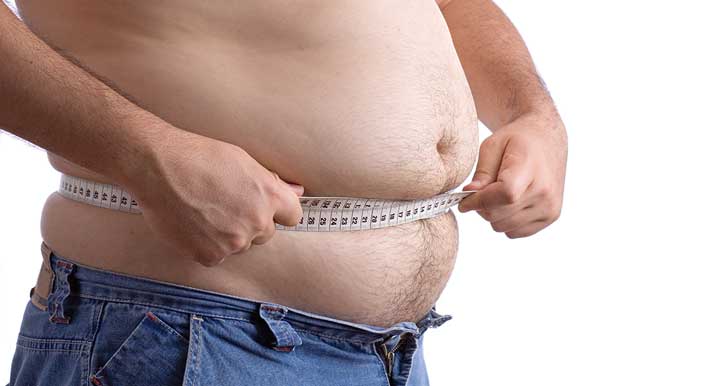
This is some seriously bad news for American men, 66% of whom are overweight or obese. One of the most debilitating side effects of obesity is that fats cells create estrogen - the more fat cells, and the bigger the fat cells, the more estrogen in the body. It gets worse, fat cells also support high levels of aromatase, an enzyme that converts testosterone to estrogen. More fat, less testosterone due to the aromatization of testosterone into estrogen .

High fat levels (through increases in estrogen due to aromatase conversion) reduce testosterone, which has its own downside: depression, loss of libido, muscle wasting, bone density loss, heart attacks and other cardiovascular issues, and higher risk of early death.

The evidence has been building for years that many neurodegenerative disorders, such as Alzheimer's Disease and other forms of dementia are linked to neuroinflammation (see this article). More recent evidence is showing that inflammation may play a crucial role in depression, schizophrenia, and bipolar disorder.

A 2012 article (Maintaining Brain Health by Monitoring Inflammatory Processes: a Mechanism to Promote Successful Aging) in Aging and Disease looked at how inflammation contributes to mental decline, as well as structural and metabolic dysfunctions. The article is freely available at the link above.
Abstract 
Maintaining brain health promotes successful aging. The main determinants of brain health are the preservation of cognitive function and remaining free from structural and metabolic abnormalities, including loss of neuronal synapses, atrophy, small vessel disease and focal amyloid deposits visible by neuroimaging. Promising studies indicate that these determinants are to some extent modifiable, even among adults seventy years and older. Converging animal and human evidence further suggests that inflammation is a shared mechanism, contributing to both cognitive decline and abnormalities in brain structure and metabolism. Thus, inflammation may provide a target for intervention. Specifically, circulating inflammatory markers have been associated with declines in cognitive function and worsening of brain structural and metabolic characteristics. Additionally, it has been proposed that older brains are characterized by a sensitization to neuroinflammatory responses, even in the absence of overt disease. This increased propensity to central inflammation may contribute to poor brain health and premature brain aging. Still unknown is whether and how peripheral inflammatory factors directly contribute to decline of brain health. Human research is limited by the challenges of directly measuring neuroinflammation in vivo. This review assesses the role that inflammation may play in the brain changes that often accompany aging, focusing on relationships between peripheral inflammatory markers and brain health among well-functioning, community-dwelling adults seventy years and older. We propose that monitoring and maintaining lower levels of systemic and central inflammation among older adults could help preserve brain health and support successful aging. Hence, we also identify plausible ways and novel experimental study designs of maintaining brain health late in age through interventions that target the immune system.
Full Citation:
Rosano, C, Marsland, AL, and Gianaros, PJ. (2012, Feb). Maintaining Brain Health by Monitoring Inflammatory Processes: a Mechanism to Promote Successful Aging. Aging and Disease; 3(1): 16–33. PMCID: PMC3320802


Two easy ways to control and reduce inflammation are an anti-inflammatory diet and regular exercise. Over at Integral Options Cafe, I posted information this morning on foods and supplements that reduce inflammation.

Here is the press release:

Obesity Leads to Brain Inflammation, and Low Testosterone Makes It Worse


June 17, 2013 — Low testosterone worsens the harmful effects of obesity in the nervous system, a new study in mice finds.

The results will be presented Monday at The Endocrine Society's 95th Annual Meeting in San Francisco.

"Low testosterone and obesity are common in aging men, and each is associated with type 2 diabetes and Alzheimer's disease," said the study's lead investigator, Anusha Jayaraman, PhD, of the University of Southern California in Los Angeles. "Our new findings demonstrate that obesity and low testosterone combine to not only increase the risk of diabetes but also damage the brain."

The study -- which was conducted in the laboratory of Christian J. Pike, PhD, Professor in the Davis School of Gerontology at USC and funded by the National Institutes of Health's National Institute on Aging -- consisted of three groups of male mice that received a high-fat diet (60 percent of calories were from fat) to induce obesity. Each group had eight mice and varied by testosterone status. One group had normal testosterone levels, and the second group underwent surgical removal of the testes so that the mice had low testosterone levels. The third group also underwent castration but then received testosterone treatment through a capsule implanted beneath the skin.

The high-fat diet, Jayaraman reported, resulted in obesity and evidence of diabetes -- abnormally high blood glucose (sugar) levels and poor glucose tolerance, which is the ability to clear glucose from the bloodstream. Compared with the group that had normal testosterone levels, the testosterone-deficient mice had more body fat, higher blood sugar levels and poorer glucose tolerance, she said.

After blood testing, brain tissues from the mice underwent analysis for changes. The brains of obese mice showed substantial inflammation and were less able to support nerve cell growth and survival, according to Jayaraman. These damaging effects of diet-induced obesity were significantly worse in mice with low testosterone, she said, adding that control groups of mice fed a normal diet did not show these changes.

"Our findings suggest that low testosterone and obesity interact to regulate inflammation of the nervous system, which may increase the risk of disorders such as type 2 diabetes and Alzheimer's disease," she said.

Because many of the negative outcomes of the high-fat diet were eased in the group of mice that received testosterone therapy, Jayaraman said that "testosterone treatment may be useful in reducing the harmful effects of obesity and low testosterone on the nervous system."

Monday, June 17, 2013

Codes of Gender - Documentary


I think I posted this here before, but it's an interesting video definitely worth a viewing, or maybe a second viewing. This documentary offers a cogent analysis (using Irving Goffman's examination of advertising and the contemporary commercial landscape) shows how influential advertising media is in communicating "normative ideas about masculinity and femininity, the relationship between gender and power, and the everyday performance of cultural norms."


The Codes of Gender


The Codes of Gender applies the late sociologist Erving Goffman’s ground-breaking analysis of advertising to the contemporary commercial landscape, showing how one of American popular culture’s most influential forms communicates normative ideas about masculinity and femininity, the relationship between gender and power, and the everyday performance of cultural norms.

In striking visual detail, this film explores Goffman’s central claim that gender ideals are the result of ritualized cultural performance, uncovering a remarkable pattern of masculine and feminine displays and poses.

The film looks beyond advertising as a medium that simply sells products, and beyond analyses of gender that focus on biological difference or issues of objectification and beauty, to provide a clear-eyed view of the two-tiered terrain of identity and power relations.

With its sustained focus on how our perceptions of what it means to be a man or a woman get reproduced and reinforced on the level of culture in our everyday lives, the film is a great introduction to socially and culturally constructed gender roles.

Sunday, June 16, 2013

Honoring Our Fathers

In honor of Father's Day, here is a short piece from the Daily Om on the importance of honoring fathers for their work and support. As this article suggests, "The process of reconciling the ideal father that resides in our minds with the father that we actually have is a fertile one that can teach us a great deal about ourselves."

This has been very true in my life. I feared and idolized my father while he lived. After he died (I was 13), I held onto the idealization (maybe I needed to) but repressed or denied the fear I so often felt and the oppressiveness of his authoritarian behavior. It wasn't until more 10-15 years after his death that I was able to begin seeing my father as a flawed human being who lived with some serious wounding.

After a few decades and a lot of therapy, I understand who my father was and how he became the man who sired me. And I understand and honor that many of the things he did when I was a child had nothing to do with me, but were about his own pain, his fear, and his wounding.

The work it took to get to this place regarding my father is part of why I became a therapist, and informs my understanding of how cold, authoritarian parents can deeply wound their childen.

Providing Support: Fathers

by Madisyn Taylor
June 14, 2013 

In a time when the sacred feminine is being honored strongly, let's not forget fathers.

The idea of fatherhood is both personal and universal. We all have ideal concepts surrounding fatherhood, and we also have our real fathers—fathers who were there or not there for us, fathers who provided financial support for our families or failed to do so, fathers who loved or neglected us, fathers who were our role models or gave us someone to rebel against. Our father may have been there for us sometimes and not there for us at other times. The process of reconciling the ideal father that resides in our minds with the father that we actually have is a fertile one that can teach us a great deal about ourselves.

Our relationship with our father will often affect our relationships with the other men who will come into our lives. You may have learned to behave and think in certain ways because those were the ways that your father acted and thought. Certain talents that you possess may have been passed down to you by your father. There also may be personal issues that you inherited by virtue of who your father is. Understanding how your relationship with your father has influenced you can help you better understand yourself and the life that you have created.

In a time when mothers, the sacred feminine, and female energy are being honored, it is important not to forget the importance of fathers. Father energy and mother energy are the two complementary energies necessary to bring a healthy human being to fruition in the world. Many of the ideas surrounding fathers are changing in the wake of more modern parenting styles and the more egalitarian roles that are evolving between the sexes. More men are embodying the mother energy these days, and a woman can provide father energy for her children. Either way, we can all benefit from thinking about our fathers and how they have influenced who we’ve become and the ways that we walk through this world. Let us remember to honor our fathers.
* * * * *
What do you think?
Discuss this article and share your opinion 
Want more DailyOM?
Register for your free email, or browse all articles

Saturday, June 15, 2013

Are Two Dads Better than One?

With Father's Day coming up tomorrow, CBS offers this story on same-sex fathers and the legalities sure to arise as the Supreme Court prepares to rule on same-sex marriage later this year.
According to the Center for Family and Demographic Research, about one in six same-sex households include children. There are reportedly almost 2 million U.S. children being raised by same-sex parents, many of them in states that don't allow gays to marry.
But with the Supreme sitting on a 5-4 conservative majority (all 5 of the conservatives are Roman Catholic - the other side has 1 Roman Catholic and 3 Jews [all of whom appointed by Clinton]), the future of same-sex marriage and same-sex parents seems to be in peril.

However,
"The preponderance of the available evidence is that children of same-sex parents turn out just as well as other kids," said Debra Umberson, a sociology professor at University of Texas at Austin.
And,
In March, the American Academy of Pediatrics officially endorsed same-sex marriage, citing research showing that parents' sexual orientation has no bearing on a child's well-being. The policy said that if two same-sex parents want to marry, "it is in the best interests of their children that legal and social institutions allow and support them to do so."
Let's all hope that same-sex couples will continue to be able to use artificial insemination or to adopt unwanted children - and that the Justices will see that bans against same-sex marriage violate the Separation Clause in the U.S. Constituion.

Are two dads better than one?

By Stephen Smith / CBS News / June 15, 2013


Brent Almond, left, and Nicholas Pirulli with their son Jon at the Capital Pride parade in Washington, D.C., on June 8, 2013. / BRENT ALMOND

In many ways, Jon Pirulli-Almond enjoyed a pretty typical afternoon last Saturday. He chilled out in his red wagon. He played with a new Batman toy. He squirted his parents (and passersby) with a water pistol.

But there was nothing ordinary about the venue - or the boy's attire. It's a safe bet that Jon was the only 3-year-old in Washington, D.C. frolicking at a gay pride parade while wearing a shirt emblazoned with the message: "My Two Daddies (Can Beat Up Your One)."

His two fathers (Brent Almond, known as "Daddy" to John) and Nicholas Pirulli (aka "Papa") proudly hoisted their son, who was winning over the crowd with both his fashion message and his squirt gun prowess.

"It was so affirming and encouraging to hear everyone cheer when (we) walked by, and I've never gotten so many high-fives in my life," Almond said. "It was hard to stop smiling throughout the whole march."

Almond, a 44-year-old graphic designer, and Pirulli, a 46-year-old attorney, are among a small but growing number of same-sex parents in this country. According to the Center for Family and Demographic Research, about one in six same-sex households include children. There are reportedly almost 2 million U.S. children being raised by same-sex parents, many of them in states that don't allow gays to marry.

Nicholas Pirulli, left, and Brent Almond with their son Jon in Italy last year. 
BRENT ALMOND

Almond and Pirulli, who had a commitment ceremony in 2003, are hoping to legally marry later this year. "I don't know that being legally married will change our day-to-day lives, but it will be nice to know there are safeguards in place, just in case," Almond said. "It will be especially neat to have Jon involved."

With same-sex marriage gaining momentum (a recent poll shows a slim majority of Americans support it and 12 states now allow it), same-sex parenting has become a hot-button topic - even at the highest levels of the U.S. judicial system. When the Supreme Court took up the issue of same-sex marriage in March, Justice Antonin Scalia claimed that experts were debating whether raising a child in a single-sex family is "harmful to the child or not."

Scalia may have been alluding to a 2012 study conducted by Mark Regnerus, a University of Texas at Austin professor who found that children of a gay or lesbian parent may be more likely to have social and emotional problems.

But that conclusion is false, according to experts. The methodology of Regnerus' study was widely criticized by sociologists and even his own colleagues called it "bad science."

"The preponderance of the available evidence is that children of same-sex parents turn out just as well as other kids," said Debra Umberson, a sociology professor at University of Texas at Austin.

The social science on same-sex parenting is limited but some of the existing evidence is compelling. University of Virginia psychologist Charlotte Patterson recently invited both straight and same-sex couples to play with their respective children on a blanket with toys. Video showed that same-sex parents were more collaborative and egalitarian in their interactions with their children, while heterosexual parents retreated to conventional roles - mothers were more interactive while fathers were content to just play with the toys themselves.

Almond says he's not surprised by the study. He recounted a time he passed by a toddler soccer league and saw all the dads huddled on the sidelines and all the moms sequestered under the trees. Gay parents, he said, generally don't restrict themselves to one role.

"I can hang with the moms in the kitchen or I can go hang out with the dads on the sidelines depending on what my kid needs me for," he said.

When it comes to the well-being of kids, experts say stability and money trump sexual orientation. Susan Brown, a sociology professor at Bowling Green University, said that children fare better when their parents don't have to worry about basic financial needs and are in a committed relationship. To that end, marriage is key.

"Marriage has symbolic value as a public statement and public union," Brown said. "So (same-sex) marriage stands to enhance a child's well-being."

In March, the American Academy of Pediatrics officially endorsed same-sex marriage, citing research showing that parents' sexual orientation has no bearing on a child's well-being. The policy said that if two same-sex parents want to marry, "it is in the best interests of their children that legal and social institutions allow and support them to do so."

The Supreme Court is expected to rule on same-sex marriage cases this month.

Almond and Pirulli, who have been together for almost two decades, took methodical steps so they could adopt. Anticipating the home study process, they moved from D.C. to the suburbs to get a house, a big yard and a dog. They chose Maryland over Virginia because the latter does not allow unmarried couples to adopt.

The process was long and gut-wrenching. They were matched quickly with a mother but she changed her mind two days before the couple was supposed to be united with the baby. In adoption parlance, that's called a "disruption." Pirulli called it devastating.

"Brent had never seen me cry before that," Pirulli said of the ordeal.

They were then referred to an attorney in Portland, Ore., who found a match in 2009. The mother went into labor a month early and the couple caught the first plane to the Pacific Northwest. That night, they met Jon just a few hours after his birth and spent the night with him in the hospital. There was no maternal change of heart this time and the couple has had Jon ever since.

Nicholas Pirulli and Brent Almond with their son Jon at the White House Easter Egg Roll on April 1, 2013. / BRENT ALMOND

On their son's first birthday, Almond launched a blog "Designer Daddy," where he riffs on everything from "cool toys and doodads" to being an adoptive parent and gay father. He has since joined a father bloggers group where he commiserates with other men about the struggles of raising a three-year-old.

He has even taken classes on parenting, including one called "Managing Anger" - a class, Almond says, made up almost entirely of toddler parents.

"As a gay dad, I don't have a lot of peers, so these classes and the dad bloggers group have helped me establish my community of peers," Almond said.

While Almond and Pirulli say that most of the parenting challenges they face have nothing to do with their sexual orientation, both admit that they worry about what Jon might encounter as the adopted son of two gay men.

"Kids can be cruel," Pirulli said.

Pondering that hypothetical scenario, Almond decided to arm his son with lyrics to fend off any potential bullies. And so he wrote the song, "My Two Daddies (Can Beat Up Your One)" - the battle cry of a picked-on kid proclaiming that "some folks may get fretful or not understand my life but my parents love each other... There just ain't no wife." (Watch Almond perform the song below).


Almond calls the song (which is available on iTunes and raises money for the LGBT advocacy group Family Equity Council) "a love letter to my son - with a smidge of me working through my insecurities as a father."

On Monday, the day after Father's Day, Almond and Pirulli will once again get on a plane to Portland. They will take Jon for his annual visit with his birth parents. During the trip, Jon will also spend time with his biological brother who was adopted by a foster family.

Jon's two dads used to worry about the trip - how his birth parents would perceive them and how their young son might handle it. But their insecurities have dissipated since 2009.

"We occasionally talk about adoption but he doesn't ask questions like 'Why don't I have a mom?'" Pirulli said. "But it's going to happen soon."

"I have a script I've written and I ran it by an adoption social worker," Almond said. "But we have to be confident. He's ours. Our highest priority is him."

© 2013 CBS Interactive Inc.

Friday, June 14, 2013

Omnivore - Notions of Manhood

From Bookforum's Omnivore blog, here is a collection of links related to being a man, including an interesting article on the relation between upper body strength and support for income redistribution.

The researchers collected data on bicep size, socioeconomic status, and support for economic redistribution from hundreds of people in the United States, Argentina, and Denmark. 
In line with their hypotheses, the data revealed that wealthy men with high upper-body strength were less likely to support redistribution, while less wealthy men of the same strength were more likely to support it. 
"Despite the fact that the United States, Denmark and Argentina have very different welfare systems, we still see that -- at the psychological level -- individuals reason about welfare redistribution in the same way," says Petersen. "In all three countries, physically strong males consistently pursue the self-interested position on redistribution." 
Men with low upper-body strength, on the other hand, were less likely to support their own self-interest. Wealthy men of this group showed less resistance to redistribution, while poor men showed less support. 
"Our results demonstrate that physically weak males are more reluctant than physically strong males to assert their self-interest -- just as if disputes over national policies were a matter of direct physical confrontation among small numbers of individuals, rather than abstract electoral dynamics among millions," says Petersen.
Based on my own life, I would guess that I fit into their model - I have greater than average upper body strength, middle class income, and I tend to support a more equitable distribution of wealth. But is that based on my upper body strength, or is it based on my moral and ethical beliefs?

There are also articles on feminist men and why men should align with feminists against sexism.

Notion of manhood 
JUN 10 2013
1:00PM

Thursday, June 13, 2013

Laugh More! ~ Richard Restak on Laughter and the Brain

One of the regular homework assignments I give to my counseling clients is to laugh as much and as often as possible. It is nearly impossible to feel anxious or depressed when we are laughing. Even a simple smile (faked or real) can alter brain chemistry enough to change our mood.
When we smile, fake or real, the contractions of the facial muscles slightly distorts the shape of the thin facial bones. This slight distortion in their shape leads to an increase in blood flow into the frontal lobes of the brain and increases in the release of dopamine (Iwase et al., 2002, Neuroimage; 17:758). As a result, walking around all day with a smile on your face will bias your mood to be happier. Not only will you be happier but your smile might spontaneously induce the release of dopamine in someone else's brain—now that truly demonstrates the power of a smile.
In a new article from The American Scholar, Dr. Richard Restak gives anecdotal and neurobiological explanations for how and why laughter is good for us.

When was the last you laughed, really, really laughed, until tears flow and your abs hurt?

~ Richard Restak is a neurologist and neuro­psychiatrist, and the author of 20 books about the brain, including The Playful Brain: The Surprising Science of How Puzzles Improve Your Mind (with puzzles by Scott Kim). He is also a former advisor to the school of philosophy at The Catholic University of America.

Laughter and the Brain

Can humor help us better understand the most complex and enigmatic organ in the human body?

By Richard Restak

Photo by Nosha

In my neuropsychiatric practice, I often use cartoons and jokes to measure a patient’s neurologic and psychiatric well-being. I start off with a standard illustration called “The Cookie Theft.” It depicts a boy, precariously balanced on a stool, pilfering cookies from a kitchen cabinet as his sister eggs him on, while their absentminded mother stands drying a plate, oblivious to the water overflowing from the sink onto the floor. Though not really a cartoon—in that nothing terribly funny is taking place—it allows me to begin assessing various things: abstraction ability, empathy, powers of observation and description, as well as sense of humor. I am especially curious to see how patients process the image, whether they perceive only a portion of it or take it in as a whole. Some people notice only the boy, others only the mother.

Next, I show a series of cartoons, starting with examples from a newspaper comics page and working up to more sophisticated drawings from The New Yorker. I then ask for an explanation of what’s going on in each of them. Over the years, I’ve learned that you can’t fake an understanding of a cartoon; you either get it or you don’t.

Finally, I tell a few jokes set out in increasing levels of subtlety and complexity. Patients don’t have to find the jokes funny (humor is too heterogeneous for that), but they should be able to explain why other people might find them funny. Why am I interested in my patients’ ability to appreciate humor? Because humor impairment may point to operational problems at various levels of brain functioning.

Charles Darwin referred to humor as “a tickling of the mind.” We speak of being “tickled pink” at a funny joke, and tickling often leads to laughter, so the analogy is apt. At the physiological level, humor reduces levels of stress hormones such as cortisol and is thought to enhance our immune, endocrine, and cardiovascular systems. Laughter also provides a workout for the muscles of the diaphragm, abdomen, and face. A joke can raise our spirits, or ease our tension. If we’re able to laugh during a stressful situation, we can put psychological distance between ourselves and the stress. Norman Cousins, editor of The Saturday Review for more than 30 years, chronicled in his 1979 bestselling book, Anatomy of an Illness, how he attempted to cure himself of a mysterious and rapidly progressive inflammatory illness of the spine by engaging in hours-long laughing sessions while watching Marx Brothers films and reruns of the then-popular Candid Camera. Though Cousins’s claims could not be scientifically confirmed, even the most skeptical researchers agree that humor provides an antidote to some emotions widely recognized to be associated with illness—for example, the feelings of rage and fear that can precipitate a heart attack.

Though I wouldn’t take a position on whether laughter has universally salutary benefits, many laughter associations and workshops around the world—common most notably in India and Sweden—do just that. Their goal is to promote good health via the therapeutic properties of laughter. LaughterWorks, which bills itself as “Australia’s leading laughter leaders,” arranges seminars and workshops for various groups, as well as half-hour sessions of “laughing, breathing and gentle exercise, under the guidance of one of our qualified laughers.”

A Swedish friend described a laughter-inducing exercise involving two people sitting across from each other. When one begins to laugh, the other soon starts laughing, too. Not long ago, my friend and I decided to try this ourselves. She sat facing me, and after a few awkward moments (at least on my part) spent staring silently at each other, she began laughing. I wasn’t sure how to respond. But a few moments later I found myself laughing, even though nothing funny was said. I must admit that I felt better after our laughter exercise. But why?

In the weeks that followed, as I searched for an explanation, I was invited to participate in a discussion with three popular comedians—Robert Kelly, Dan Naturman, and Kristin Montella—at the Comedy Cellar in Greenwich Village. The four of us sat at the famous Comedy Table, reserved for professional comedians, and spent almost two hours engaging in some high-speed repartee concerning the interaction between comedians and their audiences. The comedians, naturally curious about the presence of a “brain doctor” in their midst, may not have known that the club’s owner, Noam Dworman, had read my books and has long maintained a lively interest in neuroscience.

Soon after, I sat on a panel at the Rubin Museum of Art in Manhattan, where I joined New Yorker cartoonists Zach Kanin, Paul Noth, and David Sipress to explore the question of why people find cartoons funny. We discussed how humor, whether conveyed by joke or cartoon, has both a subjective component (exhilaration or mirth) and its physical expression (smiling or laughing). One can exist without the other: we may find a risqué joke amusing but withhold a smile if we happen to be in polite company. We may also laugh nervously when we’re made to feel uncomfortable. We laugh when we hear others laugh—as I experienced with my Swedish friend (indeed, this phenomenon of contagious laughter is why laugh tracks are used in situation comedies). Laughter can even be induced chemically, with laughing gas, or via electrical stimulation of certain parts of the brain.

Recently, scientists have begun conducting research into the neurological processes underpinning mirth and laughter. I would not suggest that neuroscience can “explain” humor or provide the reason why we laugh at certain jokes or cartoons and not at others. Trying to parse humor, in any case, can be a self-defeating exercise. As E. B. White once wrote, “Humor can be dissected, as a frog can, but the thing dies in the process and the innards are discouraging to any but the pure scientific mind.” Still, neuroscience can provide some useful insights into what happens when we find a joke or cartoon funny. Ultimately, it isn’t just humor that we seek to better understand, but rather, that most complex and elusive of organs: the human brain.

The brain has no humor “center.” Humor is associated with—note that I didn’t say “caused by,” à la White’s frog dissection analogy—brain networks involving the temporal and frontal lobes in the cerebral cortex. Located near the top of the brain, these cortical areas are related to speech, general information, and the appreciation of contradiction and illogicality. Obviously we can’t appreciate a joke told in a language we can’t speak, or a cartoon that relies heavily on cultural norms or information foreign to us. Within these cortical areas the joke or cartoon is parsed.

All humor involves playing with what linguists call scripts (also referred to as frames). Basically, scripts are hypotheses about the world and how it works based on our previous life experiences. Consider what happens when a friend suggests meeting at a restaurant. Instantaneously our brains configure a scenario involving waiters or waitresses, menus, a sequence of eatables set out in order from appetizer to dessert, followed by a bill and the computation of a tip. This process, highly compressed and applicable to almost any kind of restaurant, works largely outside conscious awareness. And because our scripts are so generalized and compressed, we tend to make unwarranted assumptions based on them. Humor takes advantage of this tendency. Consider, for example, almost any joke from stand-up comedian Steven Wright, known for his ironic, deadpan delivery:
—I saw a bank that said “24 Hour Banking,” but I didn’t have that much time.
—I bought some batteries, but they weren’t included. So I had to buy them again.
—I washed a sock. Then I put it in the dryer. When I took it out it was gone.
—I went into a store and asked the clerk if there was anything I could put under my coasters. He asked why I wanted to do that. I told him I wanted to make sure my coasters weren’t scratching my table.
In each of these examples, everyday activities are given a different spin by forcing the listener to modify standard scripts about them. Indeed, the process of reacting to and appreciating humor begins with the activation of a script in the brain’s temporal lobes.
Read the whole article.

Wednesday, June 12, 2013

The New Man 137: Shawn Phillips – What’s Really Killing Your Mojo? Low Testosterone

On the new episode of The New Man Podcast, hosted by Tripp Lanier, Tripp talks with Shawn Phillips about sexual mojo, energy levels, and how low testosterone can be at the cause of many male health issues.

Shawn is one of the most knowledgeable people in the fitness world, and he is also a student of integral theory, providing him with a wider framework for creating and identifying the best practices for health and fitness. Shawn serves as a lead facilitator and faculty member of Ken Wilber's Integral Institute, where he shares his form of strength training that fully engages the power of a focused mind and peak concentrated physical intensity.


TNM 137: Shawn Phillips – What’s Really Killing Your Mojo? Low Testosterone

11 JUNE 2013


Podcast: Download


Are you leaning on crutches like caffeine and sugar because you’re dragging ass?

Are you fired up or just getting by?

And what if your external life challenges — job, relationship, whatever — are not the things that are killing your mojo?

Shawn Phillips is back to discuss a hidden monster that’s devouring the lives of more good men than ever. We’re talking about the effects of low testosterone in men and the simple ways you can turn it around.

In this interview:
  • Why I didn’t care about Low T before but now I do
  • How Low T impacts everything we do and care about
  • What you’re doing everyday to kill your mojo
  • What simple choices you can make to build it again
  • Why being clean and fresh is making you weak
Plus…
  • Why HRT alone is not the solution
  • Shawn’s guided process to get you back on track
  • How to get rid of the puffy face and stubborn belly fat
  • How to stop settling for feeling like ass just because so many other guys are
  • Meditation (surprise!)
And…
  • Shawn’s fascination with shaved legs — on men
Learn more about Shawn’s program to dial in your testosterone here.


About Shawn Phillips, Author and Strength Expert


Longtime ambassador for personal transformation and fitness, Shawn Phillips is on a mission to spread a new standard of strength throughout America. On his quest, Shawn has focused his considerable passion on transforming our country, with his steady, unwavering message: “health is not enough; it’s A Time for Strength.” Phillips asks each of us to aim beyond health, to aim for Strength.

Shawn, whose uncompromising commitment to strength and fitness, is a best-selling author, entrepreneur, and renowned expert in the area of performance training and nutrition. For over twenty-five years he has helped hundreds of thousands of people including business leaders, professional athletes, numerous celebrities, clients and friends look great, feel great and unleash their full strength.

Instrumental in building the industry of performance nutrition, Shawn most recently created the Full Strength Premium Nutrition Shake, pioneering a brand new category known as “fast performance food.”


Shawn is also the creator of Focus Intensity Training, a system integrating body and mind; blending the depth of Eastern traditions with the Western form and function of strength training. He also has served as a faculty member of the Integral Institute, a leader in the field of human potential.

While known by many for his signature “six-pack abs,” his brilliant clarity and inspiring vision, Shawn, a Colorado native, is better known by his family, close friends and associates as a focused, hard-working man with a kind heart and an intense passion for helping people live extraordinary lives.

He is currently forming the Coalition for Strength, a new non-profit organization dedicated to sharing and celebrating the benefits of living with strength to inspire people of all walks of life to build our collective strength by cultivating our individual strength.

Shawn is the author of Strength for Life (2008, Ballantine Books). In Strength for Life Shawn guides women and men beyond health to a new-level of strength with a revolutionary approach to nutrition and training. He is also the author of ABSolution: The Practical Guide To Building Your Best Abs.

Nutritional Power Of Full Strength 

Tuesday, June 11, 2013

Candice Holdorf - Vulnerability Is the Real Strength

In this nice post from The Good Men Project, Candice Holdorf explains why she (and many other women) prefer a man who is in touch with his feelings, and therefore those of his partner. She states, and I cannot agree more (for men AND women), that vulnerability is real strength.

Men, You Get To Have Your Feelings, Too

JUNE 10, 2013 BY CANDICE HOLDORF 

Being more stable and open with our feelings contributes to a better relationship. And a better self. 


I recently experienced what some would call an emotional breakdown. The hippie, new-age Cali girl in me would prefer to think of it as an emotional breakthrough. But yeah, I had a breakdown. 
Anger, unspoken desires, resentment, exhaustion, hunger—all of these conspired to create the perfect storm of matrimonial turbulence. 
Until he finally held my shoulders, looked into my eyes and said, “You get to have your feelings.” Finally, the knot I had been gripping with all my arrogance melted. He had touched the sore place where love does not easily flow. 
The welling tears spilled forth, and my shaking body, caught in the grip of deep climax, collapsed onto his chest.

I could trust this man because I know that in our relationship, he gets to have his feelings too.
♦◊♦
Men seem to be perpetually caught in a paradoxical mind-fuck which dictates that they must be the impenetrable ‘rock’ in the relationship. He can’t have any feelings or those feelings must take a backseat to his partner’s. This belief, while chivalrous in its roots, cripples intimacy. 
The stoic and mysterious Don Draper may certainly be appealing for a night of sensual debauchery, but his relationship track record is pretty wretched. 
To me, being a rock doesn’t mean that a man is bulletproof or fixed. A rock is a porous being. It absorbs the water just as much as it meets and holds it. 
The rock is meant to symbolize constant presence. What that means is a man stays connected no matter what is swirling within himself or his partner. He remains open and permeable, mirroring his partner with equal amounts of honesty 
Vulnerability is the real strength. Someone willing to say what he feels while holding the space for his partner’s experience requires the utmost courage and willingness to stay firmly rooted in the moment. 
When a man is permeable, he is truly feeling his partner and not simply dealing with him/her. The former breeds compassion and trust. The latter usually plays out one of two ways. 
In the first, the man may completely detach from the experience. He essentially waits for his partner to ‘get it over with’ before he returns to the present. 
In the second, the man may settle into the old game of ‘son saves mommy’, leaving both parties completely disempowered as neither will take responsibility for his own experience. The focus becomes on finding someone to ‘fix’ and not on sharing experience authentically. 
As woman, I want a partner, not a caretaker. A playmate, not a parent. Someone who is already whole, not depending on me to make him whole. When a man is in alignment and approval of his own inherent femininity, it opens the door for total, embodied masculinity (which is pretty damn irresistible). 
So men, release the ‘handle-the-problem’ mindset and allow yourself to be penetrated. Your willingness to have your feelings allows me the freedom to share mine. 
Open your heart. Ground into your cock. Breathe. Let your commitment to stay present remain unwavering and speak your truth. That is the real rock we are calling forth from you.

Image Credit: visualpanic/Flickr
Read more about Marriage on The Good Life.

Saturday, June 8, 2013

Fathers Should Ask Kids: 'Am I the Dad You Need Me to Be?'


Wow, I can't imagine how my life might have been different if my father had asked that question - or even considered for a brief moment that how he treated me would impact my life in some negative ways. As a child, I interpreted his actions as being about me, or about the specific circumstances, but not about him as a father or a person. After he died (I was 13), when I was in my teens and early 20s, I began to realize that his behavior was a function of who he was, not about me as a son. I got that intellectually long before I got it emotionally.

Children try to make sense of their world in very complex ways, but deciphering the intentions behind others' behavior can be challenging (a skill that develops as the frontal cortex develops, which is not fully formed until people are in their mid to late 30s).

In the study, girls made more stable attributions (based on his qualities as a father) of the father's positive actions than did the boys (all early adolescents), who generally created unstable attributions (based on situations).

Here are the citation and abstract for the source article (full article behind a paywall, $25), followed by a summary of the article and research from Science Daily.

Full Citation:
A. K. Finlay, J. T. Cookston, D. S. Saenz, M. E. Baham, R. D. Parke, W. Fabricius, S. Braver. (2013). Attributions of Fathering Behaviors Among Adolescents: The Role of Gender, Ethnicity, Family Structure, and Depressive Symptoms. Journal of Family Issues, DOI:10.1177/0192513X13478404

Attributions of Fathering Behaviors Among Adolescents: The Role of Gender, Ethnicity, Family Structure, and Depressive Symptoms


Andrea K. Finlay, Jeffrey T. Cookston, Delia S. Saenz, Melinda E. Baham, Ross D. Parke, William Fabricius, Sanford Braver

Abstract

Little attention has been paid to how early adolescents make attributions for their fathers’ behavior. Guided by symbolic interaction theory, we examined how adolescent gender, ethnicity, family structure, and depressive symptoms explained attributions for residential father behavior. A total of 382 adolescents, grouped by ethnicity (European American, Mexican American) and family structure (intact, stepfamilies), reported attributions for their fathers’ positive and negative behaviors. Results indicated that for positive events, girls made significantly more stable attributions, whereas boys made more unstable attributions. Mexican American adolescents tended to make more unstable attributions for positive events than European Americans, and adolescents from intact families made more stable attributions for positive events than adolescents from stepfamilies. Implications are discussed for the role of attributions in father–adolescent relationships as prime for intervention in families.

Study Suggests Fathers Should Ask Kids: 'Am I the Dad You Need Me to Be?'


June 5, 2013 — As Father's Day draws near, psychologist Jeff Cookston says dads should ask their children for a little more feedback than they might get with the yearly greeting card.

Just being a good parent may not be good enough, said Cookston, professor of psychology at San Francisco State University, who has studied fatherhood extensively. "There's a need for fathers to sometimes say to their kids, 'How am I doing? Am I the dad you need me to be?'"

"Kids are actively trying to make sense of the parenting they receive," he explained, "and the meaning that children take from the parenting may be as important, or more important, than the behavior of the parents."

"I don't think a lot of parents give these ideas about meaning much thought," Cookston said. "You may think that you're being a good parent by not being harsh on your kid, for instance, but your child may view that as 'you're not invested in me, you're not trying.'"

The meanings that adolescents in particular attach to their fathers' behavior can vary depending on the child's gender, ethnicity, and the presence of a stepfather in the child's life, Cookston and former SF State graduate student Andrea Finlay report in a new study published in the Journal of Family Issues. The study included children from California and Arizona.

The researchers examined how adolescents view their fathers' actions -- specifically, whether the teens attribute these actions to a dad's overall character or to his reaction in a particular situation. For instance, a daughter might believe her dad took her to the baseball game because he is a good father, or she might believe that he took her to the game because he likes to go to the game.

The study suggests that girls tend to believe that a father's "enduring aspects" are responsible for a dad's good deeds, while boys are more likely to think that dads do good depending on the situation. Mexican-American children are more likely than their European-American peers to think that good times with dad depend on the situation.

The reasons for these differences are not clear, Cookston and his colleagues say, although in the case of boys and girls, it may be that girls are socialized to interpret other people's behavior in a more positive light. In Mexican-American families, the process of adapting to U.S. culture may increase family conflict, leading children to have a less optimistic view of their fathers' good deeds.

Cookston has conducted extensive research on parenting and fatherhood, with a focus on how children from diverse cultural backgrounds respond to parenting and how children perceive and construct their relationships with their fathers. His research has shown that the relationship between father and child can have a significant impact on the child's tendencies toward depression and behavior problems.

Father's Day can be a good time for dads to rethink their relationship with their children, with a few tips that Cookston has gleaned from these studies:

  • Be sure to check in with your child. Dads may be surprised by the "filters" their children use to interpret their behavior, making it important for fathers to regularly ask about the relationship. "Fathers should ask, 'am I more or less than you need me to be?'," Cookston said, "and children -- particularly adolescents -- should be able to say, 'I need you to change course.'" 

  • Show your emotional support. Dads provide everything from discipline to role modeling, but Cookston said it is the fathers who emphasize their emotional relationships with their children who have kids that are less likely to behave in aggressive and delinquent ways. 

  • Don't be afraid to switch up your style. If you weren't always a warm and accepting father, it's not too late to become one, according to Cookston. "Parents can change, and kids can accept that. Parents need to be constantly adapting their parenting to the development and individual needs of the child." 

  • Be a team player. Cookston's research focuses on dads, but his work with divorced families has taught him how valuable it is when parents work together as a team. Children are more likely to talk to parents about family relationships if they see that they agree on parenting decisions, he noted, and "parents play unique, additive roles in their children's lives." 

  • Aim high as a dad. "We need to raise the bar for fatherhood. If a man is around and is a good provider and doesn't yell at his kids and goes to soccer games, we say that's enough," Cookston said. "But we need to expect more in terms of engagement, involvement and quality interaction."