Monday, January 20, 2014

Juliet Jacques - He to She (Aeon Magazine)

Juliet Jacques

The other day, an ignorant and blindly privileged woman named Dani Katz wrote a horrible article against transgender realities, of which she showed herself to be entirely clueless. The article was published at Reality Sandwich, an otherwise progressive and open-minded site with solidly spiritual values. Katz's article hides behind the pretense of spirituality to denigrate and degrade the experience of transgender people.

You can go read it if you choose, the link is above. Or you can read this article from Aeon Magazine.

Here, Juliet Jacques discusses not only the history of transgendered people but her own history as a trans woman and how that transformation occurred both psychologically and physically.

He to She

Transformation is sold as an instant miracle — but for transsexual people the journey is slow and painful

by Juliet Jacques

 
Christine Jorgensen, formerly George Jorgensen (seen, left to right, in 1943, 1952 and 1975). Photo by Bettmann/Corbis

~ Juliet Jacques is a British journalist who writes about gender, literature, film, art and football. She has written for The Guardian, New Statesman, Time Out, The London Review of Books, and other publications. She lives in east London.

AS A BOY, growing up in a small town in the south-east of England, I found little to nourish me when I questioned my gender; there was nothing on such issues in our local library and no discussion of it at school. I used to scour the TV listings and the newspapers, desperate to find anyone with the same issues as me, and learn how they handled them. In films and documentaries, and in articles that tried to explain transsexual lives, I kept seeing the same stories: people who ‘always knew’ that they were ‘born in the wrong body’, and who had to choose between being themselves or risk their family and friends disowning them. I soon tired of them. However, one thing about these articles struck me every time: the ‘before and after’ photographs.

I remember one article in a women’s magazine about someone who was ‘Born a Man’. At the time, I didn’t think about how stupid this phrase was: I was too dazzled by the photographs of a person reclining, her palm resting where her forehead met her long, blonde hair. ‘Now I’m a Beautiful Woman!’ screamed the headline. Clearly, the photographs were the story. In her past, the woman looked like any boy, neither exceptionally attractive nor unattractive. Now, she could have been a model. I didn’t care: although I knew deep down that I wanted to be a woman, I had no interest in fashion, and I soon realised that this article wasn’t for me.

In the Sunday People, I saw an ad for a company called Transformation. ‘From He To She … Instantly!’ it promised, above photos of a stubbly, balding man and a glamorous woman in heavy make-up, brunette wig and pretty dress. It was designed to sell feminising products to male-born people who cross-dressed or were transsexual. I was skeptical about what they sold to stop facial hair growth or to develop a bust, thinking this would require more than some miracle cream or stuffing something inside a bra. The ad seemed like it came from another world; yet it made me feel that transition might be possible, even if I still didn’t really know how.

The adult me, cannier and more cynical, can see that ‘before and after’ photographs have the strange effect of masking the process of change even as they appear to reveal it. I still see the ruse all the time, in the same tabloids that my parents read during my teens, notably the Daily Mail. And it’s a stalwart on pop culture websites, the main weapon in both malicious attempts to undermine someone’s identity, as well as seemingly sympathetic articles. Recently, the shortcomings of ‘before and after’ were exposed when a number of high-profile transsexual people, such as American actress Alexis Arquette, Chaz Bono (child of Sonny and Cher) and Hollywood film director Lana Wachowski, came out. With Arquette in particular, who was constantly in the public eye, and whose film roles include a memorable performance as the young cross-dresser Georgette in Last Exit to Brooklyn (1989) — there was no point in trying to pretend that she had changed overnight; so instead of trading on ‘before and after’, media outlets studied old images for gradual movement, scanning for any ‘signs’ they had missed.

Makeover TV shows such as 10 Years Younger or What Not to Wear also rely on the trope of dramatic and instantaneous change. Admittedly, these demonstrate more of the transformative processes, but still implying that all will be perfect once they are completed, making outer appearance and inner peace synonymous. What happened to their subjects once the cameras go away?

The rise of reality TV shows has made this question all the more visible, including for transgender contestants. Big Brother, in particular, made a near fetish of featuring outsiders, presumably in the hope that they would clash with each other. It had the surprising effect of normalising transgender people, while catapulting them to sudden fame. In 2004, the trans woman Nadia Almada won Big Brother, and in 2012 trans man Luke Anderson triumphed. Neither had told their housemates about their pasts, but revealed them to the public instead. Their victories made them into transgender role models, and the internet gave them longevity, creating a strange new middle ground in the old obscurity-celebrity-obscurity narrative.

‘BEFORE AND AFTER’ pictures have been part of print coverage of transsexualism from the start. In January 1937, less than a decade after the earliest sex reassignment surgeries were performed in Berlin, the American bodybuilding magazine Physical Culture ran one of the first articles on the subject, entitled ‘Can Sex In Humans Be Changed?’ Its opening paragraph was surprisingly relaxed about the possibility of radical social change, suggesting: ‘The old landmarks are going, nothing is static, everything flows … Life is created in the laboratory [and] Sex is no longer immutable.’ The writer, Donald Furthman Wickets, went on to look at historical ideas of ‘male’ and ‘female’, and the role of hormones in determining them.

The article was accompanied by two shots of Britain’s first surgically transsexual man, Mark Weston: one of him posing in a white shirt, tie and tank top with Alberta Bray, ‘a former girl chum to whom he is now married’; the other as ‘the late Miss Mary Weston, Great Britain’s girl [javelin] champion’ during the 1920s. The only clear difference between the two was that he had grown some stubble. There was also a single image of Zdenek Koubkov of Czechoslovakia, who’d won the women’s 100m at the 1932 Olympic Games as Zdeneka Koubkova, but who had since transitioned, and was shown wearing a suit and lifting his hat to show off his closely-cropped hair. The pronouns ‘he’ and ‘him’ were used throughout, and readers were offered little sense of what happened physically to the athletes. In both cases, they were told: ‘The miracle was accomplished by surgery and duly acknowledged by law.’

Weston and Koubkov did not become international news. It was only after the Second World War, as photographs on newspaper covers became commonplace, that transsexualism developed into a mass media phenomenon. On 1 December 1952, the New York Daily News ran the sensational story of Christine Jorgensen under the headline ‘Ex-GI Becomes Blonde Beauty’ – with contrasting images of her as a male soldier, then glamorous woman, dominating the spread. Instantly, Jorgensen became a celebrity, working as an actress, singer and transgender rights advocate.

In Transgender History (2008), Susan Stryker claims the fascination with Jorgensen ‘had to do with the mid-20th-century awe for scientific technology, which now could not only split atoms but also, apparently, turn a man into a woman’. Stryker, a professor of gender studies at the University of Arizona, also notes that Jorgensen was the first American transsexual woman to become prominent after the war changed women’s relationships with paid labour and domestic work. It wasn’t just gender roles that were in flux, but gender itself.

As it transpired, The Transsexual Phenomenon (as the sexologist Harry Benjamin called it in his influential 1966 book) did not destroy US society. Or even visibly change it. Looking at the New York Daily News photographs of Jorgensen now, they come nowhere near to justifying their attention-grabbing tag – ‘Operations Transform Bronx Youth’. Jorgensen’s facial structure, her hairline, eyes, nose and chin, barely altered between 1943 and 1952: the main differences were her clothes and make-up.

While magazines like Physical Culture and the New York Daily News, were modelling a radical discontinuity between ‘male’ and ‘female’ and emphasising the otherworldly, even anarchic, intentions of those crossing them, sexologists, feminists and gender/queer theorists were exploring the space between these categories and suggesting that it was here that behavioural expectations for men and women were socially generated. The writers I liked most argued that the very possibility of gender re-assignment meant there wasn’t as much difference between the sexes as was once thought. By the late 1980s, Sandy Stone’s seminal essay ‘The “Empire” Strikes Back: A Post-Transsexual Manifesto’ was calling for transsexual people to be open about the space between male and female identity, and how they moved within it. This is the space that ‘before and after’ pictures keep hidden in order to retain their power to humiliate and shock.

Cautiously optimistic about the future: Juliet, aged 22 (left) with Joe Stretch (centre) and Joe Cross (right) at the Retro Bar, Manchester, summer 2004. Photo courtesy of the author

I SPENT MY LATE TEENS and early 20s exploring my gender. I read essays and books, and watched many more films that featured transgender characters and even, sometimes, transgender actors. I wore women’s clothes at home and to clubs and bars, trying out different styles to see what felt comfortable, and talked to people who asked whether or not I wanted to ‘go all the way’. Eventually, in March 2009, I decided that I did, and asked my doctor about gender reassignment through hormones and surgery.

I didn’t expect the sort of rapid transformation I’d seen advertised in my youth, and I wasn’t surprised to learn that from start to finish the process would take about three years, partly due to waiting times for specialised services. Nor was I shocked when told that the physical changes would not transform me beyond quick recognisability, as they had not transformed Weston or Jorgensen. Instead, they’d form part of a longer psychological process; altering my body in a society with entrenched ideas about how men and women should appear and how they should be treated, meant rethinking how I dressed, spoke and moved, where I went and with whom, and how I felt about myself.

Like Sandy Stone, I decided to document the time it took to move, in what became my transgender journey blog for The Guardian (it ran from June 2010 to November 2012). I hoped to create something between those one-off ‘transition narrative’ articles, which seemed to have barely evolved since the 1990s, and transsexual autobiographies such as April Ashley’s Odyssey (1982), which for years were the only way people could explain what happened at any meaningful length.

Ashley’s memoir, co-written with Duncan Fallowell, documented her voyage from the post-Depression Liverpool slums of the 1930s to national fame in the 1960s. There were spells in the Merchant Navy and as a performer in a Parisian cabaret, surgery in Casablanca, an acting and modelling career hampered by tabloid revelations, and a marriage to Arthur Corbett, Lord Rowallan, later annulled on the grounds that she was ‘a person of the male sex’. That her beauty came with a transsexual history was central to her celebrity, yet the path from photos of ‘George Jamieson, aged 15, at school’ to ‘Toni April, aged 21’, and finally April Ashley in the early 1960s appeared not jarring but smooth and logical. Another British autobiography, Conundrum (1974) by Jan Morris, an established travel writer long before her transition, used no images at all — an approach I much preferred.

As a rebuttal of the implied instantaneity of ‘before and after’ photographs, I wanted my Guardian posts to cover the process in real time, but it was too slow: months passed between my appointments at the gender identity clinic, the hormone prescription took more than a year to arrive, and the effects of the oestrogen were gradual. Even allowing for the fact that my blog began a year after the medical pathway, I’d said all I wanted to say about the social and psychological aspects of transitioning long before I got a date for surgery.

One thing I did find hard to chronicle was the strange effect this all had on my sense of myself as a continuous subject. For many months, coming out and changing my name seemed like the major rupture: having people refer to me differently and treat me differently felt far more sudden than anything that later happened to my body. Besides, the hormonal effects were too subtle for me to see, so when friends said I looked different, I'd ask them to explain how. Their responses usually matched my expectations — thicker hair, softer skin, fuller cheeks.

After more than a year of despairing at how little impact the oestrogen seemed to have made, I undressed in front of a mirror and was astonished by my own appearance. Even without make-up, my face suddenly looked more female than ever before. I realised that nobody had heckled me on the street for being transsexual for months. Moreover, I’d developed breasts — smaller than the inserts I’d bought a couple of years earlier, which in hindsight weren’t well-judged, presenting too fast a change in my appearance, and they were too obviously prosthetic — but a visible and important change nonetheless.

At this point, I came across Becoming (2010), a flipbook by the Berlin-based artist Yishay Garbasz. She regularly photographed herself as a standing nude after starting gender reassignment, choosing 87 of the 911 pictures for her book, and installing 28 images as a zoetrope for the 2010 Busan Biennale in South Korea. Each picture was taken against a white backdrop, without make-up, emphasising the incremental changes to her frame. In this context, even her sex reassignment surgery in 2008 did not appear abrupt or incongruous, but was rather assimilated into the physical landscape she presented.

LIKE ME, Garbasz had struggled to take control of the ‘before and after’ conceit, and expose the potentially limitless terrain contained within it. I still enjoy seeing it debunked. For example, I recently laughed at how easily the ‘dramatic weight loss’ juxtaposition was taken apart by an Australian personal trainer on her blog, MelVFitness. She showed how better posture, fake tan lotion and black bikini bottoms — as well as zooming in for the ‘before’ and out for the ‘after’ — enabled her to fake such a ‘radical transformation’ in just 15 minutes.

I’ve seen this demystification so often that I now find it strange to see such pictures in print — and never stranger than when I spotted someone I’d known by a male name at sixth-form college who’d become famous as a female model, with the newspaper spreads yet again screaming ‘before and after’. I recognised her from the opening catwalk shot long before I got to the image of her as a boy, or the story of her gradual self-realisation, which closely mirrored mine.

This took me back to a photograph of myself from 2004, which I stumbled across just after my body epiphany. It was taken in Manchester; I was pictured with two friends, Joe Stretch and Joe Cross, and wore a 1920s-style dress and a headscarf over my hair, with make-up hiding my skin texture. This find led to another kind of epiphany, which instantly closed the psychological gap between my pre- and post-transitional self, and highlighted the continuum between the various identities I’d grown into while exploring my gender. I realised that I could have easily faked transsexual ‘before and after’ pictures back then, if I’d wanted to, editing out the fact that, at the time, I presented mostly as male.

This autumn, 15 months after surgery, and finally feeling settled — like someone who had transitioned rather than someone who was transsexual — I let the American singer-songwriter Emily Forst, a keen amateur make-up artist, give me a makeover. She styled my hair and took a portrait that made me feel, for the first time since 2004, like the person I wanted to be. This came after years of dodging cameras — a hangover from the negative self-image attached to presenting as a man. Comparing the two photographs, the main differences I see are in my expression: my cautious optimism as a 22‑year‑old against the deep sadness in my thirtysomething eyes, having endured five years of street harassment, anxieties about how my loved ones would react to my transition, the physical pain of surgery, and the responsibilities that came with writing about it all.

I doubt that anyone who looks only at the before and after pictures of me would be able to see much of this. Although they would probably be better placed to tell me how my features had changed. But, really, that always struck me as the least interesting thing about my experience. And after everything that’s happened, it still does.

Sunday, January 19, 2014

Shane Koyczan - Remember How We Forgot?


Brilliant, touching, beautiful . . . . Discovered through Upworthy.


Credits:

ORIGINAL: By Shane Koyczan.

If you'd like to get one of Shane's poems emailed to you once a month, go here. And if you'd like to follow the amazingly talented Hannah Epperson, who accompanied this performance on the violin, Like her here.

Friday, January 17, 2014

Christina Hoff Sommers - Masculinity Is More Than a Mask


Christina Hoff Sommers is a political commentator, author, and resident scholar at the American Enterprise Institute (a right wing "think tank"). A revised and updated version of her book, The War Against Boys: How Misguided Policies are Harming Our Young Men, has recently been published.

Although I applaud Sommers for her frequent and vocal defense of men (although it sometimes seems she is defending the traditional model of masculinity against its own growth and evolution), I often disagree with he, as the prior parenthetical indicates.

In this article from Time Magazine she offers her supportive critique of how to make The Mask You Live In a better or more fair film for men and boys. This is one of those times I mostly agree with her. 

Masculinity Is More Than a Mask

Is it O.K. to tell boys to "be a man"? An upcoming film that is much buzzed about on the web ignores the real differences between the sexes


By Christina Hoff Sommers Jan. 13, 2014


Are school shooters and mass murderers born out of an aggressive emphasis on masculinity in our society? The trailer for filmmaker and feminist activist Jennifer Siebel Newsom’s new documentary, The Mask You Live In, would have us think so.

The recently released trailer has attracted 1 million views on YouTube. It argues that American boys are captive to a rigid and harmful social code of masculinity. From the earliest age, they are told to “Be a man!” “Don’t cry!” “Stop with the emotion!” and “Man up!” This “guy code” suppresses their humanity, excites their drive for dominance and renders many of them dangerous. The trailer features adolescent men describing their isolation, despair and thoughts of suicide, artfully interspersed with terrifying images of school shooters and mass murderers.

I admire Newsom for using her considerable talent to advocate for boys. But I worry that she is less concerned with helping boys than with re-engineering their masculinity according to specifications from some out-of-date gender-studies textbook. The trailer is suffused with males-are-toxic ideology but shows little appreciation for how boys’ nature can be distinctively good. The Mask You Live In is scheduled to be released later this year. Let’s hope there is still time for edits.

Here are a few suggestions:


1. Recognize that masculinity is more than a “mask”

The title and content of the film suggest that masculinity is a cultural creation. That is only marginally true. A lot of typical boy behavior, such as rough-and-tumble play, risk taking and fascination with gadgets rather than dolls, appears to have a basis in biology. Researchers have found, for example, that female monkeys play with dolls much more than their brothers, who prefer toy cars and trucks. Are male monkeys captive to a “guy code”? A recent study on sex differences by researchers from the University of Turin, in Italy, and the University of Manchester, in England, confirms what most of us see with our eyes: with some exceptions, women tend to be more sensitive, esthetic, sentimental, intuitive and tender-minded, while men tend to be more utilitarian, objective, unsentimental and tough-minded. We do not yet fully understand the biological underpinnings of these universal tendencies, but that is no reason to deny they exist.

(MORE: It’s a Man’s World, and It Always Will Be)


2. Appreciate the difference between healthy and pathological masculinity

Some boys are hypermasculine or pathologically masculine. They are bullies and worse, establishing their male bona fides through destruction, mayhem and preying on the weak and vulnerable. But most boys evince healthy masculinity. They may enjoy mayhem in games and sports, but in life they like to build, not destroy. Their instinct is not to exploit vulnerable people but to protect and defend them. Of course, all boys need guidance and discipline from the adults in their lives. I agree with Newsom that telling a boy to “man up” can be harsh and degrading. But teaching him to “be a gentleman” is another matter. It’s a tried-and-true way to bring out the best in males.


3. Acknowledge the virtue of male reserve

Newsom’s film tells us that boys in our society don’t feel safe talking about emotions and personal struggles. To do so violates the boy code and subjects them to shame and ridicule. The driving message of Newsom’s film is that we must free our young men to become emotionally expressive. Of course, parents should do all they can to improve their sons’ emotional literacy. But parents (as well as wives and girlfriends) should keep in mind that male reticence has its advantages.

A 2012 a study surveyed and observed nearly 2,000 children and adolescents and found that boys and girls have very different expectations about the value of problem talk. Girls were more likely to report that personal disclosure made them feel cared for and understood. Boys, overall, found it to be a tedious waste of time — and “weird.” Contrary to what we learn from Newsom’s film, boys did not find personal disclosure embarrassing or unmasculine. According to the study’s author, Amanda Rose: “Boys’ responses suggest they just don’t see talking about problems to be a particularly useful activity” (emphasis added).

But in girls, excessive problem talk is in fact linked to anxiety and depression. Male stoicism may be adaptive and protective. If you want a boy to be more forthcoming, Rose has good advice for parents and counselors: “You will have to persuade him that it serves a practical purpose.” Engage his male instinct for problem solving.

(MORE: What Boys Want: Hook-Up Culture Doesn’t Just Hurt Girls)


4. Make clear that most boys are psychologically sound and resilient

The Mask You Live In gives the impression that the average adolescent boy is severely depressed. In fact, clinical depression is rare among boys. (National Institute of Mental Health data show that the prevalence of depression among among 13- to 17-year-old boys is 4.3%; among girls of the same age group, it is 12.4%.)

Newsom’s film reports that every day in the U.S. three or more boys take their own lives. Suicide is, indeed, primarily a male disease. Among 10- to 24-year-olds, 81% of suicide victims are male. In 2010, a total of 3,951 young men died by their own hands. Male suicide is a much neglected scourge, and Newsom’s efforts to raise awareness are admirable. Still, in a nation of nearly 33 million boys, that means that the percentage of boys who commit suicide is close to 0.01%. Each of these deaths is a tragedy. But it helps no one to pretend that suicide is typical male behavior.

Attention-deficit/hyperactivity disorder (ADHD) does appear to be an epidemic among boys, but the implications of that are ambiguous. It could be that as a society, we are pathologizing age-old male rambunctiousness. Some experts have suggested that ADHD would be significantly reduced if we allowed boys more unstructured recess and occasions for spirited rough-and-tumble play. Yet, in Newsom’s documentary, scenes of boys engaging in mock fisticuffs, playfully head-butting and chasing one another around the playground are offered as evidence of how young males are driven to “prove” their aggressive masculinity.


5. Include specific ideas on how to help boys with depression or thoughts of suicide

Some of the most promising, innovative ideas are coming out of Australia. In 2006, a report in the Medical Journal of Australia argued for a paradigm shift in the nation’s mental-health system. Rather than blaming “masculinity” or trying to “re-educate” men away from their reluctance to seek help, the author asks, “Why not provide health services that better meet the needs of men?”

The Australians are now developing male-specific mental-health protocols. A 2012 Australian study, for example, found that large majorities of young men associate the term mental health with insanity and straightjackets. Mental fitness seems to go over better with men. The Australians recently launched a mental-fitness app for guys. The focus is on acquiring “skills,” developing “strengths” and achieving “self-mastery.” But doesn’t that reinforce traditional narratives of masculinity? It certainly does — that’s the point, and the key to its promise.

The energy, competitiveness and corporal daring of normal males are responsible for much good in the world. No one denies that boys’ aggressive and risk-taking tendencies must be socialized and channeled toward constructive ends. But the de–Tom Sawyering of the American boy should not be anyone’s agenda. I am sure it is not Newsom’s. Yet her film in progress suggests otherwise.


Christina Hoff Sommers @chsommers

Christina Hoff Sommers is a resident scholar at the American Enterprise Institute. A revised and updated version of her book, The War Against Boys: How Misguided Policies are Harming Our Young Men, has recently been published. The views expressed are solely her own.

Thursday, January 16, 2014

The Y Chromosome is Not Doomed to Shrivel Away to Nothing

Well, dang, I guess that's some good news . . . . From The Guardian (UK):

Y chromosome is not doomed to shrivel away to nothing, say researchers

Despite concerns it may be shrinking, male sex chromosome is likely to remain in rude health for many millions of years to come.

Ian Sample, science correspondent
The Guardian, Thursday 9 January 2014

Mural featuring Genghis Khan and his court
One explanation for the lack of genetic variation on the Y chromosome is the Genghis Khan effect, with a small number of men fathering many children. Photograph: Alamy
Reports of the coming death of the male sex chromosome are greatly exaggerated, say scientists, whose work will raise a collective cheer from at least half the population. The fate of the Y chromosome, which carries the genetic switch that sends a developing embryo down the route to maleness, has been questioned since scientists first discovered that it had lost more than 90% of its genes over millions of years of evolution.

The steady withering of the Y has led some to claim that it might vanish completely over the next five million years, leaving humans to join the Okinawa spiny male rat on the list of species that make do without a sex chromosome. But that unsettling prospect is dismissed in research published on Friday by scientists at the University of California, Berkeley. Having studied the genetic makeup of 16 men, they conclude that natural selection is not about to cast the shrunken male chromosome on the evolutionary scrapheap.

The Y chromosome has shrunk over time because, unlike every other chromosome in the human body, it has no partner. This means it cannot easily be repaired when harmful mutations occur. Typically, people have 23 pairs of chromosomes including two that govern sex, which are X and Y in males, or two Xs in females. The numbers vary in some genetic disorders.Most chromosomes can repair damage that arises from mutations by swapping DNA with their opposite number, a process called recombination. But the Y is always inherited alone, so has no partner to swap with. As such, the damage builds up until the DNA is discarded, leaving the chromosome that much smaller. Today, the Y carries only 27 genes that are used to make proteins, compared with around 800 on the X chromosome. A few hundred million years ago, early versions of the X and Y were the same size.

Writing in the journal Plos Genetics,the Berkeley researchers describe the genetic diversity of Y chromosomes in eight European and eight African men. The variation was tiny, and suggests that the Y chromosome has been pared down to its bare essentials by "purifying selection"An alternative explanation for the low genetic variation of Y chromosomes is that a minority of men had a high proportion of children, passing on fewer Y chromosome variants to each successive generation. At the extreme is the Genghis Khan effect, named after the Mongol leader who fathered so many sons, his Y chromosome lives on in around 0.5% of the male global population. But the study found that if this were the driving force for low genetic variation on the Y chromosome, fewer than one in four men would have fathered children in the course of human history.

According to the researchers, all 27 genes on the Y chromosome, nearly half of which are poorly understood, are acted on by purifying selection. The fact they're still here suggests they have a valuable role to play in successful breeding.

"Natural selection is acting on the Y chromosome and has maintained the genes pretty well," said Melissa Wilson Sayres, an evolutionary biologist. "All the evidence points toward it not disappearing."

The Berkeley team now hopes to study more Y chromosomes to learn whether the genes are subjected to "positive selection", whereby beneficial mutations spread through the population.

Wednesday, January 15, 2014

The U.S. Is Not a "Feminized Atmosphere" - Life Is Just Getting Harder If You're an Asshole

Fox News' Brit Hume is an asshat. He argued the other day that Chris Christie's bridge blocking scandal is just a man being a good old fashioned man, you know, an asshole, and that he is only in trouble because America is too feminized. Via Esquire.

We Are Not Living in a Feminized Atmosphere - We've Just Made Life Harder If You're an Asshole


By Ben Collins on January 13, 2014


Fox News’ Brit Hume knows why all you peons are lapping up this Chris Christie Bridgegate story. It’s not because Christie’s administration made his constituents’ commutes a living hell solely over a petty political grudge that no average person had anything to do with.

No, it’s because you’re all a bunch of fairies who need to do some lifting, stat.

Punch yourself in the face and listen up, sissies:


Well, I would have to say that in this sort of feminized atmosphere in which we exist today, guys who are masculine and muscular like that in their private conduct, kind of old fashion tough guys, run some risk.  
I mean that men today have learned the lesson the hard way—that if you act like a kind of an old fashioned guy’s guy, you’re in constant danger of slipping out and saying something that’s going to get you in trouble and make you look like a sexist or make you look like you seem thuggish or whatever. That’s the atmosphere in which he operates. This guy is very much an old fashioned masculine, muscular guy, and there are political risks associated with that. Maybe it shouldn’t be, but that’s how it is.
There is no grander American past where you went to the store and fought the clerk fair and square for a jug of milk. That era did not exist. Not everybody lined up red rover-style and snapped at one another to assert dominance until a fist/knifefight broke out. That was West Side Story, and West Side Story is a musical where they would only stop stabbing each other to dance, and we’re not even going to get into the gender politics of that.

Even back in the days of the venerated/since-bastardized-into-something-unrecognizable Founding Fathers, everybody wore wigs to hide their crippling insecurities brought upon largely by syphilis. Have you seen John Hancock's signature? Alexander Hamilton’s pen name in the Federalist Papers was “Glory Hole Johnson.” (Okay, that one's a joke.)

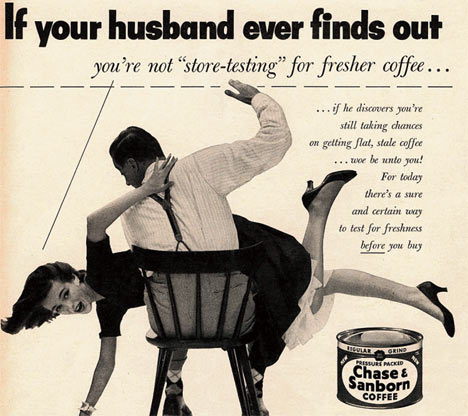
Maybe Brit Hume is thinking of the beautiful 1950s, where if your wife didn’t smell coffee before bringing it home from the supermarket, even advertisements would implore you to beat the living shit out of her until she figured it out. This was basically a cottage industry.

Just to get on the record for this one: That era was worse. Rhetorically, that was a bad time.

Not only is being an asshole an undesirable and unnecessary trait — one that's counterintuitive to getting stuff done and leading a beneficial life — it’s also not why Chris Christie is catching hell.

The media has latched onto this story — this unbelievably boring story about traffic, by the way, which is the world’s sleepiest subject — because this is the definitive role of the press in America: To out precisely this kind of corruption before somebody like this runs for president.

But while we’re at it, remember: The only thing less manly than acting like a tough guy is inquiring where all of the tough guys went, to an audience of nobody.

Tuesday, January 14, 2014

Chad Waterbury - 5 Ways to Add New Muscle in the New Year


Here is a great training article from Chad Waterbury on ways to add muscle for 2014. Chad knows his stuff - I have had better success with his programs than those of any other trainer.

5 Ways to Add New Muscle in the New Year


Now that the new year is finally here, most of us are taking a more critical look at our body. Even though fat loss tips, tricks and pills are the big sellers every January, muscle growth is just as important. Adding quality muscle will not only increase your basal metabolic level (i.e., the calories you burn at rest) but it will also make you stronger and faster – if you add the right kind of muscle.

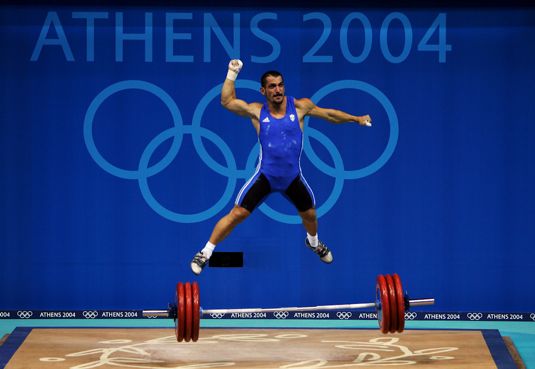
Not all muscle is created equal. Cyclists and Olympic weightlifters both have heavily-muscled thighs, but the type of muscle that makes up the girth is significantly different. Since Olympic lifters alternate between heavy loads and explosive movements, they add size to the fast-fatigable (FF) motor units that consist of the type IIB/X muscle fibers.

The FF motor units are the superstars of athleticism because they’re primarily responsible for making you bigger, stronger and faster. They come into play when you lift heavy or fast. You can also tap into the FF motor units by reaching a very high tension through an isometric hold or an intense squeeze of the muscle in peak contraction.


Cyclists, on the other hand, spend tens of thousands of hours building the slow (S) and fast-fatigue resistant (FFR) motor units. The growth potential of the S and FFR motor units is less than FF motor units – significantly less when you compare the S and FF types. The quadriceps are one of those rare muscle groups that can grow with intense endurance training. Importantly, most muscle groups will shrink when they’re bombarded with a zillion reps at a small fraction of your maximum one-rep load potential.

However, I don’t want to overload this discussion with motor unit physiology. My point in mentioning the O-lifters vs cyclist muscle relationship is that I don’t want you to build just any type of muscle: I want you to build the right kind of muscle. The muscle that makes you a more explosive athlete.

Hypertrophy requires protein synthesis. Specifically, muscle growth occurs when protein synthesis is greater than protein breakdown. This results in a net protein accretion that can be seen in the mirror over the course of weeks and months.

So to start off 2014, here are my top 5 ways to ensure that you add muscle as quickly as your physiology allows. You must provide your body the right nutrients, and train with principles that tap into the FF motor units.

1. Train with loads greater than 60% of your one-repetition maximum


Imagine two identical twins that have to train with a single dumbbell for six months. Give one guy an 8-pound dumbbell and the other guy an 80-pound dumbbell. You know, of course, that the guy with an 80-pound dumbbell will build more muscle over the course of six months. The reason is because he’ll be able to recruit the FF motor units with virtually any exercise he chooses.

In a study of the relationship between exercise intensity (% of one-rep max load) and protein synthesis, subjects who trained with 60-90% of their maximum training load induced the greatest levels of protein synthesis (Kumar et al, J Physiol, 2009).

As a general rule, 60% of your 1RM is a load you can lift 20 times. So if you’re training with a weight that allows more than 20 reps on the first set, it’s not optimal for hypertrophy.

2. Train Explosively with Lighter Loads


On the days you lift with lighter loads that are close to 60% of your 1RM it’s imperative to perform the concentric (shortening) phase explosively. This ensures that you tap into the FF motor units, even when the loads aren’t within typical strength- and muscle-building loading parameters.

When you train with loads that are 80% of your 1RM or greater, the speed of your shortening contraction phase becomes less important. A weight that only allows four or five reps will tap into your FF motor units, even if the movement is slow. However, it never hurts to try to lift heavier loads faster since it will increase the descending neural drive (i.e., the signal between your brain and muscles) more than if you tried to lift the weight slowly.


3. Maximize Motor Unit Recruitment with Each Rep


The way you perform each rep can have a profound impact on your results. I already mentioned the importance of accelerating lighter loads, but there’s more you can do to trigger muscle growth.

Regardless of the training load – assuming it’s greater than 60% of your 1RM – there’s a sure-fire way to get the most motor unit recruitment from each rep: accelerate the shortening phase, squeeze the peak contraction for at least one full second, and lower under control.

By accelerating the shortening phase you’ll recruit additional motor units. Then the intense squeeze of the peak contraction further increases muscle tension to tap into the FF motor units. And when you lower under control it causes more myofibrillar damage than if you just let gravity take over. That extra tissue damage can lead to extra muscle over time.

This three-pronged approach to each rep is much simpler, and more important, when you’re closer to 60% of 1RM. The likelihood of leaving the FF motor units out of the lift is greater when loads are lighter. That’s why it’s essential to perform the “acceleration/squeeze/lower under control” approach. However, when the loads approach 90% of 1RM your focus should be on achieving proper technique with the lift without regard for anything else.

4. Minimize Low-Intensity Cardio


While in graduate school my thesis paper was on the muscle-fiber alterations between strength- and endurance-training parameters. For months I perused every research paper imaginable on the subject. Put simply: whenever possible, your body will convert the type IIB/X muscle fibers that have the most strength and hypertrophy potential into weaker IIA and I types.

So if your goal is to develop more impressive thighs for spring break, keep in mind that low-intensity jogs will impede the growth potential in your quads, glutes, hamstrings and calves. Now, maybe you don’t care about losing some explosive motor units in your legs and would rather have a slimmer waistline? In that case, jogging is probably fine for you.

However, my recommendation is to limit all cardio to 20 minutes, three times per week. An ideal progression is to run faster during those 20 minutes. Put another way, your goal should be to cover more ground in the same amount of time. Those 20 minutes are enough to reap the health benefits of cardio while minimizing the potential negative hormonal impact that low-intensity training can have on your overall muscle growth.

A 40-minute jog might be good for your heart and endurance, but it definitely won’t get you closer to sporting thighs like Tom Platz.

5. Ingest Protein and Carbs Before Training


You can’t talk about muscle growth without mentioning nutrition. And you can’t talk about nutrition without getting into some biochemistry. (Well, you can but it typically won’t teach you much more than you already know.) So here goes.

In order to maximize muscle growth you must leverage the balance between protein synthesis and protein breakdown in your favor. Your body is in a constant flux between build-up and breakdown, and the goal of training and nutrition is to tip the scale toward protein synthesis. That’s how you grow new muscle.

Over the last few years, the AMPK-mTOR signaling system has become a hot topic amongst those with Ph.Ds behind their name. AMPK and mTOR can have opposing effects on muscle growth.

AMPK activity reduces protein synthesis and muscle growth (Wackerhage et al, Strength and Conditioning). Contrarily, the mTOR pathway appears to be a primary driver for protein synthesis. The relationship between the two is certainly a complicated subject with many unknowns. However, it appears that insulin and amino acids can turn on the mTOR pathway – and subsequently enhance protein synthesis.

I’m a proponent of performing cardio in a fasted state when fat loss is the primary goal. Once glycogen from the liver is used up, your body will start burning fat for fuel.

But during the intense strength training that’s necessary for muscle growth, it’s safe to postulate that carbs and amino acids should be available to fuel your efforts. And it appears that the insulin response from carbs paired with the amino acids (namely leucine) from the protein will trigger protein synthesis via the mTOR pathway.

So when I’m working with a client who seeks fast muscle growth, one piece of fruit combined with 20 grams of leucine-rich, whey protein is consumed 15-20 minutes before training. Thirty minutes after training another 20 grams of protein is paired with berries.

You should experiment with different types of fruit to see which one works best for you. Most of my clients favor a banana, apple or orange with this whey protein.

Add these five steps into your training plan and make 2014 the year that you gain quality muscle faster than ever.

Stay Focused,
CW

Monday, January 13, 2014

Scott Sonnon - Rules of Engagement for Becoming a Man

Scott Sonnon offers a compassionate and flexible roadmap for his 9 year old son, a guide to growing up, masculinity, and being a good man. This comes, as one might guess, from the Good Men Project.

Rules of Engagement for Becoming a Man

January 12, 2014 by Scott Sonnon

Scott Sonnon writes a letter to his son on how to go it alone as a man.


Honestly, every day feels like it could be my last. I look at my wife and my children, and I feel as if it could all end at any moment. In reality, this may indeed be very true. But psychologically, I know this feeling of imminent finality originates from having my parents violent divorce when I was only 4 years old. Having had no father in my life, I feel that as a father now myself, I could quite suddenly just… disappear. If I did, will I have said everything that I wanted to say, everything that I could, to my children?

I had published a letter to my daughter last month, that I shared with her as a conversation started. It had brought her and I together in a way I hadn’t imagined. We’re a very strong team. But my son is still quite young, unable to avoid the “SQUIRREL!” distractions in life, so I wrote to him a letter that we will read and discuss in a lucid moment, but it is more of a roadmap for the future, left to him in case these were indeed my final words to him as his Dad,

My “Rules of Engagement for Becoming a Man”

♦◊♦

Little man,

You’re only turning 9 years old, but you asked me to write you a letter, like I had written your sister. Here it is.

Some people say 8 is too young to worry about manhood, but I believe if you don’t know where you’re headed, you’ll have trouble getting there. You won’t be able to spend all your years as a boy, and then suddenly know how to be a man. On your 18th birthday, you may be told be in your identification that you’re an adult, but it won’t magically be in your identity that you’re a man. You’re already trying to put on a man’s shoes in certain circumstances, so if you know which direction to walk, perhaps you’ll have an easier time figuring out how to walk in them… and be okay when you trip.

I did not. I’m not afraid to be honest with you. My father was gone when I was only 4, which means it’s been years since I’ve been your Dad that I’ve had an example of exactly what to do as a father. I don’t have a specific plan to tell you what you’ll need to become a man. I have had to figure it out by myself, and through the father figures in my life as my coaches.

So, I can begin by telling you what I’ve learned a man is not. It’s not an age. No matter how others make it seem, there isn’t a magical age: not 18, 21, not even 45. As you grow older, you don’t automatically become more of a man. When you grow taller in your shoes, deeper in your voice, or hairy on your face, you won’t be any closer to becoming a man. I wish, Son, it was that simple.

A boy thinks and behaves as if he’s the center of the universe. This isn’t about age, but about behavior, action and thought. Even at my age, we can behave and think like boys; including like your Dad does when I make mistakes and behave childishly. I am still practicing the difference between being a boy and being a man. I can still choose to act like a boy, even though I’m 5 times older than you. Behaving like a boy means putting your own interests first (your hunger, thirst, sleepiness, pleasure, happiness, cravings, sadness, anger and so on) and getting those desires met before considering the needs of others.

A boy takes (because he’s learning) but a man gives (because he’s learning more). To become a man, you have to place others’ interests before your own. It’s not easy, because you have to think about how your behavior impacts others, and then imagine what the world looks like from their perspective, and how what you do, think and say makes them feel. Just because you feel you’re right, doesn’t mean you should do it, say it or even think it. That’s a hard one. To do this, you can’t be at the center of your own little world.

You can’t even only think about what a man would do, you have to act upon it. When big challenges come, you don’t even have time to think. You only have time to act; often when you don’t know what you should do. How you act then, tells you if you’re a boy or a man. I think about these challenges a lot, even as a “grown-up.” When they come, I think, will I have the courage to be a man, or will I allow fear to overcome me, and act only as a boy, concerned only about my own needs. Even your Dad won’t know until it happens, what he’ll do. You can only practice becoming a man in the small, daily, simple, normal things, so that when the big, scary, difficult things come, you have had enough practice to act as a man. This is what people mean when they talk about your “character.”

Throughout your life, you’re going to have these opportunities, and just like your Dad, you won’t be great at them all right away. You’ll make mistakes. You’ll fail to live up to your own expectations. You’ll be too afraid to remember your courage, and you’ll act like a boy, rather than remember to practice becoming a man. That happens to us for the rest of our lives, Son. I am still practicing even – and maybe especially – as I write these words to you. You have to find a balance between being firm with yourself, and pulling yourself off the ground, turning toward your fears, and the mistakes you’ve made, owning them and pushing through even when it hurts; with being forgiving and gentle with yourself when you repeatedly get knocked down, get overwhelmed, make huge blunders, and shrink away from them because you’ve hurt yourself from pushing too hard for too long. I haven’t mastered it myself, but I keep practicing.

♦◊♦

I didn’t have my Dad around when I was your age, so I looked to my coaches to act as my father figures. And they did. I grew from their lessons. You will find teachers everywhere when you need them, and even when you don’t, because you need to practice and learn from a teacher before the big challenges come, and after they knock you down, and when you get back up again and again.

Be ready for disappointment. Don’t think it is you. Sometimes you win and sometimes you learn. When you feel disappointed, remember this letter, and read it again, please. Because when you’re disappointed, and hard on yourself, that’s when you’re growing, and being given the chance to become more of a man. At the same time, you’re going to have plenty of happy times, and lots of laughs, victories and achievements. Don’t get too attached to these once they’re over. Celebrate them, and let 'em go. A boy collects them, but a man moves on.

You’re going to experience weakness, failure, vulnerability, worry, surprise and even terror. I can’t protect you from these feelings, but I can help you get prepared for when you feel them. It’s wonderful to feel strong, invulnerable, confident, certain and brave. But sometimes, those feelings seem to disappear for awhile. They’ll come back, but only when you do one thing: get up anyway. Get up when you know you’ve failed a hundred times, when you know it’ll hurt and you feel completely exposed and unprotected, when you know that people will be upset for you when you own up to a mistake you’ve made, when you don’t know at all what to do. You get up, and do the right thing anyway… even if you fail again. That is the difference between behaving like a boy and like a man.

Sometimes I just want to curl up with your Mom and have her hold me, because even at my age, I get overwhelmed; I feel out-gunned and under-prepared, hurt and angry, alone and tired. It’s okay to do that, Son. It’s okay to take a breath, to feel comforted. And then, you’ll know that it’s not yet time, that you could stay within that warm embrace longer and feel safe, but you get up anyway to face it. That Son, is becoming more of a man.

The things you’re going to go through will be different than what I did, Thank God. What you’ll face will be unique to you. I won’t know all the answers, even if you feel like your Dad could face any challenge. I know I don’t know. But I know that I have to do something even when I don’t know what to do. So, I can’t tell you what’s going to happen. But I can tell you for absolute certain, that you will be given exactly what you need to become a man: you’ll either do a great job at it, or you’ll learn how to do it better the next time. I’ve learned a lot, which means I’ve made a lot of mistakes. And I still am. A man never stops learning and practicing.

♦◊♦

You’ll have your own challenges, but you should always know that your Mom and I are behind you, until you’re man enough to go it alone. And then, we’ll still be with you, in one Way or Another. You get to choose how to live your life. You get to choose how you want to face a challenge, how many times you must repeat that challenge until you overcome it. Or if you choose to do nothing about it at all and hope to escape it. That’s your choice. I want the best for you, so I’m going to do my best to always provide you with support and love, but you can choose to not heed my advice. That is your choice, as you become a man.

Being a man sounds like a lot of work, like it’s very hard, and there aren’t many benefits. But let me tell you, Son, being a man is “good.” We get to feel tough and choose to be gentle. We get to feel strong, and choose to be compassionate. We get to feel freedom, but choose to be responsible. Remember what I wrote about “character.” It’s what you decide to do when the pressure is on. There’s no better feeling than that, really: to feel like everything is pushing and pulling you in so many directions, and yet you stand your ground and speak the truth, and act righteously.

When we behave like boys, we can lie, cheat, steal; even hurt others. When we act like men, we keep our word, even when it’s easy not to. We remain reliable, when someone needs us, yet spontaneous and unpredictable. You can be hard on yourself, fair with others, and compassionate with everyone. When you feel pressure from others to do what might seem “fun” but could be hurtful, deceitful or in any way “wrong”, even though it makes you “unpopular” you’ll find the courage to do the “right” thing anyway.

You may think you’ll be able to get away with it, because no one is looking, but there’s always someone watching: the boy inside you who’s becoming a man. He’s always watching. Help him grow; don’t hurt him and keep him small. You’ll hear that voice cautioning you, and sometimes, you’ll ignore it, and make a mistake. It’s okay, your Dad screws up, too. But becoming a man, means owning up to those mistakes, facing an even harder crowd of peer pressure afterward, and doing the right thing eventually. The more you run from it, the harder it will be when you do, but you can ALWAYS clean the slate and start over. Just remember, that the longer you wait to own up and come clean, the more other people will be hurt by your choices, and the harder it will be to face. But you CAN face it. A man should.

♦◊♦

Be proud of who you are, and where you came from. Your name means something. It is a bank account, and you’ve inherited a huge savings. Put more into that account for your sons and daughters. Protect it, honor it, and then pass it to them. Put more into it throughout your life than you take out. Take care of it, because you don’t own your name. You carry it to the next generation.

Your family is the most important; this one with me, your Mom and your Sister, and then one you will create when you become a man. Protect them before yourself. Provide for them above your own desires. Put them first and foremost in your thoughts, actions and behaviors. LOVE THEM AS BIG AS YOU CAN! All of our lessons as a boy prepare us for that privilege as a man. Live as an example to your children. And pass on these lessons I’m sharing with you, with them.

Stay humble for your gifts are God given. Be grateful for your fruits are delicate blessings which come and go. Work hard but be smart about it. Don’t waste a second; invest it in your growth. You’re told to “be happy,” but remember that you won’t always feel happy and that’s okay. Being a man means doing hard things that won’t make you immediately happy, but they’ll make you eventually happy. Often instant pleasure is the worst thing you could feel, because of what it will cost you to stay a boy, and not become more of a man.

Breathe. Take it all in. Let it all go quiet sometimes. Sit. Smile. This is your domain where you get to help as many people as you can. That is an honor. The worries will come; and when an army of them swarm around you, sometimes you start with the biggest guy and knock him down first; other times, you start with the closest and easiest just to get rolling. A lot of times, you’ll feel like you can’t breathe, and you’re never resting. That, too, is what it means to be a man; so when you knock out a few of your responsibilities, remember: sit, breathe, let it go, relax and smile. You’re doing it.

Believe in the nobility in becoming a man. You are learning how to become a King. Even when we act like precocious, pampered, spoiled little Princes, we are all still learning. Sometimes we need to shake off the boyish behavior, stop accepting mediocrity and charge toward our dreams… My mother once told me that she wanted a better life for me than she had; and I do want that for you. But to have a better life, you’ll need to make different decisions than I made. I promise you that I will continue to practicing becoming more of a man, when you come to me as a man, and tell me that you’re choosing to not heed my advice and go a new direction. Together, as two men, we will support each other, as you head off in that uncharted path. (But try your best to consider the counsel of your elders before you make that choice, please. Sometimes, men do know what we’re talking about.)

Most of the time, just like your Dad, you’ll be making it all up as you go along. Be ready to improvise, adapt and overcome. Expect that you will not know how to do something, that no one else can or is willing to do it, and that you’ll have to just figure it out on your own while doing it. There are a lot of different ways to solve a problem. Even if you don’t figure out the fastest or most efficient way, keep going, because you will figure out a way eventually, even if no one else has done it that way before. Just don’t stop going. Fail and fail and fail and fail and one day, you’ll be doing something completely unrelated and the solution will come to you (so remember to step away from a task for a moment if you can, to take a chance for it to come to you.) You’re so much smarter than you can imagine, because that brain of yours comes from God. Those ideas are divine gifts. Treat them as sacred as a church and bring them to life as piously as a prayer.

♦◊♦

You’ll feel tempted to try and figure everything out, and fix all problems you see. Remember that it’s a mystery to be appreciated, so stay curious. Watch how others create solutions. Listen to how they came to their conclusions. Look to understand rather than only to “fix.” Ask as many questions as appropriate when time permits, because you can always at least learn a different perspective on the same problem.

What you say and what you feel aren’t always perceived the same way by others, so you’re going to need to practice being better at communicating all of your life. That’s one of the reasons that you never finish becoming a man. Sometimes you have to say something in order to realize how you really feel, sometimes you have to correct what you’ve said because it came out the wrong way, and most times, you’re going to need to remember that it’s that way for everyone else too; so be patient, ask questions to confirm what they meant in words you understand. Ask them to do the same when they don’t understand you.

Here’s the hard one. No matter how much it will feel like you’re exposing yourself, share how you really feel with those you love. This is the most important type of sharing as a man. You can share things, and tasks, and tools, and thoughts, but sharing feelings is a very hard one because we are told to just “man up” and get over it. Listen, Son, when it comes to those you love, “manning up” IS sharing how you really feel. So, remember that you also need to really listen and hear when loved ones share with you. It’s how you will really connect with them and understand the WHY in their life; and how they can understand the WHY in your life; why we do, behave and think in the peculiar ways we do…

No matter how firm and disciplined you must become in your challenges, remember to love yourself, accept who you are, and always remain true to that man you’re becoming. Others will try to control you, and dictate what you should do in life. Remember to love and honor yourself. Try to be compassionate with them, and acknowledge that sometimes the most compassionate thing you can say to people trying to control your life is, “No.” I will stand behind those, “No,” responses with you, even if you feel totally alone, even if my body isn’t right next to you when you do it.

Truly mean it when saying you’re sorry; because you’ll be saying it a LOT. Expect to do a lot for others without recognition; in fact, although it’s hard for us to realize when we think like boys, but that’s the best kind of thing to do. So, pick your friends carefully, as many people will try to exploit your generosity. Don’t prejudice them but consider their values; will they help you become a better man, and will you help them become better men and women? Do they make others feel bad, and do they honor that you’re becoming a man of character, and hope for them to practice the same? Commit to your word, and you’ll find that your friends are able to do the same more often. It takes time, sometimes years, but how you behave, think and act is like a rock dropped into a lake: the ripples move outward affecting everyone around you.

Honor this body you’ve been given like you would protect and help your own son grow. Be honest with your growth so you can keep healthy. And when your strength wanes, and your health diminishes, remember to respect your Spirit which cannot die ever, and will always be strong no matter how big, scary and difficult the challenge.

Like I said, Son, sometimes you’re going to win; and other times you’re going to learn. It won’t seem fair when we think like a boy, but as you become a man, you’ll see that you create fairness: you equal things out for others, when what they’ve experienced has been unfair to them, you will be the one to extend an anonymous helping hand. It’ll keep you humble, and keep you busy.

So, remember to laugh… and cry. These are two of your best tools as a man. Laugh at yourself, and cry for others hardships. Being more human means you’re becoming more of a man.

Things in life may come and go, but your character is yours for life. Appreciate things while they’re here, and help others when they’re not. Because that “character” of yours is the only real thing that makes you a man.

You have everything you need to “make up” this life for yourself. You can do it. Whatever you need will be there for you when you need it, once you commit to improvising and taking action even when you don’t know what to do…. especially so.

Whatever happens, no matter today or 70 years from now when I’m gone, know that I am always proud of you, and the man you are becoming.

I love you so much, Son.

Dad

—————————————————

Very Respectfully,
ScottSonnon


Photo credit: author’s own
About Scott Sonnon
Scott Sonnon is a martial art expert, fitness coach, and wellness speaker. He overcame childhood obesity, learning disabilities, and joint disease, to be named by Men’s Fitness Magazine, one of the top trainers in the world. He came out of retirement at the age of 40, for the 2010 World Martial Art Games, and won 5 gold medals, against fighters half his age and 100 lbs heavier.
 

Visit him at: rmaxinternational.com/flowcoach & See his Tedx Talk on Suppressed Genius

Sunday, January 12, 2014

Findings from a Large and Recent Study of U.S. Paternal Involvement


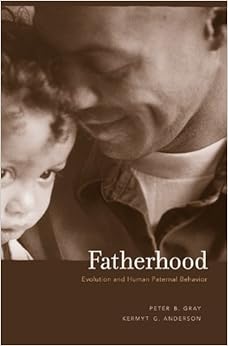
Peter B Gray is co-author, with Kermyt Anderson, of Fatherhood: Evolution and Human Paternal Behavior (2012). In this post from their Psychology Today blog, The Evolving Father, Gray takes a quick look at new findings on the involvement of fathers with their children.

Some Father-Friendly Data

Findings from a large and recent study of U.S. paternal involvement

Published on January 8, 2014 by Peter B. Gray, Ph.D. in The Evolving Father


Data on Dads--Oh Boy

If you are a father of a 3 year old, how frequently have you read to your child the past four weeks? If you are the father of a 10 year old, how often have you taken your child to activities the past four weeks? If you delve into the results of a recent report issued by the Centers for Disease Control (CDC), you can find answers to eight of these kinds of questions from a nationally representative probability sample of over 10,00 men aged 15-44, about 4000 of whom were fathers. What are some highlights of the study? And what are some qualifiers and interpretations?

One of the themes highlighted during the late-December 2013 media rush on this study was the high involvement of fathers. Most residential fathers who fell into the study engaged in most of the activities they were asked about. As an example, 93% of coresidential fathers with a child aged 5-18 years of age reported eating a meal at least several times a week or every day with their child during the past four weeks. As another example, some 84% of fathers reported reading at least once a week with a child less than five years of age. So much for slacker dads, these figures suggest.

Another theme of the findings is that father involvement differed greatly depending on whether a father lived with a child or not. For the eight behaviors asked about (e.g., playing with a child), fathers who lived with a child reported engaging in these more often than fathers who don’t live with a child. Just over half of non-residential fathers reported not eating any meals with their child aged 5-18 or reading to their child under age five during the past five weeks. Dads are obviously much less involved if they don’t live with their children, even if that is hardly surprising. Coresidential fathers also perceive they are doing a better job at fathering (44% reporting very good) than their nonresidential counterparts (21% very good). Yet from another angle, it’s astonishing that non-residential dads do anything for their kids. As Kermyt Anderson noted in our Fatherhood: Evolution and Human Paternal Behavior book, one definition of our species’ uniqueness could boil down to the claim that, “humans are the species in which males continue to invest in offspring after the parents cease to be in a sexual relationship.” (p. 130)

Besides residential status, study findings were presented with respect to fathers’ age, cultural background, relationship status (marriage vs. cohabitation) and education. These factors were also associated with variation in paternal involvement. Older fathers reported playing less and reading more than did younger fathers, for example. Nonresidential Hispanic or Latino fathers were less likely to have eaten meals with their child aged 5-18 the past four weeks than were African American or White fathers.

With this bonanza of quantitative data on U.S. paternal involvement, what are some spins suitable to an “evolving father” blog? As some reports have noted, the data suggest some incremental increases in paternal involvement in the U.S. since the last comparable report in 2002. Other sources of data (e.g., time diaries) have shown increases in the time men spend with their kids, including some specific activities like cleaning or diapering them, in the past few decades. So by such measures it appears that U.S. dads are engaging in more direct care and interaction with their children.

Some other key elements are not included in the data. Most importantly, there is no information on fathers’ economic contributions. In the U.S. and elsewhere, fathers continue to be scrutinized carefully for their ability to contribute to the financial and material support of a partner and children, making the lack of such data here a notable gap. While it can be refreshing to see the spotlight on fathers shift from a focus on breadwinning to lots of direct behavioral involvement, more complicated discussions about contemporary male work/family tradeoffs, female work/family tradeoffs, and a sexual division of labor within families need both pieces. The report also ignored any potential differences between step- and genetic fathers, combining both groups within the category of coresidential fathers. Given potential motivational and material differences between step- and genetic fathers, that also warranted a distinction, even if to show previously-documented findings such that coresidential stepfathers may me more involved in their stepkids’ lives than those same children’s nonresidential fathers.

In summary, the data on American dads and their direct care are richer with this study, even if we can push those data into all kinds of other conversations (even a panel discussion at a local NPR affiliate).

Saturday, January 11, 2014

Charles Staley - 14 [Traning] Tips For a Successful Year

 
Coach Staley hitting a 475 lbs deadlift

From strength coach Charles Staley, here are 14 excellent tips to make 2014 your most successful training year ever. Three of his primary "What You Need to Know" points are the foundation of my own training program:
  • Muscles should be trained 2-3 times a week, which means full body workout splits may be ideal. However, you don't need to use the same exercises each workout. 
  • Training for strength first and hypertrophy second creates more potential for both adaptations.
  • The more dissimilar neighboring training sessions are, the closer your can pack them. The closer you can pack them, the faster you'll progress.
In my own program, I train most muscle groups several times a week, using full-body protocols. However, only two (at most) of those days focus on heavier weights, the other days are variations of bodyweight exercises and metabolic conditioning.

It's important to be clear about your goals. For example, my goal is not size - I am training to maintain strength and muscle mass while increasing muscular endurance. My target is a series of spring cycling time trials - 20K (12 miles) and 30K (18 miles) ridden as fast as humanly possible.

As much as I like being 195 lbs and really strong, cycling is a new sport for me, and I have found in my first year of riding that being 195 lbs is not conducive to speed. So I want to be around 185 lbs with as muscle and as little fat as possible.

Rather than building size, I want to increase power. Consequently, I do a lot of metabolic conditioning with weights, and I use explosive movements like cleans and snatches. I'm also adding more jumps - box jumps, broad jumps, squat jumps, and so on.

Anyway, Charles is the man - he knows what he is talking about. He is a champion powerlifter in his own life, and he has trained other powerlifters, athletes, and fitness/bikini competitors.

14 Tips For a Successful Year

by Charles Staley | 01/06/14 | T-Nation


Here's what you need to know...
• Do what you need to do in the gym, but don't be afraid to do what you like, too. Fifteen minute "free blocks" at the end of a session can work well for this.
• Muscles should be trained 2-3 times a week, which means full body workout splits may be ideal. However, you don't need to use the same exercises each workout.
• Training for strength first and hypertrophy second creates more potential for both adaptations.
• The more dissimilar neighboring training sessions are, the closer your can pack them. The closer you can pack them, the faster you'll progress.


1. Choose Needs Over Likes, But Allow Both


What you need to do is far more important than what you like to do, but the former can't survive without the latter.

Doing what you like to do fuels your motivation and it cultivates consistency. But by pure definition, we tend to like what we do best – strong people like to lift heavy, mobile people like to stretch, people who have good endurance like to jog. All of this is fine, as long as doing what you like doesn't replace doing what you need. We all like eating carb/fat meals, but what we need is protein.

T Nation contributors Dan John and Eric Cressey have a nice strategy for this, which is doing targeted, high-payoff mobility drills between sets of lifting as "fillers."

Another strategy is the use of a "free period" at the end of each workout where once you've done your programmed lifts, you can spend 15 minutes on whatever it is that makes lifting fun for you. After all, most "bad" things aren't really intrinsically bad – they're only bad when they replace the good.

2. Train Muscles Every 2-4 Days


Elevated protein synthesis from a workout lasts only 2-3 days at most, and that's if you really go after it. So if maximum hypertrophy is your goal, you need to find a way to train each muscle (or at least the ones that are most important to you) about every three days; twice a week probably isn't quite enough.

One way to structure your training to accommodate this reality is to use full body workouts about three days a week, give or take. You don't need to use the same exercise every time; you just need to hit the muscle with high frequency. So if you're training lats three days a week, you can (and should) rotate between pull-ups, barbell rows, and dumbbell rows.

3. Train Strength And Hypertrophy Every Session


If your goals include both strength and hypertrophy adaptations, you'll be better served by training both qualities every training session. There are two reasons for this.

First is the need for frequent hypertrophy stimulation, as I explained previously. Second, by working up to a heavy set or two and then backing down for 1-2 "back-off" sets, you'll be taking advantage of post synaptic activation (PAP), which simply means that you'll be able to complete more reps with something in the 6-12 range after performing a heavy (but not maximal) effort in the 1-3 range.

In other words, training for strength first and hypertrophy second creates more potential for both adaptation.


4. Maintain A Flexible Structure


We all know the stereotypical dieter who, after staying the course for five weeks, slips up by having one doughnut and then decides that he's blown it, and it quickly escalates into a multi-day gluttonous free for all.

Lifters do the same thing with their training programs. They set up a rigid 12-week training program, but then if they miss a designated set or rep somewhere along the way, it unravels them psychologically and they rapidly lose motivation, undoing weeks of good progress.

Look, structure is important, and most lifters need more of it. But without flexibility, structure becomes a stern taskmaster that few of us can satisfy long term. Stay focused on what matters most – which is long term consistency and progress – and when those occasional slip-ups happen (and they will) just wipe the mental slate clean and keep plowing forward.

One very effective way of maintaining a flexible structure is by employing optional exercises and (sometimes) even optional workouts. Once you've identified what's really important, classify those elements as compulsory, meaning that you will do them, or at least make your very best effort to do so. Everything else is optional.

I typically do three compulsory sessions per week, and then Sunday is an optional "pick up" day. Most weeks I do that Sunday workout but on the occasional times when I miss it, it doesn't freak me out since it's an optional day anyway.

5. Use More Than One Form Of Progression


Progression is both the most necessary component of training and also the most misunderstood. Most start too heavy and progress too fast (after all, a 5 pound jump every week is a 260-pound jump in a year), but there's another, less obvious mistake that many make – we forget there are numerous ways to increase the difficulty of a workout.

The more experienced we are, the more important it is to employ as many of these methods as possible. Along with adding weight to the bar, try these other result-producing progression tactics:

• Rest less between sets
• Use greater range of motion
• Introduce short pauses at or near sticking points
• Use better technique (knee tracking, neutral spine, etc.)
• Use less "psyche up" on heavy lifts
• Use less supportive gear (belts, wraps, etc.)
• Train alone or with no music
• Use fewer warm-up sets than usual
• Work harder than usual on warm-ups (pre-exhaustion)

6. Set And Break Rep Records


Lifters who value their one-rep max strength shouldn't neglect the value of what some coaches call rep records. The more experienced you are, the harder it gets to set a new one-rep max. The best hack for this is to aggressively chase new 3RM, 5RM, 8RM, 10RM, (and so on) rep records. Not only do these high-effort sets promote hypertrophy and work capacity, they also bolster confidence.

Some the most successful powerlifting programs available today, including Jim Wendler's 5/3/1, implement this important strategy. Get after those rep records. Before long, they'll bleed into new 1RM records.

7. Use Contrast To Promote Recovery


Fatigue is specific to the type of work that produced it. Therefore, the fatigue generated by a 1RM squat will have relatively less negative effect on a set of 10 chin-ups than it will on another 1RM squat attempt.

For this reason, when you program your training, make sure that neighboring workouts are as dissimilar as possible. This concept leads to the idea of upper versus lower body days, as well as strength workouts that follow hypertrophy workouts.

Bottom line, the more dissimilar neighboring training sessions are, the closer your can pack them. The closer you can pack them, the faster you'll progress. 


8. Respect Paretto's Principle


An economist conceived one of the most important concepts that you can apply to your training. It's not surprising really, since economics is the science of satisfying unlimited wants with limited resources.

You and your training are an economy of sorts – you've got big goals but limited resources (time, energy, orthopedic health, knowledge, etc.), so it's critically important to apply these resources intelligently.

The best way to do this is to identify the 20% of your efforts that produce 80% of your gains, and then get after them big time. What exercises, supplements, mobility drills, set/rep schemes, and training partners bring out the best in you? Whatever they are, find a way to maximize them in your training.

9. Half-Ass It Instead of Skipping It


Absolutism is the most subtle form of sabotage. Applying the 80/20 rule, it's clear that in a workout where you squat 3 sets of 10, you're getting the majority of benefit from the first set. While that shouldn't be taken as a license to sit back and take it easy, it's a very useful reminder if you're the type of person who's too hard on himself.

We all have days where we wage an internal battle of wills to drag ourselves to the gym. My advice is to act "as if". Go through the motions, get dressed, get in the car, drive to the gym, and you'll find your internal homing mechanism kicking in. Even if you only do the first exercise in your planned workout, you'll still be much better off than had you not gone at all.

10. Give Yourself A Running Start


When embarking upon any type of new program, start with weights that feel too light, regardless of the set/rep scheme you employ. This will ultimately result in a longer progression and will lead to a higher peak than if you started heavier.

Let's say your current max bench press is 250 pounds and you start a new program that calls for 5 sets of 2 reps every Monday. If you start with 175 pounds, it'll feel too light. However, in just 6 weeks of 5-pound jumps, you'll already be at 205, and in 10 weeks, 225. If you can manage that type of patience, you'll bang out 5 sets of 2 like child's play with what was 90% of your max, which sets you up for a nice PR in the near future.

If you can't forgo immediate gratification and you start with say, 200 pounds, you'll be much less likely to break through to a new PR. Think of it like trying to shoulder-slam your way through a locked door – if you position yourself right against the door and push, you won't succeed. But if you back away a few steps and take a running start, you'll gather momentum and smash right through.

11. Realign Actions With Goals


Professional soldiers are familiar with a concept called "the fog of war," which basically means that when the shit hits the fan, you tend to run on instinct and revert to your former training.

Life is like that in many ways. We become so immersed in what we're doing, we sometimes lose track of why we're doing it, and (worse) whether what we're doing is taking us closer to our goals.

I urge you to constantly revisit your goals and whether your current actions are taking you closer to them. We so often start out with a specific goal (to improve body composition, for example), and then identify methods ("clean eating" for example) that will accomplish that goal.

The problem is that gradually, without us even noticing it, our methods tend to become our goals. Ever so gradually, we lose sight of the original goal because we've become so focused on the method we've chosen to get there. We take so much pride in, say, eating a certain way, that we fail to notice that perhaps it isn't the best route to our original goal.

Learn to distinguish the means from the ends. Get laser-focused on your goals, but maintain an emotional detachment from the means by which you achieve them. 


12. Do Your First Competition


The simplest and most obvious thing would be to either bench or deadlift in a powerlifting meet. Yes, that's right, you don't have to do all three lifts, which is a great way for newbies to get into the sport.

Competing fuels your motivation. It gives meaning and purpose to your training. It also opens up social channels to other lifters and coaches who can further enhance your lifting. I can't stress how big a step this is for anyone who hasn't ever competed.

I've competed in martial arts, track and field, Olympic weightlifting, and powerlifting, but my next challenge – which really takes me out of my personal comfort zone – will be to compete in the StrongFirst Tactical Strength Challenge this coming April. This competition involves a 1RM deadlift, one set of tactical pull-ups for maximum reps, and finally, as many kettlebell snatches as possible with a 53-pound bell in 5 minutes. Wish me luck, I'll need it!

13. Insure Training Drills Are Suited For You


As much as many coaches harp on the necessity of doing certain lifts (like deadlifts, deep squats, get-ups, or whatever), not everyone is built to safely perform every imaginable movement.

Not everyone, for example, has the mobility or hip structure to safely perform deep squats. Not everyone should be attempting muscle-ups, or Olympic lifts, no matter how great they might be for those who can perform them safely.

Find movements and training methods that suit your body's natural anatomy and capacities. If you can't maintain a neutral spine on a deadlift or a deep squat, perhaps you can with block pulls or a higher squat position. Or maybe you're better suited to kettlebell lifting than barbells.

Maybe you'll never be a decent bodybuilder, but you have what it takes to excel in strength sports, or vice versa. The point is, don't beat yourself up trying to excel at something that'll never happen.

14. Focus On Point A


Most success literature focuses on goals – Point B's if you will – but I urge you to put a little thought into where you're starting from. Specifically, I'd like you to reexamine your beliefs about yourself and your current practices, and determine if these beliefs are accurate or not.

Many of us hold beliefs about ourselves that simply aren't true. If you don't have an accurate picture of where you're starting from, you'll never reach your destination.

It's been my experience that most of us greatly underestimate our own abilities and potential, because our achievements up to this point are likely the result of lackluster efforts, mistaken beliefs, or both. Consider reexamining the quality of your efforts and the accuracy of your long-held beliefs. Perhaps the best way of doing this is to expose yourself to people and ideas that differ from your own.

Jim Rohn is famous for his suggestion that you're the average of the five people with which you spend the most time. I'd also extend this idea to the books you've read as well.

Onward and Upward


Success in the weight room is all about getting out of your comfort zone, right? As it turns out, the gym is a microcosm for life, as making personal and intellectual progress requires getting out of your comfort zone as well.