Friday, May 23, 2014

Fitness Friday - Fitness News and Information You Can Use

In this week's Fitness Friday, we get the truth on testosterone replacement for men, a review of Dan John's new book, a look at powerlifting squats vs. Olympic squats, the pros and cons of counting calories, and the good, the bad, and the ugly in powerlifting.

Testosterone Doesn't Up MI or Stroke: May Be Protective?

Miriam E. Tucker
May 18, 2014

LAS VEGAS — Contrary to recent findings, a new retrospective study of data from 40 specialized clinics around the United States has found that testosterone therapy in men is not associated with an increased risk for myocardial infarction (MI) or stroke and may even be cardioprotective.

The late-breaking results were presented here at the American Association of Clinical Endocrinologists (AACE) 23rd Annual Scientific and Clinical Congress by Robert Tan, MD, director of the Opal Medical Clinic, Houston, research director of the Low T Institute, and clinical professor of family and community medicine at the University of Texas.

Among 19,968 hypogonadal men who received testosterone therapy during a 5-year period (2009–2014) at Low T Centers nationwide (www.lowtcenter.com), the risk for MI was 7-fold lower and the risk for stroke 9 times lower compared with samples from the general population. Further, there was no evidence of worsening of preexisting MI or stroke in patients treated with testosterone.

"There has been a lot of hype and concern....I want to try to explain the other side of the story," Dr. Tan said in introducing his presentation.

He told Medscape Medical News, "When compared with other databases looking at rates of MI and strokes, it appears testosterone is cardioprotective."

* * * * *

From Built Lean, a review of Dan John's new book, Intervention: Course Corrections for the Athlete and Trainer.

Intervention By Dan John Book Review

by Marc Perry, CSCS, CPT | May 20, 2014


I first came across Dan John at a Perform Better Summit a few years ago. Since then, I’ve heard his name pop up over and over again.

More recently, BuiltLean contributor Steve Bergeron reviewed the 8-Week BuiltLean Transformation Program I developed. Steve suggested I incorporate more hip-dominant movements and recommended I check out Intervention: Course Corrections for the Athlete and Trainer by Dan John. I bought the book and excitedly starting digging into it.

Dan John is an accomplished strength coach, discus thrower, and Olympic lifter. He has developed a large following of trainers and coaches who enjoy his no frills, strength-based approach to getting very strong and very athletic.

* * * * *

From Breaking Muscle (be sure to check out the video of Donnie Thompson working his way up to a world record 1305lb squat):

Powerlifting Versus Olympic Squats: Which Is Better?

Robert Camacho
Contributor - Strength and Conditioning, Injury Prevention and Rehab
More Articles from this Author

Olympic Squat

Generally speaking there are two ways to squat: powerlifting or Olympic style. Even though they are both a squat and legitimate techniques in their own right, there is a bit of a difference when considering the utility and risks of each method.

Both squat styles involve tossing some weight on a barbell, placing it on top of your shoulders, and then dropping your butt down. But within that, there are some significant biomechanical differences between the two. These differences are mostly related to two factors: bar and foot position. Olympic squats are typically performed high bar with a narrow stance, while powerlifting are done low bar with a wide stance. Let’s take a look at some examples.
By the way, there is also the bodybuilder squat, with narrower foot position and the bar higher on top of the traps.

* * * * *

From T-Nation, Dani Shugart on counting calories, who should and who should not.

Calories: Should You Be Counting?

by Dani Shugart   
05/20/14


Here's what you need to know...

  • Because their instincts are bad and their appetite is low, skinny guys seeking gains should spend some time counting calories.
  • Physique competitors are at risk of undereating more than overeating. Counting calories and macros keeps them on task when their contest-crazy minds get out of hand.
  • Average overweight people are better off focusing their efforts on other areas, like food quality, than counting every little morsel.
  • For most people, calorie counting is a useful but temporary strategy. If it makes you neurotic, you've been doing it too long or it's just not for you.
It takes a special kind of person to actually want to keep track of every last thing he consumes. He measures it, analyzes it, then determines whether or not he should adjust it. He plays accountant with his body. Some calorie accountants are very successful. They build more muscle, lose more fat, and become aware of deficiencies. Some of them even develop the skills to masterfully manipulate calories from different sources and achieve a specific look for a specific event. Anal retentive tendencies pay off for them.

But others play accountant and get nothing back for their efforts. They plug their weight into a formula or online calculator and track every morsel, then make either temporary progress or none at all. Why does it work for some people but not for others? While working with clients it's become clear to me who benefits from counting and who would get better results by placing their focus elsewhere.
* * * * *

Finally, also from T-Nation, here is Charles Staley on powerlifting.

Powerlifting: The Good, Bad and Ugly

by Charles Staley   
05/19/14


Here's what you need to know...
  • Powerlifting is awesome, except for some of the fat physiques, the gaggle of federations, the rampant drug use and the supportive garb that allows you to artificially bench more than you can deadlift.
  • The rise of raw powerlifting has been positive. It's more relatable to the average lifter and appeals to those who'd rather see a more honest display of strength.
  • Despite its flaws, powerlifting is a primal rush, and signing up for a meet is one of the best things you can do to ramp up your training progress.
Back in the days when I was involved in Olympic-style weightlifting, I tended to view powerlifting with some disdain, which, by the way, is common in weightlifting circles. Weightlifters love to bag on their iron brothers for being fat simpletons who over-rely on high-tech supportive garb and who don't have the technical skills necessary for "advanced" skills like the Olympic lifts.

Powerlifting deserves some of this reputation. A quick search on YouTube will pull up video after video of bloated 350-pound dudes quarter-squatting about 40% more than they could actually squat to parallel without all the multi-ply supersuits and wraps. However, judging the sport by these unfortunate examples is about as fair as judging the sport of weightlifting by looking at some of its obese super-heavyweight competitors. The truth is, powerlifting is going through some very positive changes lately, which I'll discuss in a bit. For now though, I'd like to briefly share my personal experiences with the sport so that you have a bit of insight into my perspective.

I participated in my first raw competition in June of 2010 at the age of 50. Like many new competitors opt to do, I did a partial meet – in this case, I only competed in the deadlift event. One thing that's really nice about powerlifting, especially for newbies, is that you can just do one or two events if you'd like. This way, you can get started with a minimum of stress and anxiety. I lifted well and met lots of nice folks. I was hooked. Since then, I've gone on to win the World Championships for my age/weight category in the 100% Raw Federation. As I write this, I'm gearing up for my next meet.

I confess that I'm not exactly cut out to be a powerlifter. In fact, during a recent discussion with my insurance agent where I mentioned that I was training for a competition, he blurted, "Oh, you do triathlons?" At 198 pounds, powerlifting would reward me dearly for being 5'7" as opposed to 6'1", but so be it. I'd also be better off being 24 rather than 54, but guess what? I've decided to compete on my own terms.

Sure, my lifts would skyrocket if I brought my bodyweight up to 250 or so, but so would my waistline, and I'm not down with that. I'm using competitive powerlifting to test myself at my current height and weight, not to do whatever it takes to add a few pounds to my total. Keep this in mind as I transition to the less-appealing aspects of powerlifting.

Thursday, May 22, 2014

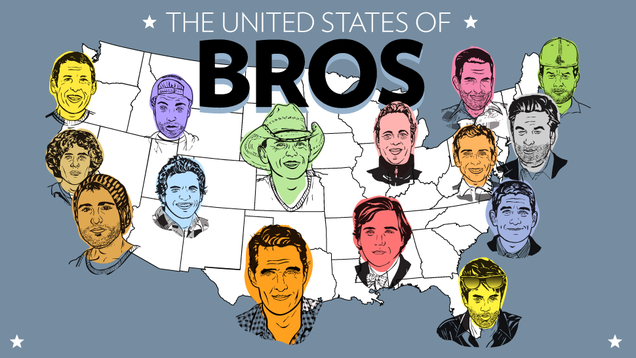
Jared Keller - The Tortured Rise of the All-American Bro (Pacific Standard)

The United States of Bros: A Map and Field Guide

This article by Jared Keller comes from Pacific Standard - it offers a first-person account of a man who identifies himself as a "bro."
For all intents and purposes, I am a bro. I identify as a bro in the sense that, as Jezebel so aptly put it, I am “an adult male whose social life revolves around collegiate homosocial bonding and who also presents himself in a way that assimilates to the prevailing aesthetic of men with similar socialization patterns.”
From a much more critical, dismissive perspective, John Saward says of "bros," writing in Vice, “This is his dream. This is his life. He is the worst person alive, and he has no idea.
 He is a walking scorched-earth policy. He takes what he wants to satisfy some hedonistic impulse, and then he leaves her sobbing in a hallway with her friend on the other line. He wrings every moment of every drop of novelty. He is doing shots and never with a chaser, because moderation and restraint are for women and faggots and children. The only way to be a real man is to be a real man as ferociously as humanly possible. He goes all-in; he gets shredded and ripped and defines his life by aggression and competitions. He buys the hamburger that comes with two other hamburgers and a chicken cutlet on top of it. Why? Because it’s three hamburgers with a chicken cutlet on top of it.
Keller asks, and tried to answer in this article, some very challenging questions:
Where did this strange American Bro come from, this alien, fist-pumping, Jager-bombing avatar of modern sexism, racism, and nihilism? And why does he loom over every male friendship, every moment “with the boys”? Am I doomed, by our culture, to live as a jerk, a social parasite made fat on the sweet lard of privilege, with my male friends and colleagues? At what point did all strong homosocial relationships between men become conflated with the most vile and socially abhorrent behavior and egregious sartorial choices?
I'm fortunate, I guess, to have long, long ago left the "bro" stage of my life, sometime in 20s. When I get together with male friends, it's usually over coffee or lunch, not Jager-bombs. Our conversations do involve our work, but also our hobbies, or home repairs (do bros own homes?), or interesting books or articles we have read.

This is longish, but it is certainly deserving of a good read.

The Tortured Rise of the All-American Bro

Pacific Standard
By Jared Keller • May 06, 2014


cornell-fraternity
A fraternity building at Cornell University (Photo: Pete Spiro/Shutterstock)


The misogynist portrait of modern American masculinity may be a historical accident. Here’s how to fix it.

In April, my college buddies and I drove up to Maine to spend the weekend getting drunk and bouncing around downtown Portland for a former roommate’s bachelor party. Of all the people I’ve met and friends I’ve made—through high school and internships and college and jobs—these random goofballs are my closest friends. We headed north to celebrate impending nuptials, but at its core this weekend was about, as my girlfriend says, “just hanging out with the bros.”

For all intents and purposes, I am a bro. I identify as a bro in the sense that, as Jezebel so aptly put it, I am “an adult male whose social life revolves around collegiate homosocial bonding and who also presents himself in a way that assimilates to the prevailing aesthetic of men with similar socialization patterns.”

But according to Vice, my friends and I are the worst thing to happen to Portland since the great 1866 fire that leveled churches, destroyed the city’s commercial center, and left nearly 10,000 homeless. On an off day, I should be on Boston’s Orange Line, stinking of bourbon and slurring, and “cackling at the ceiling, electrified by the degree to which he does not give a fuck,” John Saward writes. “This is his dream. This is his life. He is the worst person alive, and he has no idea.”
He is a walking scorched-earth policy. He takes what he wants to satisfy some hedonistic impulse, and then he leaves her sobbing in a hallway with her friend on the other line. He wrings every moment of every drop of novelty. He is doing shots and never with a chaser, because moderation and restraint are for women and faggots and children. The only way to be a real man is to be a real man as ferociously as humanly possible. He goes all-in; he gets shredded and ripped and defines his life by aggression and competitions. He buys the hamburger that comes with two other hamburgers and a chicken cutlet on top of it. Why? Because it’s three hamburgers with a chicken cutlet on top of it.
I’ve been a member of male-centric institutions my entire life—sports teams, a summer camp staff, a fraternity—and still, somehow, my friends and I don’t seem to quite match this portrait of the American Bro. My weekend habits, though boisterous and uncouth, don’t sync with the totally terrifying acid trip of masculinity captured by Vice. Though I have spent time in the presence (or wake) of the horrific men described by Saward, I have never done 75 push-ups because NO REGRETS. I don’t know anyone named Rachael who wants it, she so wants it, bro. None of my fashion choices match Jezebel’s amazing geographical exhibition of the Great North American Bro. Even BuzzFeed’s “How ‘Bro’ Are You?” quiz considers me vaguely well-adjusted, despite the fact that I make duckface in way too many photos and have been known to say “duuude.” “Congratulations on having exquisite taste,” the BuzzFeed results page says, “and feel free to procreate as much as you like!”

Where did this strange American Bro come from, this alien, fist-pumping, Jager-bombing avatar of modern sexism, racism, and nihilism? And why does he loom over every male friendship, every moment “with the boys”? Am I doomed, by our culture, to live as a jerk, a social parasite made fat on the sweet lard of privilege, with my male friends and colleagues? At what point did all strong homosocial relationships between men become conflated with the most vile and socially abhorrent behavior and egregious sartorial choices?

The repressive, hypermasculine bro that stalks your local watering hole and pisses in the street is a modern, anxious manifestation of homosexual panic, an allergic reaction to the mainstreaming of gay culture.

Ironically, the history of homosexuality in America may hold the secret to the modern hyper-masculine bro. Prior to the 1970s, the majority of psychological literature on homosexuality was based on the presumption that the practice was a mental disorder, a view that coincided with advances in medicine at the end of the 18th century and the rise of psychoanalysis in the U.S. and Continental Europe. Homosexuality was eventually declassified as a mental illness in 1973, and all references to homosexuality as a psychiatric disorder were removed from the American Psychiatric Association’s Diagnostic and Statistical Manual of Mental Disorders (DSM). Despite this, gays and lesbians were still met with apprehension and hostility by the American public: In 1988, only 11 percent approved of same-sex marriage, and while that number increased to 46 percent by 2010, 40 percent of Americans remain opposed to it.

But decades of classifying homosexuality as a “dysfunction” in America left a lasting mark on all homosocial relationships. In modern Anglo-American society, writes gender theorist Eve Kosofsky (who coined the term “homosocial”) in her classic study “Between Men,” there’s a significantly greater disconnect between male homosexual and homosocial bonds, whereas there’s a much more psychosocially continuous relationship between female homosexual and homosocial bonds. The discontinuity between male homosociality and homosexuality results in male homosocial relationships taking on the form of “male bonding,” which is characterized by homosocial desire and intimacy (say it with me now: “broing out”) but marked, most notably, by homosexual panic, the fear of this attention gliding over into something a little more taboo, a little more risqué. In an attempt to emphasize heterosexuality, fear or hatred of homosexuals and misogynist language developed. The bro, in short, is a culture-wide defense mechanism against the gay.

This social split between male homosexual and homosocial relationships is why the sort of homosocial bonding on display in black-and-white photographs of men throughout American history all but went extinct by the middle of the 20th century: homosexuality had become a pathologized identity, one that carried connotations of psychological dysfunction and perversion. “The shift meant sitting for a portrait in your best bro’s lap was verboten; more important, though, some have argued that it has led to a wide-scale deprivation in boys and men of intimate touch that is important to their development and mental health,” Kat Stoeffel explains at The Cut, discussing the rise of touch isolation. “Men who hold hands, sling an arm around each other, and say ‘I love you’ risk being labeled gay at best and violent homophobic backlash (either from observers or their beloved bro) at worst.”
Male physical affection may be making a comeback: According to a recent study in British journal Men and Masculinities, 98 percent of the heterosexual men interviewed had shared a bed with another man, while 93 percent had cuddled or spooned with one, evidence of, as the authors write, “expansion of changing conceptions of masculinity in contemporary culture.”

The repressive, hypermasculine bro that stalks your local watering hole and pisses in the street is a modern, anxious manifestation of homosexual panic, an allergic reaction to the mainstreaming of gay culture (and, by extension, a loss of cultural power and sexual stability). The modern definition of manhood came about in strict domination over the feminine, both sexually and behaviorally. “Male-male relations organize and give meaning to the social and sexual involvements of young heterosexual men in a powerful way,” writes researcher Michael Flood in a 2008 issue of Men and Masculinities, an exploration of how male homosocial bonding affects men’s relationships with women. “Homosocial bonds are policed against the feminizing and homosexualizing influences of excessive heterosociality, achieving sex with women is a means to status among men, sex with women is a direct medium of male bonding, and men’s narratives of their sexual and gender relations are offered to male audiences in storytelling cultures generated in part by homosociality.”

If modern misogyny is a virus, a symptom of psychosexual anxiety and irrational fear of homosexuality, then institutions like fraternities make for an excellent petri dish. Alcohol consumption is the primary way in which men “negotiate masculinities in leisure activities,” writes Lois West in the Journal of Men’s Studies in a 2001 examination of two American drinking cultures, fraternities and the U.S. Navy. Collective boozing—at frat houses, on shore leave, at sporting events—can facilitate the creation of masculine homosociality by “developing a sense of community and trust” around perpetuating certain kinds of American masculine traditions, West writes. But alcohol-driven social interactions are also used to inhibit negotiations over other hierarchies of identity and social boundaries relating to class, religion, race, ethnicity, and sexuality. “Status hierarchies get negotiated through competitive drinking games, humor, and heterosexual significations.”

One of the more troubling features of the modern bro isn’t the sad, relatively recent dose of anxiety that fuels his behavior, but the cultural power he maintains. Male-heavy organizations like the armed forces and college fraternities have the institutional power to safeguard the more violent, despicable, and misogynistic behaviors of young men. The prevalence of sexual assault on college campuses, the site of social and professional development for America’s workforce, is especially troubling. Nearly 20 to 25 percent of female college students will experience rape or attempted rape during their time on campus, according to the Department of Justice; and according to research by the Center for Public Integrity, abusive students rarely receive more than a slap on the wrist. Some universities even rebrand rape as “non-consensual sex.” College sexual assault has become such a frightening epidemic in America that the White House has pressured universities to do more to combat it.

Fraternities, once social organizations focused on personal development and scholastic achievement, have devolved into engines for misogyny and assault. And they can breed future horrors. “Future fraternity brothers are often coddled by yes-men athletic coaches and administrators in high school, where they learn that they can argue their way out of class and — as nationally publicized cases like Steubenville and Maryville show us — rape accusations,” Katie Baker writes. “‘[A]n astonishing number of CEOs of Fortune 500 companies, congressmen and male senators, and American presidents have belonged to fraternities.’ Once they’re entrenched in the high-paying jobs they expected to easily obtain, these former fraternity brothers … continue to act the same way behind barely closed doors. If you feel so secure about your past, present and future that you feel invincible, why stop the fun?”

One of the more troubling features of the modern bro isn’t the sad, relatively recent dose of anxiety that fuels his behavior, but the cultural power he maintains.

And in that permanent aura of cultural invincibility, born from the anxiety of homosocial bonding, is where we find the American bro, freed from the ivied walls and storied halls of his fraternity house and let loose on the sidewalks near you. A visceral portrait of the dark strains of brodom can be found in Cord Jefferson’s demand that the white community take responsibility for a “culture of lawlessness” after a group of surfers rioted in Huntington Beach, California—a satirical inversion of the “culture of black violence” segments favored by cable’s talking heads. “Whites in America have been out from under their European ancestors’ boot heels for centuries; California specifically outlawed preferences for nonwhites in state hiring and education nearly two decades ago, so being ‘oppressed’ is no longer an excuse for behavior like this,” Jefferson writes. “How long must we wait for the white community to get its act together?”

Racism, sexism, and misogyny are alive and well in the minds of some men with too much time, money, and anger on their hands. In this respect, the chest-thumping, booze-guzzling mess of a man you encounter clad in stunner shades and blasting EDM in the early hours of the morning isn’t the norm, but some accidental avatar of the worst impulses of modern man. The bro is a historical accident, a hostile social virus—incubated in the safety of homosocial bonding and bred in communal organizations—that has infected the bloodstream of the United States.

Changing demographics and attitudes may be a vaccine against the social and political dominance of bros: Millennials, fast transitioning into adulthood, are the most racially diverse generation in American history, a trend driven by the large wave of Hispanic and Asian immigrants who have been coming to the U.S. for the past half century, and whose U.S.-born children are now aging. Millennials are essentially a transitional generation: Some 43 percent of Millennial adults are non-white, the highest share of any generation, and the Census Bureau projects that the full U.S. population will be majority non-white sometime around 2043. With the changing racial make-up of today’s young adults comes a burst of political liberalism, an acceptance of homosexuality, and an emphasis on social and political justice along gender and racial lines.

But the bro is a persistent creature, and some male-centric organizations can remain safe spaces for misogyny, frustration, anxiety, and cultural narcissism despite shifts in American society. The emphasis on terrible style choices—the cheapest, most juvenile form of identity politics—only distracts attention from other forms of sexism that permeate American culture beneath the veneer of irony and sophistication (hello, hipster sexism). And casting homosocial relationships between men into something cartoonish and clownish, either as insufferably haphazard and childish (like the bromances that dot Judd Apatow’s filmography) or mortifyingly aggressive and secretly homosexual (Jersey Shore), can end up conflating positive friendships with the caricature of a man that is the American Bro.

Male friendships are camouflage to the worst impulses of the bro, at the cost of a relatively decent, courteous, and moral class of American men. For them—us—being good isn’t enough. We can’t just point to this scourge of American social life and say “not all men.” I was lucky enough to belong to male-centric institutions—like my childhood summer camp—that emphasized understanding, empathy, and loyalty. But as a straight, white man, I benefit from brodom in American culture, and I’ve been socialized to navigate it. This is what it means to actually “check your privilege”: If the American Bro is “the worst person alive, and he has no idea,” as Vice’s Saward writes, then a real man lives keenly aware of the historical and institutional powers which he has inherited, regardless of good, humble, and sensitive he thinks he is.

This, really, is my challenge: To recast “bro”—now, rightfully, a slur—as the rallying cry of honest, thoughtful, and productive male friendship.
Jared Keller
~ Jared Keller is a journalist and social media specialist living in New York. His writing has appeared in The Atlantic, Bloomberg Businessweek, National Journal, Outside, Al Jazeera America, and The Verge.

More From Jared Keller

Wednesday, May 21, 2014

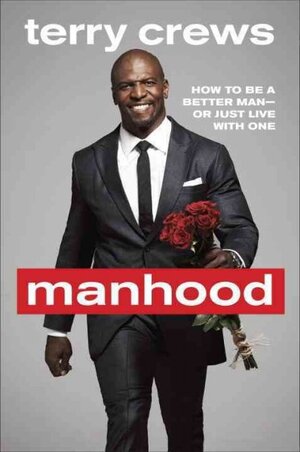
No One Wants To Be With The Marlboro Man: Terry Crews On 'Manhood'


I heard this interview on NPR over the weekend and found it quite entertaining, and disarmingly honest. Who knew that the Old Spice guy was this interesting. His name is Terry Crews, he is a former NFL player, and he was once known as T-Money on the gladiator show Battle Dome. His new book is How to Be a Better Man-Or Just Live With One.

Here is the ad copy for the book:
From NFL player turned film and TV star Terry Crews comes a wise and warmhearted memoir chronicling his lifelong quest to become a good man, loving husband, and responsible father.
 
What does it mean to be a man? Terry Crews, TV’s iconic “Old Spice Guy” and co-star of the hit Golden Globe Award–winning series Brooklyn Nine-Nine, has spent decades seeking the answer to that question. In Manhood, he shares what he’s learned, telling the amazing story of his rise to fame and offering straight-talking advice for men and the women who love them.

A self-described “super-driven superstar alpha male,” Terry Crews embodies the manly ideal for millions worldwide. But as he looks back on his difficult childhood and shares hard-learned lessons from the many humbling experiences he endured to get where he is today, he shows how his own conception of manhood is constantly evolving.

Crews offers up a lively, clear-eyed account of the ups and downs of his twenty-five-year marriage, revealing the relationship secrets that have kept it going—and the one dark secret that nearly tore it apart. Along the way, he shares his evolving appreciation for looking good, staying fit, and getting it done for the people you love.

Being a man is about more than keeping your core strong. It’s about keeping your core values stronger. With insightful observations on spirituality, work, and family, Terry Crews shows men how to face their inner demons, seek forgiveness from those they’ve wronged, and tear down the walls that prevent them from forging meaningful relationships with others.

From the NFL gridiron to the Hollywood backlot, Terry Crews has survived it all with his sense of humor—and his marriage—intact. In Manhood he shows men everywhere that real strength is not measured in muscle mass—unless that muscle is the heart.
Interesting man.

No One Wants To Be With The Marlboro Man: Terry Crews On 'Manhood'

by Terry Crews
May 17, 2014
10 min 3 sec


How to Be a Better Man-Or Just Live With One
by Terry Crews

More on this book

When Hollywood needs a big dude — a really big dude — they can call on all sorts of former athletes. Few come with the heart and humor of Terry Crews.

An 11th-round draft pick of the Rams, Crews gave up his NFL dream in 1997 to pursue a different dream in Hollywood. He thought he'd turn his love of art into a job behind the scenes in special effects. Instead, he has stolen scenes on camera — from action movies like The Expendables to TV comedies like the Golden Globe-winning Brooklyn Nine-Nine.

Maybe his most puzzling role: those surreal ads for Old Spice.

Crews has written a new memoir, Manhood: How to Be a Better Man — or Just Live with One. As he tells NPR's Tess Vigeland, "The book should've been called, Terry Crews Is an Idiot and This Is How I Survived. I'm serious! There was so much astounding immaturity in this book."

Interview Highlights


On living under an alcoholic father

As an African-American, there's a lot of things that — culturally we just don't talk to each other. Anything bad in the past is supposed to be suppressed. "Somebody had it harder than you! So just be glad you're eating!" That's the attitude. And then what would happen is he would bury all his problems in alcohol. It would come out one way or the other. He abused my mother. There was a lot of physical violence in the home."

On revealing his pornography addiction to his wife

She gave me another chance. She said, "Now that I know everything, I'm still choosing to love you." ... That kind of mercy, that kind of grace — it took our relationship to a whole other level, because this is one thing I never realized. ... I always thought if she really knew who I was, she wouldn't want to be with me. And that blew my mind!

On manhood

Manhood used to be the Marlboro Man — my way, the highway, I walk alone! And the Marlboro Man is always by himself. Family, kids? Can't hang with him. They don't understand him. What happens is, that guy in his 60s, he's back there in his shed and he's crying his eyes out. He's alone. No one wants to be with him. And I averted that future.

Tuesday, May 20, 2014

The Gender Binary (Omnivore)

From Bookforum's Omnivore blog, a new collection of links looking at the gender binary (and Facebook's "antagonistic relationship to gender), the gender gap in pay, and variations on gender differences and gender essentialism.

The Gender Binary

May 19 2014
3:00PM


Monday, May 19, 2014

Natascha Yogachandra - Teaching Positive Masculinity

This is an interesting recent article from The Atlantic on how the effort to prevent sexual assaults is now (finally) being directed at men and boys - a process of teaching "positive masculinity."

Teaching Positive Masculinity

Health advocates are engaging men in sexual assault prevention, challenging the negative aspects of traditional manhood.

Natascha Yogachandra May 14 2014


Dean Courtney Robinson leads a session with students (Natascha Yogachandra)

School is out on a Wednesday and the dean of students' office at Facing History High School is full, but these kids aren't here for detention. Dean Courtney Robinson, who has thick arms covered with tattoos and hair pulled back into a braided bun, looks over the room as high school boys shuffle in and out. Some wear sweatshirts with hoods pulled floppily over their heads; others wear navy polos embroidered with a special insignia: tiny hands clasped around a globe.

They chat, complain, and tease one another until precisely 1:35 p.m., when Robinson ushers out the hangers-on while those in the polos plop into seats for a meeting of the Human United Strength Organization, or HUSO. The conversation topics range from rap music to Malcolm X but the subtext always centers on the meaning of masculinity.

"All right, guys," Robinson begins. "Let's check in."

A senior named Devante Moore usually talks about basketball. He speaks faster and faster as he becomes angrier and angrier. Apparently, this year's coach isn't his favorite. John Susana, a freshman, mentions in a mumble that his grades are good, and his small audience claps for his success.

Room 227 is a safe place. One boy shares that his favorite Christmas gift was a hug from his mom. It's a supportive place. Robinson listens intently to the students' problems and responds with short suggestions for nonviolent solutions. It's a male place, a haven for these high-school boys to talk about the things they ordinarily would find difficult to air in public.

They call it the HUSO Mentoring Group, or HMG, an after-school offshoot of the HUSO umbrella organization, which Robinson established at Facing History in Hell's Kitchen. He hopes to see his group replicated in more city schools, even though there are already a number of similar male-oriented clubs operating under other leadership across the United States.

The purpose of these programs is to give boys the chance to rethink maleness, and to change the way men treat women and each other. Moore, the one who always brings up basketball, says that the group isn't for the weak-minded. "This is for people who got strong minds; who are willing to step up to the plate and really become a young man."

Organizers say the construct works once the young men decide to participate. Getting them in the door and then finding the money to keep the doors open are often the two biggest challenges.

* * *

When Robinson started his organization, he did not know he would become part of a much larger movement that has been working for the past 40 years to engage men in the prevention of violence against women. Mentoring for him started at his home in Harlem when he was just a boy. His mother kept the front door open for any child in need, and those who came also looked informally to Robinson for advice. He now tells his club members that they're walking examples of respectful male students, ones who choose conversation over clenched fists.

The first such experiments emerged in the late-1960s and early-1970s during the second wave of the feminist movement, when male activists realized the positive impact of their support in the battle for women's rights.

Termed "anti-sexists," these men supported the rights of their female partners and initially seemed to be little more than a weak and scattered army without provisions or direction. But after the First National Conference on Men and Masculinity in 1975, structure soon followed, resulting in the establishment of the National Organization for Men Against Sexism.

As gender studies gained credibility as an academic discipline around the same time, some scholars of feminist theory began to develop a new focus, known as masculinity studies. Dr. Ronald Levant played a significant role in the development of masculinity ideology, something he defines as "an individual's internalization of cultural belief systems and attitudes toward masculinity and men's roles."

In 1992, he and his colleagues created the Male Role Norms Inventory, which measures adherence to seven norms of the Western masculinity ideology: Avoidance of Femininity, Fear and Hatred of Homosexuals, Self-Reliance, Aggression, Achievement/Status, Non-Relational Attitudes Toward Sex, and Restrictive Emotionality. Research influenced by Levant's inventory has since revealed that men who embrace more traditional Western masculine ideology are reluctant to discuss condom use with their partners, have less satisfactory relationships, and harbor attitudes that often lead to the sexual harassment of women.

So instead of putting resources into warning women about dark streets and risqué clothing, which unfairly burdens women with assault prevention, advocates for female victims of sexual abuse, such as Lina Juarbe Botella, realize that their primary focus should be on changing the behavior of abusive men. "Women cannot be safe," Botella says, "until men know how to behave." 

Tony Porter and Ted Bunch founded A Call to Men in 2002 after being heavily involved in social justice activism for several years. Botella, the organization's training director, said that the two founders "meet men where they're at physically and emotionally," to encourage them to act as positive role models for their communities. But the two men also acknowledge the debt they owe to the women like Botella's predecessors, who came before them as workers for the same cause.

Botella admitted that she originally had difficulty accepting men as partners in the field of female advocacy. But her current focus on prevention has taught her how to embrace their presence.

"I can't take any credit for it, but Tony and Ted had a lot of wisdom on how to be with men, all types of men, from the barbershop to the boardroom. This is really a men's issue," she added. "We need to engage men so that we can ensure a collective liberation."

A Call to Men's mission goes beyond working with men of violence to include community leaders, fathers, brothers, and uncles. "If I have my arms stretched out open to symbolize all the men in our society, a small percentage of them are abusers," Botella explained. "We particularly focus on men who are on the other side, who are on the line, who might stop those jokes or [help] create a society without confrontation." When someone shares a sexist joke by the office water cooler, A Call to Men wants male bystanders to shut it down before he gets to the punchline.

Jamie Utt, who describes himself as a diversity and inclusion consultant, travels around the United States to speak at schools about positive sexuality, bullying prevention, and student leadership. "So much about toxic masculinity is all about hoping the world doesn't see how hard you're trying."

"I think that we can motivate people to act," he said over Skype from his home in Minnesota, "but it so often comes from a place of charity, you know? We're trying to motivate men to change masculinity for women, but then it's this paternalistic sort of charity versus trying to get men to change masculinity because of their personal investment in it and their relationships."

Utt knows well there are no gold medals or blue ribbons for advocacy work. He said he just wants men to realize the importance of engaging with their partners and responding to their needs. That way, they can help build communities in which all members feel safe, and masculinity is inclusive and not violent.

Carlos Andrés Gómez shares a similar message. He came to realize the negative consequences of most traditionally masculine behavior through a series of shallow relationships, fights with his father, and losses both personal and material. Already an HBO Def Jam poet, actor, and public speaker, he added author to that list in 2012 with his book Man Up: Cracking the Code of Modern Manhood. In it, he writes about renouncing his identity as a guy known for liking to pick a fight and then taking up another as a poet—"a journey to becoming a man, a different kind of man, a man who lives and moves and acts outside of the predetermined boundaries of masculinity," he says in the book.

"I mean, so much about toxic masculinity is all about hoping the world doesn't see how hard you're trying," he said. "Whether it's a guy rocking 28-inch rims, or a guy outside of a party with his shirt ripped off, beating his chest, yelling at the top of his lungs, or a guy bragging how big his dick is—it's all about this performance. It's all a performance to hope the world doesn’t see that there’s a little boy in there who’s shaking and scared and hurting."

The topic of privilege repeatedly came up during our discussion—the privilege society confers on men, the privilege society ascribes to being white or sometimes even just appearing to be white, as in the case of the blue-green-eyed Gómez. He prides himself on being able to walk into a room and completely disorient those he encounters. Gómez is well-built; his large shoulders and arms signal days spent at the gym. He "plays up" his masculinity when he walks into a school, "very much by design," he assures me, but when he delivers emotional poems on stage, he leaves tears on his cheeks. Much in the way that Robinson tries to reshape masculinity in Room 227, Gómez does so when he performs in front of an audience. The two men may have different approaches, but they work toward the same goal in safe, private spaces.

Teaching young men to value the models of maleness that men like Utt, Gómez, and Robinson are forging seems to be easier in a room full of strangers than it is in the locker room or at home. Gómez recalled an expression he says he heard somewhere once: "You know, it's like anybody can confront an enemy, but it takes a true hero to confront a friend."

He told the story of a recent trip to Alabama where the men he met represented what he calls "the front lines of the battle" to change the way men think about their masculinity. Gómez says he prefers to speak at a place like this where, by the end of the session, a "pretty homophobic construction worker" was in tears talking about his son. To Gómez, watching that man's transformation in the space of a one-hour meeting is "more revolutionary and more meaningful to me than 30 people who identify as activists" parroting what they already believe. Online forums have a special appeal because they provide anonymity that gives guys the chance to be curious in private.

And those venues have become virtual as well as physical. Online forums have a special appeal because they provide anonymity that gives guys the chance to be curious in private. Blogs like Masculinities 101, MasculinityU, and Higher Unlearning have emerged as equivalents to Robinson's classroom. They encourage young men to debate, ask questions, and learn about new definitions of masculinity.

Twitter and Facebook generate numerous conversations in which postings fling around buzzwords such as "pro-feminism," "healthy masculinity" and "positive sexuality," where male advocates tackle the issues of street harassment and sexual abuse with a keyboard.

Emiliano Diaz De Leon wishes that he had social media when he started working in the field of advocacy. His reach would have been larger, he said, to help educate young boys like himself. When Diaz De Leon was a teenager, he confessed to being violent toward women he dated and said that there had been acts of abuse in his own family. He wasn't aware of the male support group at his high school and was surprised when the school counselor referred him to join after he acknowledged his need for help. Those early experiences led him to the job he now holds as men’s engagement specialist at the Texas Association Against Sexual Assault. Although not everyone who comes to be passionate about this kind of advocacy starts because of an early intervention, many do, and he thinks the existence of such groups is a plus.

"I think if we can get men to begin to do the work that early, that absolutely has an impact on their ability to continue doing the work as adult men."

Diaz De Leon became the first children's male advocate at SafePlace, the women's shelter that was his club's sponsor, after having participated in his own high-school group. Plenty of men had provided services to the organization—making repairs to the building and such—but none before Diaz De Leon had volunteered to work with the shelter's clients.

"It was really the women, both the leadership at SafePlace and in the shelter, who took a risk, who both mentored me and challenged me and held me accountable," he said. While some women were receptive to his presence, others had a hard time with it. "They had experienced a tremendous amount of violence from men who looked like me."

He felt the weight of being the first positive male role model to which most of the children had ever been exposed.

"It really forces you, every day, to think about your behavior, language, the way that you walk, the way that you talk, the way that you are around the people in the shelter," he said.

* * *

One afternoon at the meeting in Room 227, the group starts to argue about the value of money. Sentences overlap and the boys grab at any second of silence to shout out their opinions. As they debate, Robinson listens. He waits for the right moment to jump in and when he does, some of the boys are too involved in conversation to hear him. "Yo yo yo, one mic, one mic," a few call out. It's a phrase used often by the students during meetings to avoid interruptions. The rest stop to give their mentor the floor. Robinson doesn't have to ask for their respect; he's earned it.

"I've had teachers that don't come from the same type of environment as these kids, and they're like, 'Wow, Courtney, how do you do that? You ask them to do something and they do it!'"

It's simple, he says. He doesn't dictate; he explains. When discussion centers on the words "female" and "bitch," Robinson doesn't respond aggressively when a student says that he only uses "bitch" because sometimes "she acts like one." Instead, he puts the word into perspective, asking the boy how he would feel if that word was used to describe his mother or sister.

"Regardless of how you feel about her, somebody loves her," Robinson reminds the student. "And there isn't anything you can say to justify how you're treating her." They listen.

The group's members also know that when Robinson was asked to leave Facing History and become the New York supervisor for Men Can Stop Rape, he turned the offer down to stay with them. This is why: "Me seeing y'all and being here to support you all [to] graduate and move forward and be able to deal with your problems, and help you all make it through and give you all advice means more to me than whatever dollar amount they were going to give me."

"That's love," one of the students says. And the rest clap.

Sunday, May 18, 2014

Kristen Quintrall - "Hipster Man" (He Always Cums First)

Hilarious and strangely accurate (the description of the men, I don't know about the other part) - I see these guys all over Tucson.


He Always Cums First (The Hipster Song MUSIC VIDEO) - KQ feat. Anthony Lavin

Published on Apr 2, 2013


This is the first song I've ever written and recorded. Sometimes you think you have a genius idea so you send it out into the internet world. Sometimes you're right...sometimes you are terribly wrong. Either way, I'm laughing.

(Music Producer) Anthony Lavin - https://soundcloud.com/killian-cruiser
(Director) David Geis - https://www.facebook.com/david.geis
(DP) David Navarro - http://www.dreamlighting.net

Available on iTunes soon!

TWITTER: www.twitter.com/kristenq
FACEBOOK: www.facebook.com/kristenquintrallofficia­l
OFFICIAL WEBSITE: www.kristenquintrall.com
INSTAGRAM: @kristenquintrall

-LYRICS-

This is for all my ladies out there...you know what I'm talking about...

Skinny jeans that hug that D
Patchy beard oooo it tickles me
Ironic T's from the Goodwill Store
And the way you say, You've probably never heard this band before..."
He's a trader joe's bagger and a champion Quilter
And his whole hipster life is an Instagram Filter
I love you, hipster man
I love your hipster brand
I love you, hipster man
There's only one thing I can't stand

He always cums first
He's needs release before it's cool
But there's nothing left for me but this vibrating tool
Oooooo ah ah
Hipster men cum first (before it's cool)
Oooooo ah ah
Hipster men cum first
Ya he always fucking cum first

Spinning vinyl sends my heart a flutter
Vegan diet means vegan nut butter
Grocery shopping on his Beach Cruiser
American Spirits, ya he's a tobacco user
Loves his coffee, dubstep and photography dream
It's not my fault that I'm not into "mainstream cream" (Jizz)
I love you, hipster man
I love your hipster brand
I love you, hipster man
There's only one thing I can't stand

He always cums first
He's needs release before it's cool
But there's nothing left for me but this vibrating tool (that always work, doesn't it)
And I need release, (oh big time)
And ya, I need it quick
Because there's no kind of app that replaces meatstick (I mean penis)
Oooooo ah ah
Hipster men cum first (every single time)
Oooooo ah ah
Hipster men cum first
And I'm about to burst

My mind is going crazy , he's got so much swagger
Wrote the RSS feed on the underground chatter
He's always at the shows down in Silverlake
Would never make a video of the Harlem Shake.
Watches Buffy every night after Art School
Cuz he loved Vampires before they were cool
He's my dirty little hipster, I can't resist this fella
If he breaks my heart, than I'll find another at Coachella ella ella ay ay ay

BBC - Blurred Lines: The New Battle of the Sexes


From the BBC, this is an interesting look at the new culture of misogyny, "whether there's a new culture abroad in which it's acceptable to write about, talk about, and feature women in a sexually offensive, even abusive way. Or whether the female of the species just needs to 'man up', learn to enjoy a gag, and get used to the 21st century world." This is not only a British issue, as it seems maybe worse in the U.S.

Blurred Lines: The New Battle of the Sexes


Published on May 9, 2014
Blurred Lines: The New Battle of the Sexes - BBC Documentary, 2014


From bomb threats sent to campaigners for more females on banknotes to sexually explicit pop videos. From extreme laddism at universities to rape jokes in the school yard... Kirsty Wark explores whether there's a new culture abroad in which it's acceptable to write about, talk about, and feature women in a sexually offensive, even abusive way. Or whether the female of the species just needs to 'man up', learn to enjoy a gag, and get used to the 21st century world.
Kirsty Wark also participated in a Twitter question and answer session, the product of which is presented below.

Your questions to Kirsty Wark


Kirsty Wark  
Kirsty Wark held a Twitter Q&A on sexism and misogyny


How have men's attitudes towards women changed? Is the internet a naturally hostile place for women?

The BBC's Kirsty Wark answered your questions in a live Twitter Q&A on Friday 9 May.
This is an edited version of the session.

Question from @NUS_Vonnie: Where did the idea come from that "Freedom of Speech" means freedom to say things with no consequences?
Kirsty answers: Civil society evolved over centuries-the internet just decades. Need a web conduct code that's not censorious but courteous

Will Blaik emails: Is the increased misogyny that we see a reaction to misandry?
Kirsty answers: I'm not sure that misandry is as entrenched and overt as misogyny. I think it's more complicated than a simple reaction

Question from @dotluckhurst: Is it possible to change attitudes? Parents & schools must act more urgently.
Kirsty answers: Action in schools is the great hope because it's this generation who are growing up online. Schools must talk about it.

Chris emails: Can we encourage teenagers and young people to know, care and understand others around them?
Kirsty answers: I think many young people do care for those around them. But the pressures on them, eg from porn, are phenomenal

Question from @AliceBand1: I am so shocked by Grand Theft Auto. Shocked to the core. How is this allowed to exist?
Kirsty answers: It's perfectly legal. We asked Rockstar to take part but they declined. Why don't you write to them and ask?!

Question from @_raymatthew: Why do parents allow their children to "play" computer games that show rape?
Kirsty answers: Many parents just don't know what's in these games.They need to talk to kids; the activity needs to come out the bedroom

Question from @thegreenelk: It's a mistake to tie increase in misogyny with growth of internet - think it started with rap lyrics
Kirsty answers: Misogyny has been around probably as long as men and women! But certainly rap music language should be part of the debate

Andrew Soule emails: Women say they prefer male bosses & are derogatory towards females. Do women hold themselves back?
Kirsty answers: Sexism and misogyny is a mind-set not a gender. Sometimes women don't realise that they've internalised prejudice.

Question from @thinkingmuslim: Did you toy with the idea that the internet has its own culture & its misogyny doesn't enter real world?
Kirsty answers: The internet does have its own culture, but it's one that spill[s] into the real world. For young people it is the real world

Question from @Charlesknight: Why was the show entirely white?
Kirsty answers: Noted - misogyny affects women of all colours and creeds. Women of colour can experience an additional layer of prejudice

Question from @Jillaclogs: Do you think children's access to smartphones should be regulated? So many beartraps!
Kirsty answers: Certainly could be parental controls for pre-teens, but parents need to learn to use smartphones better than their kids!

Question from @louisegrant21: Has making #blurredlines made you more worried about misogyny or more hopeful it will die out?
Kirsty answers: The young women we spoke to who are standing up to sexism and misogyny makes me hopeful. They have real energy and purpose

Question from @julieohara79: Was excellent, any chance of a series?
Kirsty answers: Glad you enjoyed the documentary. The decision on a series is above our pay-grade!

Kirsty ends: Thanks for all your questions and comments. Sorry I couldn't answer all of them. Great to have the discussion. Newsnight calls!

For more tweets from Kirsty Wark you can follow her Twitter account.
Kirsty examined these issues in the BBC2 programme Blurred Lines: The New Battle of the Sexes. Twitter Q&A produced by Andree Massiah

Saturday, May 17, 2014

40 Boys Open Their Hearts to Support a Friend - Touching


This touching story is from The Mighty. If these boys can do this at their age, they are going to grow up to be some really good men. Stories like this are what prevent me from becoming a complete misanthrope some days.

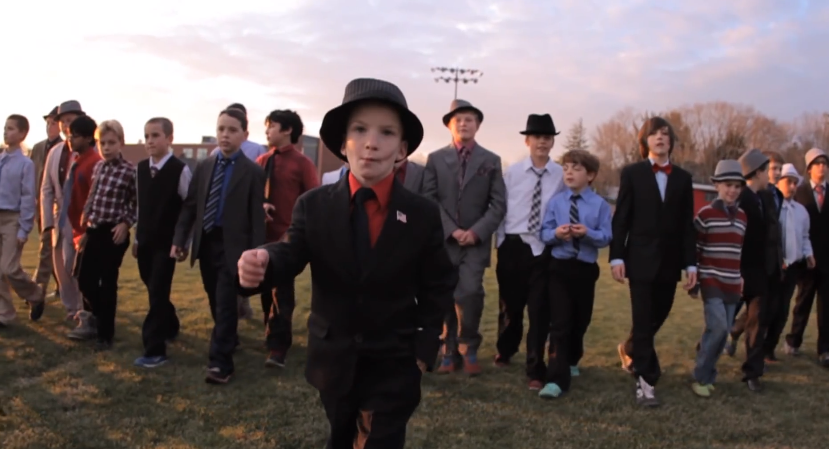
40 Boys Put on Suits to Stand Up for Their Friend. It Worked.


Megan Griffo

Jennifer Keefe’s 10-year-old son, Timothy, came home from school last November and asked his mom to take him out to buy a suit.

Keefe was taken aback. She was used to her 6-year-old son, Danny, wearing suits — he’d been attached to them since the Christmas before, when his mom bought him a red shirt and black jacket. But Timothy never showed any interest in dressing up.

“Ten-year-old boys like to wear Under Armor and sweatshirts,” Keefe recalls. “I asked him why he needed a suit.”

“We’re all wearing them,” he said, “to show Danny we support him.”


Kids at school often bullied Danny — they didn’t understand why he wore a dress shirt or fedora each day, and they didn’t understand why he couldn’t talk. Danny has apraxia of speech, a motor disorder that makes it difficult for him to communicate. Kids would go up to him and ask, “Why can’t you talk? Just talk.” He’d come home from school distraught.

But a group of the boys on the Bridgewater Badgers’ football team, where Danny is the official water manager, wouldn’t stand for this. Their solution? A “Danny Appreciation Day,” where they would all imitate Danny’s suave style and proudly go to school. In the Life Is Good video below, you can watch scenes from that day — more than 40 boys wore suits. Danny led the march.


“It could have turned ugly. The boys could have gone to the playground and said, ‘Who’s doing this to you? Where are they?’” Keefe told The Mighty. “But instead they responded in this very adult-like, peaceful way. It was all about love and support.”

Nearly six months later, Danny confidently walks around the school hallways. No one picks on him anymore, his mom says.

“It’s kind of the opposite now,” Keefe told The Mighty. “Kids go up to him and say, ‘Hey, you’re the kid from TV!’”

Family friends have also started a fundraiser to help the Keefes afford Danny’s expensive speech therapies. Out of the 100 sessions he needs this year, insurance will only cover about 15, Keefe says. It’s a battle she downplays, though — her son’s happiness is a priority.

“Danny started crying when he saw everyone in suits that day,” Keefe recalls. “He was only 6 but it was like he understood the magnitude of what happened. I’m just so thankful the parents in my community raised such kind young men.”

Watch Danny’s story in this Life Is Good video, directed by Tim O’Donnell:

Friday, May 16, 2014

Fitness Friday - Fitness News and Information You Can Use

It's Friday, so it's time for another collection of fitness articles from around the web. This week's topics include "butt wink," how to improve power, 10 health myths debunked, understanding and using training percentages, and last, whether or not time under tension is important.


First up, this is from Girls Gone Strong (don't let the name of the site fool you, these women know their stuff - and this is problem I see more in men than in women, so pay attention):

My Butt Is Doing What? Squats and Butt Wink

(Note from GGS: Hey GGS Community!  We have a real treat for you today with another awesome installment of Ask Ann, our monthly column with Physical Therapist and Athletic Trainer, Ann Wendel.  Enjoy!)

“Hi Ann!  I try to squat to full depth, but I can’t seem to do it comfortably or with good form. I keep hearing the term “butt wink.” What is it and what causes it?”

Hi there!  Thank so much for submitting your question.  It’s a great question, and ties in nicely with last month’s column. Let’s start by defining the term “butt wink.”

Butt wink is a common term for losing proper spinal positioning when squatting to depth (in gym terms, “in the hole” or “ass to grass”). Instead of maintaining a neutral or slightly extended lumbar spine, the lifter experiences posterior pelvic tilt and lumbar flexion at the lowest point of their squat. This makes the butt “wink” or tuck under (the photo below left shows proper form, photo on the right shows butt wink).


Butt Wink Picture 1
Image Source: here 

* * * * *

3 Keys to Improving Power

May 9, 2014 | Mike Robertson


power-jump 
As an athlete, power reigns supreme.

Sure maximal speed is important, and being brutally strong can help, but if you want to be at your best it behooves you to improve power.

Unfortunately, I think most athletes go about this entirely wrong.

First and foremost, they spend all their time focusing on force production vs. force absorption.
 
Second, athletes and coaches alike don’t follow a basic hierarchy when it comes to training power. Just like you shouldn’t train force production before force absorption, you may not need to train power at all initially to see improvements in power production!

Here are three keys you should focus on if your goal is to improve power.

* * * * *

From Lifehacker:

10 Health Myths That Just Won't Die, Debunked by Science

By Adam Dachis


Everything makes you fat! Gluten-free food is the key to eternal youth! You need to poop ten times a day or you’ll die! You’ll find tons of equally ridiculous health claims around the internet, and you’ll actually believe some of them. Today we’re taking a look at 10 common myths and uncovering the truth.

While we’ve learned a lot about health issues here at Lifehacker over the years, we can’t claim expertise on any particular subject. To help us get to the root of these myths, we solicited the help of three experts: Dr. Carly Stewart (medical expert at Money Crashers), Andy Bellatti (Las Vegas-based registered dietitian), and Dr. Spencer Nadolsky (medical editor at Examine.com). They all offer a unique perspective on each myth but mostly came to the same conclusions: we have a lot of silly misinformation out there about our health.

* * * * *
From T-Nation:

From 0 to 100: Know Your Percentages!

by Christian Thibaudeau
05/13/14


Here's what you need to know...

  • Knowing the effects of each training zone will allow you to make the best choices when it comes to designing your own training plans. 
  • Each training percentage, from zero to 100% of your 1RM, has a distinct effect on speed, power, muscle hardness, muscle density, and hypertrophy. 
  • Percentages can't always be followed to the "T". Some days 80% will feel like 90%, but these general guidelines will help you plan your training to get the results you're after.
While training percentages can vary depending on how you're feeling on a given day, they can still be extremely useful. After all, if you know the specific training effect of various levels of loading, you can select the weight that's appropriate to your goals. So here's something I've rarely seen presented: a list of percentages that explains what each type of training load can provide and what kind of body they will give you.
* * * * *

Last up this week is a video talk from Team3DMJ about time under tension (TUT), which was once all the rage in training for size or strength.

Peeling Back a Layer Episode 5: "Is Time Under Tension Important?"

Published on May 14, 2014


Peeling back a layer addresses commonly misunderstood topics that we think we have a solid grasp of, but that we are actually missing a critical understanding of.

This episode asks the question, "Is Time Under Tension Important?"

See the referenced scientific studies here (I recommend reading the full texts):